Author: BTCLFGTEAM

  • iDEGEN hits public shelves with momentum as crypto prices crash

    iDEGEN hits public shelves with momentum as crypto prices crash

    Bitcoin dump

    AI meme crypto market has grown to a market cap of $2.4 billion, and iDEGEN is set to take its rightful position on the table. After three months in the presale stage, it has hit the public shelves with the same viral momentum. 

    Its early adopters are set to continue reaping big from the project as the uncensored AI agent revolutionizes the crypto space. In addition to the 300,000% gains already locked in, its value may surge by at least 10X in coming months. This is despite the selling pressure current felt across the crypto majors.

    Ripple price chart pattern hints at further selling pressure in the short term

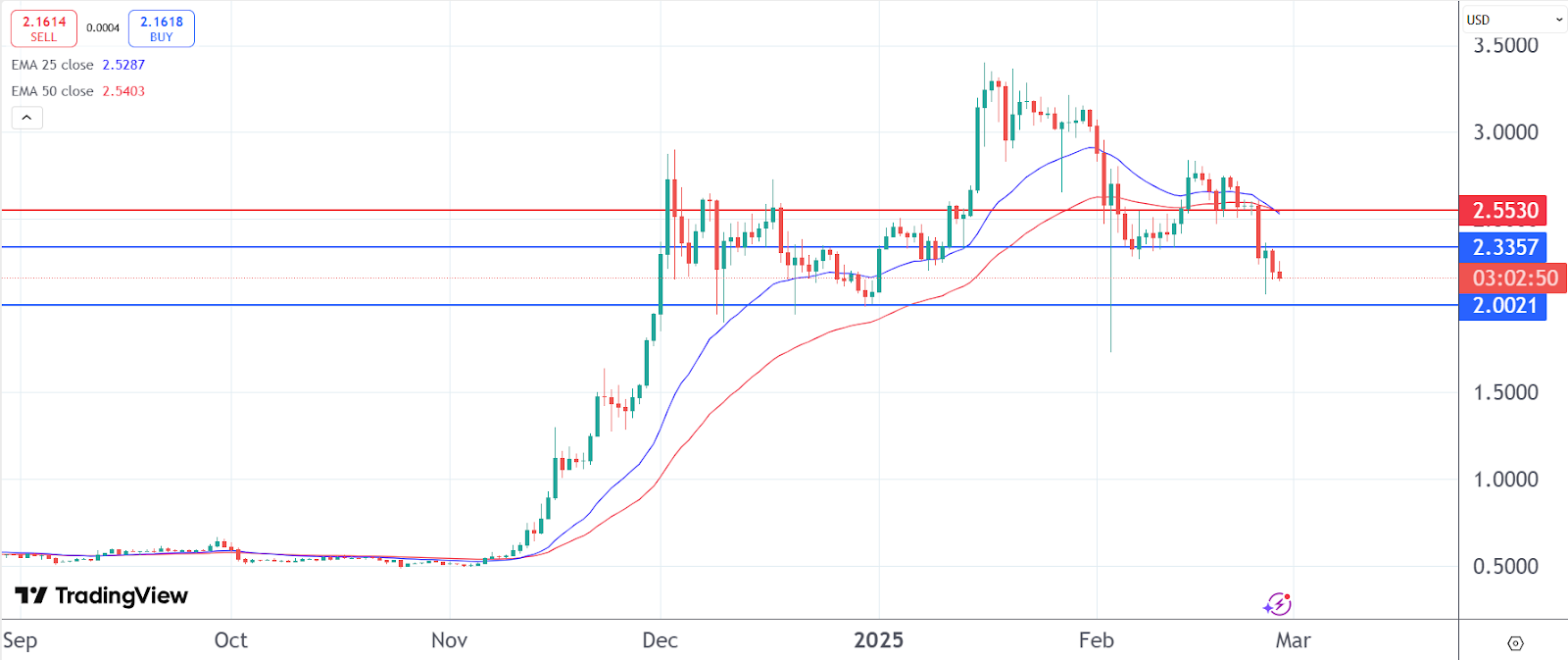
    After trading steadily above the support zone of $2.5000 in the past one week, Ripple price has plunged by about 16% since Monday. Similar to other crypto majors, the altcoin is under pressure as extreme fear grips the broader market. 

    A look at its daily chart points to the formation of a bearish death cross pattern as the short-term 25-day EMA crosses the 50-day EMA to the downside. In the near term, the range between $2.0000 and $2.3357 is worth watching. For a firm trend reversal, the bulls will need to gather enough momentum to rebreak the resistance at $2.5500.
    XRP Price
    XRP Price

    iDEGEN debuts on Raydium with the same viral momentum

    iDEGEN has hit the public shelves as promised; ending the three-month-long presale. It has debuted on Raydium, a Solana-based DEX and is set to also list on BitMart on 4th March.

    What started on a blank slate ready to learn from the crypto degens on X has grown into an ultra-popular AI crypto with the potential to compete with other AI meme coins like AI16Z, Hamster Kombat, and Fartcoin. 

    In three months, it has managed to raise $25 million. This has been made possible by its aggressive community, apt timing, and booming AI crypto market. If the presale is anything to go by, its viral momentum is set to yield growth of atleast 10X in the coming months. At its last stage price of $0.038, its early adopters are already enjoying returns of upto 300,000%. 

    Bitcoin spot ETF records streak of outflows as tariff jitters persist
    Bitcoin price

    Concerns over the impact that Trump’s trade policies will have on the US economy have triggered a shift in the market sentiment. Compared to last week’s neutral level of 49, the crypto fear & greed index is now at an extreme fear level of 10. 

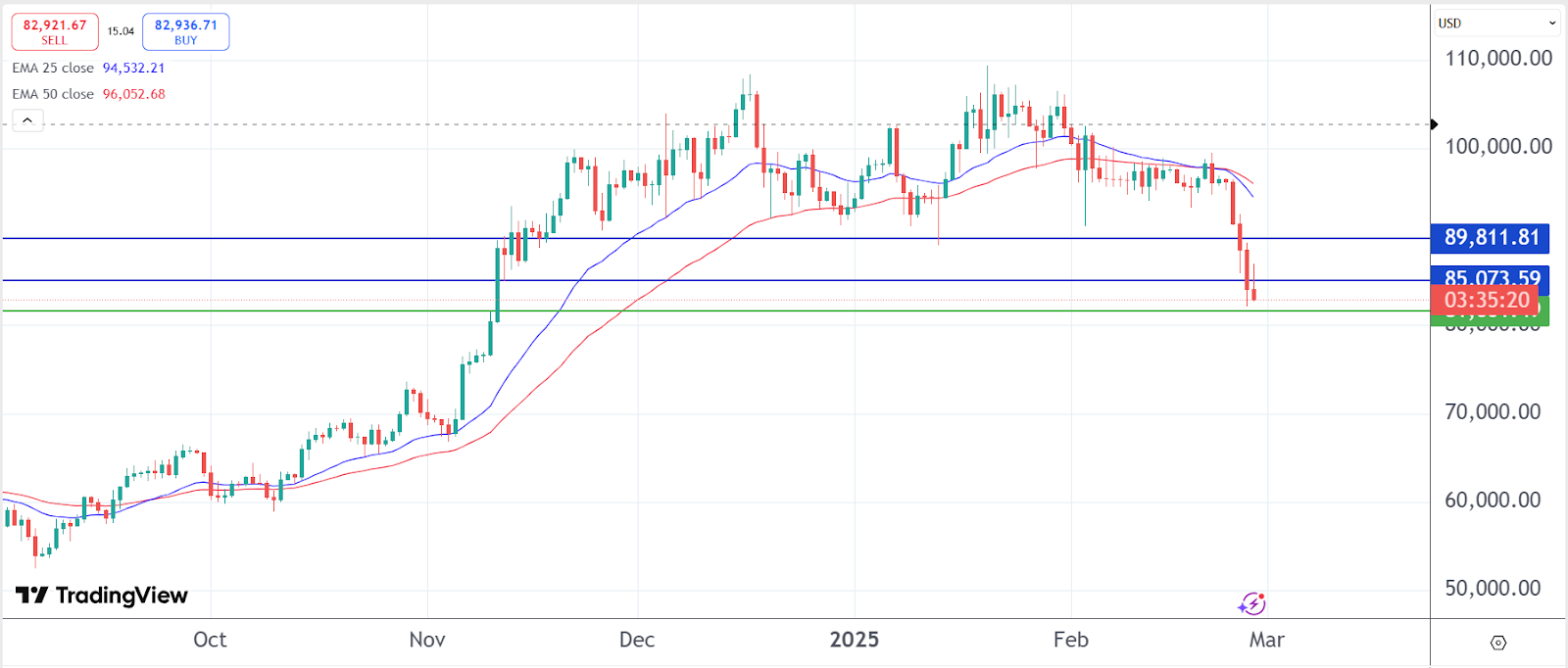
    With the resultant plunge in Bitcoin price, Bitcoin spot ETFs have seen persistent outflows as its institutional demand falls. According to SoSoValue, Bitcoin spot ETFs recorded daily total outflows of $754.53 million on Wednesday. Notably, the trend has been on for 7 sessions in a row. 

    On its daily chart, the bearish death cross pattern points to continued selling pressure in the short term. At its current level, the bulls will be keen on defending the support at $81,600. A subsequent correction may have it rebound past $85,000 to find resistance at $90,000. 



    Source link

  • Bitcoin Pepe turns into a compelling alternative amid a bleak Bitcoin sentiment

    Bitcoin Pepe turns into a compelling alternative amid a bleak Bitcoin sentiment

    Bitcoin Pepe turns into a compelling alternative amid a bleak Bitcoin sentiment

    • Bitcoin sentiment hits lowest since 2022 as Fear & Greed Index drops to 10.
    • Bitcoin funds lose $3B in 7 days, with BlackRock ETF seeing a record $420M single-day exit.
    • Bitcoin Pepe offering Layer-2 meme coins on Bitcoin offers an alternative with its ongoing presale.

    Bitcoin’s recent tumble has sent shockwaves through the crypto market, with the Crypto Fear & Greed Index plunging to its lowest level in over two years, signaling extreme fear among investors.

    Macroeconomic uncertainties, fueled by threats of trade tariffs from US President Donald Trump, have only added to the unease.

    However, amid this bleak backdrop, a new project dubbed Bitcoin Pepe is emerging as a potential alternative for crypto enthusiasts.

    Bitcoin’s bleak outlook

    The Crypto Fear & Greed Index recently hit a score of 10, its lowest since June 2022. That period saw major crypto collapses like Three Arrows Capital and Terraform Labs, sparking widespread panic. Today, the sentiment echoes that fear, even without similar crashes.

    Bitcoin’s price has dropped nearly 16% in the past 30 days, hovering around $86,304. Analysts pin this on macroeconomic pressures, including Trump’s reaffirmed 25% tariffs on Canada and Mexico, with threats aimed at the European Union stoking fears of a trade war.

    Bitcoin investment products, particularly US spot Bitcoin ETFs, are bleeding cash. Over seven days, $3 billion flowed out, including a record $420 million single-day exit from BlackRock’s iShares Bitcoin Trust. Funds like Ark 21Shares and Grayscale saw heavy withdrawals too.

    However, some analysts remain hopeful. Ben Simpson of Collective Shift says buying during extreme fear often pays off historically.

    But Arthur Hayes warns of a drop to $70,000. Ki Young Ju notes 30% corrections are normal in bull cycles, citing a 53% dip in 2021 that Bitcoin overcame.

    Bitcoin Pepe offers a meme-focused alternative

    Amid the volatile crypto market, Bitcoin Pepe is stepping up as a fresh option in the stormy market with its ongoing presale. With the “World’s Only Bitcoin Meme ICO,” the project aims to bring Solana-like perks of speed and low fees to Bitcoin’s sturdy network. It’s a Layer-2 solution built for meme coins.

    The PEP-20 standard is its backbone. It lets anyone launch meme coins on Bitcoin, tapping into the blockchain’s unmatched resilience. Bitcoin’s staying power makes this a big deal.

    Bitcoin Pepe’s presale is rolling along in Stage 5 of 30, having raised $3,632,454 at press time, with the BPEP token priced at $0.0255 and set to rise to $0.0268 in the next stage. This tiered pricing shows a deliberate rollout plan aimed to incentivize early investors.

    As Bitcoin Pepe rides the meme coin wave, blending it with Bitcoin’s strength with instant transactions and tiny fees to draw users tired of Bitcoin’s usual costs, its presale offers a compelling haven for those who want to hedge against the current market turmoil.

    Looking ahead, the project’s roadmap hints at future growth with talk of partnerships and integrations.


    Source link

  • UTXO, SNZ, and Jump Crypto among major institutions adopting sBTC

    UTXO, SNZ, and Jump Crypto among major institutions adopting sBTC

    UTXO, SNZ, and Jump Crypto among major institutions adopting sBTC

    • Stacks’ sBTC gains traction with UTXO, SNZ, Jump Crypto as early adopters.
    • With this adoption, the demand for sBTC has tripled capacity in under 24 hours.
    • The sBTC unlocks Bitcoin DeFi, with withdrawals set to start in March 2025.

    A new wave of institutional adoption is sweeping through the Bitcoin ecosystem as Stacks, a prominent Bitcoin Layer 2 solution, celebrates the rapid uptake of its decentralized, Bitcoin-backed asset, sBTC.

    Leading the charge among early sBTC adopters are industry heavyweights UTXO Management, SNZ, and Jump Crypto, signalling strong confidence in sBTC’s potential to unlock decentralized finance (DeFi) utility for Bitcoin holders worldwide.

    UTXO Management, a key player with its venture arm backing top Bitcoin companies and its liquid fund 210k Capital deploying resources across public and private markets, has embraced sBTC as part of its Bitcoin strategy.

    Jump Crypto, a division of the renowned Jump Trading Group, brings its expertise as a quantitative trading firm and infrastructure builder to the table. Saurabh Sharma of Jump Trading notes, “sBTC fosters a more dynamic and interconnected financial landscape.”

    SNZ, a crypto-native investment firm with a footprint in Hong Kong, Singapore, and the US, continues its legacy of supporting Bitcoin innovation. It was an early backer of Stacks and other public blockchains in Asia.

    Other notable participants include CMS Holdings, an active investor in Bitcoin scaling ventures; RootstockLabs, a pioneer behind the Rootstock sidechain; Sypher Capital, with its focus on generating native Bitcoin yield; and Asymmetric Research, a security partner to major protocols like Solana and Wormhole.

    Together, these institutions underscore sBTC’s broad appeal across the crypto ecosystem, from trading and investment to technical development and security.

    The rising enthusiasm for sBTC

    Launched on the Stacks mainnet in December 2024, sBTC has quickly positioned itself as a game-changer in the tokenized Bitcoin landscape, enabling programmable smart contracts and transactions secured by Bitcoin’s robust infrastructure.

    The enthusiasm for sBTC was evident from the start, with its initial capacity cap filled by a roster of influential depositors, prompting a second cap raise that tripled availability on February 25th.

    Remarkably, this expanded capacity was fully subscribed in under 24 hours, reflecting surging demand from institutions, wealth managers, builders, and retail investors alike.

    Among the standout sBTC use cases driving this momentum is Zest, a fast-growing application that has already captured nearly 40% of the sBTC within the protocol, showcasing the asset’s immediate usability and appeal.

    For Bitcoin enthusiasts, sBTC represents a bridge between the cryptocurrency’s unparalleled security and the dynamic possibilities of DeFi.

    Unlike traditional staking or locking of Bitcoin on its base layer, sBTC activates capital by enabling a wide range of financial applications, from yield generation to lending and decentralized exchanges.

    Alex Miller, CEO of Hiro, a developer tooling company within the Stacks ecosystem, emphasized the sBTC’s transformative potential stating that the growing adoption of sBTC provides essential liquidity for developers building and scaling applications.

    Notably, the rise of sBTC comes amid a broader surge in Bitcoin Layers, which have seen their total value locked (TVL) soar by over 460% in the past year, climbing from approximately $500 million in 2024 to $2.8 billion by February 2025, according to CoinGecko data.

    This growth reflects a growing recognition among Bitcoin (BTC) holders that Layer 2 solutions like Stacks can enhance functionality without compromising the core principles of security and decentralization.

    With tokenized Bitcoin assets now accounting for 1.67% of BTC’s circulating supply, the highest level since October 2022, sBTC is poised to play a central role in this evolving narrative.

    Looking ahead, Stacks is preparing to roll out withdrawal functionality for sBTC in March 2025, a milestone that will further solidify its utility. As the leading Bitcoin Layer 2 by developer traction and market cap, Stacks is driving a movement to transform Bitcoin’s $1 trillion in passive capital into a fully programmable, productive asset.

    With support from top staking providers, custodians, and ecosystems like Solana and Aptos, sBTC is not just connecting Bitcoin to DeFi—it’s paving the way for a future where all roads in crypto lead back to Bitcoin.

    Source link

  • Bitcoin drops below $84k as markets react to tariffs

    Bitcoin drops below $84k as markets react to tariffs

    BTC on stack of cryptocurrencies with falling crashing graph in background

    • Bitcoin price fell to lows of $82,131, dipping to levels seen in November 2024.
    • The BTC sell-off happens after Trump’s latest tariffs announcement, including a 25% tarriffs on the EU.
    • Equities also dumped, with the S&P 500 seeing $500 billion wiped off.

    The price of Bitcoin dropped more than 6% in 24 hours to break below $84,000 on Wednesday.

    Notably, Bitcoin price has touched its lowest levels since November 2024, when it rose amid election momentum. According to crypto and stocks trader IncomeSharks, the market is bearish.

    BTC sold-off as the crypto market reacted to trade war sentiment, with this coming on the heels of the latest tariffs announcement by President Donald Trump.

    Having announced that the 25% tariffs on Canada and Mexico and 10% on China will go into effect in April, Trump said he would slap 25% tariffs on the European Union. The news saw the S&P 500 fall, with over $500 billion in market cap wiped off.

    Bitcoin dips amid ETFs outflows

    As equities reacted to the potential trade war, Bitcoin crashed below $84,000. Per data from CoinMarketCap, the price of BTC hit lows of $82,131.

    BTC price also dumped amid massive selling pressure from ETFs. Major issuers Fidelity, Ark and Grayscale all sold. BlackRock, which sent millions of dollars worth of BTC and ETH to an exchange on Tuesday, also offloaded $150 million of the flagship coin.

    While bulls had rebounded to above $84k at the time of writing, sentiment remains weak and a retest of $80k is possible. Crypto analyst Rekt Capital shared the chart below.

    According to analysts, the markets are pricing in a possible “rebound in inflation” with investors factoring in likely spikes in the prices of goods.

    “What’s interesting is the SHARP divergence between Gold and Bitcoin since the trade war began. While Gold is up +10%, Bitcoin is down -10%, even though Bitcoin is historically viewed as a “hedge” against uncertainty,” the Kobeissi Letter said.


    Source link

  • Binance CEO: we’re seeing a “tactical retreat” with crypto “not a reversal”

    Binance CEO: we’re seeing a “tactical retreat” with crypto “not a reversal”

    • Richard Teng indicated that the crypto market tends to bounce back after major geopolitical events
    • Teng’s remarks come as Bitcoin dropped below $90,000 earlier this week following the news of US President Donald Trump’s trade tariffs on Canada and Mexico

    What we’re seeing with crypto market prices is a “tactual retreat, not a reversal,” according to Binance’s CEO.

    In a series of posts on X, Richard Teng said crypto markets typically bounce back after major events.

    “History has shown that crypto markets react to macroeconomic shifts much like traditional assets, but they also bounce back with remarkable resilience,” he said, adding “what we are witnessing now is another short-term tactical retreat, far from a structural decline.”

    Bitcoin drops to $87,000 for the first time since November

    Teng’s post comes as Bitcoin dropped below $90,000 earlier this week following the news that US President Donald Trump had confirmed trade tariffs on Canada and Mexico.

    Speaking to CoinJournal, James Toledano, COO at Unity Wallet, said many believed that Bitcoin’s price would continue rising once Trump entered the White House, adding:

    “But the reality is that the price has gone south, likely due to tariff trade wars, fragile peace talks in Eastern Europe, and fears around DeepSeek’s impact on the US tech sector. But this could also just be a momentary lapse of pricing reason.”

    Continuing on X, Teng said: “Price movements often overshadow what’s happening beneath the surface, but the core drivers of crypto’s growth remain firmly intact.”

    Crypto ETF filings on the rise

    According to Teng, the rising number of crypto exchange-traded funds (ETFs) is a good sign for the market.

    He added that market cycles come and go, but the fundamental indicators of crypto’s strength are getting stronger.

    Earlier this month, the Chicago Board Options Exchange (Cboe) filed four separate filings on behalf of issuers to launch spot XRP ETFs.

    Last week, the US Securities and Exchange Commission (SEC) acknowledged 19b-4 filings from Grayscale to list spot Dogecoin and XRP ETFs. More recently, Grayscale filed for a Polkadot ETF, making it the latest crypto ETF application submitted in the past few months.

    In October, Bitwise filed an S-1 form with the SEC for an XRP ETF. Similarly, Canary Capital filed for an XRP ETF last year, reflecting its broader strategy of bringing multiple crypto ETFs to the market.


    Source link

  • Bitcoin drops below $90k as Trump confirms trade tariffs

    Bitcoin drops below $90k as Trump confirms trade tariffs

    Dogecoin and other major altcoins dip

    • This is the lowest Bitcoin has dropped since November 2024
    • Trump’s trade tariffs are likely impacting crypto market prices as investors look elsewhere to trade
    • Two crypto hacks days apart have worsened investor sentiment

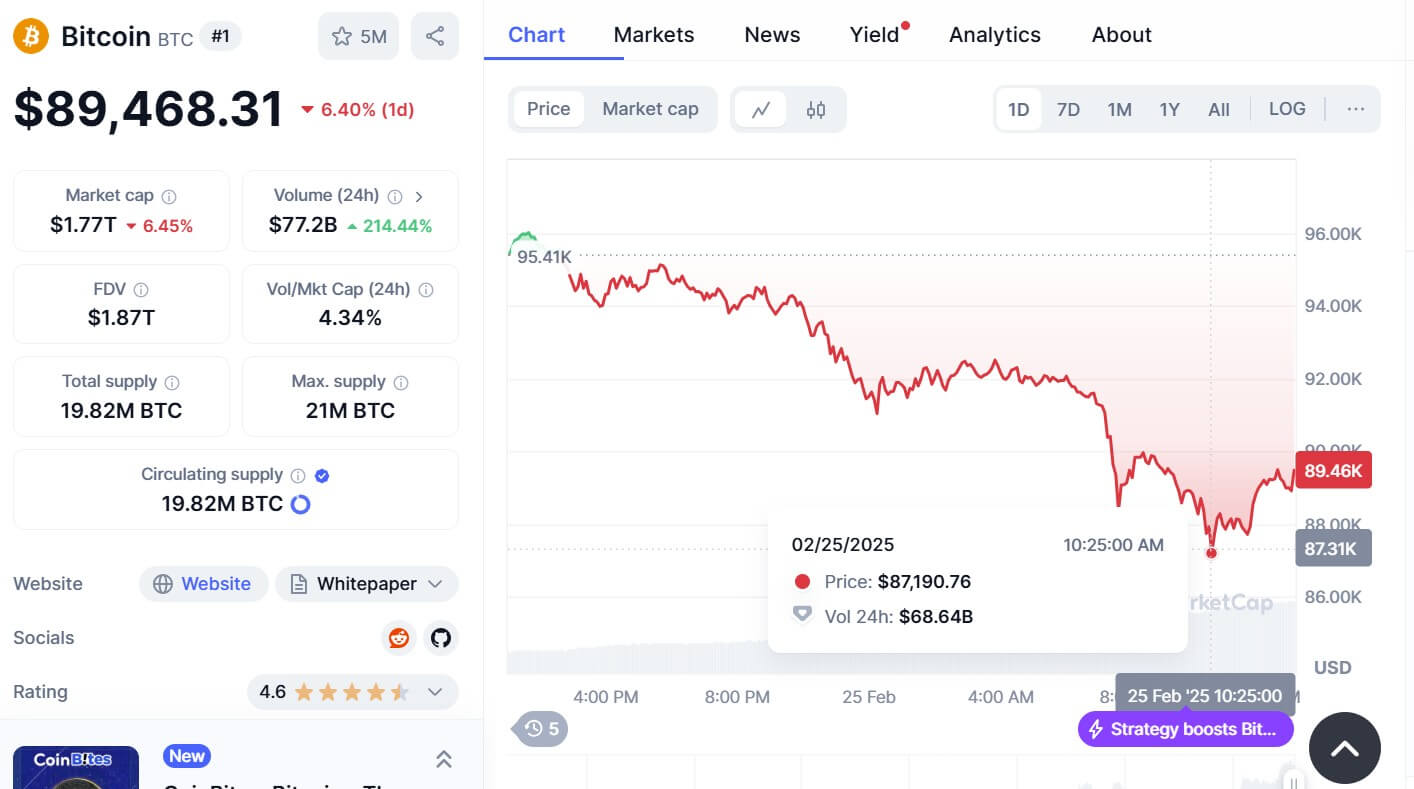
    Bitcoin’s price has dropped below the $90,000 mark, signalling the lowest decline for the number one crypto asset since November 2024.

    Bitcoin’s price at $87,000. Source: CoinMarketCap

    On February 25 at 10:25 UTC, Bitcoin was trading at around $87,190, according to data from CoinMarketCap. At the time of publishing, it has risen slightly but remains under $90,000, a key figure to stay in bullish territory.

    According to Arthur Hayes, BitMEX’s co-founder, Bitcoin could drop to $70,000 if large hedge funds sell their positions in Bitcoin exchange-traded funds (ETFs).

    Impact of Trump’s tariffs

    The drop in value comes amid uncertainty about inflation, US President Donald Trump’s policies, and geopolitical events.

    Yesterday, Trump confirmed 25% trade tariffs on Canada and Mexico, causing the market to react as investors look to other avenues to put their money.

    According to James Toledano, COO at Unity Wallet, many believed that Bitcoin’s price would continue rising once Trump entered the White House, adding to CoinJournal:

    “But the reality is that the price has gone south, likely due to tariff trade wars, fragile peace talks in Eastern Europe, and fears around DeepSeek’s impact on the US tech sector. But this could also just be a momentary lapse of pricing reason.”

    Security breach at Bybit

    Last week, Hong Kong-based crypto exchange Bybit was the target of a major hack, resulting in the loss of nearly $1.5 billion worth of Ethereum from a single wallet.

    Despite Ben Zhou, Bybit’s founder and CEO, saying it had “fully closed the ETH gap,” raising funds to cover the losses and boost investor confidence, the fact remains that investors are shaken.

    Not only that, but neobank Infini suffered a $50 million hack yesterday. According to reports, insider access enabled the hacker to manipulate the platform’s smart contract it had developed after retaining administrative privileges unbeknownst to Infini.

    Following the theft, the hacker converted the stolen USDC into Dai and then purchased 17,696 Ethereum, valued at around $49 million at the time.

    “Additionally, global macroeconomic uncertainty and a downturn in traditional markets have weighed on Bitcoin, as risk assets remain highly sensitive to external pressures,” said Toledano.

    “Note, the S&P 500 which is the bellwether for the equities market is down over 4% over the last month and over 2% this past week alone. While 2 and 4 percentage points mean little in the cryptosphere, these figures are notable in TradFi from a loss perspective.”

    Source link

  • Weekly price analysis: prices range on uncertain economic outlook

    Weekly price analysis: prices range on uncertain economic outlook

    • Crypto prices traded within a range last week as crypto takes is relegated to the back burner in the wake of economic uncertainties
    • Exchange-traded fund (ETF) inflows were negative as Bitcoin ETFs logged net outflows of $62.9 million while Ethereum ETFs logged $8.9 million in outflows

    Bitcoin

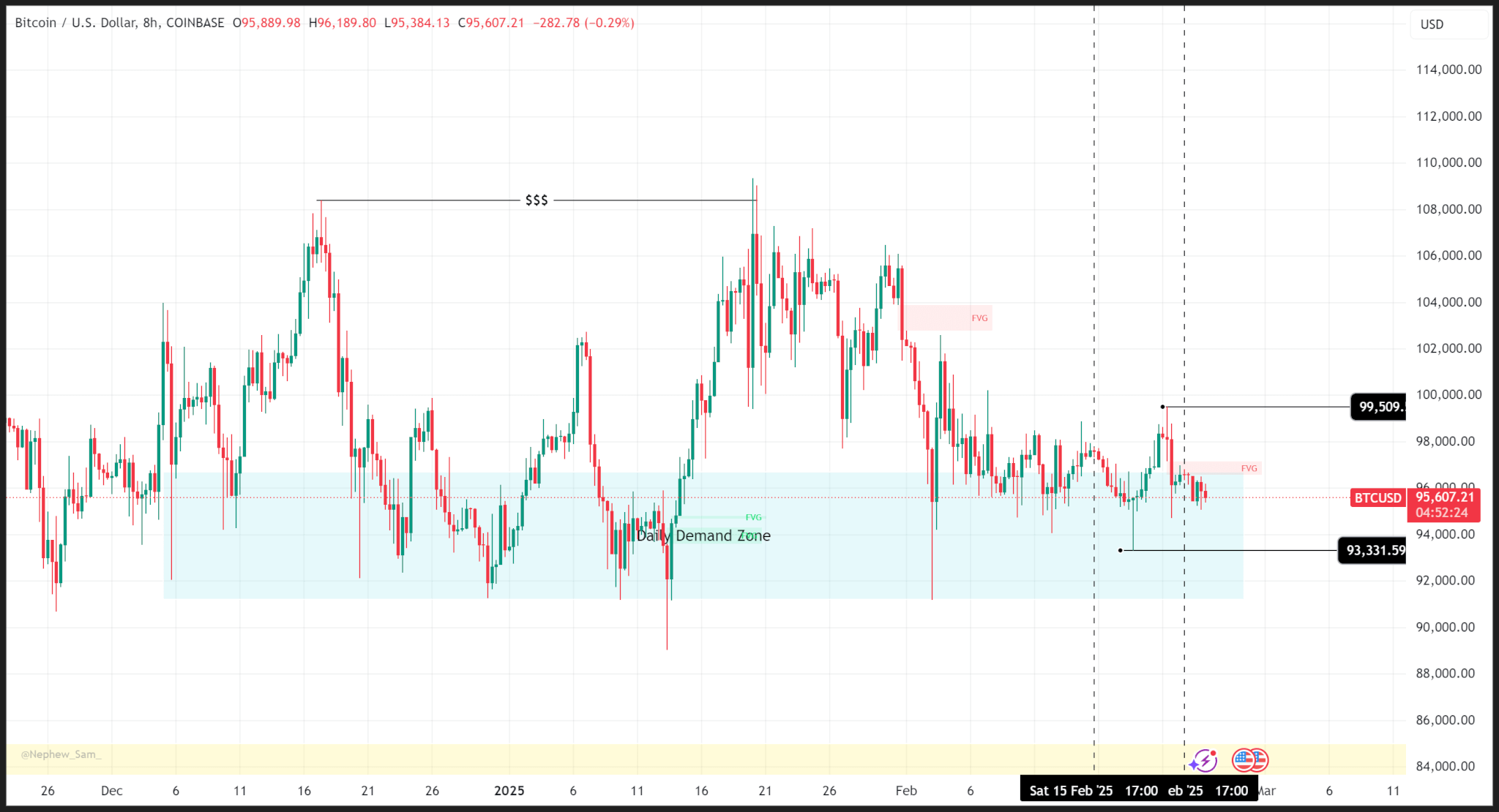
    Bitcoin’s price action continued trading rangebound, with weekly highs and lows of $99,509 and $93,331, as uncertainty looms around inflation, US President Donald Trump’s policies, and geopolitical events.

    Zooming out, we see that price action has ranged at the daily support level for the last three weeks as current market conditions lack sufficient catalyst to push prices to new highs.

    BTC/USD chart by TradingView

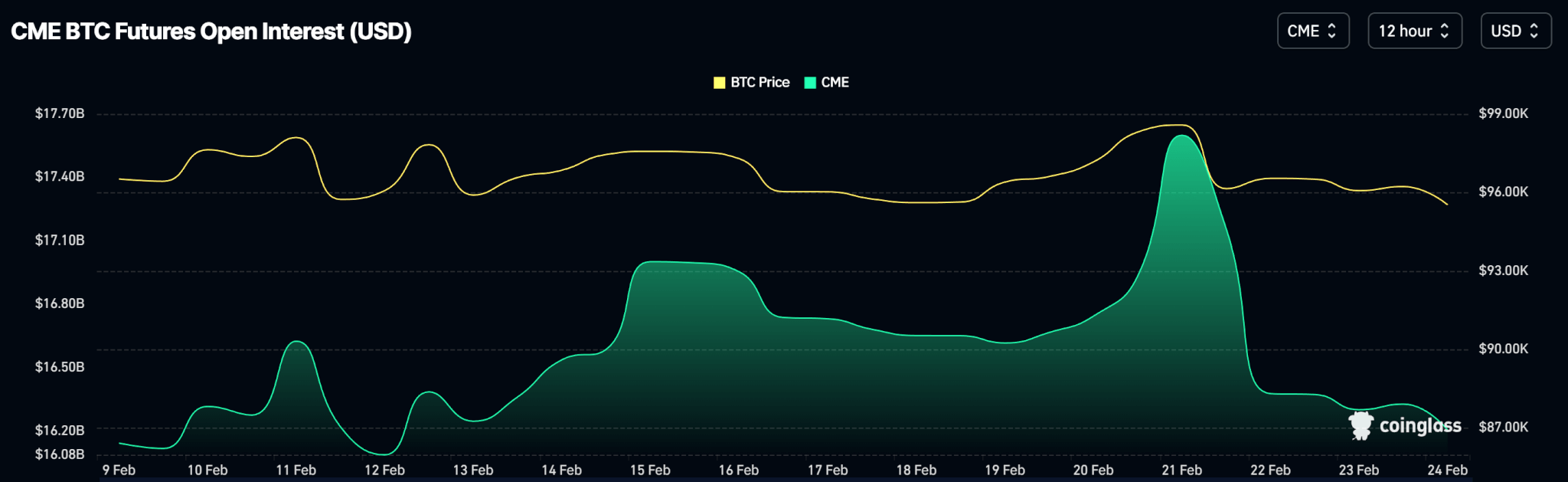
    Open interest mimics price action as the week began with a reduction in the volume of open contracts which picked up on Wednesday, February 19, congruent with price action.

    CME BTC Futures Open Interest (USD) chart by Coinglass

    Outlook

    Bitcoin must remain above the daily support of $90,673 to remain in bullish territory. A close below this level on the daily time frame could trigger a fall to the $84,000 level.

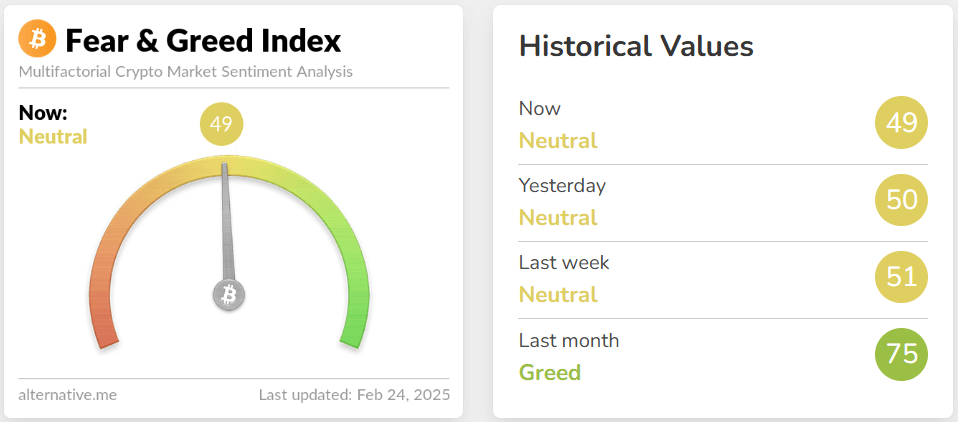
    Meanwhile, market sentiment has cooled significantly over the last month and is in neutral territory.

    Bitcoin trades at $87,900 as of publishing.

    Ethereum

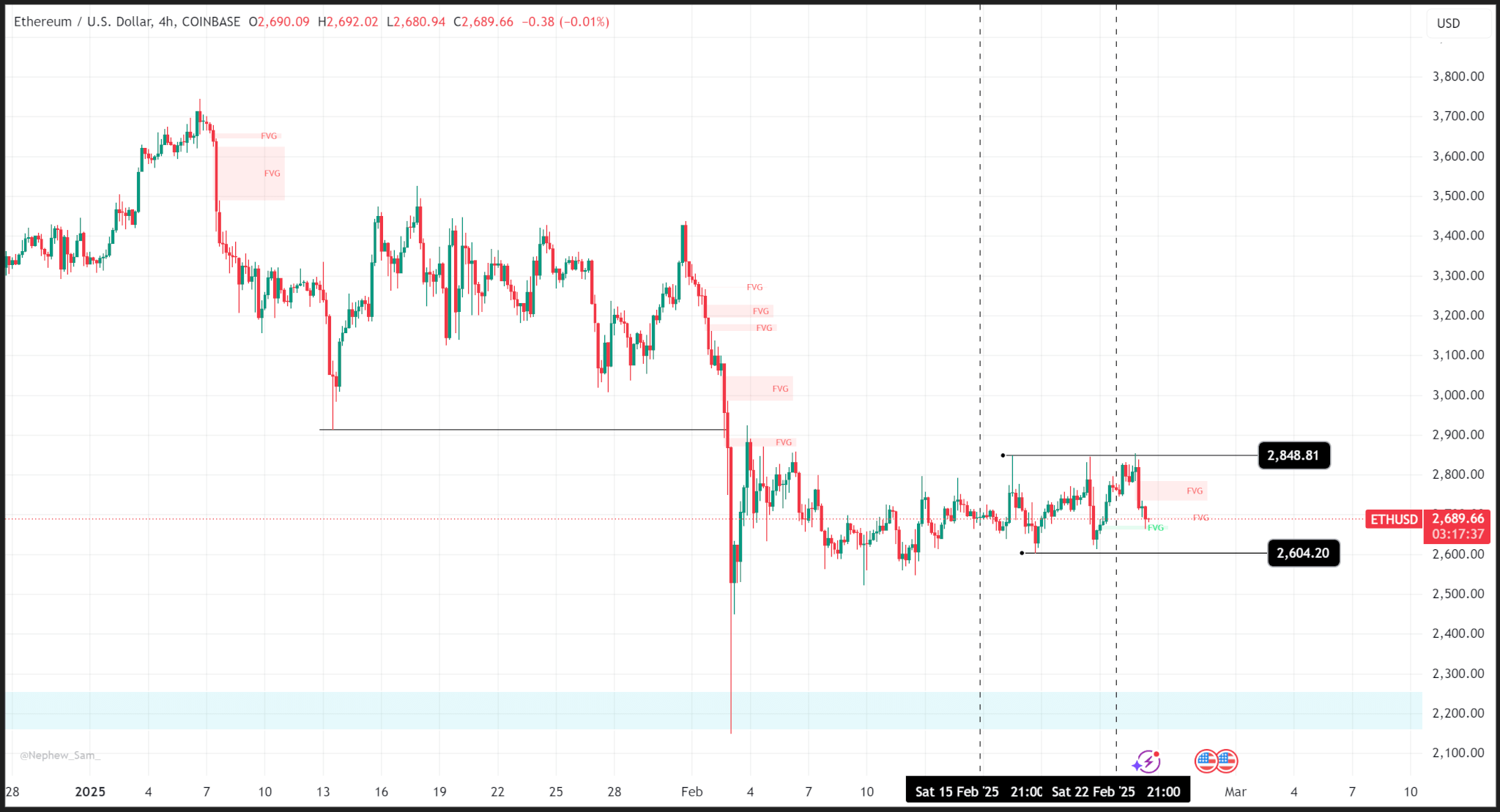
    Ethereum’s price action ranged last week logging a weekly high and low of $2,848 and $2,604 despite last week’s news of the Bybit hack.

    ETH/USD chart by TradingView

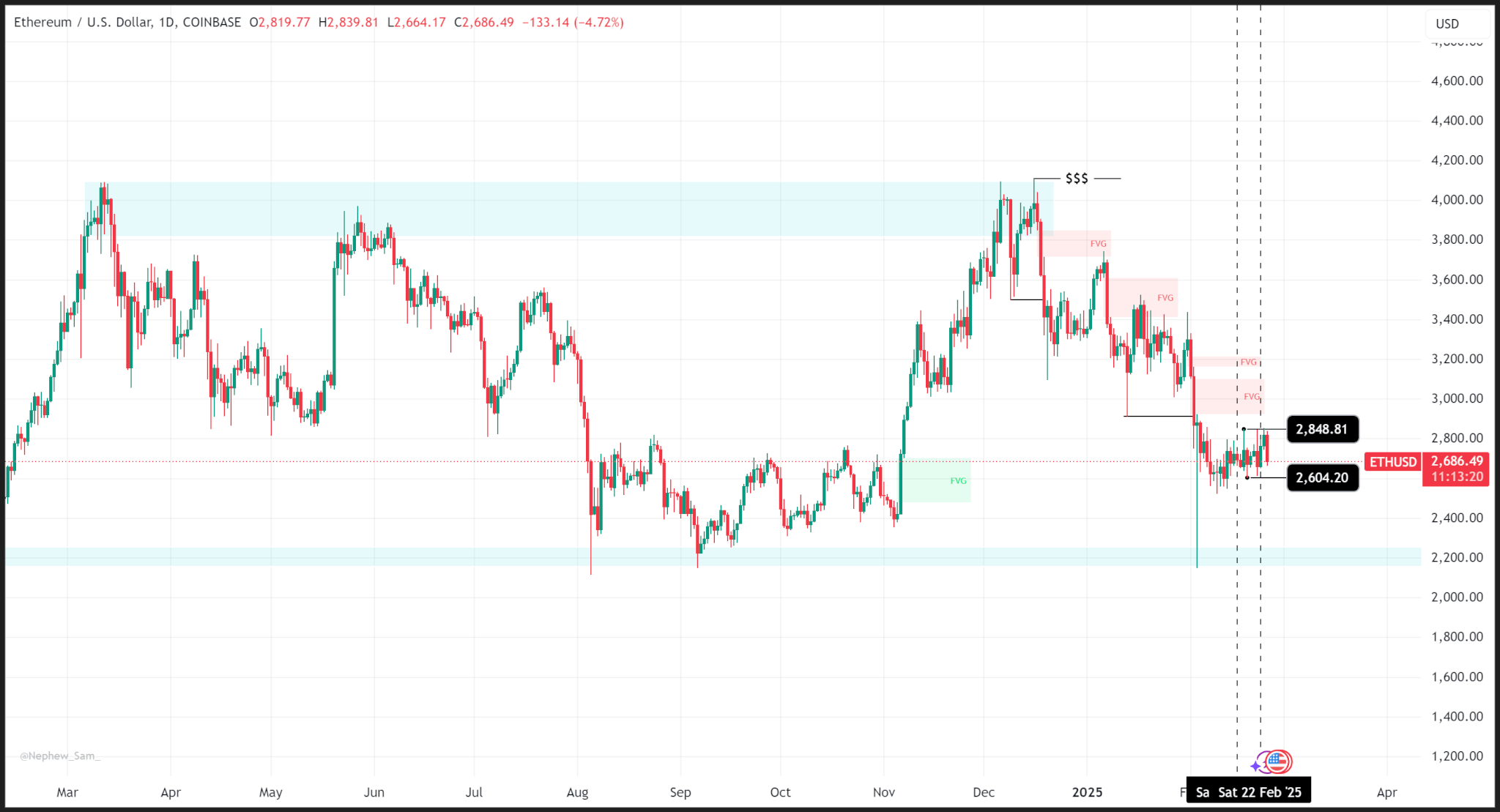
    Zooming out, we see a bleaker picture as ETH has been trending lower since December 09 after failing to break above its March 2024 high.

    ETH/USD chart by TradingView

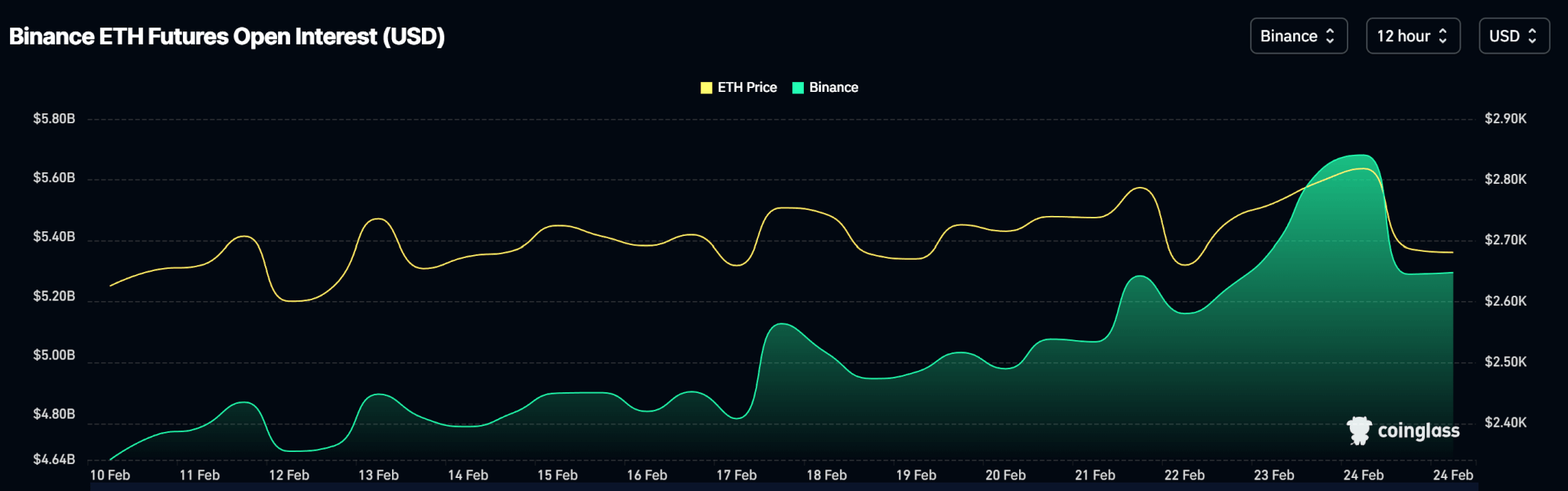
    Open interest data shows a steady rise in contract volume throughout the week though price traded rangebound.

    Binance ETH Futures Open Interest (USD) chart by Coinglass

    Outlook

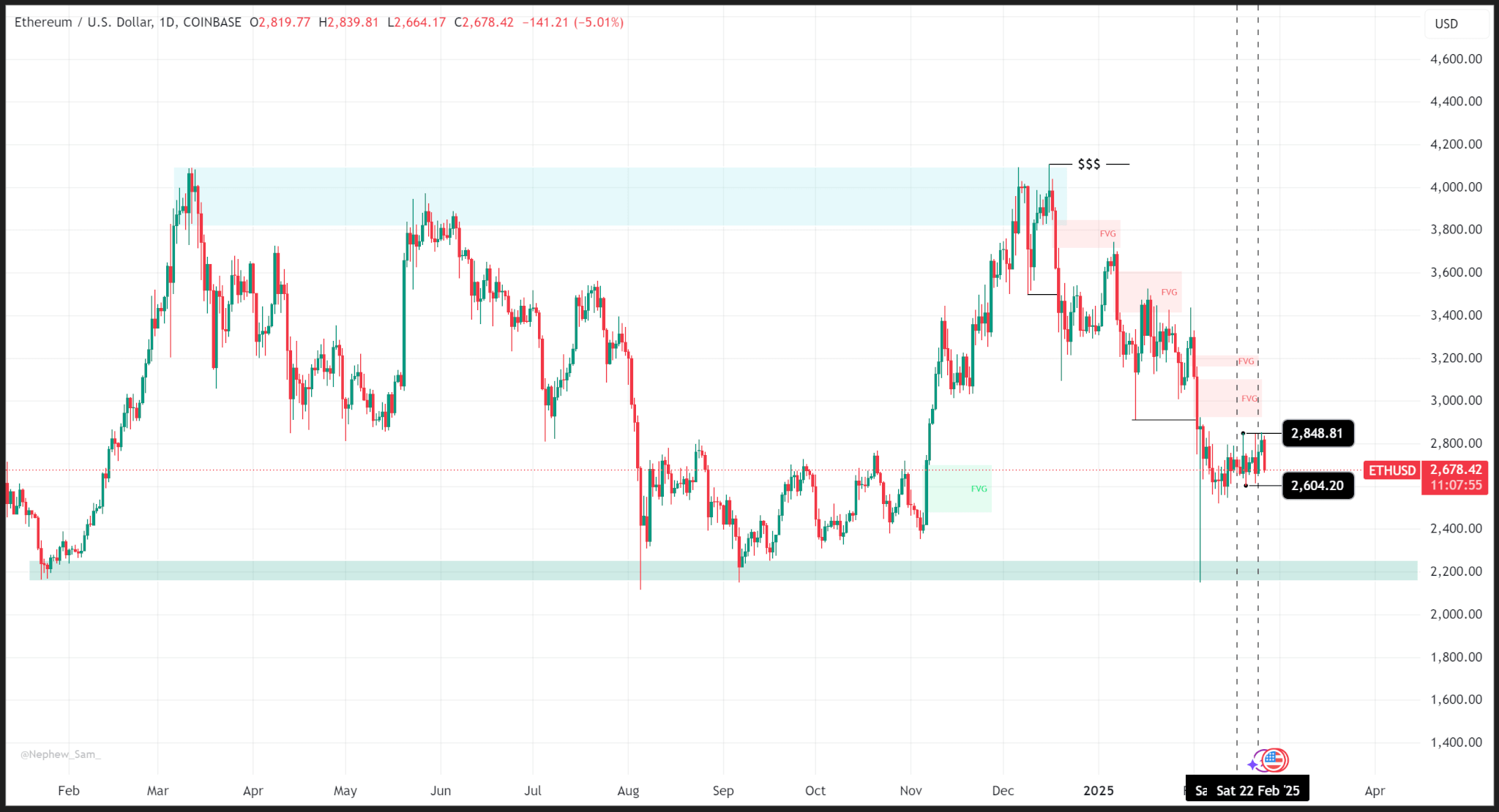
    We reckon the next major support zone for ETH is the $2,500 level which has proven to be a strong liquidity level in the past.

    ETH/USD chart by TradingView

    ETH trades at $2,384 as of publishing.

    Solana

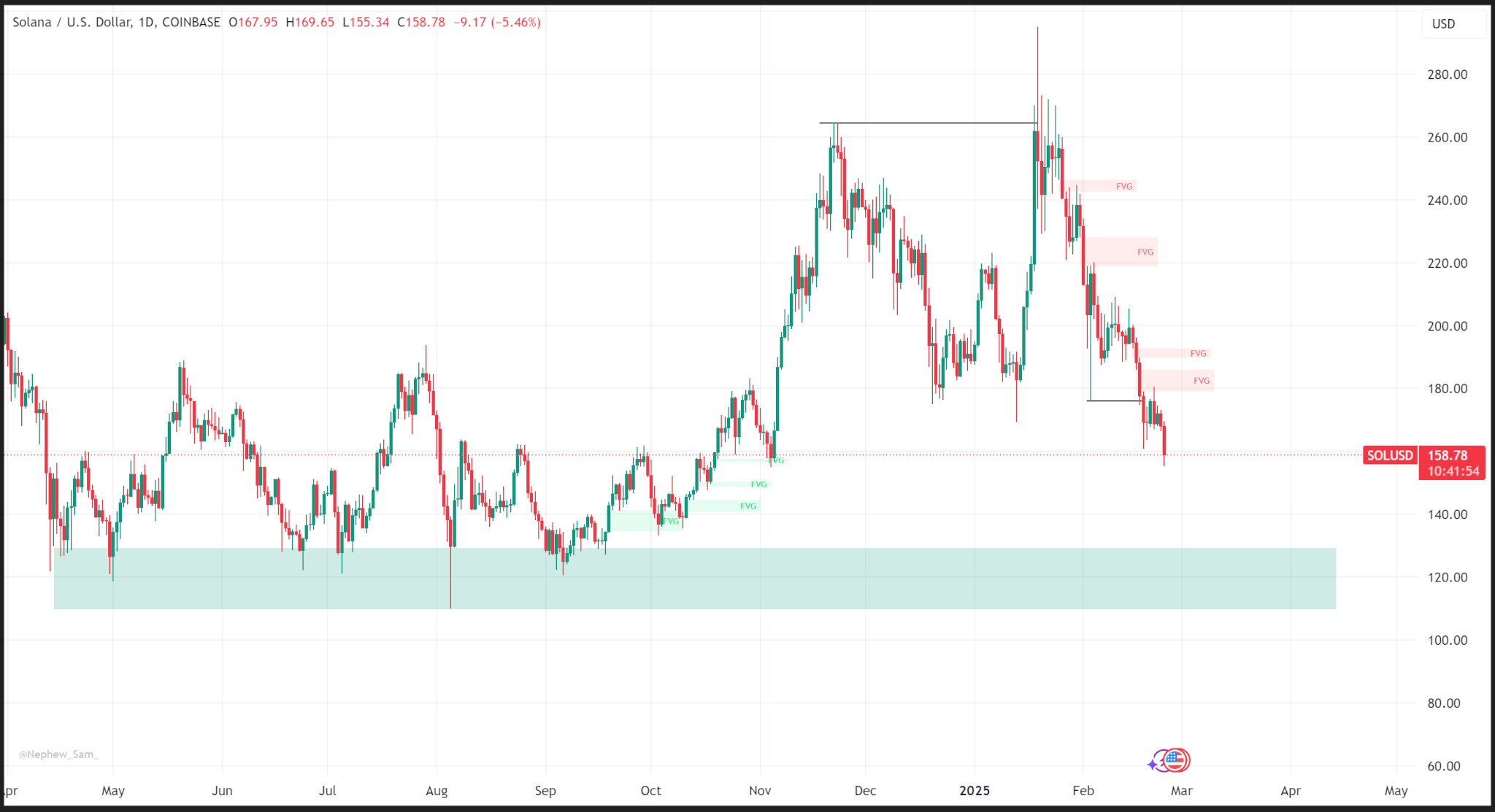
    Like Ethereum, Solana’s price has been declining since it failed to swing higher and form new candles above the last all-time high on the daily time frame.

    SOL/USD chart by TradingView

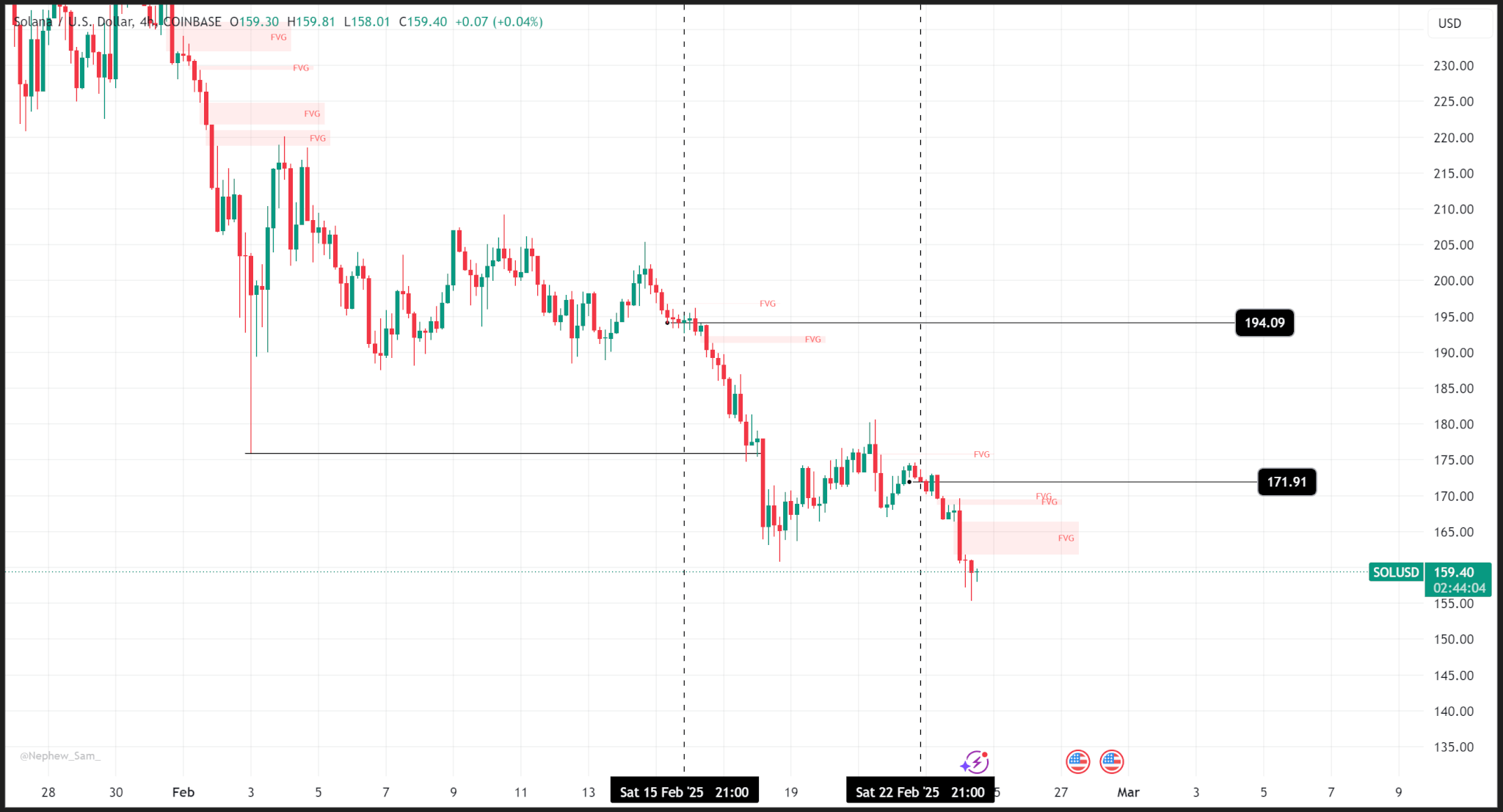
    Unlike Ethereum, last week’s price action was bearish as the price fell from a weekly open around $194 to a close around $171.

    SOL/USD chart by TradingView

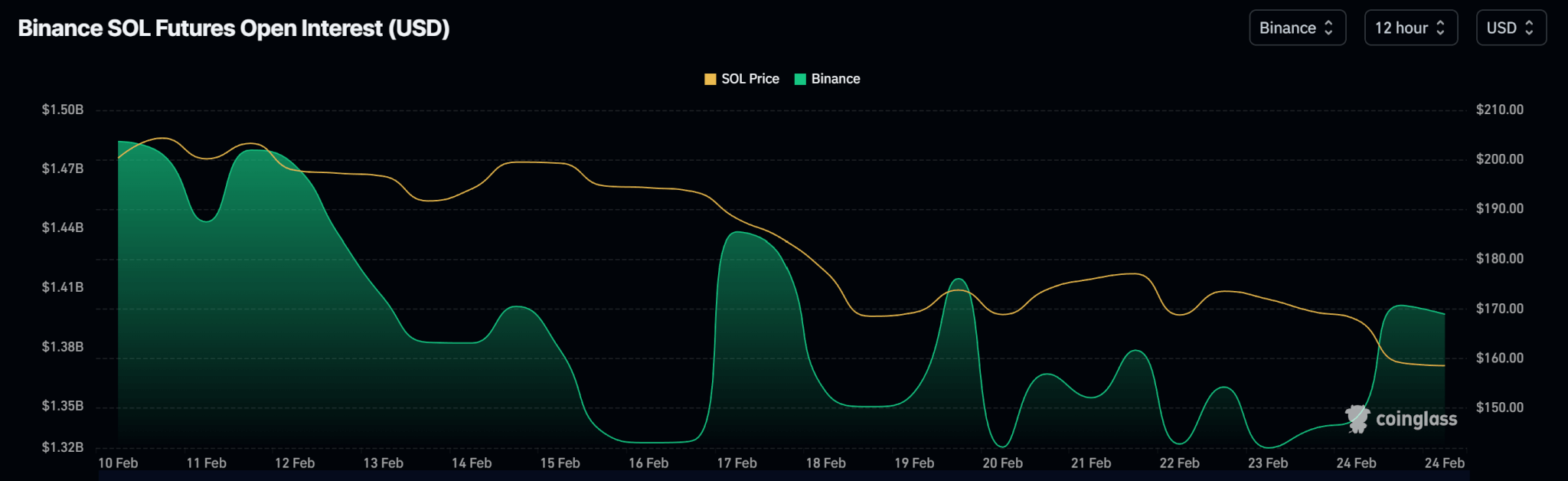
    Open interest charts show topsy-turvy movement in open contract volumes as the price falls.

    Binance SOL Futures Open Interest (USD) chart by Coinglass

    Outlook

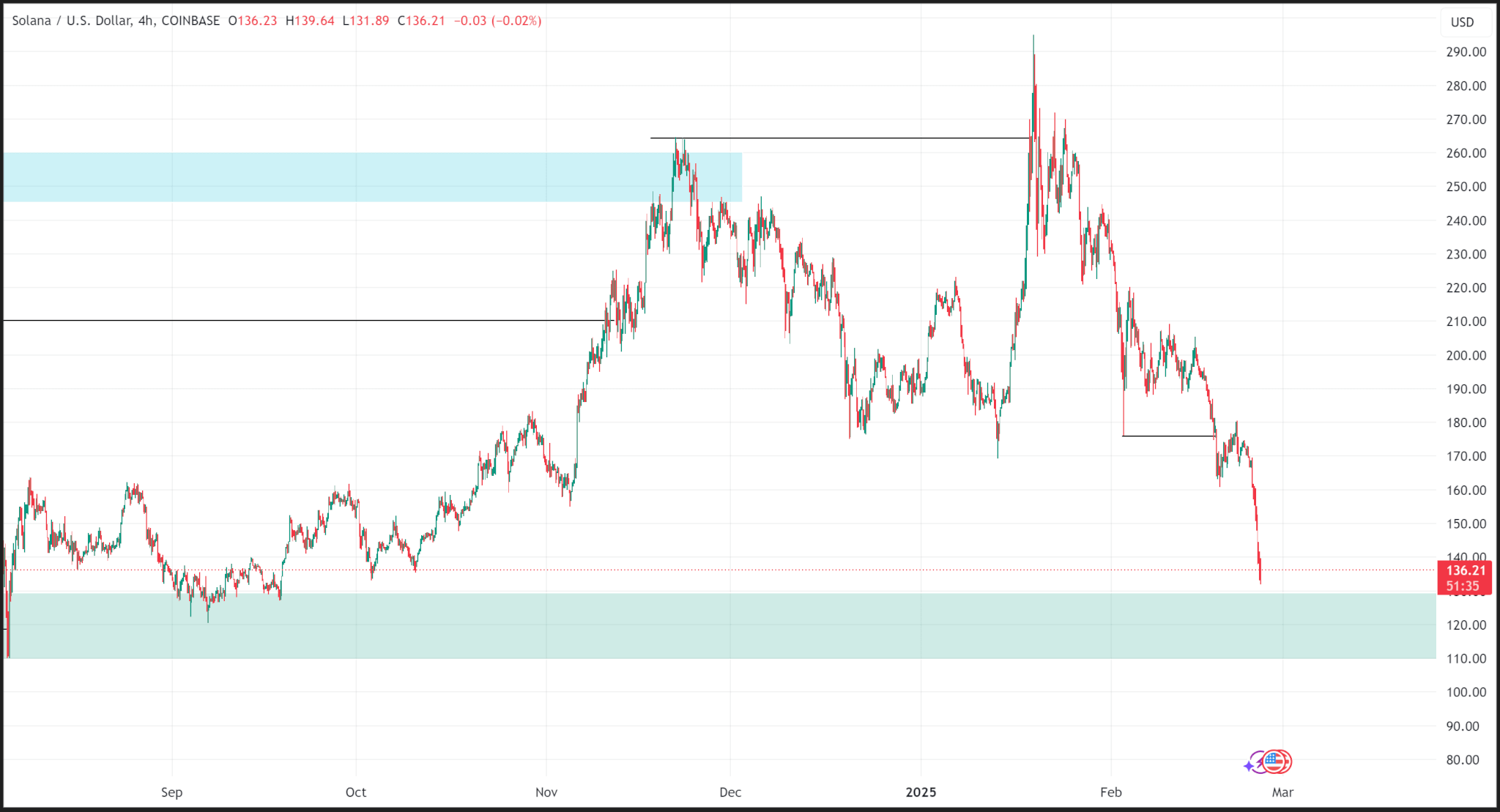
    The next major support zone for Solana is at the $129 level. However, we may see smaller rallies as price trends lower overall.

    SOL/USD chart by TradingView

    Source link

  • Bitflow brings AI-powered DeFi to Stacks with Automated DCA for Bitcoin and Runes

    Bitflow brings AI-powered DeFi to Stacks with Automated DCA for Bitcoin and Runes

    Bitflow brings AI-powered DeFi to Stacks with Automated DCA for Bitcoin and Runes

    • Bitflow launches Automated Dollar-Cost Averaging (DCA) for Bitcoin and Runes investments on Stacks.
    • The AI-powered DCA enables trustless, recurring investments.
    • Future plans include adding yield strategies and cross-layer flows.

    Bitflow, a decentralized exchange built on the Stacks ecosystem, has unveiled Automated Dollar-Cost Averaging (DCA), a groundbreaking feature that introduces AI-driven investment strategies to Bitcoin and its associated assets.

    The automated DCA allows users to automate recurring purchases of Bitcoin (BTC), stablecoins, Stacks’ native STX token, sBTC, and popular Runes tokens like $DOG, all while retaining complete control over their funds.

    Designed to simplify and enhance participation in the growing Bitcoin-native economy, Bitflow’s latest offering marks a significant milestone in decentralized finance (DeFi) on the Stacks Layer 2 network.

    Simplifying Bitcoin DeFi investment with automation

    At the heart of the Automated Dollar-Cost Averaging (DCA) is Bitflow Keepers, an intelligent automation engine that powers the DCA feature. This technology enables trustless, recurring transactions without requiring users to time the market or execute trades manually.

    By supporting a wide range of assets, including SIP-10 tokens and the memecoin sensation $DOG (DOG•GO•TO•THE•MOON), Bitflow ensures that users can diversify their portfolios seamlessly.

    For the first time, DeFi enthusiasts on Stacks can program their investment strategies, transforming Bitcoin into a dynamic, yield-generating asset.

    Particularly, Bitflow’s non-custodial design keeps transactions fully onchain, providing transparency and security while eliminating dependence on third-party intermediaries.

    Dylan Floyd, Bitflow’s Co-Founder and Lead Developer, emphasized the transformative potential of this feature, noting that Bitcoin DeFi is entering a new era of automation, where users can harness advanced tools to grow their holdings efficiently.

    Notably, the Automated DCA feature is the first step in a roadmap aimed at integrating AI-driven automation into DeFi. Upcoming enhancements will include automated yield farming strategies, enabling users to optimize returns on BTC-based assets without constant oversight.

    Plans are also in place for market-triggered swaps, which will allow traders to set conditions for executing transactions based on price movements or volatility, adding a layer of sophistication to Bitcoin trading.

    Additionally, Bitflow intends to improve liquidity by facilitating seamless asset transfers between Bitcoin’s Layer 1 and Stacks’ Layer 2, bridging the gap between the two ecosystems.

    This ambitious agenda underscores Bitflow’s role as a pioneer in the Stacks ecosystem, where it serves as a liquidity hub for trading Bitcoin assets.

    By incorporating Runes and SIP-10 tokens into its decentralized exchange, Bitflow is broadening the scope of Bitcoin-native finance, appealing to both seasoned traders and newcomers looking for efficient ways to engage with the market.

    Source link

  • Montana house representatives reject Bitcoin reserve bill

    Montana house representatives reject Bitcoin reserve bill

    Montana house representatives reject Bitcoin reserve bill

    • Montana House has rejected the Bitcoin reserve bill.
    • The Bitcoin reserve bill aimed for $50M in crypto.
    • The house cited risk to taxpayer funds.

    On February 22, 2025, Montana’s House of Representatives decisively voted down House Bill No. 429, a proposal that aimed to establish Bitcoin (BTC) as a state reserve asset.

    The 41-59 vote marked a significant setback for advocates of integrating cryptocurrency into Montana’s financial strategy, highlighting a deep divide over the role of digital assets in public finance.

    Introduced by Representative Curtis Schomer earlier in February, the bill sought to diversify the state’s investment portfolio by creating a special revenue account. This account would have allowed the state treasurer to allocate up to $50 million for investments in stablecoins, precious metals, and cryptocurrencies with a market capitalization exceeding $750 billion over the past year, a threshold currently met only by Bitcoin.

    Supporters argued that such a move could yield higher returns than traditional bond investments, positioning Montana as a forward-thinking player in the evolving financial landscape.

    Montana house representatives wary of risks involved

    Despite clearing the House Business and Labor Committee on February 19 with a 12-8 vote, backed by Republicans and opposed by Democrats, the bill faced stiff resistance during its second reading in the House.

    Fiscal conservatives, including many Republicans, voiced concerns over the speculative nature of Bitcoin, emphasizing the state’s duty to protect taxpayer money.

    Representative Steven Kelly captured this sentiment during the House Floor Session, stating, “It’s still taxpayer money, and we’re responsible for it. We need to protect it. These types of investments are way too risky.”

    Representative Jane Gillette echoed these doubts, pointing out that the bill lacked clear guidelines on how the funds would be managed, while Representative Bill Mercer warned that Bitcoin’s history of dramatic price swings made it an imprudent choice for public funds.

    On the other side, advocates like Representative Lee Demming argued that embracing digital assets could safeguard Montana’s reserves against inflation and bolster long-term financial growth, a perspective shared by Bitcoin proponents nationwide.

    The rejection of HB 429 effectively kills the proposal for now, requiring any future efforts to start anew in Montana’s legislature.

    US states push for Bitcoin reserves

    Montana’s decision stands in contrast to a growing trend among US states exploring Bitcoin as a reserve asset.

    Approximately 24 states, including Utah, Arizona, Oklahoma, Texas, and Ohio, have introduced similar legislation, with Utah’s HB230 making the most progress by allowing up to 5% of public funds to be invested in digital assets.

    Nationally and globally, the push for Bitcoin reserves is gaining traction, with countries like Switzerland, Brazil, Japan, and Russia also weighing the cryptocurrency’s potential as a strategic asset.

    Dennis Porter, CEO of the Satoshi Action Fund, which collaborated with Montana legislators like Schomer and Senator Daniel Zolnikov, expressed disappointment with Montana’s move but remained optimistic about the broader movement. He noted that Bitcoin’s decentralized structure and limited supply make it an attractive hedge against economic uncertainty.

    Source link

  • Franklin Templeton launches a Bitcoin and Ethereum index ETF

    Franklin Templeton launches a Bitcoin and Ethereum index ETF

    Franklin Templeton launches a Bitcoin and Ethereum index ETF

    • Franklin Templeton has launched EZPZ ETF tracking Bitcoin and Ether.
    • The EZPZ ETF is the second US crypto index ETF.
    • The other crypto index is Hashdex’s Nasdaq Crypto Index US ETF (NCIQ).

    Franklin Templeton, a prominent global asset manager, has introduced a new exchange-traded fund (ETF) that provides investors with exposure to both Bitcoin (BTC) and Ethereum’s Ether (ETH).

    Announced on February 20, 2025, the Franklin Crypto Index ETF, trading under the ticker EZPZ, marks the second crypto index ETF to launch in the United States, following closely on the heels of Hashdex’s Nasdaq Crypto Index US ETF (NCIQ), which debuted on February 14.

    The Franklin Bitcoin and Ether Index ETF

    The EZPZ fund is designed to track the US CF Institutional Digital Asset Index, a market capitalization-weighted benchmark managed by CF Benchmarks.

    As of its launch date, the index allocates approximately 87% of its weighting to Bitcoin — currently priced at $98,706 — while Ether, valued at $2,755, accounts for about 13%.

    Franklin Templeton has emphasized that this ETF offers a streamlined way for investors to gain exposure to these leading digital assets without the complexities of directly purchasing and managing them.

    Looking ahead, Franklin Templeton plans to expand the fund’s holdings as additional cryptocurrencies are incorporated into the underlying index, subject to regulatory approval. This forward-thinking approach positions EZPZ as a potential “one-stop-shop” for US investors seeking a diversified crypto portfolio through a single investment vehicle.

    The launch of EZPZ comes amid a wave of cryptocurrency ETF developments in the US. Hashdex’s NCIQ, trading on the Nasdaq, similarly focuses on Bitcoin and Ether with plans to broaden its scope over time.

    The broader market has also seen a surge in ETF filings throughout 2024, with asset managers submitting proposals for funds tied to altcoins such as Solana (SOL), XRP, and Litecoin (LTC).

    In October, NYSE Arca sought approval to list a Grayscale ETF based on the Grayscale Digital Large Cap Fund, a diversified crypto portfolio established in 2018 that includes Bitcoin, Ether, Solana, and XRP, among others.

    Additionally, Bitwise recently filed for a 10 Crypto Index Fund ETF with the SEC, further underscoring the growing demand for crypto investment vehicles.

    Analysts at Bloomberg Intelligence have expressed optimism about the regulatory outlook, suggesting “relatively high odds of approval across the board” for these new crypto ETF proposals. This momentum highlights a pivotal moment for the integration of digital assets into traditional finance, offering investors more accessible and regulated options to participate in the crypto market.

    Franklin Templeton’s entry into the crypto ETF space with EZPZ signals both the firm’s confidence in the maturing digital asset ecosystem and the increasing appetite among mainstream investors for cryptocurrency exposure. As the index evolves and regulatory hurdles are cleared, EZPZ could pave the way for broader adoption of crypto-focused ETFs, bridging the gap between conventional investment strategies and the rapidly expanding world of blockchain-based assets.

    For now, the fund stands as a milestone in making Bitcoin and Ether more accessible to US investors, with the promise of further growth on the horizon.


    Source link