Author: BTCLFGTEAM

  • Nillion (NIL) price crashes 50% after unauthorized market-maker sell-off

    Nillion (NIL) price crashes 50% after unauthorized market-maker sell-off

    Nillion Price Crash

    • Nillion price fell more than 50% as altcoins battled sell-off pressure.
    • The team has accused a market maker of dumping the platform’s native token.
    • Despite the price dump, the team has initiated a token buyback using treasury funds.

    The price of Nillion (NIL), a token associated with a private computing network that champions data privacy, has crashed sharply over the past 24 hours.

    As cryptocurrencies tanked amid macro jitters, the small-cap token’s price plunged from above $0.21 to under $0.10. Sellers touched lows of $0.0.086.

    NIL’s brutal 50% crash was accompanied by a staggering 680% jump in daily volume. A panicked market saw Nillion price dumping, and accelerated on Wednesday as  nearly $200 million in sell-side volume brutalized buyers. 

    But why such aggressive selling for the native token of the private computing network?

    NIL price crashes by over 50%: what happened?

    On November 20, 2025, the Nillion team released a statement on X.

    According to the platform, the sharp drop that saw NIL suffer a bloodbath happened as a market maker sold huge chunks of the token.

    This sale was allegedly authorized. The post did not name the entity in question.

    However, it alleged the partner switched off communication both as they sold and after the price-impacting event. 

    “If you were surprised by yesterday’s price action, you’re not alone,” the team noted. “Our entire team was confused until we realized what happened: a market maker sold NIL tokens without legal authorization from the Nillion Association. Then, refusing to respond to any team communications during the flash sale and hours following.”

    To help mitigate the impact, Nillion said it has deployed treasury funds to buy back tokens.

    Meanwhile, collaboration with exchanges has helped freeze accounts and wallets tied to the dumping. The project is also taking legal action.

    Nillion price outlook

    NIL ranks as one of the biggest losers across the crypto market in the past 24 hours, with current declines over the period at 36% at the time of writing.

    After the initial price dump to lows of $0.086, NIL bulls attempted a swift bounce.

    However, the brief gains faded at $0.14. Price is up 37% from that intraday low, but the recovery has stalled, and NIL hovers just above $0.118.

    Nillion Price Chart
    NIL price chart by CoinMarketCap

    Price has traded above this mark for much of the day, and technically, it appears buyers are exhausted.

    Sentiment is down, and the path of least resistance could be lower. Overall, downbeat sentiment for most altcoins suggests NIL may break below $0.10 again.

    Nillion price reached an all-time high of $0.95 in March 2025, which means current price levels are more than 87% off that peak. The token traded above $0.24 earlier in the week and above $0.33 in October.

    Source link

  • Bitcoin just hit a critical point: analysts split between $85K crash and $250K surge

    Bitcoin just hit a critical point: analysts split between $85K crash and $250K surge

    Bitcoin price just hit a critical point

    • Bitcoin trades near $92K amid mixed signals from ETFs and tech markets.
    • Hoskinson and Saylor predict a strong BTC rebound despite recent losses.
    • ETF outflows and macro risks could, however, push BTC toward $85K support.

    While Bitcoin price has recovered from the low of $88,540 hit on November 19, the question is whether it will hit a higher high than the $93,403 registered on November 18.

    Some analysts believe BTC is preparing for a deeper slide, while others insist a powerful rebound is already forming beneath the surface.

    At press time, BTC price was around $92,237 and already showing signs of exhaustion, which would spell doom since it formed a lower low on November 19, which is a bearish sign.

    Bullish calls grow despite the slide

    At $92,237, Bitcoin (BTC) is reeling from a bruising stretch that has erased more than $33,000 from its value in under two months.

    Notably, today’s uptick follows a pause in ETF outflows and a rebound in tech stocks, driven by Nvidia’s stronger-than-expected earnings.

    While the market remains on edge as macro uncertainty and shifting liquidity conditions continue to pressure risk assets, Cardano founder Charles Hoskinson remains one of the strongest voices calling for a major rebound.

    During CNBC’s Squawk Box show on Tuesday, Hoskinson argued that Bitcoin’s recent losses reflect broader macro distortions, including tariff tensions, recession risks, and uneven regulatory signals.

    Hoskinson believes these forces will ease in the coming months.

    He expects BTC to recover sharply and potentially hit $250,000 within the next year, projecting that institutional adoption and large-scale tokenisation will redefine market cycles.

    Michael Saylor shares a similar level of confidence, viewing the current downturn as typical of Bitcoin’s long-term behaviour.

    The MicroStrategy executive says the company is built to withstand extreme drawdowns, calling his position “indestructible” in a recent interview with Fox Business.

    Notably, Saylor has continued to buy BTC even as volatility increases, reinforcing his view that deep corrections are part of the broader path toward higher valuations.

    ETF activity has also become a pivotal factor.

    The BlackRock Bitcoin ETF posted a record $523 million daily loss on November 18 following a streak of outflows across the spot Bitcoin ETF landscape.

    Total Bitcoin Spot ETF Net Inflow
    Total Bitcoin Spot ETF Net Inflow | Source: Coinglass

    The Bitcoin ETFs outflow seems to have stabilised, with IBIT seeing $60M worth of inflows on November 19.

    Analysts warn that sustained inflows will be essential if Bitcoin hopes to avoid a retest of this week’s lows.

    Bearish risks still loom

    Not all signals point upward. Some traders see a real chance BTC could break below key support levels near $90,000.

    If the market fails to hold this support, prediction platforms indicate rising expectations of a drop toward $87,000.

    ETF outflows totalling more than $3 billion this month highlight lingering caution, and many retail participants remain hesitant after weeks of drawdowns.

    Macro conditions remain complicated.

    Expectations of Federal Reserve rate cuts have faded, while recession concerns are resurfacing due to weak jobs data and ongoing trade friction.

    These pressures have limited upside momentum even as Nvidia’s tech rally briefly boosted risk appetite.

    Despite the uncertainty, Bitcoin continues to trade like a high-beta asset tied closely to broader market sentiment, and the next few days may determine whether buyers regain control or whether sellers will test new lows.


    Source link

  • Bitcoin slides below $90K as crypto correction becomes one of the worst since 2017

    Bitcoin slides below $90K as crypto correction becomes one of the worst since 2017

    Bitcoin sinks below $90K as a sharp 43-day selloff wipes out 2025 gains, driven by liquidations, ETF outflows, and rising fear.

    • Bitcoin plunges below $90K, erasing all gains for 2025.
    • ETF outflows and leverage-driven liquidations deepen the selloff.
    • Sentiment hits “Extreme Fear” as crypto markets shed over $1T.

    Bitcoin crashed below $90,000 on Wednesday, marking a devastating 28% decline from its early October peak above $126,000.

    The plunge has erased all of crypto’s 2025 gains and pushed the largest cryptocurrency into bear market territory.

    Ethereum tumbled 6% to below $3,000, while the broader crypto market saw roughly $1.2 trillion in value evaporate over recent weeks.

    Analysts say this 43-day drawdown now ranks among the steepest corrections since 2017, with forced liquidations and ETF outflows accelerating the selloff.

    The unwind feels sudden, given that Bitcoin looked unstoppable just six weeks ago.​

    What makes this collapse particularly brutal is how thoroughly it dismantles the bull narrative. Trump was supposed to be the “crypto president.”

    The spot Bitcoin ETF was supposed to unlock institutional buying. Instead, Bitcoin is negative for 2025, down 2% after climbing as high as +35% in October.

    Investors who chased breakouts above $120,000 are now underwater. That kind of momentum reversal breeds panic and forces margin calls.​

    The liquidation cascade: Why leverage turned this into a bloodbath

    The mechanics of the crash tell you everything. K33 Research’s Vetle Lunde noted that “steady outflows from ETFs have also added fuel to the selloff.”

    US spot Bitcoin ETFs shed nearly $2.3 billion over five consecutive sessions. That’s redemptions from big institutions that are simply walking away. When the largest buyers start selling, smaller traders follow in a herd stampede.​

    The real damage comes from leverage. The government shutdown eliminated key economic data, creating a data vacuum.

    Without employment numbers and inflation prints, the Fed’s December rate-cut decision became genuinely uncertain. Suddenly, the “rate cuts will save crypto” thesis evaporated.

    Leveraged long positions got liquidated in cascading forced sales. When Bitcoin swept below the average cost basis of spot Bitcoin ETFs, algorithmic selling kicked in.​

    Sentiment has completely inverted. The Crypto Fear and Greed Index remains pinned at “Extreme Fear,” the lowest it has been.

    Retail investors who bought near $125,000 are watching unrealized losses mount. Long-term holders haven’t capitulated yet, but the on-chain data is starting to show cracks.​

    Where does Bitcoin bottom? Analysts map out ugly scenarios

    Lunde’s base-case scenario puts support between $84,000 and $86,000, but that’s if this correction mirrors recent downturns.

    If it gets worse, if it mirrors the two deepest corrections in the past two years, Bitcoin could revisit April’s lows near $74,000, where MicroStrategy’s average entry sits.​

    The truly bearish case opens the door to an 80% drawdown from recent highs. That would put Bitcoin in the $20,000–$25,000 zone, but analysts say that needs a full credit crisis to materialize.

    Right now, stocks are holding up. Risk assets aren’t in freefall. That limits how low crypto can go without broader carnage.​

    For now, Bitcoin is stuck between competing forces. Long-term holders are accumulating at these levels. Institutions aren’t panicking enough to dump entirely.

    But neither are they buying aggressively. Without a macro catalyst, a Fed pivot, tariff relief, or genuine AI-driven productivity gains, Bitcoin likely stays volatile and sloppy until early 2026.

    Source link

  • Bitcoin ATMs appear in Nairobi malls as Kenya’s new crypto law faces early compliance test

    Bitcoin ATMs appear in Nairobi malls as Kenya’s new crypto law faces early compliance test

    Bitcoin ATMs appear in Nairobi malls as Kenya’s new crypto law faces early compliance test

    • They appeared soon after the Virtual Assets Service Providers Act of 2025 took effect.
    • CoinATMradar currently lists two Bitcoin ATMs in Kenya.
    • The Central Bank of Kenya and the Capital Markets Authority say no VASP is licensed yet.

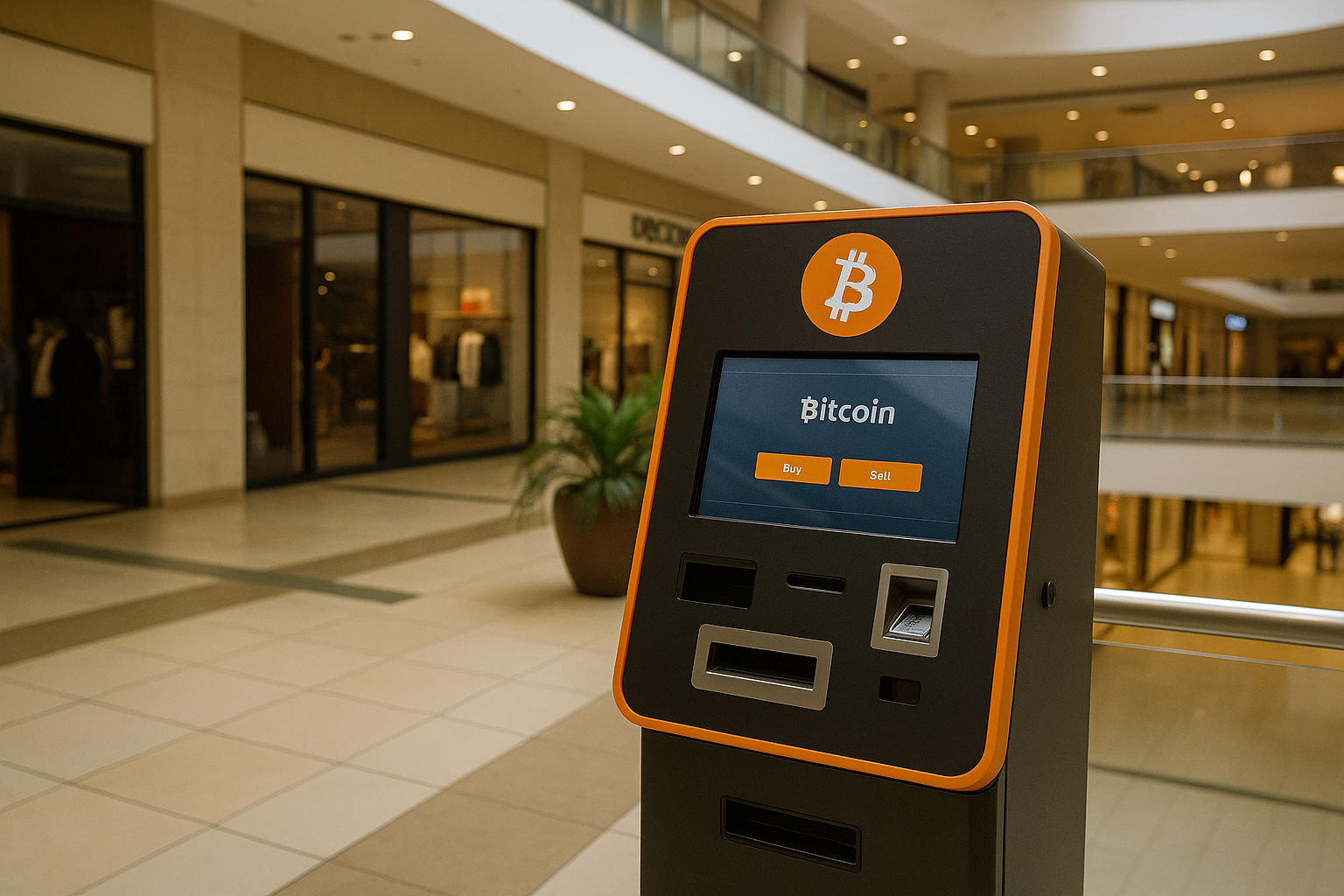
    Bitcoin ATMs have surfaced across major shopping malls in Nairobi, only days after Kenya activated its first comprehensive crypto law, creating an unexpected test for regulators who have not yet authorised any crypto provider to operate.

    The machines, branded Bankless Bitcoin, appeared beside traditional bank kiosks and offered cash to crypto services to shoppers.

    Their arrival coincides with the early phase of Kenya’s Virtual Assets Service Providers Act of 2025, which came into effect on 4 November and set the first formal rules for crypto businesses.

    Gaps in licensing

    Local outlet Capital News confirmed that multiple malls in Nairobi had new machines installed, expanding beyond earlier attempts to introduce crypto ATMs in Kenya.

    In 2018, The East African reported that BitClub deployed Bitcoin ATMs in the city, although the machines never reached mainstream retail spaces and adoption remained limited.

    Kenya currently has two reported Bitcoin ATMs, making the latest installations notable for their placement in high-traffic commercial environments.

    Regulators signal caution

    The new law assigns oversight responsibilities to two regulators. The Central Bank of Kenya will handle payment and custody functions, while the Capital Markets Authority will regulate investment and trading activity.

    However, the regulations required to begin licensing crypto firms have not yet been issued.

    In a joint notice released on Tuesday, the Central Bank of Kenya and the Capital Markets Authority stated that they have not licensed any VASP to operate in or from Kenya under the new Act.

    They also warned that companies claiming authorisation are doing so without approval.

    The National Treasury is developing the regulatory framework that will decide when licensing can begin, placing operators in a temporary environment where the law exists but permissions do not.

    This creates a visible gap. Bitcoin ATMs are entering public spaces even as regulators tell the public that no provider has met the requirements laid out in the law.

    The contrast places pressure on authorities to clarify enforcement and could shape how crypto firms approach compliance in the near term.

    Informal use grows

    The spread of Bitcoin ATMs into high end malls highlights Kenya’s evolving crypto landscape.

    Capital News reported that Bitcoin usage has long been active in lower income neighbourhoods such as Kibera, where residents use BTC as a form of banking in areas with limited access to formal financial services.

    People have relied on crypto to store value without extensive documentation or traditional banking infrastructure.

    The shift from informal areas to upscale malls suggests that consumer interest is expanding even while regulatory conditions remain unsettled.

    The coexistence of visible infrastructure and incomplete licensing rules places Kenya at an early crossroads as it moves from a largely informal crypto market to a regulated one.

    Source link

  • Starknet nosedives 20% amid broader crypto crash: is STRK done plummeting?

    Starknet nosedives 20% amid broader crypto crash: is STRK done plummeting?

    Starknet Price Bearish

    • Starknet price dropped sharply as top cryptocurrencies tumbled to key support levels.
    • On November 18, 2025, STRK plunged nearly 20% to touch lows of $0.17. 
    • STRK plunged as Bitcoin dropped to lows of $89,500.

    Starknet’s native token took a sharp hit as cryptocurrencies bled on Monday, November 17, 2025, with bears extending the dip to Tuesday as STRK plunged nearly 20% to lows of $0.17. 

    At the time of writing, Starknet traded 14% down in 24 hours at around $0.19. The decline contrasted with gains for Internet Computer, Hyperliquid, and others.

    Notably, the altcoin mirrored losses for Zcash, the top privacy coin by market cap, which was also seeing notable profit taking.

    Starknet nosedived 20% amid a broader crypto crash

    As the crypto market entered freefall on November 17, Starknet price plummeted.

    Triggered by a number of factors, including macro jitters and geopolitical tensions, amplified selling pressure across major assets cascaded into altcoins.

    For instance, Bitcoin, the bellwether of the market, shed more than 4% to drop to a low of $89,500.

    The move saw the global market cap fall to $3.13 trillion. Trading volume rose 45% on Nov. 18 to over $247 billion, with the Ethereum price falling to lows of $3,000.

    XRP, BNB, and Solana all recorded significant drops, pushing liquidations to above $1 billion globally.  

    Starknet, which rose amid recent privacy coin gains, followed suit.

    The zero-knowledge proofs-powered layer 2 solution saw its STRK token fall from highs of $0.22 to $0.17. Nosediving 20% allowed bears to erase much of the token’s recent 50% rally.

    As the chart below shows, Starknet price recently notched four straight green daily candles as price touched  high of $0.24. Following Monday’s dip, weekly gains are currently down to about 22%.

    Starknet Price Chart
    Starknet price chart by TradingView

    Is STRK done plummeting?

    Market observers note that while Starknet’s TVL (total value locked) remains robust at over $340 million, the token’s correlation with Bitcoin, left it exposed to the flagship coin’s volatility.

    The timing couldn’t be worse for Starknet. 

    Just this week, the project announced a multi-million dollar program aimed at Bitcoin staking. The milestone aims to bridge the Ethereum and Bitcoin ecosystems through Starknet’s BTCFi offering. 

    As the crypto market dusts off some of the sell-off pressure, finding a floor near the $0.16-$0.17 mark could be crucial for bulls.

    If this happens, STRK could eye $0.24 and potentially one year highs above $0.78. The main target in the short term remains the psychological $1 level.

    The platform’s Bitcoin integration positions it uniquely for cross-chain growth. Bitcoin DeFi growth, especially as Ethereum’s upgrades enhance layer-2 efficiency, adds to the bullish outlook.

    However, in the short term, risks such as a prolonged Bitcoin bear market could allow sellers to seek more pain.

    Bulls saw STRK price fall to an all-time low under $0.04 on October 10, 2025. Current prices nevertheless hover about 305% up since.

    Source link

  • Hong Kong crypto rules attract global banks as AMINA wins new approval

    Hong Kong crypto rules attract global banks as AMINA wins new approval

    Hong Kong crypto rules attract global banks as AMINA wins new approval

    • The licence covers 13 cryptocurrencies, including Bitcoin, Ether, USD,C and Tether.
    • AMINA reported a 233% increase in Hong Kong trading volumes in early 2025.
    • Hong Kong launched new stablecoin rules and approved a Solana ETF this year.

    Hong Kong’s push to build a regulated digital asset market is drawing more interest from global financial institutions, and the latest example is Swiss crypto bank AMINA Bank AG securing approval to expand its services in the city.

    The bank received a Type 1 licence uplift from the Securities and Futures Commission, which makes it the first international bank allowed to offer regulated crypto trading and custody to institutional clients in Hong Kong.

    The move strengthens the city’s position as a regional digital asset hub and highlights rising demand for bank-grade crypto services among professional traders.

    AMINA plans to use the approval to provide institutional users with a regulated route into cryptocurrencies at a time when clients are looking for stronger safeguards and clearer rules.

    Hong Kong’s compliance standards have often limited the number of foreign institutions able to offer these services, which has left a gap in the market for firms with established banking frameworks.

    AMINA’s entry aims to fill that gap while giving clients a regulated platform backed by traditional financial infrastructure.

    AMINA expands in a fast growing market

    The licence uplift allows AMINA’s Hong Kong subsidiary to offer trading and custody for 13 cryptocurrencies.

    These include Bitcoin, Ether, USDC, Tether, and several leading decentralised finance tokens that are widely used across global exchanges.

    The approval creates new opportunities for institutional clients looking for a single regulated venue with access to a curated list of major digital assets.

    AMINA also reported a sharp rise in market activity.

    The bank recorded a 233% increase in trading volume on Hong Kong crypto exchanges in the first half of 2025.

    The increase points to stronger engagement from both institutional and retail segments, which are becoming more active as Hong Kong’s regulatory environment evolves.

    The bank expects the new approval to support a wider product range.

    It plans to expand into private fund management, structured crypto products, derivatives, and tokenised real-world assets.

    These additions would place AMINA among the firms offering institutional clients diversified exposure across multiple types of digital assets.

    Local players face new global competition

    While AMINA is the first international bank to receive this specific licence upgrade, it enters a competitive market.

    Hong Kong already hosts regulated local firms such as Tiger Brokers and HashKey, which serve institutional and retail clients under earlier permissions.

    AMINA’s approval signals that the market is open to more foreign institutions, which could change competitive dynamics for both global and local providers.

    Hong Kong officials have said on multiple occasions that attracting global firms is central to the city’s digital asset strategy.

    AMINA’s arrival may encourage more banks and brokerages abroad to consider similar applications as they assess opportunities in Asia’s regulated crypto markets.

    Policy changes shape Hong Kong’s crypto framework

    AMINA’s approval arrives during a period of rapid policy development in the city.

    Hong Kong introduced its new stablecoin rules in August, creating a formal licensing pathway for issuers.

    Following this, major regional banks such as HSBC and ICBC indicated they were examining licence applications as part of their digital asset plans.

    The city also approved its first Solana exchange-traded fund in late October.

    The approval placed Hong Kong ahead of the US in allowing a regulated Solana ETF and added another product to its growing list of crypto-linked investment options.

    Hong Kong tightened rules around self-custody of digital assets in August.

    The change focused on improving cybersecurity protections and reducing risks tied to individual key management.

    The decision was presented as a safety measure rather than a restriction on user access.

    The combination of new rules and rising institutional interest has created an environment that is now attracting more global firms.

    AMINA’s regulatory progress adds momentum to Hong Kong’s strategy of balancing strong compliance with market expansion.

    Source link

  • Crypto loopholes across Canada enable silent cash transfers

    Crypto loopholes across Canada enable silent cash transfers

    Crypto loopholes across Canada enable silent cash transfers

    • A Toronto outlet handed over $1,900.00 in cash using only a $5 bill for verification.
    • Ukraine-based exchange 001k offered to deliver $1,000,000.00 in cash in Montreal.
    • Over 20 crypto-to-cash services were found operating unregistered across Canada.

    A report by CBC has revealed how Canada is witnessing the rise of unregulated crypto-to-cash services that enable large-scale anonymous financial transfers.

    These operations not only bypass anti-money laundering laws but also establish an untraceable money trail that financial intelligence agencies are unable to track.

    Across cities from Toronto to Montreal, crypto platforms are facilitating discreet cash handovers worth thousands and even millions, without requiring any identification from users.

    Despite rules that demand full verification for transactions over $1,000.00, services continue to hand over cash using only minimal confirmation.

    Experts have raised alarm over the role of these services in enabling potential money laundering, illicit trade, and financial crime.

    Investigative efforts have now revealed how this silent financial movement is escaping oversight in plain sight.

    Crypto-for-cash deals avoid ID checks

    In one midtown Toronto branch of a registered money transfer business, a $1,900.00 cash pickup was arranged through encrypted messages using the Telegram app.

    The only verification required was a photo of a Canadian $5 bill.

    The customer, who had earlier transferred 2,000 tether tokens to Ukraine-based crypto exchange 001k, showed the physical bill and received $100 notes from the teller with no further questions.

    Such transactions breach Canada’s anti-money laundering regulations, which require personal identification and transaction documentation for any transfer exceeding $1,000.

    The company later claimed that the arrangement had been made by a rogue manager using personal funds off the official books.

    The teller involved, they said, acted without knowledge of the transaction’s real nature.

    001k is not registered with FINTRAC, the Canadian financial intelligence agency, and therefore is not legally permitted to conduct business with Canadians.

    Yet the transaction went ahead and passed under the regulatory radar.

    Platforms offer million-dollar handovers

    The same pattern was uncovered in Montreal.

    Journalists engaged in anonymous conversations with crypto services, including 001k and another unnamed provider.

    Both offered to deliver $1,000,000.00 and $890,000.00 in cash, respectively, in exchange for tether sent to designated wallets.

    No identification was asked for at any stage.

    These platforms operate online, contactable via web directories and Telegram channels.

    Many advertise in plain sight and offer face-to-face cash deals in locations ranging from Halifax to Vancouver.

    According to experts, more than 20 such services were found in Canada, most operating without proper registration or regulatory checks.

    Despite Canada’s attempt to regulate the sector through FINTRAC, enforcement remains limited.

    The agency oversees over 2,600 registered money service businesses, but lacks the resources to track unregistered and underground operators.

    A growing global laundering channel

    Crypto analysis firm Crystal revealed to CBC that crypto-to-cash services in Hong Kong alone processed $2.5 billion in 2024.

    Canada’s rapidly growing market could mirror that figure if enforcement continues to lag.

    With the rise of digital tokens like Bitcoin, Ethereum, and Tether, it has become easier for money to move across borders and be converted into untraceable cash.

    Law enforcement depends on access to user identity at the point where crypto enters or exits the system.

    When transactions are carried out without registration, those points vanish, and the blockchain’s transparency becomes meaningless.

    Investigators lose visibility once digital assets are converted into physical currency anonymously.

    The flexibility of these services creates risk.

    Anyone can now move large sums in or out of Canada without detection, including organised crime networks and individuals involved in illegal activity.

    Without active compliance monitoring, these transactions take place without leaving any traceable connection.

    Canada struggles to enforce crypto regulations

    Canadian regulators are under-equipped to deal with the scale of the problem.

    Crypto platforms can connect users in seconds, bypassing traditional financial systems and enabling instant access to large volumes of cash.

    FINTRAC’s oversight is stretched, and its inability to track foreign operators or monitor encrypted platforms like Telegram leaves a major gap in financial security.

    The use of small signals, like a $5 bill serial number, to validate multi-thousand-dollar exchanges highlights just how far removed these services are from compliance.

    Unless significant regulatory action is taken, Canada could continue to serve as a silent hub for crypto cash transfers that avoid scrutiny, recordkeeping, and legal obligations.

    Source link

  • Kiyosaki defends Bitcoin and warns Wall Street as crypto volatility returns

    Kiyosaki defends Bitcoin and warns Wall Street as crypto volatility returns

    Kiyosaki defends Bitcoin and warns Wall Street as crypto volatility returns

    • Kiyosaki accused Wall Street of promoting paper assets that benefit insiders.
    • He said gold, silver, and Bitcoin provide value outside institutional control.
    • His Bitcoin forecast puts the price at $250,000 by 2026.

    As volatility grips the crypto market again, Rich Dad Poor Dad author Robert Kiyosaki has stepped up in defence of Bitcoin and decentralised assets.

    Amid renewed price swings and public doubt over digital currencies, Kiyosaki argued that Bitcoin remains a hedge against centralised financial systems and inflation.

    He described it as “people’s money,” contrasting it with what he calls “fake money” issued by the US Federal Reserve and Treasury.

    While Warren Buffett’s past criticisms labelling Bitcoin as “gambling” resurfaced online, it was Kiyosaki’s response that reignited debate across financial communities.

    His message was clear: the fault lies not with crypto, but with a broken fiat system that he believes Wall Street continues to uphold.

    Fiat risks and distrust in institutions

    Kiyosaki has long rejected the idea that centralised institutions should be the backbone of wealth.

    In his view, the real danger to investors is not Bitcoin’s volatility, but the ongoing reliance on a system driven by inflation and debt.

    He warned that assets like stocks and bonds, frequently promoted by institutional investors, are just as vulnerable to collapse.

    According to him, the core issue is trust. While traditional markets claim to offer safety, Kiyosaki sees them as tools that enrich the powerful while exposing regular people to risk.

    This, he argues, is why decentralised assets like Bitcoin and Ethereum are gaining ground—they provide financial autonomy in an unstable environment.

    He classifies gold and silver as “God’s money” and Bitcoin as “people’s money,” highlighting their independence from government control and printing presses.

    With Bitcoin capped at 21 million coins, Kiyosaki says it offers protection that fiat currencies simply cannot match.

    Kiyosaki’s challenge to the financial establishment

    As Wall Street continues to sell institutional products, Kiyosaki is urging people to reconsider what really holds value.

    He questioned how long investors can trust paper-based assets in a world where central banks can print currency without limits.

    He emphasised that real-world necessities cannot be replaced with financial abstractions.

    “You cannot live in a paper house, drive using paper fuel, or eat paper food,” he wrote, pointing to the artificial nature of fiat-based wealth.

    By comparison, assets like Bitcoin offer a limited-supply, decentralised alternative that he believes is better suited to survive economic instability.

    Bitcoin prediction and market direction

    Amid the broader market uncertainty, Kiyosaki has also made a bold forecast. He predicts Bitcoin could reach $250,000 by 2026, a significant rise from its current level around $95,600.

    While this projection is speculative, it aligns with his belief that decentralised assets will outperform as trust in fiat continues to erode.

    Though Warren Buffett’s view of Bitcoin as speculative persists, Kiyosaki’s message offers a pointed challenge to the financial status quo.

    His comments reflect a growing shift in investor sentiment, where control, transparency, and scarcity are seen as more valuable than institutional assurance.

    Source link

  • Bitcoin Cash price prediction: eyes on the $460 demand zone if support gives way

    Bitcoin Cash price prediction: eyes on the $460 demand zone if support gives way

    Bitcoin Cash price under bear preassure

    • Bitcoin Cash price is under selling pressure, testing support near $470.8 and $460.3.
    • Bitcoin pullback and market fear amplify downside risks for the BCH price.
    • Key resistance sits at $528.85, with potential upside if support holds.

    Bitcoin Cash price has come under significant pressure in the past 24 hours, with BCH slipping to $491.09 following a series of technical setbacks and broader market weakness.

    After failing to hold above the $530 resistance level, Bitcoin Cash (BCH) has seen selling momentum intensify, as a result of technical profit-taking and the influence of the Bitcoin price pullback.

    Eyes are now on whether BCH can stabilise above critical support levels or if the selling pressure will push the cryptocurrency toward lower demand zones.

    BCH struggles under resistance amid bear pressures

    On November 13, Bitcoin Cash surged to $532 but faced rejection at the $530–$532 zone, failing to sustain a breakout.

    The cryptocurrency’s inability to remain above the 200-day EMA at $510.56 led to a break below the crucial $515 support, triggering algorithmic sell orders.

    Technical indicators such as the MACD, which remains below its signal line, have reinforced bearish momentum, while a close below the 61.8% Fibonacci retracement at $500.23 has invalidated the short-term bullish structure.

    Traders should now watch closely for a reclaim of $515 to stabilise prices, although a drop below $480 could open the door to deeper corrections.

    Bitcoin price pullback drags BCH lower

    BCH had not been immune to the broader weakness in the crypto market.

    However, Bitcoin’s rejection near $107,000 caused capital rotation away from riskier altcoins, with Bitcoin Cash (BCH) showing a 30-day correlation of 0.89 to Bitcoin (BTC).

    This strong correlation amplified the downside, contributing to a 24-hour trading volume surge of 10.58% to $523 million as traders exited positions amid panic selling.

    Market-wide risk aversion has further fueled the decline, with derivatives data showing a 4.58% drop in BCH futures open interest and overall spot volumes falling by more than 21%, reflecting low conviction across the market.

    The Crypto Fear & Greed Index, sitting at 22, indicating “Extreme Fear,” has also intensified the bearish sentiment.

    Bitcoin Cash price short-term outlook

    On shorter timeframes, the 6-hour chart highlights heavy selling momentum as BCH nears critical support.

    The immediate support around $470.8 is under pressure, with a notable demand zone at $460.3 potentially acting as a floor for buyers.

    Resistance is positioned near $528.85, though the price has shown limited strength to test it.

    A confirmed reversal pattern above 470.8 could prompt a retracement toward $528.85, but without clear bullish signals, further decline toward the 460.3 demand zone is likely.

    Bitcoin price analysis
    Bitcoin price chart | Source: CoinMarketCap

    Traders are advised to watch for momentum shifts before entering new positions, as failure to hold support could result in accelerated downside movement.

    Longer-term resistance levels also frame the narrative for the BCH price.

    According to market analysis, holding above $473.62 is crucial for any upward movement toward $493.23, and surpassing that could pave the way to $528.85, with $544.23 marking the third resistance target.

    Conversely, if $473.62 fails to hold, BCH may slide toward the next support at $444.75, underscoring the importance of this critical level in guiding near-term market behaviour.

    Traders and investors should keep a close eye on momentum shifts, as failure to hold key support could lead BCH toward lower levels, while maintaining stability could allow for a measured rebound.

    For those tracking market dynamics, understanding the interplay between Bitcoin Cash price and broader crypto movements remains critical in anticipating potential swings and making informed decisions.

    Source link

  • Plume network crashes to new all-time low as crypto sell-off deepens

    Plume network crashes to new all-time low as crypto sell-off deepens

    Plume Price Flames

    • PLUME hit an all-time low of $0.035, which had the token down 85% from its March peak of $0.247.
    • Losses came amid sustained bearish pressure, with a 26% single-day crash erasing millions off its market cap.
    • Plume Network saw a total of over $440,000 in futures liquidations, most of it longs.

    As markets bled, Plume Network’s price dropped sharply to hit an all-time low of $0.035 and rank among the top losers in the past 24 hours across crypto.

    PLUME, the native token of the blockchain platform dedicated to bridging traditional finance with decentralized ecosystems, plummeted as Bitcoin flipped red.

    BTC fell to a new multi-month low, erasing significant gains as bulls failed to defend levels all the way to $95,800.

    Plume price drops to a new all-time low

    The PLUME token traded at $0.0349 at the time of writing, having reached unprecedented new all-time lows amid a fresh crypto crash.

    Initially, the altcoin surged on hype surrounding Plume’s full-stack RWA chain to hit $0.247 in March. But its price has declined steadily since, and accelerated to the latest low amid heightened selling pressure.

    Plume Price
    Plume Network chart by CoinGecko

    In the past few months, whale addresses have sporadically dominated accumulation rounds.

    However, retail panic has taken on the upper hand. Market data shows over $440,000 in 24-hour liquidations, seeing long positions dominating at over $392,000.

    Per CoinGecko, Plume has recorded over $60 million in daily trading volume. That’s an 83% spike in the past 24 hours, which highlights the corresponding selling.

    What’s next for PLUME price?

    For Plume, a sustained break below $0.035 could invite further capitulation. Potentially, bears might fancy $0.03.

    Notably, this dump arrives despite robust fundamentals. Plume’s SEC registration as a transfer agent in Q3 2025 has unlocked pathways for regulated tokenized securities and on-chain IPOs.

    Furthermore, recent integrations, such as the acquisition of liquid staking protocol Dinero, bolster institutional appeal.

    However, social sentiment has soured amid macroeconomic strains, including jitters around the Federal Reserve’s interest path.

    Analysts say the odds of a rate cut in December have fallen, and reaction has largely been negative.

    Despite the carnage, Plume’s long term outlook could mirror expected rebounds for the crypto sector. Nest Protocol’s recent relaunch, with 100 million PLUME allocation to stakers, has drawn significant interest.

    This means recovery could hinge on bulls reclaiming $0.05 support.

    A broader uptick in RWA adoption and overall bullish strength could allow for a potential rebound to $0.075 and likely $1.

    Nonetheless,  the 26% dump could accelerate downside action if uncertainty further grips the market. That $0.03 mark is critical for bulls over the coming weeks.

    Over the past week, the Plume price has plunged by nearly 30%. It’s down 64% in the past three months.

    Source link