Author: BTCLFGTEAM

  • Strategy IPO redefines corporate Bitcoin strategy with euro-denominated offering

    Strategy IPO redefines corporate Bitcoin strategy with euro-denominated offering

    Strategy IPO redefines corporate Bitcoin strategy with euro-denominated stock offering

    • The company will issue 3.5 million STRE shares, each priced at €100 ($115).
    • Investors will receive a 10% annual dividend, paid quarterly beginning 31 December.
    • Strategy currently holds 641,205 BTC, valued at approximately $47.49 billion.

    Strategy, the crypto treasury company known for its methodical accumulation of Bitcoin, has unveiled plans for a euro-denominated perpetual stock under the ticker STRE.

    The initial public offering (IPO) signals a refined integration of traditional capital markets with the Bitcoin economy.

    Strategy’s latest move extends its long-term model of raising capital through equity and debt to expand its Bitcoin reserves, consolidating its position as the largest corporate holder of the asset.

    Euro-denominated IPO targets professional investors

    The company plans to issue 3.5 million shares of STRE, each priced at €100 ($115), with a 10% cumulative annual dividend payable quarterly from 31 December.

    Proceeds will be used to acquire additional Bitcoin (BTC), currently trading at $104,603, and for general corporate purposes.

    Strategy stated that the shares will be available only to qualified investors in the EU and UK, excluding retail participants.

    The structure reflects the company’s preference for institutional capital and adherence to regulated financial frameworks while maintaining exposure to digital assets.

    Refining the Bitcoin corporate treasury model

    Founded by Michael Saylor, Strategy adopted its Bitcoin-first balance sheet model in mid-2020.

    The company raises capital through market instruments, converts it into Bitcoin, and holds the cryptocurrency as a strategic reserve.

    This approach has made Strategy the largest Bitcoin-holding public company, with 641,205 BTC worth about $47.49 billion.

    Earlier in November, it added 397 BTC to its holdings as part of its ongoing acquisition plan.

    Saylor’s framework has influenced a wave of similar corporate treasury models, with firms issuing equity or credit to build crypto reserves.

    Many now hold Bitcoin and Ether (ETH), trading at $3,502, as balance sheet assets.

    Together, these companies have raised billions, indicating a shift in how institutions view cryptocurrencies: not as speculative bets, but as reserve assets with long-term strategic value.

    Market competition and acquisition restraint

    Analysts have warned that the rapid growth of the crypto treasury sector could lead to consolidation as new entrants compete for investor capital.

    Some expect companies to acquire rivals to preserve scale and relevance.

    However, Strategy has confirmed it will not pursue mergers or acquisitions, even where they might appear beneficial.

    The firm intends to expand organically, focusing on disciplined balance sheet growth and direct communication with investors.

    This stance separates Strategy from its peers. While others diversify or seek acquisitions, it remains committed to a singular mission of strengthening its Bitcoin position.

    The company’s discipline and transparency have become central to its investor relations strategy.

    Major banks back the offering

    The IPO will be managed by global financial institutions including Barclays, Morgan Stanley, Moelis, and TD Securities.

    Their participation underscores growing confidence among traditional finance players in Bitcoin-linked products.

    The STRE stock represents a rare hybrid between fixed income and digital asset exposure.

    It offers predictable returns while channelling proceeds into Bitcoin, effectively linking the traditional yield-seeking investor base with the cryptocurrency ecosystem.

    As institutional participation in Bitcoin deepens, Strategy’s euro-based IPO may define a new template for corporate finance.

    The company’s ability to merge compliance-driven capital markets with a decentralised asset base demonstrates how digital currencies are being absorbed into the core of global finance.
    Source link

  • Kraken expands regulated derivatives in Europe with Bitcoin and Ethereum collateral

    Kraken expands regulated derivatives in Europe with Bitcoin and Ethereum collateral

    Kraken expands regulated derivatives in Europe with Bitcoin and Ethereum collateral

    • The feature applies to more than 150 perpetual futures markets available to European users.
    • The exchange operates under MiCA and MiFID II regulations, with oversight from Ireland and Cyprus.
    • Kraken’s third-quarter revenue rose by 50% to $648 million following its acquisition of NinjaTrader.

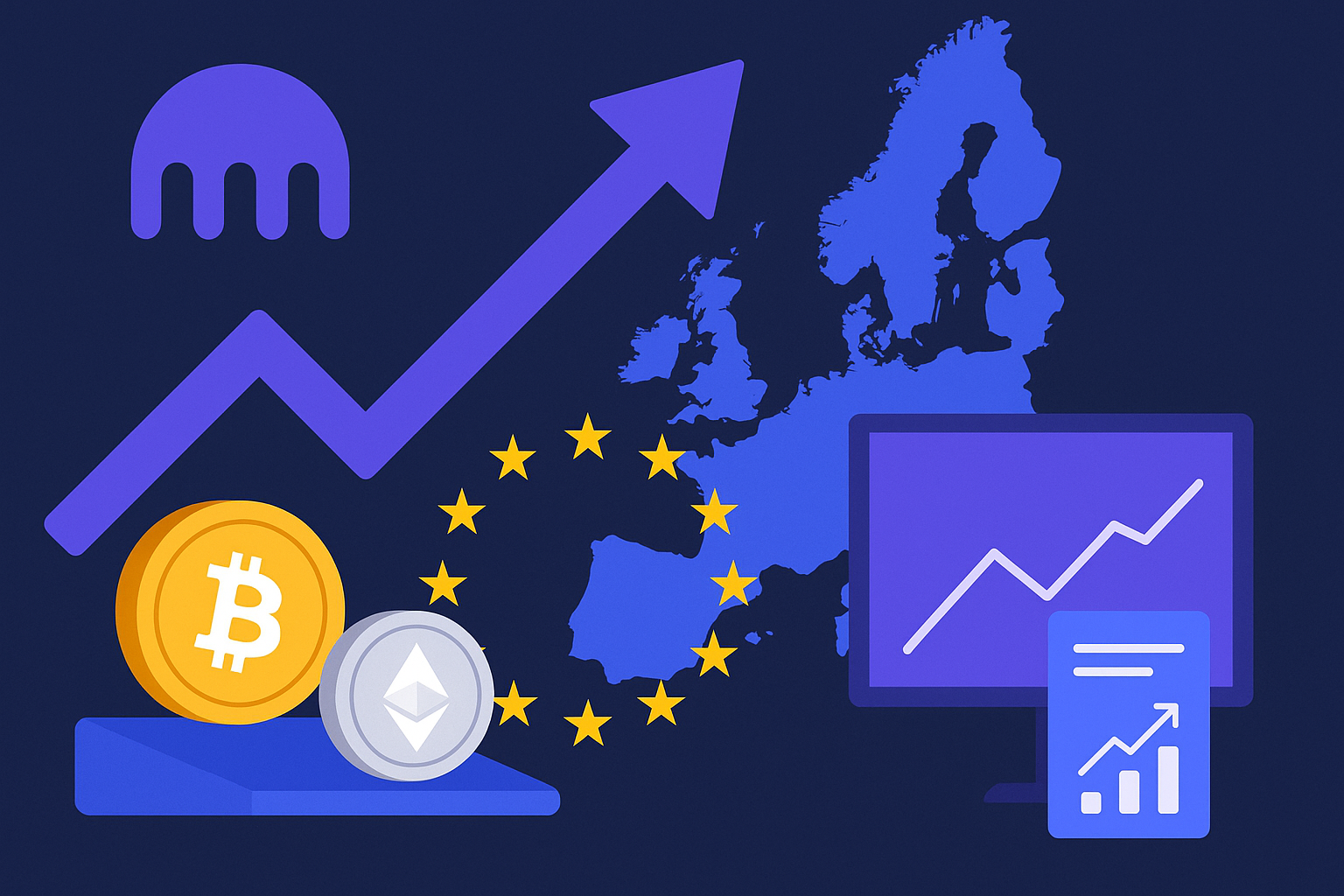
    Kraken has expanded its regulated derivatives offering in the European Union, allowing traders to use Bitcoin, Ethereum, and approved stablecoins as collateral for perpetual futures on Kraken Pro.

    Announced on 3 November, the move makes Kraken one of the first licensed exchanges in Europe to support crypto-collateralised derivatives under the Markets in Crypto-Assets (MiCA) framework.

    The feature strengthens Kraken’s position in Europe’s digital asset market by combining capital efficiency with regulatory compliance.

    By allowing clients to post crypto assets instead of converting them into fiat, the exchange provides faster access to liquidity while remaining under strict oversight from European regulators.

    Crypto as margin on Kraken Pro

    European traders can now use Bitcoin, Ethereum, or select stablecoins as margin across more than 150 perpetual futures markets.

    Collateral is converted to USD for liquidation and margin calculations, standardising risk management while maintaining crypto exposure.

    Kraken’s operations are covered by its MiCA licence from the Central Bank of Ireland and supervision by the Cyprus Securities and Exchange Commission.

    The exchange uses volatility-based margin haircuts to manage exposure to price swings. All custody arrangements comply with the Markets in Financial Instruments Directive II (MiFID II), ensuring full investor protection under European law.

    The feature allows traders to access up to 10x leverage using crypto collateral. It reflects Kraken’s ongoing strategy to align its trading products with Europe’s unified digital asset rules ahead of MiCA’s full rollout in 2025.

    A shift in EU derivatives

    Kraken’s expansion comes at a time when Europe is tightening oversight of crypto products while promoting innovation through consistent regulation.

    By offering crypto-collateralised futures under direct supervision, the exchange positions itself at the forefront of compliant derivatives trading in the EU.

    The integration benefits institutional and retail traders seeking efficient and legally sound ways to trade leveraged crypto products.

    Hedge funds and corporate treasuries can now operate within clear regulatory limits, signalling the increasing maturity of Europe’s digital derivatives market.

    This move also strengthens the region’s financial infrastructure. Transparent liquidation procedures and regulated custody standards align digital assets with traditional financial norms, helping reduce risk and improve trust.

    As other licensed exchanges follow Kraken’s lead, the EU could become a global hub for compliant digital asset trading.

    Growth supports expansion

    The announcement follows a strong financial quarter for Kraken. The exchange reported revenue of $648 million in the third quarter, a 50% rise from the previous quarter.

    The increase was driven by higher trading volumes and new product integrations following the acquisition of NinjaTrader, a futures and forex trading platform.

    This momentum underlines Kraken’s ability to grow while maintaining regulatory standards. By embedding compliance into its strategy, the company is building credibility and scale in an increasingly regulated environment.

    As MiCA rules continue to take effect, exchanges that prioritise both innovation and compliance are expected to capture greater institutional interest.

    Kraken’s integration of crypto collateral into a regulated derivatives framework demonstrates how digital assets can function securely within Europe’s financial system.

    The development marks a shift from speculative trading to a more structured market, where transparency and protection guide participation.

    For the European Union, this represents progress toward establishing a regulated, sustainable, and globally competitive digital asset economy.

    Source link

  • After worst October in six years, is Bitcoin poised for a November rally?

    After worst October in six years, is Bitcoin poised for a November rally?

    After worst October in six years, is Bitcoin poised for a November rally?

    • Bitcoin posted its first negative October performance in six years, now trading at $107k.
    • Fed’s hawkish comments on a potential December rate cut pressured the price.
    • November has historically been one of Bitcoin’s strongest months (42% mean return).

    Bitcoin is entering November on uncertain footing after suffering its first negative October performance in six years, a downturn that has left investors questioning whether the move was a healthy correction or the start of a deeper bear trend.

    The leading cryptocurrency is currently trading around $107,000, down 1.4% in the last 24 hours.

    The recent price weakness culminated in a significant deleveraging event on November 3, which saw over $1.16 billion in leveraged long positions liquidated, highlighting the intensity of the sell-off.

    Macro headwinds drive a ‘red October’

    The negative monthly performance occurred against a complex macroeconomic backdrop.

    While the US Federal Reserve delivered an anticipated rate cut, subsequent comments from Chair Jerome Powell tempered market expectations for another cut in December, creating uncertainty that pressured risk assets like Bitcoin.

    This caution was reflected in market data, with Bitcoin’s US-session returns cooling from a positive 0.94% on October 29 to a negative 4.56% over the past week, according to Velo data.

    On a more positive note, geopolitical tensions have eased following the trade agreement reached between US President Donald Trump and Chinese President Xi Jinping.

    A mid-cycle correction or the end of the bull run?

    Despite the recent downturn, some market experts believe the sell-off is a constructive development for the broader bull market.

    “So could this red October actually set up the next major leg of Bitcoin’s bull cycle? I think that’s entirely possible,” Rachel Lin, CEO of SynFutures, told Decrypt.

    Corrections like this tend to be the midpoint of a broader cycle rather than the end.

    This optimistic view is supported by strong on-chain data, which indicates that long-term structural demand from holders remains robust despite the short-term price volatility.

    History suggests a strong November rebound is possible

    Historical performance data also provides a bullish case for the coming month. November has traditionally been one of Bitcoin’s strongest months, posting an average return of 42% over the past 12 years.

    This trend, combined with a still-positive mean return of 6.05% for the third quarter, suggests the underlying uptrend remains intact.

    “For November, I expect a period of stabilization and cautious optimism,” Lin said.

    Bitcoin may trade sideways early in the month as markets absorb Fed commentary, but a decisive shift in tone could trigger a recovery.

    The expert maintains that if Bitcoin continues to follow its typical post-halving cycle, the long-term outlook remains bright.

    Citing strong fundamentals from ETF inflows to institutional adoption, Lin believes “a move toward $120,000 to $150,000 by the end of 2025 remains within reach.”


    Source link

  • Bitcoin holds $110k as cautious calm returns to crypto markets

    Bitcoin holds $110k as cautious calm returns to crypto markets

    Bitcoin holds $110k as cautious calm returns to crypto markets

    • Bitcoin is trading steadily around $110,300 as markets consolidate.
    • Traders have largely paused adding new risk after the recent Fed meeting.
    • Bitcoin dominance has risen to approximately 60% of the total crypto market.

    With Bitcoin holding steady above the key $110,000 level as traders consolidate positions and reassess risk following last week’s hawkish signals from the US Federal Reserve, a cautious calm settled over cryptocurrency markets at the start of the week.

    While the market has stabilized after a volatile period, underlying data from the derivatives and credit markets suggests that a “wait-and-see” approach is now the dominant strategy, with investors looking for a fresh catalyst to dictate the next major move.

    As the business week began in Hong Kong, Bitcoin was trading around $110,300, while Ether held near $3,880. Both assets remain down significantly over the past 30 days, by 10% and 14% respectively.

    According to market maker FlowDesk, clients have largely “paused adding new risk” after the Fed meeting, with market activity dominated by short-term trading and portfolio rebalancing.

    Despite the caution, FlowDesk noted that traders showed net buying in tokens with strong underlying fundamentals like BTC, HYPE, and SYRUP, even as Solana-linked assets lagged.

    This deleveraging has left many traders “underexposed if the market rebounds,” suggesting a cleaner market position, the firm wrote.

    Fear lingers in the derivatives market

    While spot markets appear calm, the derivatives space still shows signs of fear. According to CoinGlass data, approximately $155 million in crypto derivatives were liquidated in the past 24 hours.

    The split, with $97 million in long positions and $58 million in shorts being wiped out, points to a moderate flush of overleveraged bullish bets rather than broad panic selling.

    FlowDesk observed “elevated put skew and lingering caution despite calmer volatility,” indicating that traders are still buying downside protection.

    This cautious positioning, dominated by put buying and call selling, could present an opportunity if the market stabilizes.

    “Cheap risk reversals could appeal if spot markets stabilize,” FlowDesk wrote, adding that volatility will likely “drift lower into year-end.”

    Gold holds gains despite hawkish Fed

    In the broader macroeconomic picture, gold is holding onto its recent gains despite headwinds from the Fed.

    The precious metal closed Friday at about $4,003 per ounce, posting a 3.7% gain in October for its third consecutive monthly rise.

    Despite hawkish comments from the Federal Reserve and a stronger dollar that have reduced the odds of a December rate cut, haven demand for gold remains strong.

    Persistent geopolitical tensions and ongoing U.S. fiscal uncertainty have continued to support the metal’s appeal as a stable asset.


    Source link

  • ZIGChain eyes gains as Nasdaq-Listed SEGG Media backs ZIG

    ZIGChain eyes gains as Nasdaq-Listed SEGG Media backs ZIG

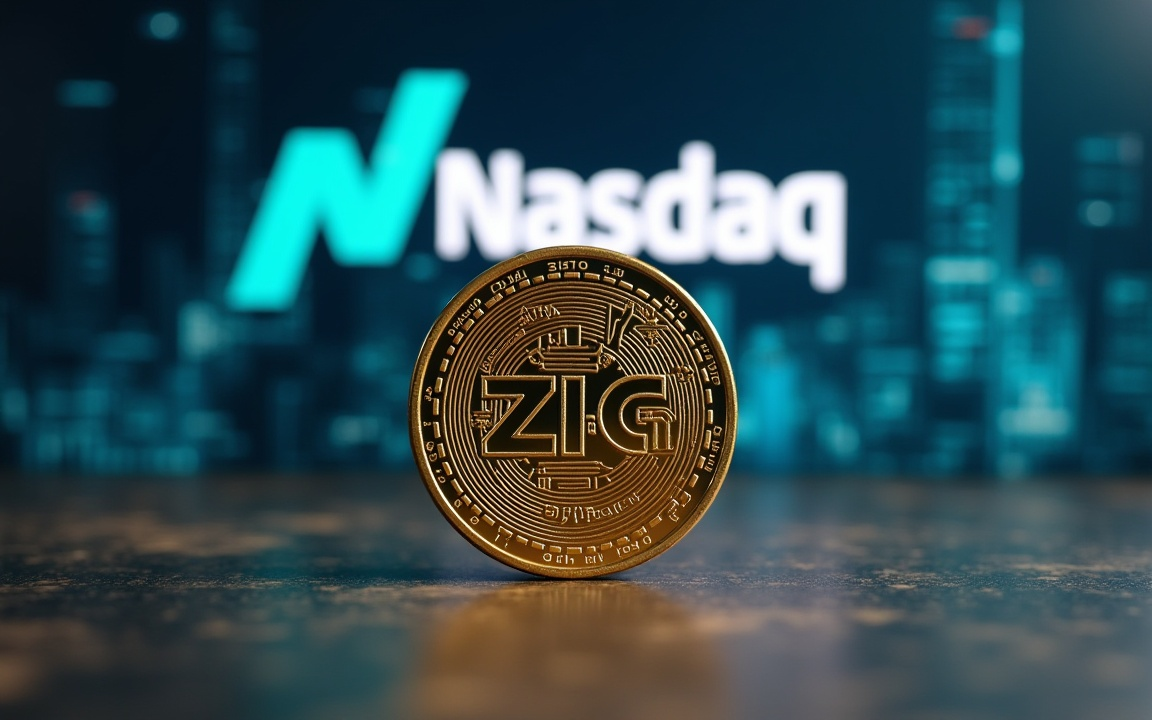
    ZIGChain And Nasdaq Logo

    • ZIGChain price was up nearly 3% as bulls targeted $0.1.
    • Gains came as SEGG Media announced plans to buy ZIG as part of a $300 million treasury strategy.
    • Institutional investors could enhance ZIG’s credibility.

    ZIGChain price hovers near $0.08, but could target key levels as a significant development emerges from the intersection of traditional finance and web3 innovation.

    Nasdaq-listed SEGG Media Corporation announced a bold $300 million strategic initiative to integrate blockchain technology into its sports and entertainment operations.

    SEGG plans a notable focus on accumulating ZIG, the native token of ZIGChain.

    SEGG Media to buy ZIG from $300 million treasury strategy

    SEGG Media (formerly Lottery.com Inc.) has disclosed an ambitious plan to allocate a portion of its newly established $300 million Digital Asset Treasury toward acquiring ZIG.

    The strategy dedicates 80% of the treasury to a multi-asset crypto portfolio.

    It includes Bitcoin, with validator-based income generation on networks like Ethereum, Solana, and ZIGChain.

    The remaining 20% will be used for acquisitions.

    SEGG also targets pilot programs for tokenizing assets such as athlete intellectual property and fan stakes.

    More in store for the benefit of ZIGChain

    A memorandum of understanding with ZIGChain outlines a collaborative effort to tokenize SEGG Media’s sports and entertainment businesses.

    The firm plans to leverage ZIGChain’s infrastructure for real-world asset tokenization.

    The partnership also aims to launch a trading platform on Sports.com and Concerts.com, enabling tokenized teams, bands, and events.

    SEGG Media’s CEO, Matthew McGahan, has emphasized the company’s mission to bridge traditional markets with blockchain innovation.

    ZIGChain’s founder, Abdul Rafay Gadit, also highlighted the milestone this represents for institutional blockchain adoption.

    ZIGChain price: How high can ZIG go?

    The strategic accumulation of ZIG by a Nasdaq-listed entity like SEGG Media has sparked speculation about the token’s price trajectory.

    ZIG is currently trading at $0.086, according to CoinMarketCap data, with a 24-hour trading volume of $2.48 million.

    While the price has tanked towards new year-to-date lows since flipping from highs of $0.12 in April, ZIG remains well above the all-time lows of January 2023.

    ZIGChain Price
    ZIG chart by CoinMarketCap

    Mainnet launch, which occurred recently, has the network eyeing growth.

    Just a month into the mainnet launch, ZIGChain has recorded over 1 million transactions.

    More significantly, the involvement of a $300 million treasury could inject significant liquidity into the ZIGChain ecosystem, potentially driving demand and price appreciation.

    If SEGG Media’s allocation mirrors the enthusiasm seen in related trends, ZIG could see a short-term surge to mirror current outperformers.

    A retest of $0.10 could allow bulls to aim for $0.12 and potentially $0.15.

    Buyers reached these highs in December 2024.


    Source link

  • Bittensor price pops 18% to lead top gainers: what next for TAO?

    Bittensor price pops 18% to lead top gainers: what next for TAO?

    Bittensor Price Surges

    • Bittensor’s native token TAO has surged 18% to $490.
    • The altcoin has outpaced other top gainers amid a broader market uptick in AI-related projects.
    • Bulls have eyes on a breakout above $500.

    Bittensor’s TAO token has experienced a sharp rise, climbing double digits to hover just shy of the $500 psychological barrier.

    The TAO price had hit an intraday high of $490 at the time of writing.

    The move has driven TAO to the top of daily gainers lists, surpassing even privacy-focused coins like Zcash, which had jumped 15% in 24 hours.

    ETP hype and AI traction help Bittensor price

    The latest catalyst for TAO’s ascent traces directly to institutional advancements.

    In particular, as analysts continue to ponder whether the decentralized AI project has the potential to flourish into the Nvidia of crypto. More on this later.

    More of the latest gains for TAO come after the October 29 announcement of the world’s first staked Bittensor Exchange Traded Product (ETP).

    Deutsche Digital Assets and Safello launched the ETP, which went live as fresh digital asset investment product hype resurfaced.

    Bittensor’s growing network and the ETP rollout seem to have come just at the right time for the project- hence TAO’s price gains.

    Secured by BitGo Europe and domiciled in Liechtenstein, the product bridges traditional finance with decentralized AI, potentially unlocking billions in European institutional capital previously sidelined by regulatory hurdles.

    What’s next for TAO price?

    TAO’s price outlook is predominantly bullish. That’s despite it being tempered by inherent crypto volatility and macroeconomic headwinds in the short term.

    A sustained close above $500 could catalyse a breakout to $700.

    These are the highs seen in December 2024, and above that, bulls will be targeting a new all-time high.

    In March 2024, bulls reached the all-time peak of $767.

    Crypto analyst Dread Bongo shared this outlook about the token.

    Nvidia of crypto?

    Data from CoinGecko shows that the artificial intelligence token category is marginally lower, with a 1.2% dip in total market capitalisation.

    Top AI-linked cryptocurrencies such as NEAR Protocol, Internet Computer, Story, and Render have posted 24-hour gains of 2–4%.

    Bittensor (TAO), however, has outperformed the group, surging 18% in the past day to maintain its position as the largest AI token by market cap at $4.69 billion.

    The rally in Bittensor comes amid renewed investor enthusiasm for artificial intelligence, fueled by gains in AI-focused equities following recent developments from Nvidia and Microsoft.

    Yet as investment in Bittensor funds further validates traction, whale accumulation and halving sentiment may be huge catalysts to watch.


    Source link

  • Venezuela to integrate Bitcoin and stablecoins into its banking network by December

    Venezuela to integrate Bitcoin and stablecoins into its banking network by December

    Venezuela to integrate Bitcoin and stablecoins into its banking network by 2025

    • Local banks will offer custody, transfers, and crypto-to-fiat exchange services.
    • The bolivar’s sharp depreciation has driven a surge in stablecoin adoption.
    • Conexus currently processes nearly 40% of Venezuela’s electronic payments.

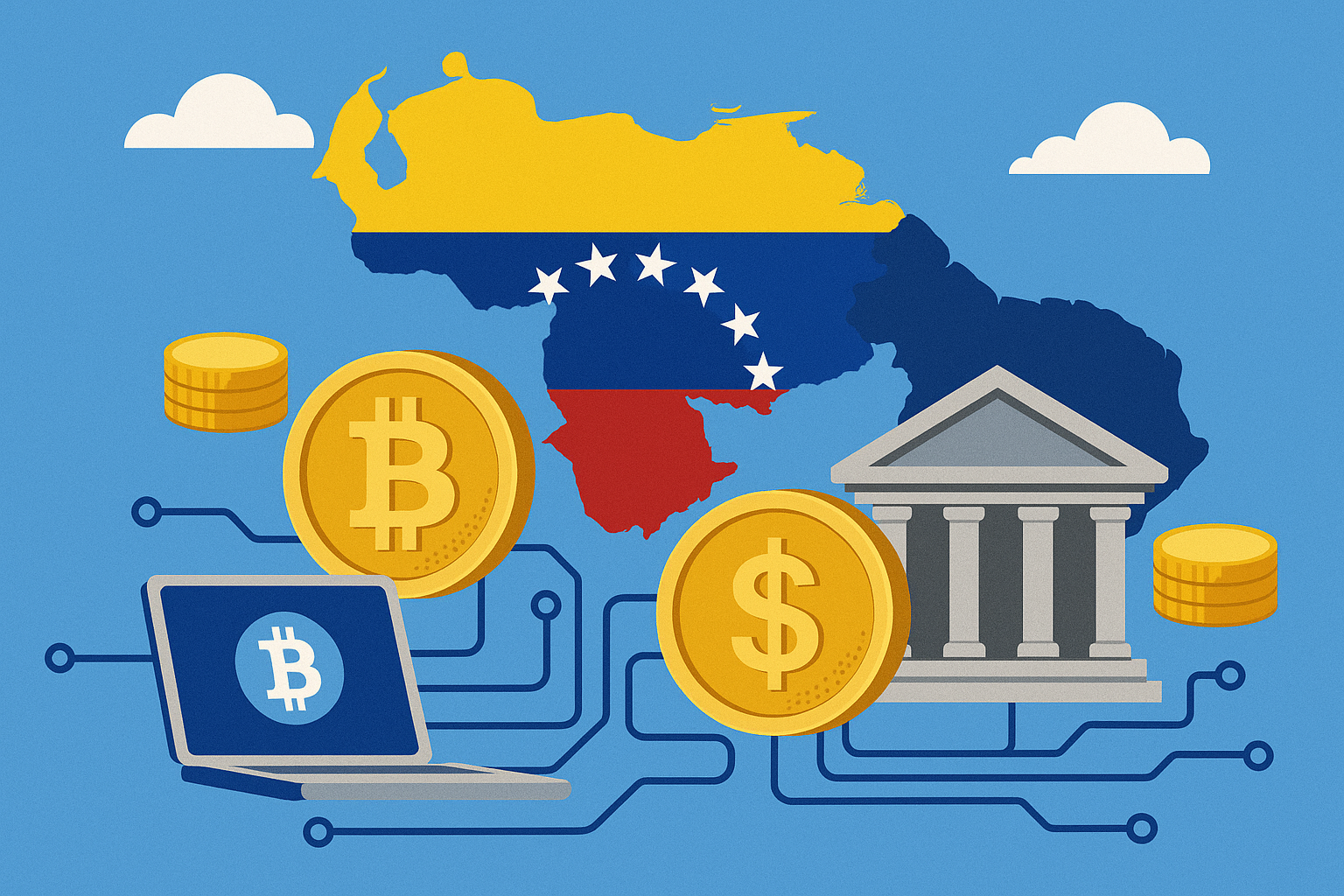
    Venezuela is preparing to merge its struggling traditional banking system with digital currencies as payment giant Conexus plans to integrate Bitcoin and stablecoins into the national banking infrastructure.

    The move, expected to launch in December 2025, marks a significant step in the country’s financial transformation, offering Venezuelans a regulated channel for cryptocurrency use.

    With the bolivar’s persistent depreciation and rising adoption of stablecoins, this development could make Venezuela one of the first nations to formally blend fiat and crypto operations under a unified system.

    The integration also reflects Venezuela’s long-standing struggle with international sanctions that have limited access to global banking.

    By adopting blockchain-based systems, Conexus aims to provide citizens with a more resilient alternative that can facilitate remittances, domestic transfers, and business payments without heavy dependence on foreign intermediaries and unstable local exchange rates.

    The initiative also seeks to improve financial inclusion nationwide, making digital transactions more accessible to individuals and businesses across the country.

    Conexus aims to bridge banks and blockchain

    Conexus, which currently processes nearly 40% of Venezuela’s electronic transactions, is leading this shift by allowing local banks to offer direct crypto services such as custody, transfers, and fiat conversion for Bitcoin and stablecoins.

    The integration seeks to make digital currency access seamless for customers within their regular bank accounts, eliminating the need for external wallets or apps.

    The new infrastructure will be built on blockchain technology to enhance transparency and transaction security.

    According to the company, the system will enable both individuals and businesses to move between digital and traditional currencies safely, reducing reliance on unregulated exchanges.

    Growing reliance on stablecoins amid inflation

    Years of hyperinflation have eroded confidence in the bolivar, pushing Venezuelans to rely heavily on stablecoins like Tether (USDT) as a store of value and medium of exchange.

    From small retailers to freelancers, many now prefer stablecoins to protect earnings from volatility.

    Conexus President Rodolfo Gasparri has highlighted that this surge in stablecoin transactions demonstrates a clear public demand for better integration between crypto and banking systems.

    The company’s upcoming model aims to formalise this reality by providing regulated access to crypto within Venezuela’s financial framework, allowing citizens to transact and save using digital assets with greater confidence.

    Potential blueprint for emerging economies

    The Conexus initiative could reshape not only Venezuela’s financial sector but also set an example for other economies facing currency crises.

    By offering a direct bridge between fiat and digital assets, the model could help millions gain access to stable, low-cost, and transparent financial services.

    Venezuela’s attempt to merge traditional finance with blockchain technology aligns with global trends toward digitalisation of money, particularly in regions where economic instability drives innovation.

    If implemented successfully, this system could serve as a prototype for countries in Latin America and beyond, where inflation and limited banking access continue to affect economic stability.

    Source link

  • ai16z gains as Binance announces AI16Z to ELIZAOS token swap

    ai16z gains as Binance announces AI16Z to ELIZAOS token swap

    ai16z-price-gains

    • AI16Z price has spiked more than 11% in the past 24 hours to hit $0.069.
    • Gains come amid Binance support for AI16Z to ELIZAOS token swap.
    • ElizaOS is an AI project that rebranded from ai16z in January.

    AI16Z price is up by more than 11% in the past 24 hours and currently ranks among the altcoins defying broader cryptocurrency market downside pressure.

    In the last 24 hours, altcoins such as Zcash and GHOST have gained as the privacy-coin narrative persists.

    ai16z has also gained and is among the digital tokens that are looking to thrive on the back of major network support.

    Binance to support AI16Z to ELIZAOS token swap

    One of the likely catalysts for ai16z price in the past 24 hours appears to be Binance’s endorsement of the AI16Z to ELIZAOS token swap.

    The exchange, the world’s largest by trading volume, is set to suspend AI16Z trading on its Binance Alpha platform on November 6, 2025.

    According to details, the brief halt in trading will allow the exchange to facilitate the transition.

    Specifically, Binance will support the token swap at the ratio of 1 AI16Z to 6 ELIZAOS.

    “At 2025-11-06 10:00 (UTC), deposits of AI16Z tokens to Binance Alpha 2.0 Accounts will be suspended. Users should ensure they leave sufficient time for their AI16Z deposits to be fully processed prior to this time. After the event is complete, deposits of AI16Z will no longer be supported,” Binance wrote.

    Trading of the elizaOS (ELIZAOS) token will resume at 2 pm UTC on Nov. 7, with users also able to deposit to their accounts.

    What is ElizaOS?

    ElizaOS began as the memecoin ai16z (AI16Z) inspired by the tech venture capital firm Andreessen Horowitz (a16z).

    However, it has since transitioned to become one of the leading agentic operating systems, rebranding from ai16z to ElizaOS in January 2025.

    The project’s token is issued on Solana’s network and allows for ElizaOS governance, AI agents payments and ecosystem rewards.

    ElizOS leverages decentralized governance via its decentralized autonomous organization model and features AI-driven governance.

    AI16Z price outlook

    The token is also up amid a broader bullish outlook for artificial intelligence-related cryptocurrencies, with AI16Z price up more than 17% this past week.

    Bulls have pushed this token from intraday lows of $0.055 to above $0.069.

    If bullish momentum holds, the altcoin could target October 2025 highs above $0.10.

    AI16Z Price Chart
    AI16Z chart by CoinMarketCap

    Daily volume is up 49% to over $62 million. Meanwhile, AI16Z has a total supply of 1.1 billion tokens, with a market cap of $76.4 million.

    Given, some coins are seeing fresh momentum despite Bitcoin’s crash to lows of $106k on Thursday.

    While the benchmark digital asset has since recovered to around $110,000 in early trading Friday, it is in the red on the day.

    Top alts Ethereum, XRP and Solana are also battling as bulls attempt to reclaim key price zones.


    Source link

  • Jiuzi Holdings taps SOLV Foundation for its $1B Bitcoin investment plan

    Jiuzi Holdings taps SOLV Foundation for its $1B Bitcoin investment plan

    Jiuzi Holdings taps SOLV Foundation for its $1B Bitcoin investment plan

    • Jiuzi commits up to $1B and 10,000 BTC to SOLV’s DeFi yield platform.
    • The partnership bridges TradFi compliance with DeFi Bitcoin finance.
    • JZXN shares have surged over 17% following the strategic announcement.

    Jiuzi Holdings, Inc. (NASDAQ: JZXN) has unveiled a sweeping $1 billion Bitcoin finance initiative through a strategic partnership with SOLV Foundation, a decentralised finance (DeFi) platform managing more than $2.8 billion in total value locked.

    The move positions Jiuzi as one of the few Nasdaq-listed firms actively bridging traditional finance (TradFi) with DeFi to create compliant, yield-generating Bitcoin products for institutional investors.

    10,000 Bitcoin commitment to SOLV’s flagship SolvBTC.BNB vault

    The partnership will see Jiuzi allocate up to $1 billion from its digital asset plan into Bitcoin staking and yield-focused blockchain products.

    Central to the strategy is a commitment of up to 10,000 Bitcoin to SOLV’s flagship SolvBTC.BNB vault on the BNB Chain — one of the largest Bitcoin yield platforms in the ecosystem.

    The assets will be safeguarded by regulated third-party custodians and verified through Chainlink’s proof-of-reserves auditing system, ensuring transparency and institutional-grade security.

    This marks a pivotal moment for Jiuzi Holdings, which is best known for its new energy vehicle infrastructure business in China.

    The company has been steadily diversifying into blockchain finance, and its partnership with SOLV Foundation signals a deepened commitment to positioning Bitcoin as a productive, yield-bearing asset rather than a passive store of value.

    Building a compliant bridge between TradFi and DeFi

    Jiuzi and SOLV have emphasised that the partnership will operate under strict compliance with US Securities and Exchange Commission (SEC) regulations and Nasdaq listing standards.

    The collaboration will establish a joint Steering Committee composed of senior representatives from both organisations.

    This committee will develop and oversee Bitcoin-centric DeFi initiatives, including expanding the adoption of SolvBTC across additional blockchain networks such as Solana and Base.

    By combining Jiuzi’s regulatory standing and institutional access with SOLV’s on-chain expertise, the partnership aims to create a secure, transparent, and scalable financial framework for Bitcoin-based products.

    Both companies view the collaboration as a model for how regulated capital can participate safely in decentralised yield markets.

    Optimising treasury strategy through blockchain

    Beyond its yield products, Jiuzi will anchor its corporate treasury around Bitcoin as its primary digital asset.

    The firm’s Bitcoin holdings, including those of its subsidiaries, will be deposited on SOLV’s platform and managed under the supervision of approved custodians.

    This approach is designed to maximise capital efficiency while maintaining visibility and accountability through blockchain-based auditing tools.

    Li Tao, Chief Executive Officer of Jiuzi Holdings, described the partnership as “a transformative step forward” that strengthens the company’s Bitcoin vault strategy and aligns it with one of the most advanced ecosystems for Bitcoin liquidity and staking.

    SOLV Protocol co-founder Ryan Chow added that the partnership merges Jiuzi’s regulatory stature with SOLV’s expertise in managing large-scale Bitcoin assets, paving the way for secure institutional capital flow into DeFi.

    Notably, the news of the partnership sparked a sharp rally in Jiuzi’s stock, with shares surging more than 22% in trading following the announcement.

    Investors responded positively to the company’s expansion into digital asset finance, recognising the potential for Jiuzi to play a pivotal role in institutional Bitcoin adoption.

    Source link

  • Avalon Labs (AVL) releases whitepaper for AI-powered RWA marketplace

    Avalon Labs (AVL) releases whitepaper for AI-powered RWA marketplace

    Avalon Labs (AVL) releases whitepaper for AI-powered RWA marketplace

    • The whitepaper announces the world’s first AI-backed RWA marketplace.
    • It launches on BNB Chain, welcoming participation from AI developers and GPU owners.
    • AVL gains over 15% on the daily timeframe before cooling.

    Amid broader weakness, Avalon Labs fueled optimism through the blockchain industry after releasing its highly anticipated whitepaper.

    The document highlights the firm’s mission for launching the world’s first AI-driven RWA marketplace, alongside an AI-MaaS (AI-Model-as-a-Service) platform, which merges blockchain with artificial intelligence.

    The new project will debut exclusively on BNB Chain, a move that could welcome lucrative opportunities for GPU owners and AI developers.

    The move heralds the next stage of RWA tokenisation’s evolution – powered by innovations beyond blockchain, including self-learning AI programs and intelligent.

    According to the announcement:

    This marketplace is open to all GPU hardware owners and AI model developers. Our first launch will feature a Reinforcement Learning Model (RL Model) deployed by Avalon abs in collaboration with our AI partner, powered by H200 GPU hardware as the foundation.

    Avalon Labs’ alt saw a sharp uptick following the whitepaper release.

    AVL soared from the daily low of $0.1436 to $0.1668 – a 16% increase.

    However, the digital token has retraced as hype fades and bearish broader sentiments.

    Meanwhile, Avalon Labs plans to create a platform that supports artificial intelligence innovation.

    The project aims to provide contributors and developers a fair environment to engage in the AI economy.

    Avalon to tokenise commercial rights

    Beyond the AI-driven marketplace, Avalon Labs also introduced the CRT (Commercial Rights Tokenization) standard.

    The concept introduces a new framework for tokenizing commercial rights linked to goods, services, and assets.

    CRT might transform how businesses connect with investors and raise capital.

    For instance, an enterprise can tokenize rights to future services or sales and offer them to customers via on-chain contracts.

    The mode bridged blockchain with traditional commerce to provide a new option for SMEs to access liquidity as investors gain exposure to RWA streams.

    The whitepaper highlighted:

    CRT isolates and tokenizes commercial rights of access and service. This enables commodities, services, and goods to be legally structured, accessed, exchanged, and monetized through blockchain infrastructure in a regulatory-compliant manner.

    Precisely, Avalon Labs is going beyond asset tokenization. It is tokenizing the rights that add value to those assets.

    AVL price outlook

    Avalon Labs’ native token decoupled from broader declines as the whitepaper sparked optimism.

    AVL soared roughly 16% from a daily low of $0.1436 to $0.1668 intraday peak.

    Its 24-hour trading volume surged 50% to signal trader enthusiasm.

    Nevertheless, it has cooled to $0.1570 as hype fades, possibly as bears rattled the overall cryptocurrency sector.

    Continued broader dups could see AVL erasing its latest gains before establishing a decisive trajectory.


    Source link