Category: TRENDING

  • Top 5 cryptocurrencies to watch this week: BTC, DOT, SAND, RUNE, ZEC

    Top 5 cryptocurrencies to watch this week: BTC, DOT, SAND, RUNE, ZEC

    Bitcoin (BTC) has been relatively calm during the weekend, indicating that traders are playing it safe and not waging large bets before the upcoming Federal Open Market Committee meeting on March 15 and March 16. The quantum of the rate hike could act as the next trigger for the crypto markets.

    The current neutral setup of Bitcoin has kept the analysts guessing. Analytics resource Material Indicators warned that Bitcoin could plunge but they advised investors to be ready to buy the dip as they believe that the “bounce can change your life.”

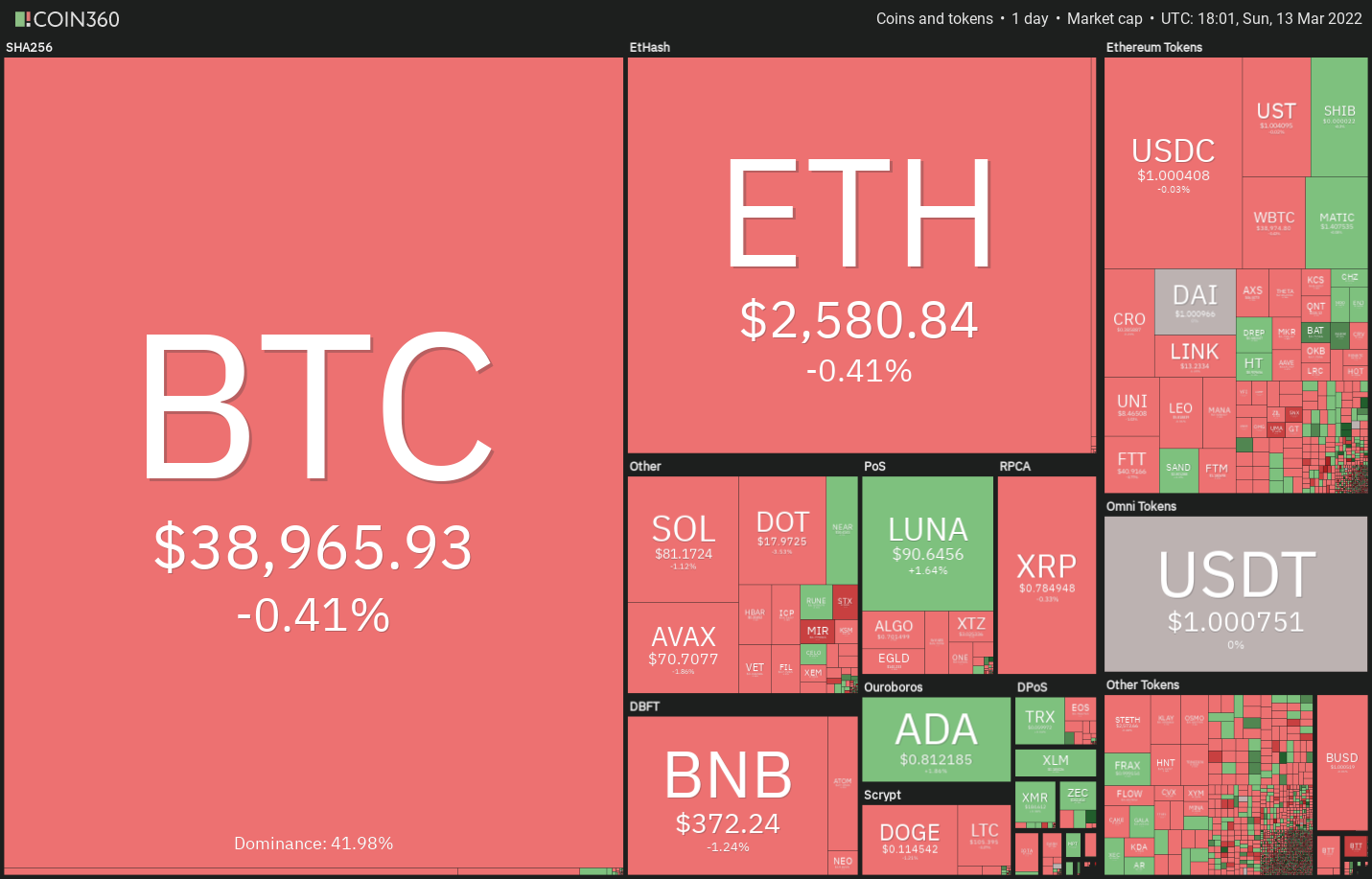
    Crypto market data daily view. Source: Coin360

    A Price Waterhouse Coopers’ Sports Outlook 2022 report for North America highlighted three use cases for nonfungible tokens, which could shape the future of sports. The consultancy believes that NFTs and digital assets are among the ten major trends in the sports industry.

    Could the crypto markets start a directional move in the near term? Let’s study the charts of the top-5 cryptocurrencies that may participate in a rally if the bullish sentiment picks up.

    BTC/USDT

    Bitcoin formed a Doji candlestick pattern on March 12 and on Sunday, indicating indecision among the bulls and bears. The price is stuck between the 20-day exponential moving average ($39,810) and the horizontal support at $37,000.

    BTC/USDT daily chart. Source: TradingView

    The 20-day EMA is flattish and the relative strength index (RSI) is just below the midpoint, indicating a balance between supply and demand.

    If the price rises and breaks above the 50-day simple moving average ($39,978) the bulls will attempt to push the BTC/USDT pair above $42,600. If they succeed, the pair could rally to $45,400 and later to the resistance line of the channel.

    Conversely, if the price turns down and breaks below $37,000, the bears will smell an opportunity. The sellers will then try to pull and sustain the pair below the support line of the channel. Such a move could clear the path for a possible drop to $30,000.

    BTC/USDT 4-hour chart. Source: TradingView

    The pair is forming a descending triangle pattern which will complete on a break and close below the strong support at $37,000. The pair could then drop to $34,322 and later start its journey toward the pattern target at $29,250.

    Alternatively, if bulls push and sustain the price above the 50-SMA, the pair could rise to the downtrend line. A break and close above this level will invalidate the bearish pattern. That could attract buying and the pair may then rally toward $45,400.

    DOT/USDT

    Polkadot (DOT) has been in a downtrend for the past several months but the bulls are trying to form a bottom in the zone between $16 and $14. The price rose above the 20-day EMA ($17) but the bulls have not been able to overcome the barrier at the 50-day SMA ($18).

    DOT/USDT daily chart. Source: TradingView

    However, a positive sign is that the bulls have not given up much ground from the 50-day SMA. This suggests that the traders may be holding on to their position anticipating a break above the resistance. If that happens, the DOT/USDT pair could rally to the overhead resistance at $23 where the bears may again pose a stiff challenge.

    The flattish 20-day EMA and the RSI near the midpoint suggest a range-bound action in the short term. If the price turns down from the 50-day SMA, the bears will try to pull the pair below $16. If they succeed, the pair could retest the critical support at $14.

    DOT/USDT 4-hour chart. Source: TradingView

    The 4-hour chart shows that the pair is oscillating between $16 and $19. The failure of the buyers to propel the price above the overhead resistance may have attracted profit-booking from short-term traders. That pulled the price to the 50-SMA.

    If the price rises above the 200-SMA, it will suggest that bulls continue to buy on dips. The buyers will then again try to drive the price above the overhead resistance at $19. If they manage to do that, the pair could rise to $20 and later make a dash toward $23.

    Conversely, a break and close below the 50-SMA may increase the possibility of a drop to the strong support at $16.

    SAND/USDT

    The Sandbox (SAND) has been range-bound between $2.55 and $4.86 for the past several weeks. The bears pulled the price below the 200-day SMA ($3.15) on March 4 but haven’t been able to break the support at $2.55.

    SAND/USDT daily chart. Source: TradingView

    This indicates accumulation near the support of the range. The RSI is showing signs of a positive divergence, indicating that the bearish momentum may be weakening.

    If the price rises from the current level, the bulls will try to push the SAND/USDT pair above the 200-day SMA. If that happens, the pair could rise to the 50-day SMA ($3.51). A break and close above this resistance could open the doors for a possible rally to $4.50 and then to $4.86.

    This bullish view will invalidate in the short term if the price turns down and slides below $2.55. That could suggest the resumption of the downtrend.

    SAND/USDT 4-hour chart. Source: TradingView

    The 50-SMA has been acting as a stiff resistance on the 4-hour chart. If bears sink the price below $2.70, the pair could drop to the solid support at $2.55. A break and close below this level could indicate advantage to bears.

    To negate this view, the bulls will have to push the price above the zone between the 50-SMA and $3. If that happens, the pair could rally to $3.42 where the bears may again mount a strong defense.

    Related: Cryptocurrencies against the ‘silent thief.’ Can Bitcoin protect capital from inflation?

    RUNE/USDT

    THORChain (RUNE) broke above the moving averages on March 1 and successfully defended the level during the retest on March 8. This suggests that the sentiment has changed from sell on rallies to buy on dips.

    RUNE/USDT daily chart. Source: TradingView

    The bulls will now try to push the price to the 200-day SMA ($7.90) where the bears may again pose a strong challenge. If the price does not give up much ground from the 200-day SMA, the bulls will make one more attempt to clear this hurdle. If they succeed, the RUNE/USDT pair could rise to $9.

    Alternatively, if the price turns down from the current level, the 20-day EMA is the important level to watch out for. A strong rebound off this level will suggest that the bullish sentiment remains intact while a break below it could result in a decline to $4.

    RUNE/USDT 4-hour chart. Source: TradingView

    The 20-EMA on the 4-hour chart is sloping up and the RSI is in the positive zone, indicating that the bulls have the upper hand. The pair could now rise to the overhead resistance at $7 where the bears will try to stall the up-move.

    Alternatively, if the price turns down from the current level, the pair could drop to the 20-EMA. If the price rebounds off this level, the bulls will attempt to resume the uptrend. The bears will have to pull and sustain the price below the 20-EMA to indicate a change in the short-term trend.

    ZEC/USDT

    Zcash (ZEC) broke and closed above the $135 resistance on March 8, which completed a double bottom pattern. This was followed by a break above the 200-day SMA ($145) on March 10, signaling that bulls are back in the game.

    ZEC/USDT daily chart. Source: TradingView

    The bears are currently attempting to pull the price back below the 200-day SMA and challenge the breakout level at $135. This is an important level for the bulls to defend because a break below it could suggest that the recent breakout may have been a bear trap. The ZEC/USDT pair could then drop to the 50-day SMA ($114).

    If the price rebounds off the current level or $135, it will suggest that the sentiment remains positive and traders are buying on dips. The bulls will then try to drive the pair above $160 and resume the up-move. The target objective of the breakout from the double bottom pattern is $189.

    ZEC/USDT 4-hour chart. Source: TradingView

    The bears pulled the price below the 20-EMA on the 4-hour chart but they have not been able to sustain the lower levels. This suggests that bulls continue to buy on every minor dip. The bulls will now try to push the price above $160 and resume the uptrend. The rising 20-EMA and the RSI in the positive territory indicate that the path of least resistance is to the upside.

    Contrary to this assumption, if the price turns down from the overhead resistance and slips below $143, the selling could pick up momentum. The pair could then drop to the critical support at $135.

    The views and opinions expressed here are solely those of the author and do not necessarily reflect the views of Cointelegraph. Every investment and trading move involves risk, you should conduct your own research when making a decision.


  • First Mover Asia: South Korea Election Made Crypto a Big Issue, but There’s No Guarantee of a Follow-Through; Cryptos Suffer Weekend Decline

    First Mover Asia: South Korea Election Made Crypto a Big Issue, but There’s No Guarantee of a Follow-Through; Cryptos Suffer Weekend Decline

    Since Russia began its unprovoked attack, bitcon, has risen and dipped within the $37,000 to $45,000 price range that it entered in late January. “It’s been another range-bound, indecisive week for Bitcoin and the crypto markets where the market leader has failed to make any meaningful headway on the upside,” wrote Joe DiPasquale, the CEO of fund manager BitBull Capital, in a text to CoinDesk. He added: “The current price action is typical during bearish phases, as was seen in May, June and July, and often precedes strong price bottoms.”

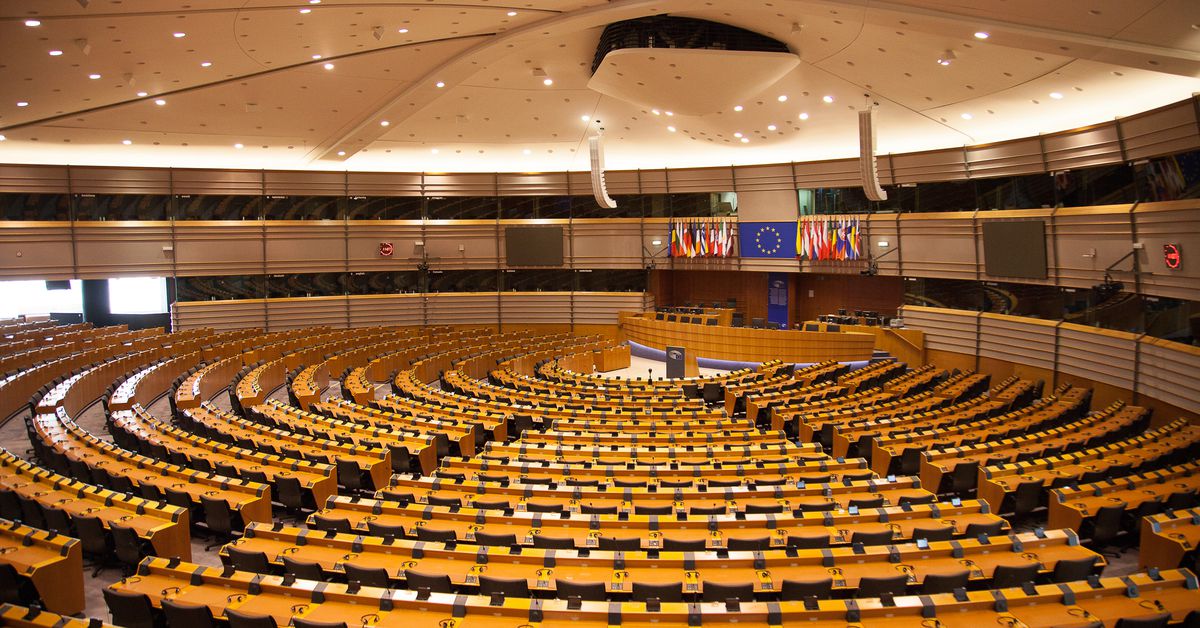
  • Bitcoin-Banning Measure Seen Too Close to Call in Tomorrow’s EU Parliament Vote

    Bitcoin-Banning Measure Seen Too Close to Call in Tomorrow’s EU Parliament Vote

    The leader in news and information on cryptocurrency, digital assets and the future of money, CoinDesk is a media outlet that strives for the highest journalistic standards and abides by a strict set of editorial policies. CoinDesk is an independent operating subsidiary of Digital Currency Group, which invests in cryptocurrencies and blockchain startups. As part of their compensation, certain CoinDesk employees, including editorial employees, may receive exposure to DCG equity in the form of stock appreciation rights, which vest over a multi-year period. CoinDesk journalists are not allowed to purchase stock outright in DCG.

    @2022 CoinDesk

  • 3 reasons why XRP price could drop 25%-30% in March

    3 reasons why XRP price could drop 25%-30% in March

    XRP price risks dropping by more than 25% in the coming weeks due to a multi-month bearish setup and fears surrounding excessive XRP supply.

    XRP descending triangle

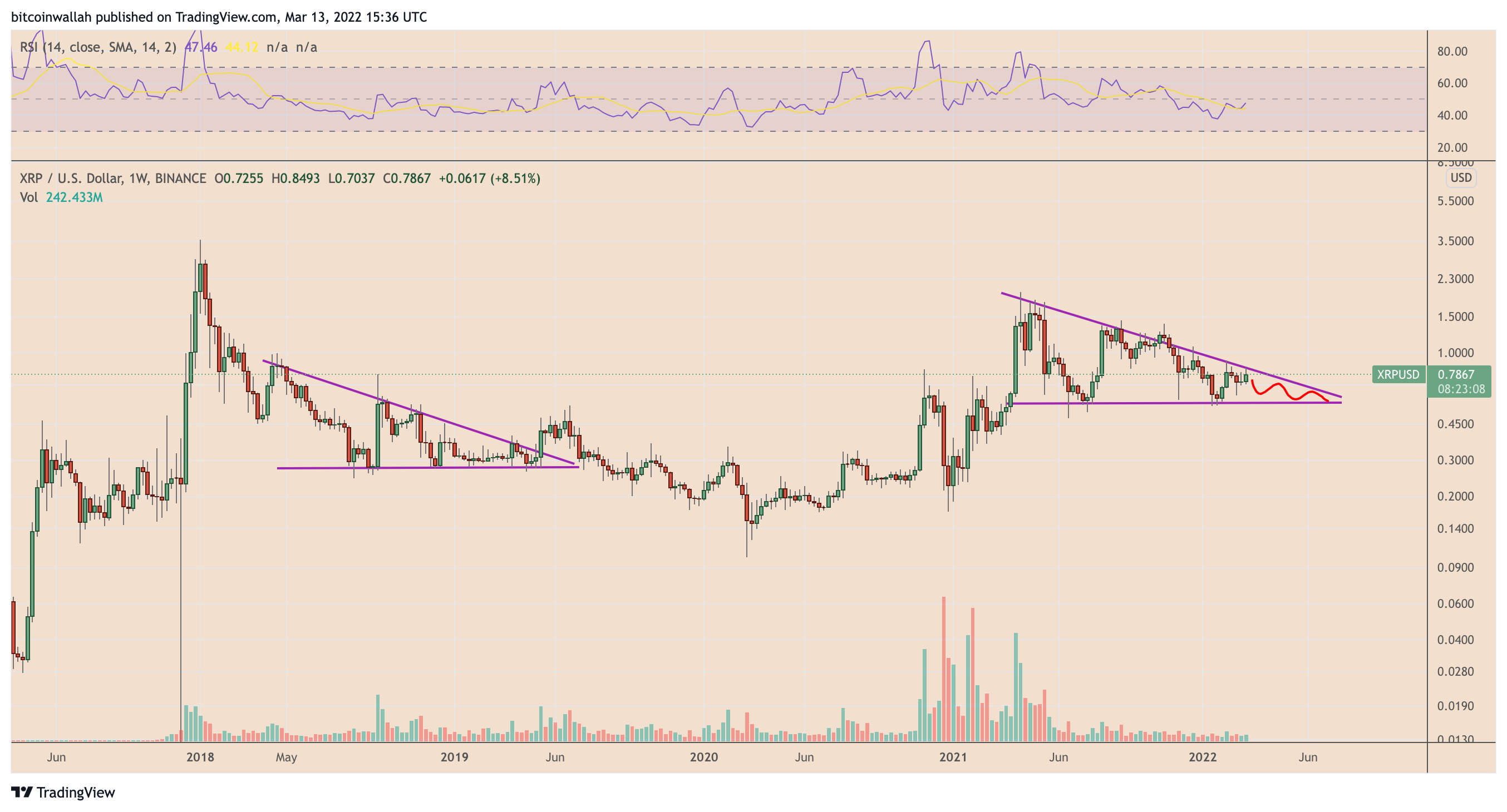
    XRP has been consolidating inside a descending triangle pattern since topping out at its second-highest level to date — near $1.98 — in April 2021.

    In doing so, the XRP/USD pair has left behind a sequence of lower highs on its upper trendline while finding a solid support level around $0.55, as shown in the chart below.

    XRP/USD weekly candle price chart. Source: TradingView

    In the week ending March 13, XRP’s price again tested the triangle’s upper trendline as resistance, raising alarms that the coin could undergo another pullback move to the pattern’s support trendline near $0.55, amounting to a drop between 25% and 30%.

    The downside outlook also takes cues from other bearish catalysts that has emerged around the triangle resistance. 

    For instance, XRP formed a bearish hammer on March 12, a single candlestick pattern with a small body and a long upside wick, suggesting lower buying pressure near the coin’s week-to-date top of around $0.85.

    XRP/USD daily price chart featuring bearish hammer. Source: TradingView

    Additionally, the price turned lower after testing a confluence of resistances defined by its 20-week exponential moving average (20-week EMA; the green wave) and its 50-week EMA (the red wave), as shown in the attached image below.

    XRP/USD weekly candle price chart with moving average resistances. Source: TradingView

    Excessive supply FUD

    More downside cues for XRP come after Ripple Labs locked 800 million XRP in escrow as a part of its programmed schedule for withdrawals.

    The blockchain payment company moved around 100 million XRP worth nearly $40 million to exchange wallets on March 3. Meanwhile, it kept the other 700 million XRP (worth around $550 million) in an escrow account, raising anticipations that at least 200 million XRP would be flooded into the market to generate funds for Ripple’s operational expenses, as well as to distribute XRP among Ripple’s global clientele.

    Meanwhile, it kept the other 700 million XRP (worth around $550 million) in an escrow account, raising anticipations that at least 200 million XRP would enter the market to generate funds for Ripple’s operational expenses, as well as to distribute XRP among Ripple’s global clientele.

    The selloff fears originated from the XRP price’s earlier response to unexpected supply hikes. For instance, XRP/USD fell by more than 50% to near $0.60 four months after its net supply in circulation increased from 40.46 billion to over 47 billion in just two days.

    XRP circulating supply. Source: Messari

    Nonetheless, Ripple’s withdrawal of 800 million XRP has not yet been reflected in its net circulating supply.

    Profit-taking risks mount

    Another catalyst that hints XRP’s price could fall 25-30% to reach its descending triangle target is a Santiment indicator that tracks social media trends and their impact on market trends.

    XRP price versus $XRPNetwork trend. Source: Santiment

    XRP’s price rose by over 15% week-to-date on March 12, notes Santiment, alongside a large spike in social media searches for the hashtag #XRPNetwork, suggesting that it could follow up with a potential selloff ahead. Excerpts:

    “Historically, our social trends indicate that profit-taking is justified whenever the crowd makes the #XRPNetwork a top topic.”

    The views and opinions expressed here are solely those of the author and do not necessarily reflect the views of Cointelegraph.com. Every investment and trading move involves risk, you should conduct your own research when making a decision.
  • Bitcoin: Gold 2.0? Try Reserve Asset 3.0

    Bitcoin: Gold 2.0? Try Reserve Asset 3.0

    From there, Bretton Woods II was born, where the dollar still dominates, but in a system that mostly uses “inside money.” Inside money is made up of claims that are someone else’s liability, while outside money is the type of money that is the liability of no one. In other words, the money system became largely debt-based. So when China holds U.S. Treasurys, that is inside money. When Russia sells USD to buy gold, that is outside money.

  • 6 Questions for Joe DiPasquale of BitBull Capital

    6 Questions for Joe DiPasquale of BitBull Capital

    We ask the buidlers in the blockchain and cryptocurrency sector for their thoughts on the industry… and throw in a few random zingers to keep them on their toes!


    This week, our 6 Questions go to Joe DiPasquale, CEO of BitBull Capital — a company that manages a bundle of crypto hedge funds and has access to closed and exclusive funds.

    Joe DiPasquale is CEO of BitBull Capital, which has managed crypto hedge funds since 2017. Joe founded BitBull because he believes in active management in crypto investments. He has been an investor for 10 different crypto hedge funds, in addition to having run his own active strategies since 2013.

    Previously, Joe worked in investment management, investment banking, technology and strategy consulting at Deutsche Bank, Bain and McKinsey. He received his BA from Harvard University and MBA from Stanford University. BitBull also runs BitBull Research, which regularly publishes its “Crypto Investing Newsletter,” available with a free subscription on BitBull’s website, as well as its “Opportunistic Deals Memo,” available only to investors.


    1 — What’s a problem you think blockchain has a chance to solve but hasn’t been attempted yet?

    Most problems that will be solved by blockchain aren’t yet solved. Ben Horowitz of Andreessen Horowitz has said that it’s similar to the App Store that came out on iPhones in 2008 — we couldn’t conceive of apps like Uber or Pokemon Go or others, but the technology was created. With blockchain, we are seeing its use in cryptocurrencies, DeFi, NFTs and the Metaverse, and even traditional finance, but most developments are still to come.


    2 — What kind of consolidation do you expect to see in the crypto industry in 2022?

    I don’t believe 2022 will be a year of consolidation; rather, it will be a year of continued improvement of protocols, from Eth2 to various others such as Solana, Polkadot, Avalanche and more. While consolidation is inevitable, we are still in the early stages of development and expansion. This is a time for the creation and diversity of technologies.

    3 — Which countries are doing the most to support blockchain, and which ones will be left behind?

    It will certainly be interesting to hear Biden’s planned executive order around crypto, but El Salvador has done the most to support blockchain and crypto. It was the first country to officially classify Bitcoin as a legal currency. There are other countries, like Japan and Switzerland, where blockchain development has been promoted and encouraged. And although it’s a territory, not a country, Puerto Rico is quickly becoming a hotbed of blockchain and crypto activity.


    4 — When you tell people you’re in the blockchain industry, how do they react?

    It depends on how you phrase it. When I tell people about our positive returns through many down periods in crypto, such as the beginning of 2022, or about getting 15%–20% APY on stablecoins vs. 0.1% with a bank account, they are interested. When you simply tell people that you run a “crypto hedge fund,” they tend to not understand how it’s different from buying and holding Bitcoin.

    5 — Who makes sense to you, and who makes no sense whatsoever?

    One of the most important things in investing is to be able to take in information from a variety of sources, including — and especially — those you disagree with. If people aren’t making sense to me, I try to listen twice as hard. On the other hand, one thing I love about investing and running hedge funds is that we’re very quantitatively measured, and our results are out there for all to see monthly.


    6 — Name the things you own that you’ll never part with.

    I spend most of my time working, so my desk setup is specific to me and has been built over time to be comfortable and efficient, including my second monitor and ability to sit or stand. There are also certain things I’ve gotten over the years, such as an artistic Bitcoin representation from a meeting in Japan, which I also keep on my wall and love.

  • 23-year-old Australian buys $314k property via planned crypto investments

    23-year-old Australian buys $314k property via planned crypto investments

    A young resident from Queensland, Australia played the long game of accumulating Bitcoin (BTC) and Ethereum (ETH) over several years to eventually overcome the soaring real estate prices during the 2020 bull run and own his dream home.

    The 23-year-old Loi Nguyen started his journey as an investor back in 2017 by purchasing a few hundred dollars worth of BTC, ETH and traditional stocks. However, his interest in crypto reached new heights while pursuing an Economics degree:

    “Crypto came back into my life when I did a course at the uni on inflation. I learned that Bitcoin can be disinflationary.”

    Speaking to news.com.au, Nguyen revealed that the lower interest rates (less than 0.5%) offered by traditional banks could never help him break into the real estate market. By following a dollar-cost averaging (DCA) investment strategy, the young investor continued to diversify his portfolio into cryptocurrencies amid the temporary bear market of 2018:

    “I recognize I took on a lot of risks. I wanted to protect my purchasing power, protect my current savings, make sure my money didn’t dwindle away.”

    Loi Nguyen as a university student, making planned crypto investments. Source: news.com.au

    As traditional markets collapsed during the start of the covid-19 pandemic, Nguyen’s crypto investments outgrew the value of his stock portfolio. This was when his investment focus moved away from traditional markets further into cryptocurrencies — eventually accumulating 1 BTC over several months. 

    With the intent to purchase real estate, Nguyen cashed out his crypto investments during November-December 2021, a timeline when BTC reached an all-time high of $69,000. In total, the young Aussie sold less than half of his crypto portfolio, leaving him around $31,400 (43,000 Australian dollars) to show the bank as a part of the downpayment.

    Nguyen’s new one-bedroom apartment in Brisbane, Australia. Source: news.com.au

    Nguyen purchased a one-bedroom apartment in Brisbane, which was priced at $314,000 ($430,000 Australian dollars) and required approximately $62,735 ($86,000 Australian dollars) as a downpayment. “About half of that was made up of crypto,” Nguyen added.

    After finishing high school, Nguyen worked full-time for a year as a bank teller but was on a low salary of roughly $20,400. “I’m doing a lot better now,” he concluded.

    Related: Aussie advisory committee lists key factors for easing crypto adoption

    Australian cybersecurity advisor, the Cyber Security Industry Advisory Committee, recently highlighted numerous crypto-specific opportunities.

    As Cointelegraph reported, the study titled Exploring Cryptocurrencies underpins the need for a regulatory setting for attaining greater clarity and confidence regarding cryptocurrencies for the Australian market.

    The federal advisory recommends the exploration of four key areas that can “help ensure the safe adoption of cryptocurrencies in Australia” — minimum cyber security standards, capability (awareness through specialized training), the follow-the-lead approach and operator transparency.

  • Russia and Belarus face crypto sanctions, Crypto.com hounds users for loan payments and Biden signs executive order on crypto: Hodler’s Digest, March 6-12

    Russia and Belarus face crypto sanctions, Crypto.com hounds users for loan payments and Biden signs executive order on crypto: Hodler’s Digest, March 6-12

    Coming every Saturday, Hodler’s Digest will help you track every single important news story that happened this week. The best (and worst) quotes, adoption and regulation highlights, leading coins, predictions and much more — a week on Cointelegraph in one link.

    Top Stories This Week

    Biden to sign executive order on crypto, authorize all-government effort to consolidate regulation

    While many in the crypto community previously feared the worst regarding regulation, President Joe Biden on Wednesday signed an executive order on digital assets that had a relatively favorable approach to the crypto sector. 

    While the order didn’t explicitly outline the scale of regulatory measures that could be expected, the general sentiment from the U.S. federal government appeared to be constructive as opposed to stifling. 

    Per the order, the federal government’s regulatory oversight of the crypto sector will focus on six areas: consumer and investor protection; financial stability; financial inclusion; responsible innovation; the United States’ global financial leadership; and combating illicit financial activity. The order directs specific agencies to lead in designated policy and enforcement domains.

    Bain Capital Ventures sets up a half-billion-dollar fund for crypto projects

    Multi-billion-dollar startup investment firm Bain Capital Ventures (BCV) has unveiled a new $560 million crypto ecosystem fund, with the company already reported to have splurged $100 million on 12 undisclosed projects.

    A BCV representative emphasized to Cointelegraph that the fund will be used to back entrepreneurs developing the next generation of open Web3 internet infrastructure: 

    “We believe this seismic shift will be one of the most important technological developments since the advent of the web and will require a new type of investment firm – one that can support the needs of the founders and the ecosystem from ideation through scale.”

    Crypto.com gives users in excluded countries one week to repay loans

    Many Crypto.com users were reporting on Wednesday that the platform was giving them until March 15 to pay down their crypto loans or face liquidation to recoup the borrowed value of the assets. Users from nations such as Germany, Switzerland and the U.K. were notified via email after Crypto.com updated the list of countries barred from its loan program. This list now includes the United States and 38 other counties.  

    The sudden policy change left customers anguished and in disbelief, with many claiming that the exchange‘s recent splurge on advertisements and marketing has started to take a toll on its balance sheet. Crypto.com has not yet responded to Cointelegraph‘s requests for comment.

    Sanctions on Russia and Belarus will include crypto — European Commission

    The European Commission stated on Wednesday that its latest sanctions on Russia and Belarus would also extend to crypto assets, with member states agreeing that the amended crackdowns will ensure “even more effectively that Russian sanctions cannot be circumvented, including through Belarus.”

    The expanded sanctions came after the commission announced last month that it would be booting several Russian banks from the SWIFT cross-border payment network. 

    Under the crypto-related sanctions, digital assets fall under the scope of “transferable securities,” while loans and credit provided via crypto will not be permitted as part of these restrictive financial measures.

    Crypto-friendly Yoon Suk-yeol wins South Korean presidency, ICX surges 60%

    Crypto-friendly South Korean presidential candidate Yoon Suk-yeol won the country’s election on Thursday, with digital asset policy playing a key role in the nation’s election debate. 

    Suk-yeol’s pro-crypto stance appeared to be a breath of fresh air to the majority of citizens, especially among the younger crowd, after outgoing president Moon Jae-in actively worked to crack down on the space last year. 

    Speaking at a virtual asset forum in January, Suk-yeol promised to deregulate South Korea’s crypto industry and establish a progressive approach to digital assets, stating:

    “To realize the unlimited potential of the virtual asset market, we must overhaul regulations that are far from reality and unreasonable.”

    Winners and Losers

    At the end of the week, Bitcoin (BTC) is at $38,751, Ether (ETH) at $2,561 and XRP at $0.72. The total market cap is at $1.72 trillion, according to CoinMarketCap.

    Among the biggest 100 cryptocurrencies, the top three altcoin gainers of the week are Waves (WAVES) at 35.89%, Stacks (STX) at 24.45% and Zcash (ZEC) at 24.34%. 

    The top three altcoin losers of the week are Anchor Protocol (ANC) at -33.46%, Fantom (FTM) at -30.64% and Cosmos (ATOM) at -16.64%.

    For more info on crypto prices, make sure to read Cointelegraph’s market analysis.

    Most Memorable Quotations

    “Trying to obscure large transactions using open and transparent crypto technology would be far more difficult than other established methods (e.g., using fiat, art, gold, or other assets).”

    Paul Grewal, chief legal officer at Coinbase

    “The more I learned, the more I realized we need this. This kind of money will help overcome so many issues. Not only is Bitcoin a tool for freedom, but the technology underpinning Bitcoin such as blockchain and decentralization will change Africa’s development.”

    Bineta (a.k.a. Mama Bitcoin), Senegalese Bitcoiner and owner of Bleu comme la mer

    “Usually, a fan sits back and watches a game, follows on social media and maybe buys a jersey. NFTs give an opportunity for true engagement, ownership and in some cases, decision-making power. […] Just like we’ve seen with sports betting, NFTs are another lever for leagues to create additional engagement with fans and therefore another way to monetize IP.”

    Dan Porter, CEO and co-founder of Overtime

    “We need to see Bitcoin as not maybe digital gold, but as a currency that doesn’t follow the whims of a central bank, but rather has a very finite quantity.”

    Joe DiPasquale, CEO of Bitbull Capital

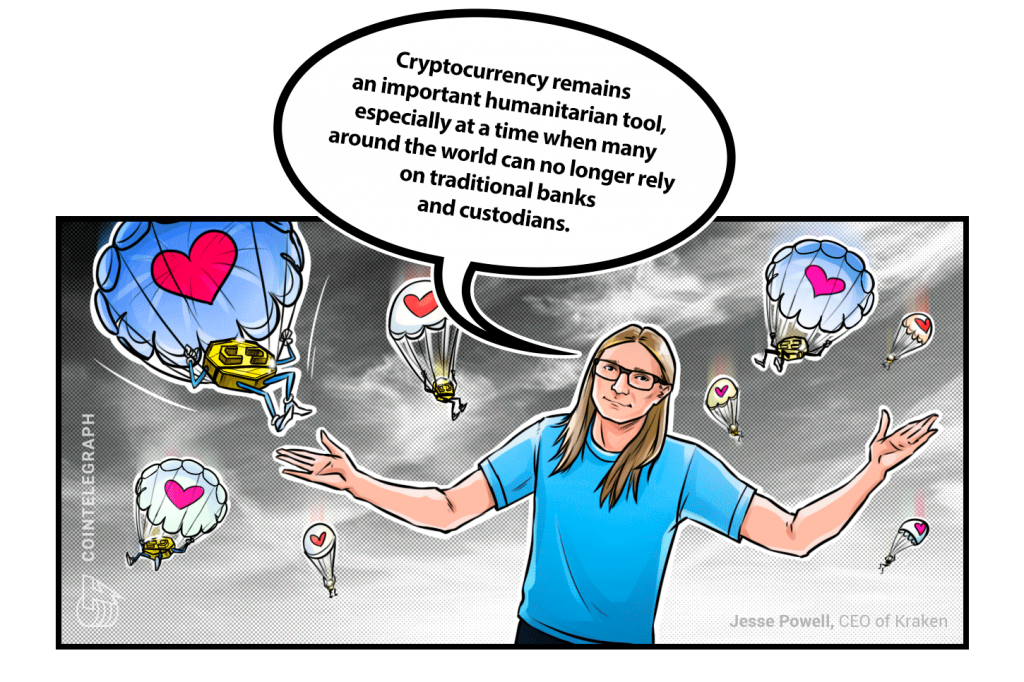
    “Cryptocurrency remains an important humanitarian tool, especially at a time when many around the world can no longer rely on traditional banks and custodians.”

    Jesse Powell, CEO of Kraken

    “While I agree with the President’s desire to combat money laundering and defend America’s national security, I think his executive order misses the fact that the overwhelming majority of digital asset users are law-abiding and trying to make our financial system better.”

    Cynthia Lummis, United States senator

    “We want to identify and invest in one or two targets in every economic sector and try to bring them into crypto.”

    Changpeng CZ Zhao, CEO of Binance

    “In the U.S., where most people have access to traditional banking, crypto is often viewed as more akin to gambling than to investing. The space can also feel pretty intimidating from the outside looking in — things move so quickly, a lot of the lingo is new and confusing, and the way it’s portrayed in the media is overwhelmingly negative.”

    Jackie Rose, head of institutional business development at Blockchain.com 

    “It makes much more sense to replace a resistive heater (like a space heater) with a Bitcoin miner, as both of them will turn electricity into heat, while the Bitcoin miner also generates Bitcoin.”

    Michael Schmid, Bitcoin miner

    Prediction of the Week 

    $40K Bitcoin price is in reach, but analysts warn that a sweep of recent lows is likely

    Bitcoin had a week of indecisive price action filled with notable ups and downs. Inside the week, BTC visited lows below $37,500 and highs above $42,500, based on price data from Cointelegraph’s BTC price index.  

    Cointelegraph’s Jordan Finneseth wrote an article, published on Thursday, detailing a number of points regarding Bitcoin. Among other quotes and data, the article included a possible outcome explained by ExoAlpha chief investment officer and managing partner David Lifchitz. 

    “BTC remains still stuck in the $33,000-$45,000 range,” Lifchitz said. “Without any follow-through in the next 48 hours and a possible break above $45,000 toward $50,000, BTC will probably keep on bouncing in the range.”

    FUD of the Week 

    DeFi Godfather Cronje quits as TVL and tokens tank for related projects

    Respected developer and Yearn.finance founder Andre Cronje deleted his Twitter account after he and his long-time colleague Anton Nell both stepped away from the crypto sector altogether.   

    Nell stated on Sunday that the duo will no longer contribute to the DeFi and crypto space moving forward, as he announced that they will be shutting down roughly 25 apps and services that they were operating. 

    The community reaction was mixed, with some sympathetic toward the duo needing a long-overdue break. However, others grabbed the pitchforks when crypto prices and total value locked (TVL) across DeFi started to tank.  

    “Was this a RUG? Nah. I see a developer who signed up to build but didn’t sign up for all the bullshit & drama that comes with it. He reached a tipping point where it wasn’t worth it for him anymore,” said The DeFi Edge on Twitter.

    DeFi detective alleges this suspicious smart contract code may put dozens of projects at risk

    Pseudonymous online DeFi detective Zachxbt highlighted that 31 nonfungible token projects may be exposed to financial risk due to “suspicious code.” 

    Zachxbt initially pointed to NFT project The Starslab, which was allegedly compromised for 197.175 Ether. The detective quoted fellow pseudonymous blockchain investigator MouseDev, who noted, after reviewing the code behind The Starslab (which is prevalent in a lot of other projects):

    “The smart contract [for this project] can never truly be renounced or transferred! Only an additional owner. The original deployer will always be considered the owner! […] This means if they still have the private key of the deployer, they can pull the money, even though the owner is the null address.”

    Siblings charged over mining coin that turned into alleged $124M fraud

    John Albert Loar Barksdale and JonAtina “Tina” Barksdale, a brother and sister duo, were charged by the U.S. Securities and Exchange Commission (SEC) for allegedly defrauding over 12,000 “retail investors out of more than $124 million” via a scheme dubbed Ormeus Coin. 

    The U.S. Department of Justice also arrested John — who was described by the SEC as a “snake-oil salesman” — abroad and charged him with wire fraud, securities fraud and conspiracy, among other alleged crimes. According to court documents, the fraud allegations stem from two initial coin offerings in 2017. The Barksdales allegedly lied about “the size, value, and purported profitability of Ormeus Coin’s cryptocurrency mining assets” to garner capital from unsuspecting investors. 

    “We will continue to vigorously pursue persons who sell securities in schemes to defraud the investing public no matter what label the promoters apply to their products,” said Melissa Hodgman, an associate director for the SEC’s Division of Enforcement.

    Best Cointelegraph Features

    Manzi the magnificent: From millionaire at 16 to incredible IoT inventor
    “Devices now, for the first time, can kind of open up and start talking to each other because of the technology that blockchain provides.”

    Stablecoins will have to reflect and evolve to live up to their name

    Stablecoins have the possibility to become a promising alternative system amid global inflation, but they must be auditable to remain stable.

    Crypto mining’s cost: How has hardware availability changed the industry?

    Is accessible mining possible? How easy is it to buy mining equipment, and how can this happen affordably?

  • Limiting Proof-of-Work Crypto Back on the Table as EU Parliament Prepares Virtual Currencies Vote

    Limiting Proof-of-Work Crypto Back on the Table as EU Parliament Prepares Virtual Currencies Vote

    One version of the new draft, reviewed by CoinDesk, has a similar provision though significantly toned down from the original. It says that crypto assets “shall be subject to minimum environmental sustainability standards with respect to their consensus mechanism used for validating transactions, before being issued, offered or admitted to trading in the Union.”

  • Kadena price soars by 40% after new protocol launches and a major exchange listing

    Kadena price soars by 40% after new protocol launches and a major exchange listing

    In bull and bear markets, the mantra for cryptocurrency projects that are focused on long-term sustainability is “always be building.”

    Kadena (KDA) is one project that has earned rewards from its forward-looking approach to development despite the weakness in the wider crypto market and the layer-one proof-of-work blockchain protocol has seen its price reverse direction recently.

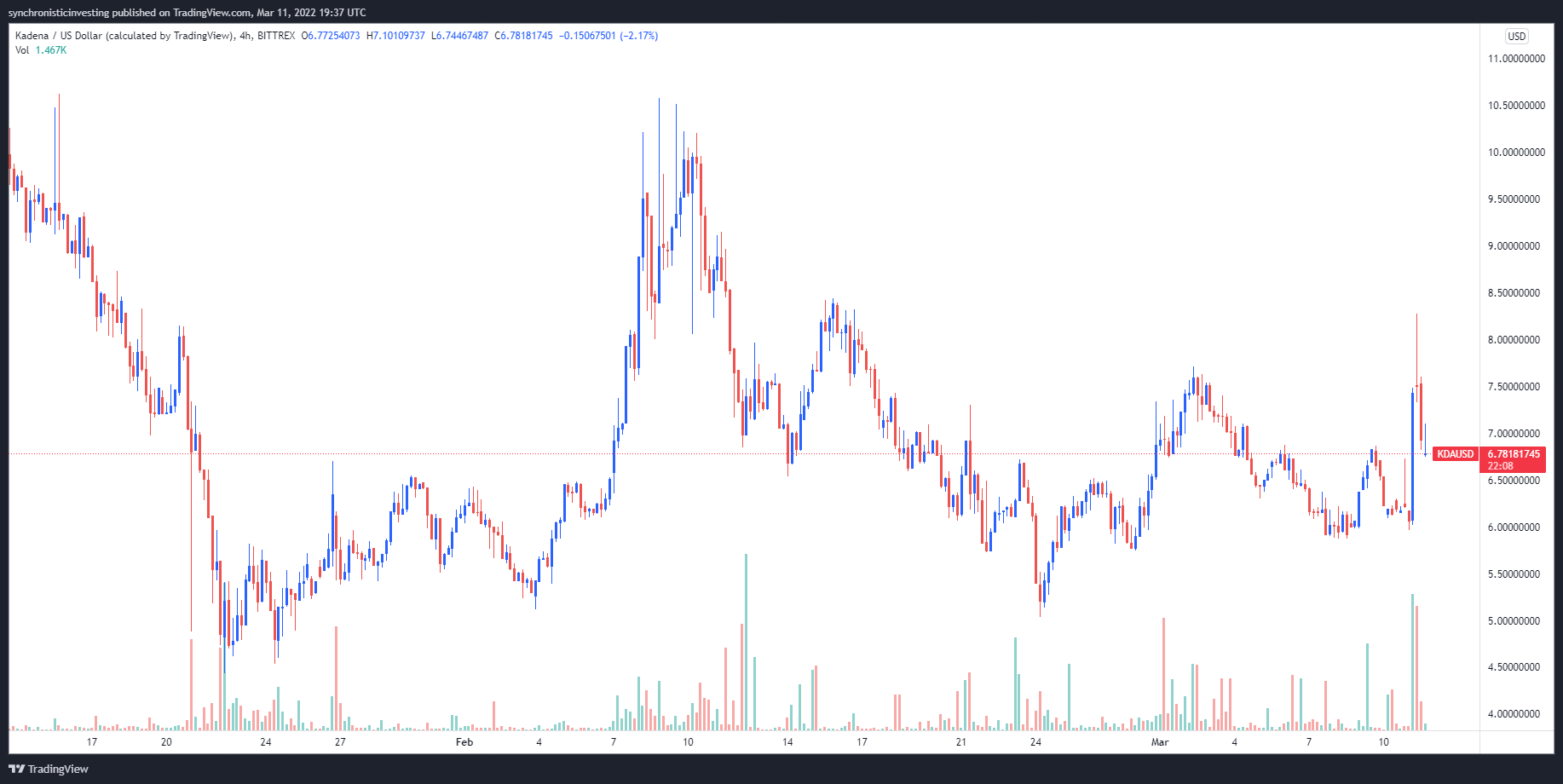
    Data from Cointelegraph Markets Pro and TradingView shows that the price of KDA spiked 40% from a low of $5.94 in the early hours on March 11 to a high of $8.28 as its 24-hour trading volume surged 784% to $325 million.

    KDA/USD 4-hour chart. Source: TradingView

    Three reasons for the recent price growth for KDA include a new listing on Binance, the launch of the first decentralized exchange on the Kadena network and upcoming roadmap plans which include the launch of an NFT standard and wrapped native tokens.

    Kadena lists on Binance

    The biggest driver of KDA was the March 11 listing on Binance.

    Following the announcement, the 24-hour trading volume spiked from an average $38 million to $325 million during trading on Friday. KuCoin exchange also saw high trading volume, with $117.4 million worth in trader occurring before the listing went live at Binance.

    New projects launch on the Kadena network

    A second development helping boost the price of KDA was the launch of new protocols on the Kadena network, including Kaddex, the first decentralized exchange in the project’s ecosystem which offers gas free trading.

    Kaddex also announced an integration with Simplex that will bring a fiat onramp into the growing decentralized finance ecosystem.

    Some of the other protocols that have recently launched and integrated with Kadena include, Hypercent Launchpad, a platofrm which facilitates the launch of verified projects on Kadena, and the crypto liquidity provider ZoidPay.

    Related: Altcoin Roundup: 3 Proof-of-work protocols focused on building Web 3.0

    Upcoming roadmap developments could be bullish

    A third factor helping to attract attention to Kadena is the project’s upcoming roadmap goals which include the launch of of a native NFT standard called Marmalade.

    Other notable developments that are planned on the Kadena roadmap include the launch of wrapped native tokens like kBTC, kETH and kUSD, a push for additional U.S. and global exchange listings, the development of lending platform infrastructure and the launch of a sustainable mining initiative.

    Developers behind the project have also announced plans to launch testnets for a Kadena Ethereum Virtual Machine (EVM) bridge as well as a Kadena to Cosmos bridge that will facilitate interoperability with other popular blockchain ecosystems.

    The views and opinions expressed here are solely those of the author and do not necessarily reflect the views of Cointelegraph.com. Every investment and trading move involves risk, you should conduct your own research when making a decision.