Tag: Asset

  • Bitwise forecasts Bitcoin as best-performing asset over next decade

    Bitwise forecasts Bitcoin as best-performing asset over next decade

    Bitwise projects Bitcoin to deliver 28% annual returns over the next decade.

    • Bitwise projects Bitcoin to deliver 28% annual returns over the next decade.
    • Institutions now view Bitcoin like equities and bonds for portfolio allocation.
    • Spot ETFs and corporate treasuries fuel Bitcoin’s growing long-term adoption.

    Bitwise Asset Management expects bitcoin to deliver the strongest returns of any major asset class over the next ten years, projecting a compound annual growth rate of 28% with gradually declining volatility.

    The forecast was shared in a new memo previewing the firm’s forthcoming Bitcoin Long-Term Capital Market Assumptions report.

    Institutional demand spurs framework

    The report, authored by Bitwise Chief Investment Officer Matt Hougan, is targeted at large platforms and professional allocators that are increasingly treating bitcoin as a “core” portfolio consideration.

    Hougan notes that the shift follows the launch and widespread approval of spot bitcoin exchange-traded funds (ETFs), which have opened the asset class to mainstream retirement accounts and wealth platforms.

    Interest in long-term planning has grown markedly.

    Hougan said Bitwise received a dozen requests this year for long-term assumptions around bitcoin, compared with none between 2017 and 2024.

    In his view, this marks an inflection point: institutions are now evaluating bitcoin in the same way they assess equities, bonds, and other traditional assets.

    Favourable comparisons with traditional markets

    While the full report is yet to be published, the preview states that bitcoin’s projected returns, volatility profile, and correlations compare favourably with established asset classes.

    Bitwise characterises bitcoin’s correlations with other major assets as “low”, falling between −0.5 and 0.5, which many allocators value for diversification benefits.

    The asset manager’s positioning of bitcoin’s outlook draws parallels with annual capital-market forecasts issued by large Wall Street firms such as JPMorgan, PIMCO, BlackRock, and Vanguard.

    These outlooks help institutions determine long-term strategic allocations across asset classes including equities, fixed income, real estate, and alternatives.

    Hougan argues that similar guidance is now warranted for digital assets, given their growing maturity and integration into mainstream investment products.

    Growing Onchain and corporate holdings

    Since spot bitcoin ETFs launched in January 2024, they have quickly gained traction.

    On-chain holdings tied to these ETFs have grown to represent almost 7% of bitcoin’s fixed 21 million supply, with assets under management exceeding $146 billion, according to data from The Block.

    Corporate treasuries have also expanded their exposure.

    Publicly traded companies, led by MicroStrategy with a holding of 629,376 BTC, have collectively accumulated more than $80 billion worth of bitcoin.

    These acquisitions have been financed largely through capital market activities, including equity offerings and convertible debt issuance.

    Bitwise’s full Bitcoin Long-Term Capital Market Assumptions report is expected later this week.

    It will provide detailed methodology and quantitative analysis, alongside side-by-side comparisons with forecasts for traditional asset classes from leading global asset managers.

    For Bitwise, the release marks a bid to position bitcoin within the same framework used for decades to evaluate traditional investments.

    For institutions, it reflects a growing acceptance of bitcoin not as a speculative play, but as a serious allocation option with defined risk and return expectations.

    Source link

  • PayPal launches “Pay with Crypto” to help US merchants accept digital asset payments

    PayPal launches “Pay with Crypto” to help US merchants accept digital asset payments

    PayPal launches “Pay with Crypto” to help US merchants accept digital asset payments

    • Businesses can now accept over 100 cryptocurrencies with near-instant conversions.
    • Pay with Crypto reduces transaction costs by up to 90%.
    • US merchants are now connected to a $4T market and over 650M crypto users

    Indeed, the latest stablecoin regulation in the United States was a game-changer.

    Besides bolstering bullish momentum, the GENIUS Act has seen many firms stepping deeper into the future of fintech.

    To support the increasing cryptocurrency adoption, PayPal has rolled out Pay with Crypto.

    The new product will allow US-based merchants to accept payments in over 100 different coins, including stablecoins, Bitcoin, Ethereum, and Solana.

    The best part. Businesses can automatically convert the received tokens to stablecoin or fiat with a 0.99% transaction fee.

    The new feature reduces the costs traditionally linked to cross-border transactions.

    Most businesses that operate internationally suffer from high fees, complex banking requirements, and delays.

    PayPal aims to solve this through a smoother payment process.

    It also unlocks global growth with a borderless customer base.

    PayPal CEO and President Alex Chriss says:

    Businesses of all sizes face incredible pressure when growing globally, from increased costs for accepting international payments to complex integrations. Today, we’re removing these barriers and helping every business of every size achieve its goals.

    Solving the international payment crisis

    Businesses globally lose billions yearly through international payment models.

    Delayed settlements, unpredictable exchange rates, and credit card fees have dented global trade.

    That is where Pay with Crypto comes in.

    PayPal introduces instant crypto-to-stablecoin or fiat conversion in an already colossal financial infrastructure.
    Furthermore, merchants will not have to worry about the technical side of digital asset transactions.

    PayPal promises to handle everything, including minimizing volatility, to ensure simplicity without compromising speed and security.
    Also, merchants can use PayPal’s Pay with Crypto to increase their profit margins.

    For instance, they will enjoy up to 90% lower processing fees compared to credit cards.

    Also, businesses that hold their funds as PYUSD (PayPal’s stablecoin) will earn rewards.

    Chriss added:

    Imagine a shopper in Guatemala buying a special gift from a merchant in Oklahoma City. Using PayPal’s open platform, the business can accept crypto, pay lower fees, and grow their business – all in one simple step.

    What’s next?

    All merchants in the US will access PayPal’s Pay with Crypto feature in the coming weeks, allowing them to receive payments in over 100 supported digital tokens.

    Businesses can link with trusted wallets like Coinbase, Exodus, OKX, and MetaMask to enjoy instant conversion from crypto to stablecoins like USDT or fiat.

    United States citizens will soon use digital currencies like ETH, BTC, and SOL to pay for goods and services.

    Meanwhile, PayPal is establishing itself as a pioneer amid growing crypto adoption.

    Recently, it integrated with Arbitrum to support PYUSD growth.

    Moreover, OKX tapped PayPal to simplify cryptocurrency purchases across Europe.

    These developments come as digital currencies gain ground in the financial landscape.

    The global crypto market cap hovers at $3.93 trillion after correcting from recent highs above $4 trillion.


    Source link

  • Best crypto to buy as Bitcoin (BTC) surpasses Google in global asset rankings

    Best crypto to buy as Bitcoin (BTC) surpasses Google in global asset rankings

    Best crypto to buy as Bitcoin (BTC) surpasses Goggle (GOOGL) in global asset rankings

    • Bitcoin recently surpassed Google in global market cap rankings.
    • Bitcoin Pepe is quickly approaching $10 million in its ongoing BPEP token presale ahead of exchange listing.
    • Bitcoin Pepe promises to bring meme coins to the Bitcoin network.

    Cryptocurrencies led by Bitcoin (BTC) are making waves as they disrupt the global asset rankings.

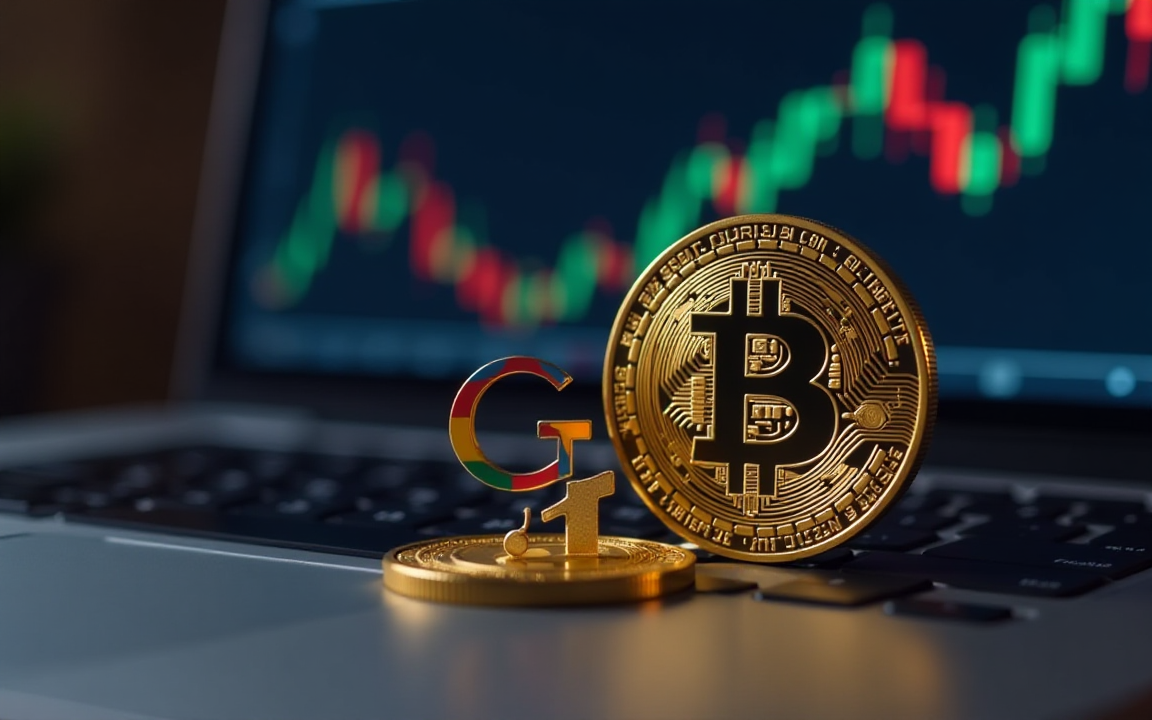
    Bitcoin (BTC) recently surged past $106,000, overtaking Alphabet (NASDAQ: GOOGL) to become the sixth-largest asset globally by market capitalisation.

    In another sign of crypto’s growing financial footprint, Tether—the largest stablecoin issuer—now holds more in US Treasury securities and gold reserves than Germany.

    According to data from the US Department of the Treasury, Tether’s holdings have exceeded Germany’s $111 billion in US Treasuries.

    These developments underscore the rapid momentum behind digital assets, as they increasingly rival and, in some cases, surpass traditional financial institutions in scale and influence.

    As capital increasingly flows into digital assets, investors are seeking the next high-potential projects that could ride this bullish wave.

    Among them, Bitcoin Pepe is quickly emerging among the best crypto to buy, especially for those looking to enter the market during this market resurgence.

    Bitcoin’s surge above Google in market cap

    On May 19, 2025, Bitcoin overtook Google’s parent company, Alphabet Inc. (GOOGL), in global asset rankings by market capitalisation.

    This came as Bitcoin’s price topped $106,000, lifting its market value past the $1.67 trillion mark.

    This development underscores a broader trend: institutional and sovereign-level confidence in Bitcoin is growing.

    Governments, hedge funds, and publicly traded companies are all adding BTC to their treasuries, with the most recent being Metaplanet, which added 1,004 bitcoins to its holdings.

    While traditional tech stocks have been a staple in investment portfolios for decades, Bitcoin’s narrative as “digital gold” and a decentralised store of value is winning hearts and capital across global markets.

    Its fixed supply, combined with growing demand, continues to push its valuation higher even amid periodic market corrections.

    Moreover, Bitcoin’s performance relative to top-tier equities is shifting perceptions. In previous market cycles, critics dismissed BTC as speculative or too volatile.

    That said, the rapid ascent of Bitcoin is also catalyzing interest in adjacent crypto projects, particularly those aiming to build on Bitcoin’s foundational strength.

    Bitcoin Pepe is emerging as a top buy as BTC surges

    As Bitcoin continues to dominate headlines, Bitcoin Pepe is quickly positioning itself as one of the most promising investment opportunities in the crypto market today.

    Built as the world’s first meme-based Layer-2 for Bitcoin, Bitcoin Pepe is more than just a viral token, it represents an ambitious plan to bring Solana-style speed and scalability to the Bitcoin network.

    Bitcoin Pepe’s native token, BPEP, is currently in the final stages of its presale.

    Having already raised over $9.8 million in the presale, Bitcoin Pepe has drawn significant interest from early backers who see both the narrative and technological edge it brings to the table.

    The current BPEP presale price is $0.0342. Notably, the token has seen a 62.9% price rise since the presale started a few weeks ago, with a 5% increase in each presale stage.

    Bitcoin Pepe’s roadmap is equally ambitious. Once the presale comes to an end, the price of BPEP is expected to rise substantially, especially after it hits centralised exchanges shortly after the presale ends.

    Beyond the presale hype, Bitcoin Pepe has introduced a new token standard by the name of PEP-20 token standard, which allows users to launch their own memecoins on Bitcoin’s blockchain.

    By introducing ultra-fast transactions and negligible fees, Bitcoin Pepe aims to empower a new generation of creators and investors to build directly on the most secure blockchain in existence.

    Despite the broader market experiencing a minor pullback today, the sentiment around Bitcoin Pepe remains overwhelmingly bullish, fueled not only by retail investors but also by crypto influencers and key opinion leaders (KOLs) who recognize the project’s unique positioning at the intersection of memes, Bitcoin, and scalable infrastructure.

    Source link

  • Vancouver mayor proposes Bitcoin as city reserve asset for stability

    Vancouver mayor proposes Bitcoin as city reserve asset for stability

    Vancouver mayor proposes Bitcoin as city reserve asset for stability
    • Vancouver Mayor Ken Sim proposes Bitcoin as a reserve asset to protect purchasing power.
    • Jeff Booth supports Ken Sim’s proposal, recognizing Bitcoin’s potential as a strategic asset.
    • Former USA CFTC Chairman Giancarlo advocates for Bitcoin reserves, likening it to gold.

    Vancouver Mayor Ken Sim has introduced a bold proposal to explore Bitcoin as a reserve asset for the city, aiming to diversify its financial resources and safeguard its purchasing power.

    The motion, titled “Preserving the city’s purchasing power through diversification of financial resources: Becoming a Bitcoin-friendly city,” is scheduled to be officially presented to the Vancouver City Council on December 11, 2024. The proposal marks a significant shift toward cryptocurrency adoption by a major city government.

    Protecting Vancouver from economic shocks using Bitcoin

    In his motion, Mayor Sim seeks to investigate how Bitcoin could help protect Vancouver from economic volatility and inflation by adding it to the city’s reserves.

    It comes amid growing interest in Bitcoin as a reserve asset at the government level, particularly in the United States. Several US lawmakers have recently proposed holding Bitcoin in public financial reserves, highlighting the increasing consideration of cryptocurrency in national economic strategies.

    Although the full text of the proposal has not yet been made available, Bitcoin advocate Jeff Booth voiced support for Mayor Sim’s plan during a discussion on X Spaces on November 26, 2024. Booth described the motion as an important step in recognizing Bitcoin’s potential as a strategic financial asset for the city.

    Former CFTC chairman supports a Bitcoin reserve in the USA

    Meanwhile, Christopher Giancarlo, the former Chairman of the US Commodity Futures Trading Commission (CFTC), has been vocal about the potential for Bitcoin as a strategic reserve asset for the US.

    In a recent interview, Giancarlo referred to Bitcoin as the “world’s first digital commodity,” noting its similarities to traditional commodities such as gold, oil, and copper, which nations have historically hoarded. He praised the idea of a national Bitcoin reserve, emphasizing its potential to provide long-term financial stability in an increasingly digital economy.

    Giancarlo also acknowledged concerns about Bitcoin’s speculative nature but drew parallels to the dot-com bubble, where early-stage speculation gave way to technological breakthroughs that revolutionized industries. He believes the same evolution could occur with blockchain and Bitcoin technology, making it a forward-looking move for governments and financial institutions.

    Source link

  • Asset manager Franklin Templeton applies to launch a spot Bitcoin ETF

    Asset manager Franklin Templeton applies to launch a spot Bitcoin ETF

    • Franklin Templeton joins other asset management firms like Grayscale that have applied to offer crypto ETFs.
    • The SEC was mandated by the court to evaluate Grayscale’s application to convert its Bitcoin futures ETF into a spot ETF.
    • Franklin Templeton will collaborate with CF Benchmarks to ensure accurate valuation.

    Franklin Templeton, a prominent asset management firm with $1.5 trillion in assets under management, has submitted an application to the United States Securities and Exchange Commission (SEC) seeking approval for the launch of a Bitcoin exchange-traded fund (ETF) that would track the price of Bitcoin in real-time.

    This move by Franklin Templeton follows a series of notable developments in the cryptocurrency ETF space. In late August, the SEC opted to delay its decisions regarding spot ETF applications from several other companies, including WisdomTree, Valkyrie, Fidelity, VanEck, Bitwise, and Invesco. Furthermore, a significant court ruling on August 29th mandated that the SEC must evaluate Grayscale’s application to convert its Bitcoin futures ETF into a spot ETF.

    Franklin Templeton’s ETF application

    In their application, Franklin Templeton outlines the structure of the proposed fund. It would function as a trust, with Coinbase serving as the custodian for Bitcoin holdings. Bank of New York Mellon would take on the roles of cash custodian and administrator. Fund shares are intended to be traded on the Cboe BZX Exchange, a major securities exchange in the United States. The SEC has set its next deadline for making a decision on this application for October 16th.

    In recognition of the regulatory uncertainties surrounding the digital asset market in the United States, Franklin Templeton explicitly acknowledges the risks in its application. They highlight the potential adverse impacts of legislative or regulatory developments, which could significantly affect the value of Bitcoin and the shares of the proposed ETF. Such impacts could include bans, restrictions, or imposing stringent conditions on various aspects of the cryptocurrency ecosystem, including trading, mining, digital wallets, custody services, and the overall operation of the Bitcoin network.

    CF Benchmarks and Franklin Templeton partnership

    To ensure accurate valuations, Franklin Templeton plans to collaborate with CF Benchmarks, a digital asset index provider regulated in the United Kingdom. CF Benchmarks would provide daily valuations based on data from reputable cryptocurrency exchanges, including Coinbase, Bitstamp, iBit, Kraken, Gemini, and LMAX Digital. These valuations would be updated at 5-minute intervals to reflect the real-time nature of the cryptocurrency market.

    At the time of writing, the price of Bitcoin was trading at $25,952.26, underlining the dynamic and ever-changing nature of the digital asset market that Franklin Templeton seeks to tap into with its proposed Bitcoin ETF.

    Source link

  • Bitcoin still trading like a risk asset, despite claims of decoupling amid banking crisis

    Bitcoin still trading like a risk asset, despite claims of decoupling amid banking crisis

    Key Takeaways

    • First Republic has become the latest bank to collapse in the US
    • Bitcoin has bounced this week, as it did in March when SVB fell and the banking crisis was triggered
    • Our Head of Research, Dan Ashmore, contends that Bitcoin remains a risk asset, despite claims from enthusiasts that a decoupling is occuring
    • Correlation with stock market is still high, he writes, pointing to altered expectations around interest rate policy as the reason Bitcoin has moved upward

    There has been chatter amid the market recently (again) that Bitcoin is decoupling from stocks. Something about Bitcoin offering an alternate store of value outside the realm of the fiat world, a proposition that has suddenly become a lot more valuable as the banking turmoil striking the US rages. 

    Let me start by saying that I don’t think my opinion is very valid here. I can’t predict the future. But I want to look at the numbers because I believe they prove that this theory, that Bitcoin has decoupled, is objectively false. 

    I wrote a deep dive on Bitcoin’s correlation with stocks in March, when this theory originally surfaced as Silicon Valley Bank collapsed, while Bitcoin raced upwards. The same logic applies now, so let me try summarise it by refreshing the same numbers. 

    And a quick note – this article is nothing about my beliefs around Bitcoin’s trajectory in the long-term. Whether Bitcoin decouples in future and establishes itself as a store of value akin to gold, uncorrelated to other risk assets, is a debate for another time and not one I will delve into here. I’m purely looking at the price action today and saying that, as of May 2023, Bitcoin is trading like an extreme-risk asset, completely removed from this uncorrelated vision. 

    Bitcoin’s correlation with the Nasdaq

    The natural place to look is tech stocks, being one of the riskier subsectors of the equity universe. The Nasdaq, being a tech-heavy index, is often seen as the benchmark for this sector. So let us chart Bitcoin’s correlation with the Nasdaq over the past couple of years. 

    Using a 60-Day Pearson measure, the chart shows that the correlation has bounced around a lot over the past couple of years. For the most part, however, it has shown a relatively strong relationship, frequently residing above 0.5. 

    There were a couple of dips. The first is clearly May/June 2021, when Bitcoin cratered from $63,000 to $31,000 for no apparent reason, before climbing back up into the high sixties later that year. 

    The second large dip in correlation is in November 2022. This was none other than the FTX collapse, the staggering implosion sending shockwaves through the crypto industry. At the same time, stocks actually advanced significantly as softer inflation data cropped up and optimism increased around the future path of interest rates. Cue the big dip in correlation. 

    Therefore, there have been two periods of notable, and very large, decorrelations. Both of these occurred as crypto melted down, independently of the stock market. If you look closely over the last year – I have shown the correlation over the last year below – you will see another big deviation in the summer of 2022 when crypto “bank” Celsius shut withdrawals. 

    And most importantly, the correlation has come back up swiftly every time. Including in March, when Bitcoin outperformed in the aftermath of the banking crisis. 

    But, did it really outperform in March? The correlation above remained relatively high, certainly nowhere near previous episodes of decorrelation – and a lot more brief. Sure, Bitcoin raced upward further than the Nasdaq post-SVB, but it also fell further prior to the guarantee that deposits backing the second largest stablecoin, USD Coin, were safe. In reality, Bitcoin did what it has been doing – sold off more aggressively and then bounced back stronger. Because, well, it is riskier.  

    Besides, the elephant in the room is the Federal Reserve. Markets have been moving off expectations of Fed policy all year long, and this was the true cause of the movement in March, as well as this week. 

    With SVB’s collapse, the market reacted to the announcement of a large liquidity injection by the Fed, as well as the expectation that rates could not be hiked as much in future as a result of the creaking banking system. These are both good things for risk assets and so Bitcoin rose. Again, not because of any potential downfall of the fiat system. 

    Not to mention, these banking problems were borne out of duration risk management, completely distinct to the banking issues of the GFC in 2008, which were a full-blown insolvency crisis built upon terrible underlying assets (subprime mortgages). Today, the banking crisis is still a crisis, but a regional one borne out of the most aggressive hiking cycle in recent memory, which has seen bank assets dropping in value and deposits pulled to take advantage of those higher rates elsewhere, leading to an unsustainable bank run as confidence evaporates. 

    We have seen similar developments again this time around, as First Republic Bank fell last week after revealing it saw over $1 billion of withdrawal requests last quarter. 

    Again, the market reacted to these things breaking by saying: “OK, the Fed cannot hike much more. This is good for risk assets”. Looking at Fed fund probabilities, there is the expectation of a 25 bps hike today (May 3rd) and then….nothing. The market is viewing this as the final hike. 

    So, it is important to keep track of lurking variables (interest rate policy) when assessing correlations and trying to garner why Bitcoin is moving. For the time being, the numbers are pretty clear, and the conclusion is unequivocal: Bitcoin is trading like a risk asset. Perhaps we don’t even need to look at correlation. Take a glance at the below chart plotting Bitcoin’s returns since the start of 2022 against the Nasdaq. Do you really want to argue that these assets are uncorrelated?

    The numbers speak for themselves. Again, this is not speculating about what will happen in future. Tomorrow, Bitcoin could go to $1 million and the Nasdaq could go to zero for all I care. Bitcoin may one day reach that uncorrelated store of value status. But for now, the numbers are clear: it is trading like a risk asset. 

    Source link