Tag: Bank

  • Deutsche Bank sees parallels between Gold and Bitcoin as central banks boost gold reserves

    Deutsche Bank sees parallels between Gold and Bitcoin as central banks boost gold reserves

    • Deutsche Bank says gold now makes up 24% of central bank reserves, the highest share since the 1990s.
    • Analyst Marion Laboure sees parallels between gold and Bitcoin as safe-haven, low-correlation assets.
    • Deutsche Bank predicts both Bitcoin and gold could join central bank reserves by 2030.

    Global central banks are expanding their gold holdings at a pace not seen in decades, a trend that could have major implications for Bitcoin, according to a new report from Deutsche Bank.

    The bank’s strategists noted that gold’s share of central bank reserves climbed to 24% in the second quarter, its highest level since the 1990s, marking a renewed confidence in the precious metal amid shifting global monetary dynamics.

    Deutsche Bank’s findings highlight how gold’s resurgence and Bitcoin’s momentum in 2025 share several common characteristics, particularly as investors and policymakers seek alternative stores of value in an uncertain economic environment.

    Central Banks’ Gold accumulation reaches multi-decade highs

    The report shows that official demand for gold has doubled compared to the 2011–2021 average, signaling an intensified effort by central banks to diversify away from fiat currencies.

    The strategists described this as a “significant shift in global finance,” echoing patterns seen throughout the 20th century when gold played a dominant role in global reserves.

    Gold’s renewed accumulation coincides with its climb past inflation-adjusted all-time highs.

    Although gold prices have been setting nominal records for several years, Deutsche Bank noted that only recently has the metal surpassed its real-adjusted peak from 1980.

    “It’s only in recent weeks that gold has finally surpassed its real-adjusted all-time highs from around this point 45 years ago,” the bank’s strategists wrote.

    They attributed the decades-long gap between those milestones to a combination of factors, including central bank gold sales, institutional sell-offs, and the rise of the fiat currency era.

    The report also recalled that gold’s formal role as a reserve asset ended in 1979 when the International Monetary Fund (IMF) prohibited member countries from pegging exchange rates to gold — a move that cemented the end of the Bretton Woods system.

    Bitcoin emerges as a modern parallel to Gold

    Deutsche Bank’s macro strategist Marion Laboure explored potential parallels between gold and Bitcoin in a report titled Gold’s reign, Bitcoin’s rise.”

    She observed that both assets have shown similar long-term performance patterns since their inception and share a reputation for high volatility and periods of underperformance.

    Laboure emphasized that both gold and Bitcoin have a low correlation with traditional financial assets, making them attractive options for diversification.

    These shared traits, she suggested, contribute to their appeal as potential “safe-haven” assets in times of market uncertainty.

    While Laboure acknowledged that Bitcoin’s volatility and lack of backing remain major concerns, she noted that volatility has declined to historic lows.

    Other challenges — including limited adoption, speculative behavior, cybersecurity risks, and liquidity constraints — continue to limit Bitcoin’s suitability as a mainstream reserve asset, but its trajectory is drawing increasing institutional attention.

    Looking ahead: Bitcoin and Gold in central bank reserves by 2030?

    Despite lingering skepticism among policymakers, Laboure predicted that both Bitcoin and gold could feature on central bank balance sheets by 2030.

    The forecast reflects a gradual convergence between traditional and digital stores of value, particularly as institutional adoption of Bitcoin expands and governments explore ways to diversify their reserves.

    Still, she cautioned that Bitcoin’s volatility and perceived risk profile remain key barriers for central banks, whose primary mandate is to preserve capital stability.
    Source link

  • SoFi Bank to start using Bitcoin for cross-border payments

    SoFi Bank to start using Bitcoin for cross-border payments

    SoFi Bank to start using Bitcoin for cross-border payments

    • SoFi will enable instant cross-border transfers using Bitcoin and UMA.
    • Transfers will convert USD to Bitcoin via Lightning, then to local currency.
    • The service will first launch in Mexico with lower fees than traditional remittances.

    SoFi Bank is preparing to shake up the global remittance industry by introducing a blockchain-powered international money transfer service.

    The US digital bank has partnered with Lightspark, a Bitcoin infrastructure company founded by former PayPal president David Marcus, to bring faster and cheaper cross-border payments directly into its app.

    SoFi steps into blockchain payments

    The new service will allow SoFi customers to send money abroad without relying on traditional remittance providers or third-party platforms.

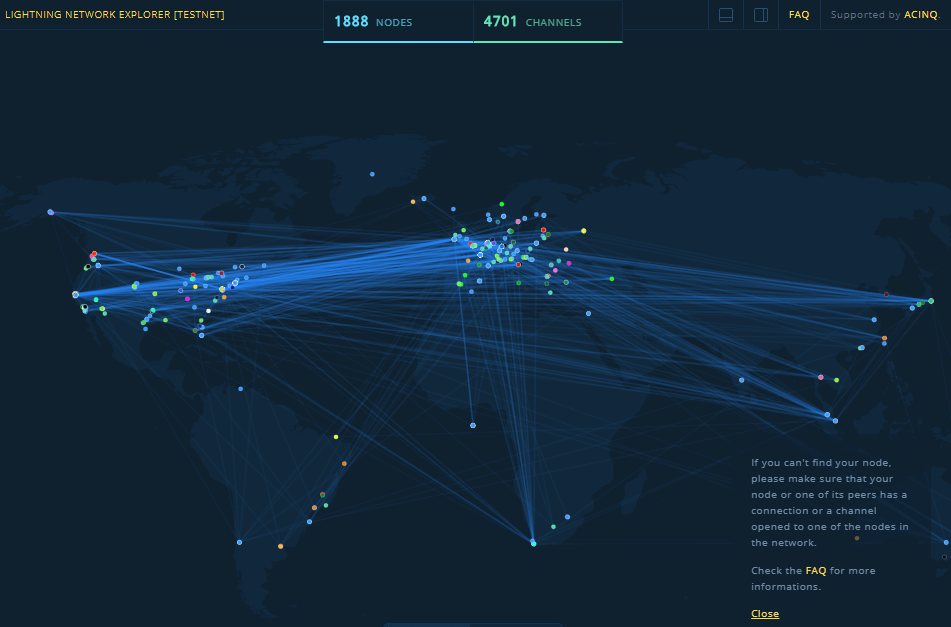
    Instead, transfers will be powered by the Bitcoin Lightning Network and Lightspark’s Universal Money Address, or UMA.

    This technology is designed to move dollars across borders instantly, at any time of the day, while ensuring that fees and exchange rates are displayed clearly before each transaction.

    SoFi says the service will debut later this year, beginning with Mexico, a key remittance corridor from the United States.

    Once rolled out, users will be able to initiate transfers directly through the SoFi app, where US dollars will be converted into Bitcoin, routed across the Lightning Network, and then converted back into the recipient’s local currency before being deposited in their bank account.

    Notably, this is not SoFi’s first step into the digital asset space.

    The bank began offering crypto trading in 2019, but later scaled back the service following regulatory concerns during the collapse of FTX.

    However, with a federal banking license secured and new rules under the GENIUS Act offering greater clarity, SoFi is reentering the sector more aggressively.

    During its most recent earnings call, the company outlined ambitions beyond remittances.

    These include plans for stablecoin issuance, crypto-backed loans, and staking infrastructure for other institutions.

    By positioning itself as a bridge between traditional banking and Web3, SoFi hopes to secure a long-term advantage over pure-play crypto platforms.

    Faster and cheaper transfers

    The promise of speed and lower costs is central to SoFi’s plan.

    Traditional remittances often take days to clear and can cost families as much as 6% of the amount being sent.

    By embedding blockchain rails into its platform, SoFi expects to deliver a service that is available around the clock and significantly below the national average cost of remittances in the United States.

    Anthony Noto, SoFi’s chief executive, emphasised that many of the bank’s members rely on sending money to loved ones overseas.

    He said that building blockchain transfers directly into the SoFi app will give users “faster, smarter, and more inclusive access” to their funds.

    The bank is also opening a waitlist to meet early demand and gauge interest from members who frequently send money abroad.

    Lightspark provides the backbone

    Lightspark, which launched in 2022, has been positioning its UMA as a universal standard for moving money globally in a way that feels as simple as sending an email.

    According to Marcus, Bitcoin is the only open payments network that can power such transactions securely and at scale.

    Marcus added that UMA on SoFi will allow members to move dollars instantly with full transparency and control, while avoiding the delays of traditional systems.

    The collaboration makes SoFi the first US bank to integrate Bitcoin’s Lightning Network and UMA at this scale.

    It also comes at a time when other major institutions, including Bank of America and JPMorgan, are testing blockchain for their own transfer systems.


    Source link

  • Bitcoin’s surge to record highs signals potential shift toward stability, says Deutsche Bank

    Bitcoin’s surge to record highs signals potential shift toward stability, says Deutsche Bank

    Bitcoin

    • Bitcoin hit a record high above $123,000, with Deutsche Bank noting a rare drop in volatility alongside the rally.
    • Analyst Marion Laboure sees signs of Bitcoin maturing as an asset, supported by regulatory clarity and institutional adoption.
    • Despite a short-term pullback, broader macro and micro factors point to a more stable, long-term trend for Bitcoin.

    Bitcoin may be entering a new phase of greater price stability, according to a recent analysis by Deutsche Bank.

    The cryptocurrency reached a record high above $123,000 on Monday, marking a roughly 75% gain from its levels in mid-November.

    Deutsche Bank analyst Marion Laboure noted that the sharp appreciation has been accompanied by a historic drop in volatility — an unusual but telling combination.

    “While excitement over the upcoming legislations has spurred Bitcoin’s sharp appreciation, it is notable that Bitcoin’s rise has also been accompanied by a historic decline in volatility levels,” Laboure wrote in a note to clients on Tuesday.

    She suggested this may point to an emerging decoupling of Bitcoin’s spot price from its traditional volatility, hinting at the digital asset’s evolution toward a more stable asset class.

    Laboure cited growing market adoption, clearer regulatory frameworks, and increased institutional involvement as contributing factors to this stabilization trend.

    Together, these dynamics are helping to shift Bitcoin away from the high-churn, speculative cycles that have historically defined its behavior.

    Regulatory and institutional tailwinds

    The record-breaking price movement comes as US lawmakers gathered for the “Crypto Week,” which investors hope will pave the way for a more supportive regulatory environment.

    While crypto legislation has long been a point of debate in Washington, proponents see this week’s discussions as a potential inflection point that could attract greater participation from institutional investors.

    In her analysis, Laboure emphasized the convergence of macro and micro factors currently driving Bitcoin’s performance.

    On the macro side, she pointed to rising geopolitical tensions, shifts in global trade policies including tariffs, and ongoing de-dollarization trends as adding complexity to traditional markets, making Bitcoin more attractive as an alternative asset.

    On the micro level, she highlighted the increasing participation of institutional investors and longer-term holding patterns among market participants.

    These trends, according to Laboure, suggest that Bitcoin’s role in portfolios is maturing.

    Rather than serving solely as a speculative tool, it is gradually being integrated into broader investment strategies.

    Short-term pullback, long-term outlook

    Despite the strong rally, Bitcoin experienced a modest retreat of over 2% in midday trading on Tuesday, falling back to around $117,000.

    However, Laboure cautioned against reading too much into short-term fluctuations, reiterating that broader adoption and regulatory clarity remain key pillars supporting the current trajectory.

    “Volatility remains inherent,” she acknowledged.

    However, the emerging conditions, from legislation and market structure to investor behavior, “suggest Bitcoin’s integration into portfolios is maturing, and potentially signals a more sustainable trend beyond previous instances of short-term market speculation.”

    As institutional interest deepens and the regulatory landscape evolves, analysts like Laboure believe Bitcoin could continue to see upward momentum while exhibiting more stable price behavior — a significant shift for an asset historically defined by extreme swings.

    Source link

  • Czech National Bank governor wants to invest in Bitcoin

    Czech National Bank governor wants to invest in Bitcoin

    • If the plan is approved, the CNB could hold up to five percent of its €140 billion reserves in Bitcoin
    • Michl believes the Bitcoin trend will continue even without the Trump administration
    • The governor said he’s open to Bitcoin ending up becoming worthless

    The governor of the Czech National Bank has said that he’ll present a plan to the board to invest in Bitcoin as a way for the bank to expand its reserves.

    In an interview with the Financial Times, governor Aleš Michl, who is expected to present the plan on Thursday, said: “For the diversification of our assets, Bitcoin seems good.”

    If the board approves the plan, the bank could hold up to five percent of its €140 billion ($146 billion) reserves in Bitcoin.

    Trump impact

    Michl also pointed to US President Donald Trump’s impact on the crypto market. Last week, Trump signed an executive order for a crypto working group to provide regulatory clarity on crypto. It’s also expected to look into a national Bitcoin stockpile.

    Despite believing that the Trump administration could “create some bubble for Bitcoin,” Michl added that the Bitcoin trend “would be an increase without those guys as well, because it’s an alternative [investment] for more people.”

    Since being re-elected to the White House, Trump has appointed several pro-crypto candidates to top positions. Paul Atkins is expected to become the chair of the US Securities and Exchange Commission (SEC), a position previously held by Gary Gensler.

    Wider investor interest

    Michl pointed to the increased investor interest, thanks to the introduction of US spot Bitcoin exchange-traded funds (ETFs) last January.

    Yet, while the governor is presenting a plan to the board, he said that he was open to Bitcoin becoming worthless.

    “It’s possible to have a big range of outcomes, that Bitcoin will have a value of zero or an absolutely fantastic value . . . but in our history we have also had some stocks like Enron or the payment company Wirecard, so we have some experience with bad investments, so, yes, I’m ready [for a possible Bitcoin collapse].”

    Source link

  • Bank of America CEO says banks will embrace crypto with clearer regulations

    Bank of America CEO says banks will embrace crypto with clearer regulations

    • The banking sector could embrace crypto payments if clearer rules are in place
    • Crypto would be another form of payment like Visa and Mastercard, said Brian Moynihan
    • A new crypto task force aims to provide a “clear regulatory framework for crypto assets”

    Bank of America’s CEO said the US banking industry will embrace crypto payments if clearer rules are in place from regulators.

    In an interview with CNBC at the World Economic Forum in Davos, Switzerland, Brian Moynihan said that all banks send money digitally nowadays. He added that if rules come in and crypto payments are made “real,” then “the banking system will come in hard on the transactional side of it.”

    “If you go down the street here and you go in and buy lunch, right, if you can pay with Visa, Mastercard, a debit card, Apple Pay, etc., this would just be another form of payment,” the BoA CEO said.

    To date, US banks have been cautious about offering retail crypto services, instead focusing on providing institutional products such as spot Bitcoin exchange-traded funds (ETFs).

    Changes under a Trump administration?

    Moynihan’s comments come as President Donald Trump started another term in the White House earlier this week.

    During his election campaign, Trump indicated a pro-crypto stance and has since appointed several pro-crypto candidates to various government positions.

    Introducing a new crypto task force “dedicated to developing a comprehensive and clear regulatory framework for crypto assets” could give banks the push they need to enter the space.

    Speaking to CoinJournal, Tom Kiddle, co-founder of Palisade, a French-regulated digital asset custodian backed by Ripple, said: “So far, the country has done little to advance a clear crypto regulatory framework. However, Trump’s nomination of pro-crypto Paul Atkins could mark the dawn of a new era for the sector.”

    When asked about crypto such as Bitcoin as an investment option during the interview, Moynihan refrained from answering, stating that topic was “really a separate question.”

    Source link

  • Italy’s largest bank, Intesa Sanpaolo, buys $1M Bitcoin

    Italy’s largest bank, Intesa Sanpaolo, buys $1M Bitcoin

    Italy's largest bank, Intesa Sanpaolo, buys $1M Bitcoin
    • Intesa Sanpaolo Bank buys $1 million in Bitcoin
    • The bank is the first Italian bank to invest in crypto
    • The move is a low-risk experiment with digital assets in preparation for potential client demand

    In a pioneering move for Italy’s financial sector, Intesa Sanpaolo, the country’s largest bank, has ventured into the cryptocurrency market by purchasing $1 million worth of Bitcoin (BTC).

    This acquisition marks a significant milestone as the first direct cryptocurrency purchase by a major Italian bank, reflecting the growing acceptance of digital assets in traditional finance.

    A test in preparation for potential client demands

    The transaction, which netted Intesa Sanpaolo 11 Bitcoin, underscores a cautious yet optimistic approach towards cryptocurrencies.

    According to an internal memo and subsequent reports by Reuters, this investment is seen as an experiment within the bank’s vast portfolio, which includes over $100 billion in securities.

    The bank’s CEO Carlo Messina described the purchase as a test, emphasizing the minimal risk involved due to the relatively small amount compared to the bank’s total assets.

    Messina further elaborated that this move is not just about dipping toes into the digital asset pool, but also about preparing for potential client demands. “This shows there can be some attention to digital channels, but with very limited investment amounts,” he commented.

    Such a strategy could signal to other financial institutions that there’s room for cryptocurrencies in traditional banking, especially if sophisticated clients show interest in these novel investment options.

    Intesa betting on a favorable crypto environment in 2025

    The timing of this investment is noteworthy. Following the US approval of its first crypto-based ETF at the start of 2024 and the election of a pro-crypto US government-in-waiting at the end of the year, Bitcoin’s price soared to unprecedented heights, reaching six figures by late 2024.

    With expectations of favorable regulatory changes under the new US administration led by President-elect Donald Trump, the market anticipates further growth in 2025. Intesa Sanpaolo’s move could be seen as strategic, capitalizing on what many consider an opportune entry point into the cryptocurrency market.

    This groundbreaking step by Italy’s leading bank not only highlights a shift towards embracing digital assets, but also sets a precedent for other banks in Italy and potentially across Europe to consider cryptocurrencies as part of their investment strategies.

    As the financial world watches, this could lead to more integrated and innovative services blending traditional banking with the burgeoning world of digital currencies.

    Source link

  • MicroStrategy’s endgame is to be the leading Bitcoin bank: Michael Saylor

    MicroStrategy’s endgame is to be the leading Bitcoin bank: Michael Saylor

    MicroStrategy’s endgame is to be the leading Bitcoin bank Michael Saylor
    • MicroStrategy aims to become the world’s leading Bitcoin bank, holding 252,220 BTC.
    • The company invests borrowed funds in Bitcoin, expecting 29% annual returns.
    • Saylor’s goal is to grow MicroStrategy into a trillion-dollar bitcoin-driven entity.

    Michael Saylor, founder and executive chairman of MicroStrategy, in an interview with analysts at research and brokerage firm Bernstein outlined a clear vision for the future of his company. According to Saylor, MicroStrategy aims to become the world’s leading Bitcoin bank.

    Saylor believes that Bitcoin (BTC) is not only the top-performing asset of the 21st century but also the cornerstone of a revolutionary financial system and his ultimate goal is for MicroStrategy to transform into a trillion-dollar company by leveraging the potential of Bitcoin (BTC).

    MicroStrategy’s Bitcoin accumulation strategy

    MicroStrategy’s recent acquisition of 7,420 BTC demonstrates its aggressive approach toward bitcoin accumulation, using both debt and equity to maximize returns. The company’s total investment in BTC is estimated to have cost around $9.9 billion, alongside a debt burden of $4 billion.

    As a result, MicroStrategy now controls about 1.2% of the total Bitcoin supply, reinforcing its prominent position in the market.

    Currently, with over 252,220 BTC in its reserves, currently valued at more than $15 billion, MicroStrategy holds the title of the largest corporate Bitcoin holder globally.

    Saylor’s long-term thesis is that Bitcoin’s scarcity and volatility make it a superior asset for hedging against inflation and storing value. He foresees Bitcoin eventually reaching millions of dollars per coin, and with continued investment, MicroStrategy could grow into a trillion-dollar entity.

    Saylor envisions the firm issuing various financial instruments such as equity, convertible debt, and preferred stock tied to Bitcoin, which would further cement its role in the emerging Bitcoin economy.

    Saylor also emphasizes the attractiveness of Bitcoin over traditional lending models. He argues that lending to Bitcoin, by investing in it directly, offers better returns with less risk compared to lending to individuals or corporations. He plans for MicroStrategy to continue borrowing funds to invest in Bitcoin without lending out the Bitcoin itself, minimizing counterparty risk.

    In the broader context of corporate bitcoin adoption, MicroStrategy’s model stands out. While other companies in the crypto space, like Marathon and Block, have adopted Bitcoin as part of their treasury strategy, MicroStrategy’s focus and scale make it unique.

    Saylor remains confident that MicroStrategy’s business model, which bridges traditional USD capital markets with Bitcoin, will be difficult for others to replicate, positioning the firm as a pioneer in the Bitcoin-driven financial landscape.

    A Bitcoin bank that doesn’t lend out funds

    Unlike traditional banks that lend out funds, MicroStrategy’s business model revolves around borrowing money at low interest rates and investing those funds in Bitcoin.

    By offering slightly higher rates to lenders and expecting Bitcoin’s annual growth to average around 29%, the company is positioned to outperform many conventional investments.

    Saylor’s strategy hinges on capital markets arbitrage, where MicroStrategy capitalizes on the difference between USD capital and Bitcoin’s appreciation, allowing them to generate significant returns.

    MicroStrategy’s bold ambition to become a trillion-dollar Bitcoin bank reflects Saylor’s unwavering belief in Bitcoin’s potential as the world’s most valuable asset.

    Source link

  • National Bank of Bahrain launches a Bitcoin investment fund

    National Bank of Bahrain launches a Bitcoin investment fund

    National Bank of Bahrain launches a Bitcoin investment fund
    • The National Bank of Bahrain launches the GCC’s first Bitcoin investment fund.
    • The fund offers accredited investors exposure to Bitcoin as a capital-protecting option.
    • Bahrain ranks fifth globally in Bitcoin holdings, emphasizing its crypto-friendly stance.

    The National Bank of Bahrain (NBB) has made headlines with the launch of a groundbreaking investment fund aimed at providing accredited investors with exposure to Bitcoin.

    This initiative marks the first Bitcoin-linked structured investment in the Gulf Cooperation Council (GCC) region, which includes countries such as Kuwait, Oman, Qatar, Saudi Arabia, and the United Arab Emirates.

    National Bank of Bahrain collaborating with APR Digital

    In collaboration with APR Digital, the fund is designed to cater to the growing interest in digital assets, particularly Bitcoin.

    Hisham AlKurdi, Group Chief Executive of Markets & Client Solutions at NBB, in a press release, expressed pride in introducing this innovative product, stating, “We are proud to introduce this bespoke structured investment, which blends the appeal of digital asset exposure with the security of capital protection.”

    This move underscores the bank’s commitment to providing wealth management clients with secure and diverse investment opportunities.

    Boost for Bitcoin adoption in Bahrain

    As Bitcoin continues to gain traction worldwide, the launch of this fund is a significant boost for BTC adoption in Bahrain.

    The country is currently ranked fifth globally for the largest Bitcoin holdings, with a portfolio of approximately 13,166 BTC, valued at around $844 million.

    Unlike some nations that acquire BTC mainly through seizures, Bahrain has been actively accumulating the cryptocurrency, positioning itself as a leader in the digital asset space.

    Furthermore, the Central Bank of Bahrain (CBB) has implemented a clear legal framework to foster the adoption of digital currencies.

    Recently, the CBB granted a payment service license to the crypto exchange Crypto.com, allowing it to provide crypto services to Bahraini users, further solidifying Bahrain’s status as a crypto-friendly nation.

    With the introduction of this Bitcoin investment fund, the National Bank of Bahrain aims to capitalize on the growing potential of cryptocurrencies, offering clients a unique avenue for portfolio diversification in an evolving investment landscape.

    As interest in digital assets continues to rise, Bahrain’s proactive approach is likely to encourage further investment and innovation in the region.

    Source link

  • Singapore’s DBS Bank to launch crypto options and structured notes in Q4 2024

    Singapore’s DBS Bank to launch crypto options and structured notes in Q4 2024

    Singapore’s DBS Bank to launch crypto options and structured notes in Q4 2024
    • DBS Bank to launch OTC crypto options trading linked to BTC and ETH in Q4 2024.
    • Clients can hedge against volatility through options and structured notes.
    • DBS continues integrating blockchain and Web3 for institutional-grade access.

    Singapore’s DBS Bank is set to launch over-the-counter (OTC) crypto options trading and structured notes in the fourth quarter of 2024.

    This initiative aims to cater to the needs of institutional clients looking for ways to manage the volatility associated with major digital assets like Bitcoin (BTC) and Ethereum (ETH), the two largest cryptocurrencies by market capitalization.

    DBS’s crypto options and structured notes

    According to DBS, clients who wish to gain exposure to cryptocurrencies can now do so through options trading and structured notes.

    A crypto options contract derives its value from the price of underlying digital currencies. It enables traders to lock in the right, but not the obligation, to buy or sell an asset at a predetermined price at a future date.

    By purchasing put options, for example, clients can secure the ability to sell Bitcoin at a fixed price, regardless of market conditions at the time of execution, thus providing a layer of protection against price drops. This flexibility is particularly useful for investors seeking to manage the volatility of their crypto portfolios.

    In addition to options, DBS will offer structured notes, which are debt securities whose returns are tied to the performance of underlying assets.

    Structured notes provide investors with more customized opportunities, allowing them to capitalize on market movements while potentially reducing risk through tailored financial products.

    DBS expanding its digital asset services

    Announced on September 17, 2024, DBS’s new offerings will give institutional investors access to advanced financial products linked to BTC and ETH.

    These products, which include crypto options contracts and structured notes, are designed to allow investors to hedge against the market fluctuations that have historically characterized the cryptocurrency space.

    With this move, DBS is expanding its digital asset services to include more sophisticated strategies, aligning itself with the growing demand for institutional-grade access to digital assets.

    According to Jacky Tai, DBS’s group head of trading and structuring, institutional clients are increasingly allocating funds to digital assets, and this expansion provides them with a new channel for incorporating advanced strategies into their portfolios.

    DBS’s commitment to offering “trusted institutional-grade access” to digital assets is in line with its broader mission of integrating blockchain technology and Web3 infrastructure into its financial services.

    As Singapore continues to lead in the global adoption of digital assets, DBS Bank remains at the forefront, leveraging regulatory support and technological innovation to provide cutting-edge solutions for its clients.

    Source link

  • Switzerland’s 4th largest bank ZKB launches Bitcoin and Ethereum trading

    Switzerland’s 4th largest bank ZKB launches Bitcoin and Ethereum trading

    Switzerland's 4th largest bank ZKB launches Bitcoin and Ethereum trading
    • Zürcher Kantonalbank (ZKB) now offers Bitcoin and Ethereum trading via ZKB eBanking and Mobile Banking.
    • The bank has partnered with Crypto Finance AG and will use Fireblocks for secure custody.
    • The services are available only to Swiss residents with the necessary agreements signed.

    Zurich Cantonal Bank, Switzerland’s fourth-largest bank locally known as Zürcher Kantonalbank (ZKB), has taken a major step into the cryptocurrency realm with the launch of Bitcoin (BTC) and Ethereum (ETH) trading services.

    Announced on September 4, this development marks a significant milestone in the mainstream adoption of digital currencies by traditional financial institutions.

    ZKB has partnered with Crypto Finance AG and Fireblocks

    ZKB’s new offering allows retail clients to trade and store Bitcoin (BTC) and Ether (ETH) directly through its digital platforms: ZKB eBanking and ZKB Mobile Banking. This integration provides a seamless experience for customers, who can now manage their cryptocurrency holdings alongside their traditional investments without needing separate wallets.

    To ensure a secure and regulated environment for these transactions, ZKB has partnered with Crypto Finance AG, a subsidiary of Deutsche Börse Group.

    Crypto Finance AG’s technology, licensed by both FINMA and BaFin, will support the ZKB’s trading operations, ensuring compliance and security.

    ZKB has also developed its own crypto custody solution, with Fireblocks playing a key role in safeguarding digital assets.

    This strategic moves positions ZKB at the forefront of the cryptocurrency revolution, providing a centralized platform for trading and storage that eliminates the need for clients to manage their own private keys.

    According to Alexandra Scriba, ZKB’s head of institutional clients, the bank’s approach offers high levels of security and the potential for integrating other digital currencies and applications in the future.

    Currently, the crypto trading services are only available to clients residing in Switzerland and to activate an account, clients must sign agreements for trading, securities, and a “Consent Declaration Disclosure.”

    This cautious approach reflects ZKB’s commitment to maintaining robust security standards while expanding access to digital currencies.

    ZKB’s entry into the cryptocurrency market underscores a broader trend within the banking sector, where institutions are increasingly embracing digital assets. Competitors like PostFinance are also exploring crypto services, highlighting a growing acceptance of digital currencies in traditional finance, paving the way for more integrated and accessible cryptocurrency solutions.

    Source link