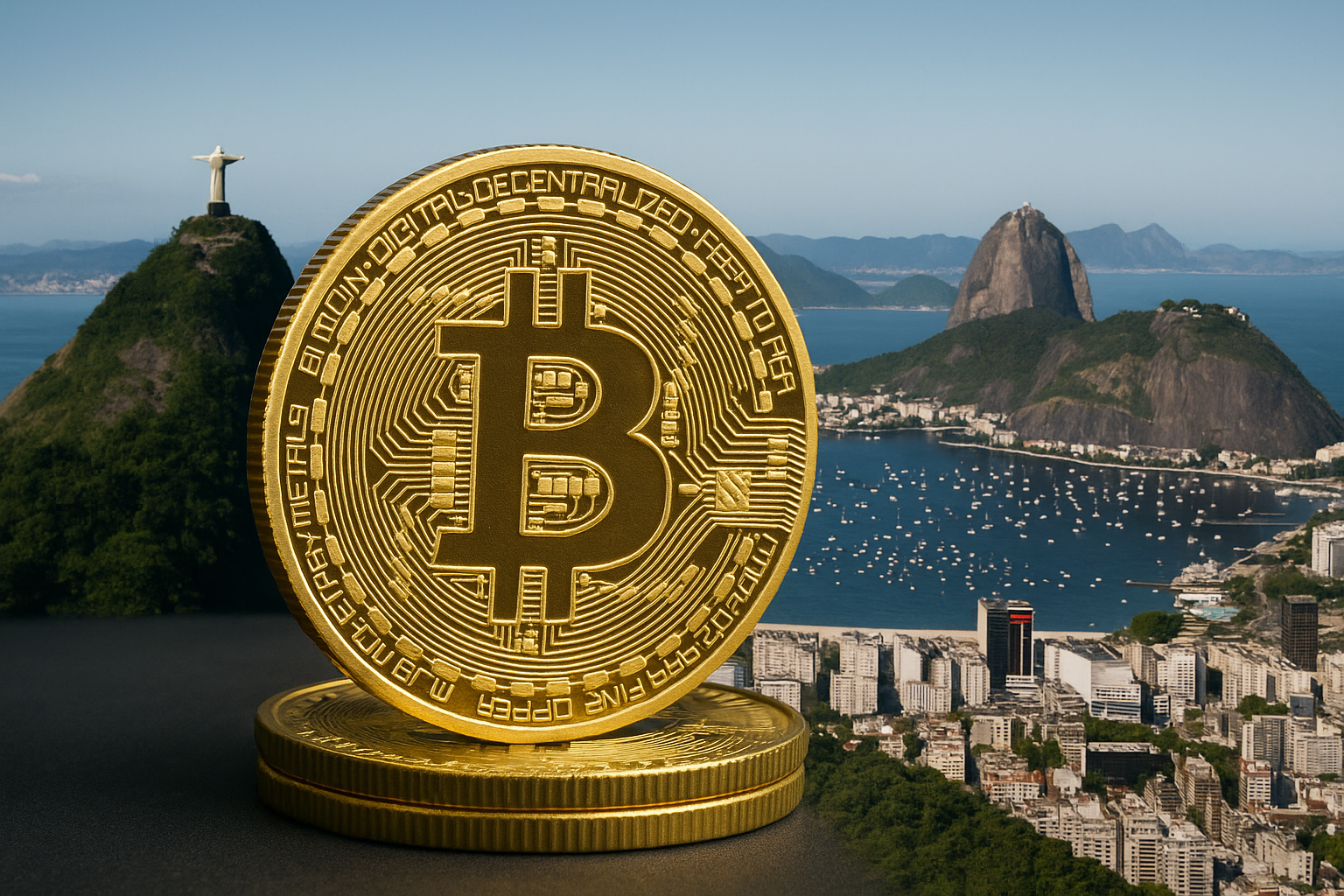

- Lawmakers previously proposed a $19 billion Bitcoin reserve.
- Countries like Germany, Pakistan, and the Philippines are reviewing similar plans.
- Brazil’s Drex CBDC could support future digital reserve systems.
Brazil’s central bank is preparing to host one of Latin America’s most closely watched financial events next month, as global reserve managers gather in Rio de Janeiro for the Central Banking Autumn Meetings.
Among the top items on the agenda is the growing debate over whether Bitcoin and other cryptocurrencies could play a role in national reserves.
The meetings, as reported by local media, will bring together central bankers and policymakers from across the region to discuss new approaches to financial resilience, digital innovation, and inflation management.
Brazil’s participation marks a critical step in positioning the country at the centre of the region’s emerging digital asset strategy.
Brazil’s growing focus on Bitcoin as a reserve asset
At the Rio meetings, Brazil’s representatives will join officials from Colombia, Jamaica, and the Bahamas to discuss how Bitcoin could be integrated into sovereign reserves.
The discussions will cover issues such as volatility, liquidity, and the potential of Bitcoin as a hedge against inflation.
This focus comes as Brazil’s lawmakers continue to evaluate a proposal to create a $19 billion sovereign Bitcoin reserve.
The plan, which was previously discussed in parliamentary hearings, seeks to position Bitcoin as both a strategic financial asset and a tool to diversify the country’s holdings.
During earlier sessions, policymakers heard from technical experts in the digital asset sector on how Bitcoin could serve as a reserve asset alongside gold and foreign currencies.
By taking these discussions to an international policy forum, Brazil is signalling that the question of Bitcoin reserves is no longer limited to domestic politics but is becoming a subject of regional collaboration.
Global momentum behind national Bitcoin reserves
Brazil’s renewed interest in digital reserves comes amid a wider global shift toward rethinking reserve composition.
In the United States, officials have begun evaluating a proposal to establish a strategic Bitcoin reserve that could act as a safeguard against economic shocks.
Although the plan is still in early stages, it has drawn significant international attention, prompting other economies to assess similar measures.
In Europe, Germany’s second-largest political party recently submitted a motion calling for the creation of a national Bitcoin reserve.
The proposal urged the government to consider Bitcoin as a protection against inflation and currency depreciation, reflecting growing institutional acceptance of digital assets within traditional finance.
Elsewhere, countries such as the Philippines and Pakistan have also initiated reviews of policy drafts that would allow Bitcoin to be recognised as a strategic asset.
While most central banks do not yet hold cryptocurrencies in their reserves, the shift in dialogue from speculation to formal policy review suggests the idea is becoming increasingly mainstream.
Infrastructure and policy implications for Brazil
Brazil’s exploration of Bitcoin reserves is likely to overlap with its ongoing work on the Drex, the country’s central bank digital currency.
The Drex project aims to create a tokenised version of the Brazilian real that could facilitate interoperability between fiat and blockchain-based systems.
Experts believe that the infrastructure developed for Drex could eventually provide the technical foundation needed for managing reserve assets in digital form.
However, central banks worldwide still face challenges in safely storing, auditing, and reporting digital reserves. Market volatility and accounting standards remain major considerations.
For Brazil, next month’s meetings could help shape a roadmap for addressing these operational hurdles through regional cooperation.
A strategic moment for Latin America’s financial policy
The upcoming Rio meetings could mark a turning point for how Latin American economies view digital reserves.
With inflation pressures and currency volatility continuing to shape monetary policy, Bitcoin’s inclusion in sovereign strategies may no longer be a distant possibility.
Although no immediate policy shift is expected, Brazil’s leadership in hosting these discussions places it at the forefront of digital finance policymaking in the region.
The outcomes could determine how quickly central banks move from debate to implementation, setting the stage for future integration of Bitcoin into the global reserve system.

