
- The feature applies to more than 150 perpetual futures markets available to European users.
- The exchange operates under MiCA and MiFID II regulations, with oversight from Ireland and Cyprus.
- Kraken’s third-quarter revenue rose by 50% to $648 million following its acquisition of NinjaTrader.
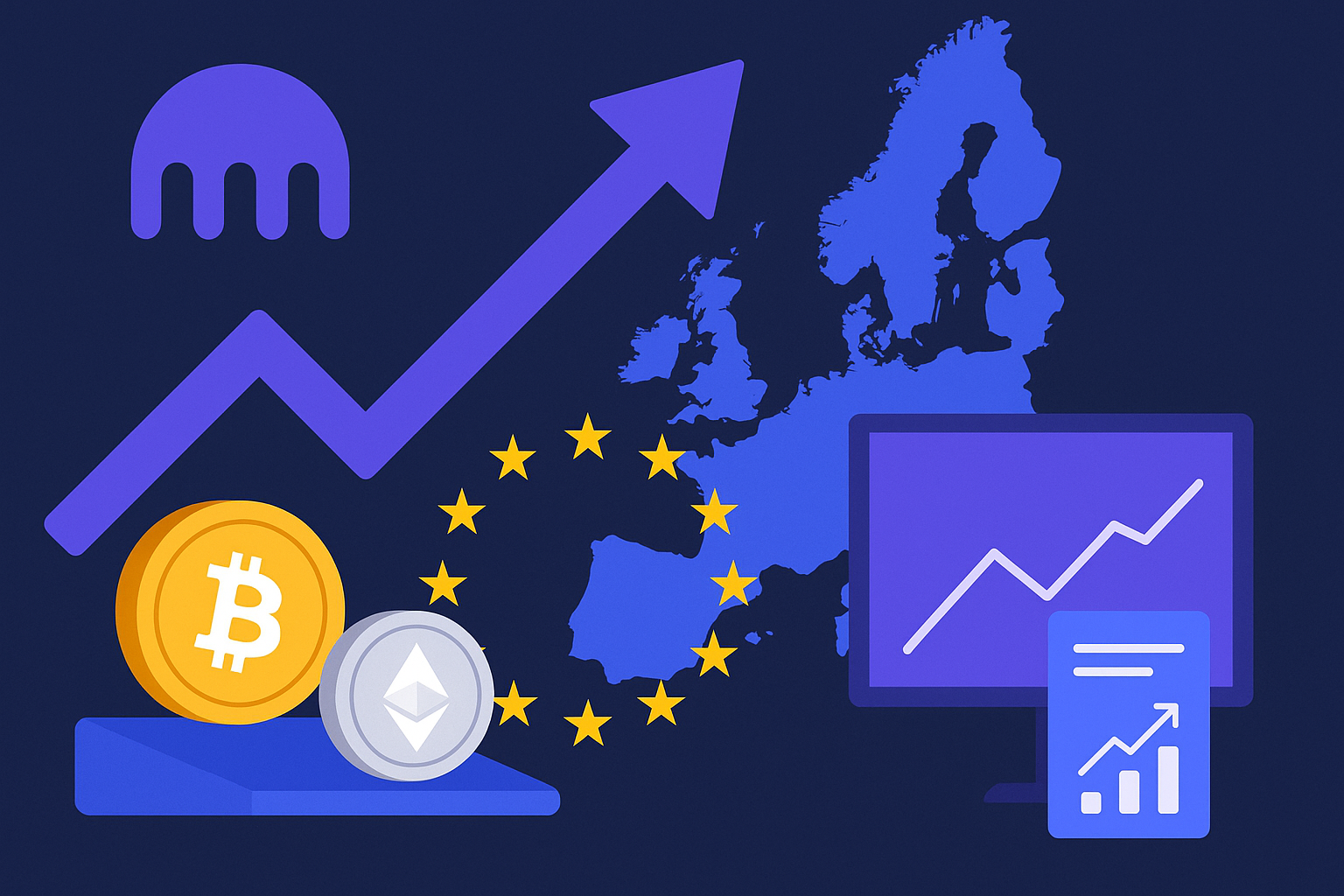
Kraken has expanded its regulated derivatives offering in the European Union, allowing traders to use Bitcoin, Ethereum, and approved stablecoins as collateral for perpetual futures on Kraken Pro.
Announced on 3 November, the move makes Kraken one of the first licensed exchanges in Europe to support crypto-collateralised derivatives under the Markets in Crypto-Assets (MiCA) framework.
The feature strengthens Kraken’s position in Europe’s digital asset market by combining capital efficiency with regulatory compliance.
By allowing clients to post crypto assets instead of converting them into fiat, the exchange provides faster access to liquidity while remaining under strict oversight from European regulators.
Crypto as margin on Kraken Pro
European traders can now use Bitcoin, Ethereum, or select stablecoins as margin across more than 150 perpetual futures markets.
Collateral is converted to USD for liquidation and margin calculations, standardising risk management while maintaining crypto exposure.
Kraken’s operations are covered by its MiCA licence from the Central Bank of Ireland and supervision by the Cyprus Securities and Exchange Commission.
The exchange uses volatility-based margin haircuts to manage exposure to price swings. All custody arrangements comply with the Markets in Financial Instruments Directive II (MiFID II), ensuring full investor protection under European law.
The feature allows traders to access up to 10x leverage using crypto collateral. It reflects Kraken’s ongoing strategy to align its trading products with Europe’s unified digital asset rules ahead of MiCA’s full rollout in 2025.
A shift in EU derivatives
Kraken’s expansion comes at a time when Europe is tightening oversight of crypto products while promoting innovation through consistent regulation.
By offering crypto-collateralised futures under direct supervision, the exchange positions itself at the forefront of compliant derivatives trading in the EU.
The integration benefits institutional and retail traders seeking efficient and legally sound ways to trade leveraged crypto products.
Hedge funds and corporate treasuries can now operate within clear regulatory limits, signalling the increasing maturity of Europe’s digital derivatives market.
This move also strengthens the region’s financial infrastructure. Transparent liquidation procedures and regulated custody standards align digital assets with traditional financial norms, helping reduce risk and improve trust.
As other licensed exchanges follow Kraken’s lead, the EU could become a global hub for compliant digital asset trading.
Growth supports expansion
The announcement follows a strong financial quarter for Kraken. The exchange reported revenue of $648 million in the third quarter, a 50% rise from the previous quarter.
The increase was driven by higher trading volumes and new product integrations following the acquisition of NinjaTrader, a futures and forex trading platform.
This momentum underlines Kraken’s ability to grow while maintaining regulatory standards. By embedding compliance into its strategy, the company is building credibility and scale in an increasingly regulated environment.
As MiCA rules continue to take effect, exchanges that prioritise both innovation and compliance are expected to capture greater institutional interest.
Kraken’s integration of crypto collateral into a regulated derivatives framework demonstrates how digital assets can function securely within Europe’s financial system.
The development marks a shift from speculative trading to a more structured market, where transparency and protection guide participation.
For the European Union, this represents progress toward establishing a regulated, sustainable, and globally competitive digital asset economy.