Tag: exposure

  • Norway’s $1.6 trillion wealth fund boosts indirect Bitcoin exposure by 192% in Q2 2025

    Norway’s $1.6 trillion wealth fund boosts indirect Bitcoin exposure by 192% in Q2 2025

    Norway’s $1.6 trillion wealth fund boosts Bitcoin exposure by 83% in Q2 2025

    • NBIM now holds the equivalent of 7,161 BTC through listed equities.
    • Institutional interest in Bitcoin grows through ETFs and corporate holdings.
    • The move may signal early stages of sovereign-backed Bitcoin adoption.

    Norway’s sovereign wealth fund, the largest in the world, has taken a significant step into the cryptocurrency market, increasing its Bitcoin (BTC) exposure by 192% during the second quarter of 2025.

    Norges Bank Investment Management (NBIM), which manages the country’s $1.6 trillion oil-funded portfolio, expanded its holdings from the equivalent of 2,446 BTC from the June quarter in 2024 to 7,161 BTC.

    The move underscores a broader shift among institutional investors who are using publicly listed equities and ETFs to gain exposure to the cryptocurrency market without holding digital assets directly.

    Bitcoin exposure rises through equities and ETFs

    NBIM’s largest Bitcoin exposure comes via its stake in MicroStrategy (MSTR), the biggest corporate holder of the cryptocurrency. The fund also initiated a smaller position equivalent to 200 BTC in Japan-based Metaplanet.

    These holdings are reflected in the fund’s Q2 2025 13F filings, which track institutional investments in US-listed companies.

    The data, compiled by analysts, highlights NBIM’s increased allocation to Bitcoin-linked equities during a period of growing global interest in the asset class.

    Sovereign wealth funds are typically known for their conservative, long-term investment strategies, making this level of exposure notable.

    Institutional participation strengthens

    The move by NBIM comes amid rising institutional adoption of Bitcoin, driven in part by strong inflows into Bitcoin ETFs and increased corporate interest.

    These products have made it easier for large investors to gain exposure without managing the complexities of digital asset custody.

    Industry analysts note that sovereign wealth funds and large pension managers are beginning to explore Bitcoin as part of diversified long-term portfolios.

    While NBIM has not publicly commented on its decision, the timing aligns with Bitcoin’s steady price gains over the past quarter, supported by favourable macroeconomic conditions and increased demand.

    Strategic hedge potential

    For NBIM, the Bitcoin allocation remains a small portion of its total assets, but it may serve as a hedge against currency debasement and geopolitical risks.

    Such positioning reflects a growing recognition among large investors that Bitcoin could play a role in risk-adjusted portfolio diversification.

    The increase also follows a global trend where state-backed investment vehicles cautiously test exposure to emerging asset classes, particularly those viewed as potential stores of value.

    If this allocation pattern continues, the participation of sovereign funds could have a meaningful impact on Bitcoin’s market liquidity and institutional legitimacy.

    Broader implications for sovereign-backed Bitcoin adoption

    The developments at NBIM may signal the early stages of more widespread sovereign-backed Bitcoin adoption.

    Although the current exposure is small relative to the size of the fund, the scale of sovereign wealth fund capital means even incremental moves can influence market dynamics.

    As other funds monitor NBIM’s strategy, institutional activity in Bitcoin-linked assets could increase further.

    For the cryptocurrency market, these flows represent a structural change in the investor base, moving beyond retail speculation to long-term, strategic capital from the world’s largest pools of wealth.
    Source link

  • Taiwan eyes Bitcoin as hedge against inflation and US Treasury exposure

    Taiwan eyes Bitcoin as hedge against inflation and US Treasury exposure

    Taiwan eyes Bitcoin as hedge against inflation and US Treasury exposure

    • Lawmaker Ko Ju-Chun suggests adding Bitcoin to national reserves.
    • Taiwan has 423 metric tons of gold in its asset base.
    • New Hampshire in the US passed a law to include Bitcoin in state reserves.

    Taiwan is considering a significant policy shift—one that could see Bitcoin join its national reserves.

    Faced with inflationary pressure, global trade tension, and increasing reliance on US Treasury bonds, the country is now questioning whether its financial buffers are truly secure.

    Legislator Ko Ju-Chun recently proposed the inclusion of Bitcoin in the central bank’s reserve mix, citing its decentralised nature and fixed supply as a strategic hedge against future financial instability.

    The proposal reflects a broader reassessment of traditional reserve assets, especially as over 90% of Taiwan’s US$577 billion in foreign exchange reserves are currently tied to US Treasuries, raising concerns about diversification and liquidity during crises.

    Rising currency risks and dependency on US Treasuries

    Taiwan’s export-led economy is particularly sensitive to geopolitical shifts and inflation trends.

    With growing tensions between the US and China and the risk of supply chain disruptions, lawmakers are increasingly alert to the vulnerabilities of the New Taiwan Dollar (NTD).

    Currently, Taiwan holds 423 metric tons of gold and nearly all its foreign exchange in US dollar-denominated assets.

    Analysts note that while these have been historically reliable, their over-concentration exposes the country to US monetary policy and potential sanctions should relations deteriorate.

    In an address to parliament, Ko Ju-Chun highlighted that Taiwan needs “strategic flexibility” in how it manages its reserves, especially under scenarios of financial decoupling or restricted access to dollar markets.

    Bitcoin floated as a hedge, not a replacement

    The core of the proposal is not to upend Taiwan’s current reserve strategy but to diversify it.

    Ko’s plan calls for allocating a small percentage of Taiwan’s reserves to Bitcoin, which he argues would provide an uncorrelated asset that is globally accessible and cannot be arbitrarily inflated.

    Bitcoin’s fixed supply of 21 million tokens, combined with its decentralised ledger system, is a key reason why it is being considered.

    According to Professor Liu Yiru of National Taiwan University, these features make it particularly resistant to inflationary dilution—unlike fiat currencies, which central banks can expand during economic shocks.

    Former Premier Chen Cong also weighed in, stating that although Bitcoin may not serve as a transactional currency at scale, its role as a digital store of value could help safeguard Taiwan’s financial sovereignty.

    Global momentum for Bitcoin reserves

    Taiwan’s deliberation comes at a time when other governments are also experimenting with Bitcoin at the state level.

    In the US, New Hampshire recently passed the Bitcoin Reserve Act, allowing the inclusion of the digital asset in its state reserves.

    The move has prompted discussions in other American states and emerging markets facing high inflation or currency instability.

    While Taiwan has yet to formalise any such measure, the conversation signals a shift in how policymakers view crypto-assets, not merely as speculative investments but as potential components of national financial infrastructure.

    In addition to legislative interest, Ko suggested that a task force be set up to study the feasibility, volatility, and custodial risks associated with Bitcoin reserves.

    The central bank has not publicly responded to the proposal, though it is expected to be discussed further in upcoming budget and monetary policy reviews.

    The broader context of these debates also includes Taiwan’s need to balance its strong technological sector with the risks posed by its geopolitical location.

    Diversifying reserve assets may serve not only economic goals but also broader strategic autonomy.

    Source link

  • IMF recommends El Salvador to limit the public’s exposure to Bitcoin

    IMF recommends El Salvador to limit the public’s exposure to Bitcoin

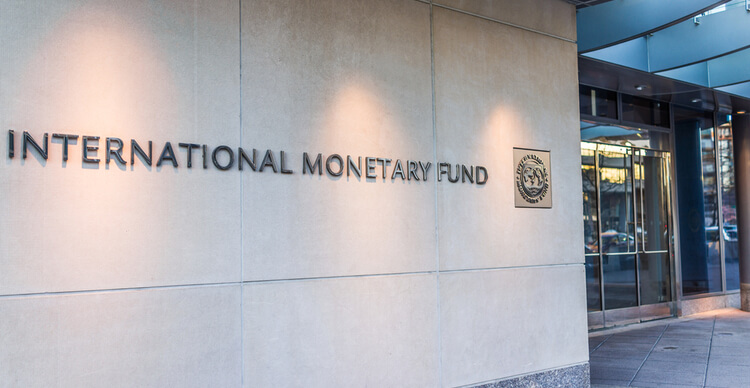
    The IMF building in Washington DC
    • The IMF wants El Salvador to limit “public sector exposure to Bitcoin”
    • The financial agency’s remarks follow an August statement, which talked about “mitigat[ing] the risks from Bitcoin”

    The International Monetary Fund (IMF) has recommended that El Salvador reduce the scope of its Bitcoin law and limit the public’s exposure to Bitcoin.

    During a press conference, IMF spokesperson Julie Kozack said:

    “What we have recommended is a narrowing of the scope of the Bitcoin law, strengthening the regulatory framework and oversight of the Bitcoin ecosystem, and limiting public sector exposure to Bitcoin.”

    Kozack added that the IMF continues talking with El Salvador and that “addressing risks arising from Bitcoin is a key element of these discussions.”

    The Central American country is no stranger to the IMF’s views on its use of Bitcoin. Notably, the issue goes back to 2021 when El Salvador made Bitcoin legal tender. Following its official adoption, the IMF released a statement in November 2021 “recommend[ing] narrowing the scope of the Bitcoin law” while “strengthening the regulation and supervision of the new payment system.”

    This was again called for in January 2022 when the IMF advised El Salvador to reconsider its decision on Bitcoin as the country’s legal tender.

    More recently, the IMF released a statement in August that focused on, among other things, the need to “mitigate the risks from Bitcoin.” However, the financial agency did note that while “many of the risks have not materialized, there is joint recognition that further efforts are needed to enhance transparency..” in Bitcoin.

    Still committed to Bitcoin

    Despite these remarks from the IMF and the continued back-and-forth, El Salvador remains unchanged in its mission to see Bitcoin rise in the country.

    However, while the government is keen to see adoption numbers rise, Nayib Bukele, El Salvador’s pro-Bitcoin president, knows more work needs to be done. In a recent interview with TIME magazine, Bukele admitted that his Bitcoin strategy for El Salvador had been “net positive,” but it hasn’t witnessed the “widespread adoption” they hoped for.

    Despite this, Bukele remains committed, even going so far as to buy additional Bitcoin when the price drops. The country also promised to use the profit it makes from its Bitcoin Trusts to build 20 schools as it works at making crypto more appealing to its citizens.

    Source link

  • MicroStrategy better than Coinbase for crypto exposure: Berenberg

    MicroStrategy better than Coinbase for crypto exposure: Berenberg

    microstrategy vs coinbase stock berenberg
    • Berenberg analysts sees upside in MicroStrategy to $340.
    • They explain their bullish view in a recent research note.
    • Coinbase stock has a “hold” rating only at Berenberg.

    MicroStrategy Inc is a better pick for exposure to cryptocurrencies than Coinbase Global Inc, as per the Berenberg analysts.

    MicroStrategy stock has upside to $340

    Mark Palmer and Hassan Saleem see upside in the technology company to $340 a share – up another 20% from here. In a recent research note, they said:

    MicroStrategy which features a unique business model focused on the acquisition and holding of bitcoins, represents an attractive alternative to Coinbase in the current environment.

    At writing, the Nasdaq-listed firm owns about 140,000 BTC in total. Earlier in May, MicroStrategy said it took an impairment charge of $170 million on its bitcoin holdings in the first quarter.

    Its stock price has already nearly doubled since the start of the year.

    Why is Berenberg dovish on Coinbase stock?

    On Coinbase, Berenberg analysts have a “hold” rating with a price objective of $55 a share – roughly in line with where it’s currently trading.

    They’re dovish primarily due to the ongoing regulatory scrutiny. In March, the crypto exchange received a “Wells Notice” from the U.S. Securities and Exchange Commission (SEC).

    Coinbase’s revenue is at risk in the event of an enforcement action are disproportionately profitable relative to its total revenue.

    In comparison, MicroStrategy focuses on bitcoin that’s already been classified as a commodity and not a security thereby insulating it from such risks. The correlation between MSTR and COIN currently stands at about 0.96.

    Source link