Tag: faces

  • Bitcoin ATMs appear in Nairobi malls as Kenya’s new crypto law faces early compliance test

    Bitcoin ATMs appear in Nairobi malls as Kenya’s new crypto law faces early compliance test

    Bitcoin ATMs appear in Nairobi malls as Kenya’s new crypto law faces early compliance test

    • They appeared soon after the Virtual Assets Service Providers Act of 2025 took effect.
    • CoinATMradar currently lists two Bitcoin ATMs in Kenya.
    • The Central Bank of Kenya and the Capital Markets Authority say no VASP is licensed yet.

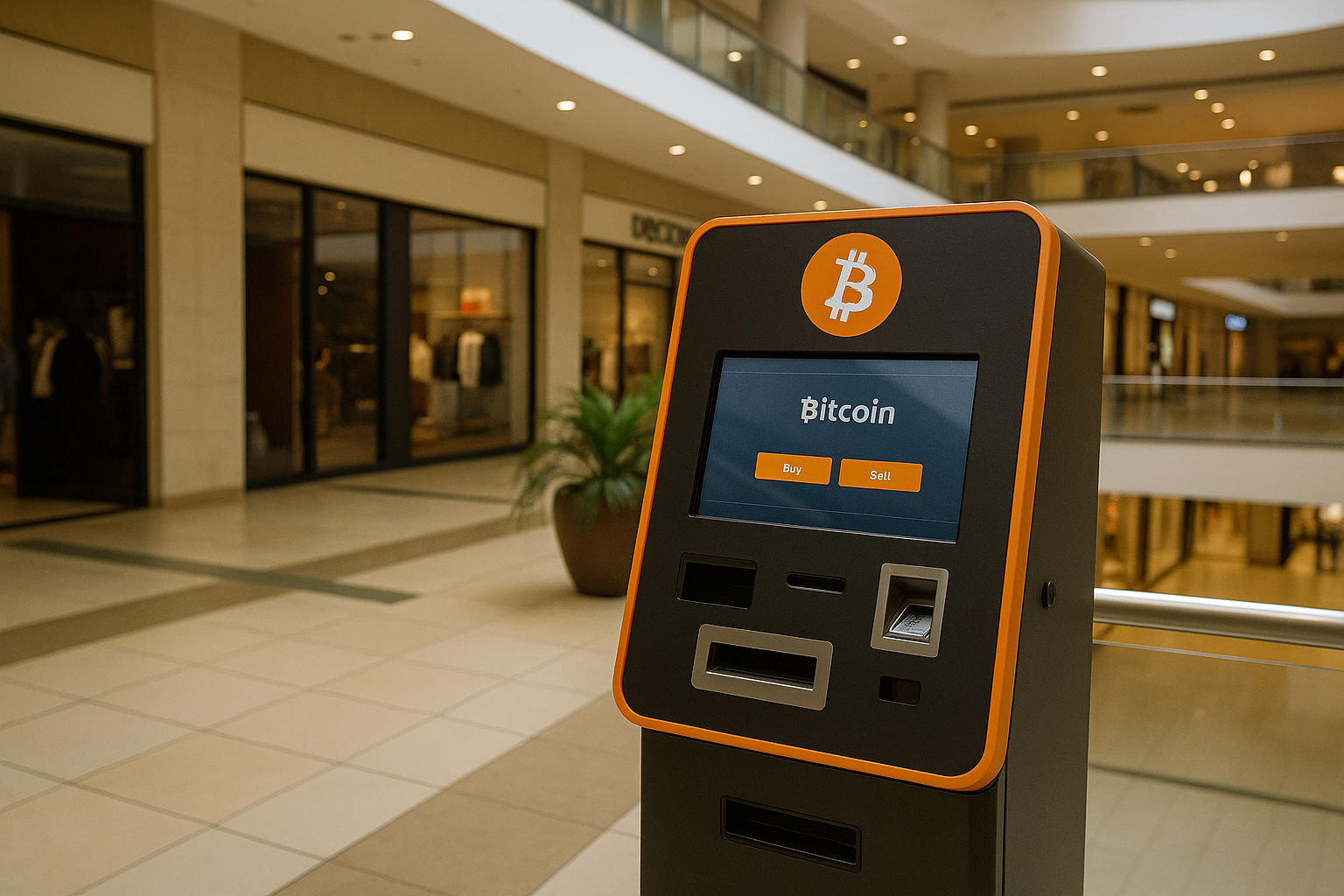
    Bitcoin ATMs have surfaced across major shopping malls in Nairobi, only days after Kenya activated its first comprehensive crypto law, creating an unexpected test for regulators who have not yet authorised any crypto provider to operate.

    The machines, branded Bankless Bitcoin, appeared beside traditional bank kiosks and offered cash to crypto services to shoppers.

    Their arrival coincides with the early phase of Kenya’s Virtual Assets Service Providers Act of 2025, which came into effect on 4 November and set the first formal rules for crypto businesses.

    Gaps in licensing

    Local outlet Capital News confirmed that multiple malls in Nairobi had new machines installed, expanding beyond earlier attempts to introduce crypto ATMs in Kenya.

    In 2018, The East African reported that BitClub deployed Bitcoin ATMs in the city, although the machines never reached mainstream retail spaces and adoption remained limited.

    Kenya currently has two reported Bitcoin ATMs, making the latest installations notable for their placement in high-traffic commercial environments.

    Regulators signal caution

    The new law assigns oversight responsibilities to two regulators. The Central Bank of Kenya will handle payment and custody functions, while the Capital Markets Authority will regulate investment and trading activity.

    However, the regulations required to begin licensing crypto firms have not yet been issued.

    In a joint notice released on Tuesday, the Central Bank of Kenya and the Capital Markets Authority stated that they have not licensed any VASP to operate in or from Kenya under the new Act.

    They also warned that companies claiming authorisation are doing so without approval.

    The National Treasury is developing the regulatory framework that will decide when licensing can begin, placing operators in a temporary environment where the law exists but permissions do not.

    This creates a visible gap. Bitcoin ATMs are entering public spaces even as regulators tell the public that no provider has met the requirements laid out in the law.

    The contrast places pressure on authorities to clarify enforcement and could shape how crypto firms approach compliance in the near term.

    Informal use grows

    The spread of Bitcoin ATMs into high end malls highlights Kenya’s evolving crypto landscape.

    Capital News reported that Bitcoin usage has long been active in lower income neighbourhoods such as Kibera, where residents use BTC as a form of banking in areas with limited access to formal financial services.

    People have relied on crypto to store value without extensive documentation or traditional banking infrastructure.

    The shift from informal areas to upscale malls suggests that consumer interest is expanding even while regulatory conditions remain unsettled.

    The coexistence of visible infrastructure and incomplete licensing rules places Kenya at an early crossroads as it moves from a largely informal crypto market to a regulated one.

    Source link

  • Bitcoin faces quantum risk: why SegWit wallets may offer limited protection

    Bitcoin faces quantum risk: why SegWit wallets may offer limited protection

    Bitcoin faces quantum risk: Why SegWit wallets may offer limited protection

    • SegWit wallets delay public key exposure until the point of transaction.
    • Holding Bitcoin in SegWit addresses offers temporary protection if left untouched.
    • Critics believe practical quantum computing remains decades away.

    Quantum computing’s long-theorised threat to Bitcoin is resurfacing in the crypto conversation.

    The idea that a powerful enough quantum machine could break cryptographic security and expose Bitcoin keys has moved from theoretical chatter to practical concern.

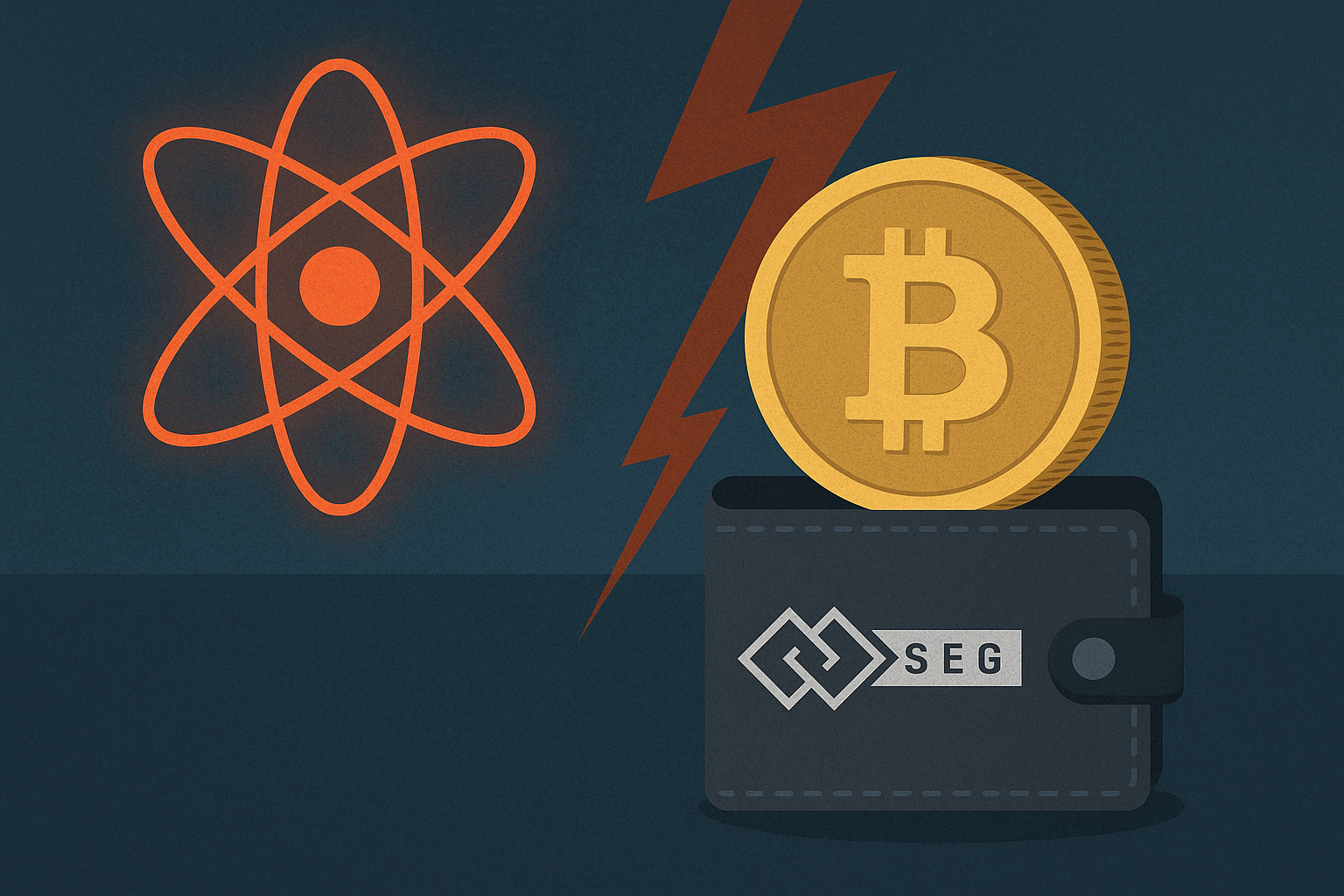
    Bitcoin analyst Willy Woo recently suggested a short-term safeguard: store Bitcoin in SegWit addresses for the next seven years.

    While the tactic has sparked debate, the broader community remains divided over whether quantum computers are a real, imminent threat or just the latest tech-driven scare.

    SegWit offers delayed public key exposure

    Segregated Witness (SegWit), introduced on 23 August 2017, is a protocol upgrade that changes how data is stored in Bitcoin transactions. Woo suggests that SegWit’s delayed public key exposure could act as a deterrent against quantum attacks.

    Unlike Taproot, which exposes the public key immediately within the address, SegWit only reveals it during transaction execution.

    This delay makes it harder for a quantum computer to reverse-engineer the private key from the public one before the transaction is completed.

    Under current conditions, exposing a public key does not present much of a problem. However, if and when quantum computing advances to the point of real-time decryption capabilities, the exposure window of Taproot wallets could be a key vulnerability.

    In contrast, SegWit’s hashing conceals the public key behind a layer of encryption until absolutely necessary. This may keep Bitcoin more secure during this anticipated transition period.

    Hodling in SegWit comes with major constraints

    While the SegWit method may offer protection, it carries a critical limitation. According to Woo, users must not move their Bitcoin from the SegWit address.

    Any outgoing transaction would expose the public key, potentially inviting a quantum attack if executed during the transaction.

    As such, this method is not viable for active traders or anyone needing liquidity in the short term. It is a static defence mechanism, not a dynamic solution.

    This approach effectively puts Bitcoin in a vault. It is safe but inaccessible. It is also only as secure as the continued absence of real-time quantum decryption.

    If a breakthrough comes earlier than anticipated, even SegWit-held coins could be compromised during withdrawal. Woo acknowledges that this is only an intermediary measure.

    It is meant to bridge the gap until a quantum-resistant Bitcoin protocol becomes available.

    Experts disagree over SegWit’s efficacy

    Not everyone agrees that SegWit provides any meaningful protection. Charles Edwards, founder of digital asset fund Capriole, has dismissed the idea as ineffective.

    He argues that SegWit is not a quantum-safe model and relying on it could delay necessary network upgrades.

    According to Edwards, the belief that Bitcoin has a seven-year buffer period could create complacency, weakening pressure to accelerate work on quantum-resistant algorithms.

    This disagreement underscores a broader lack of consensus in the crypto space on how seriously the community should take quantum risk.

    Although protocol upgrades are under development, there is concern among developers that current initiatives are progressing too slowly.

    Some argue that existing security layers were not built with quantum capabilities in mind, making them structurally vulnerable regardless of transaction format.

    Sceptics say quantum fears are overblown

    Despite the alarm, some in the community believe the risk is being overstated. Critics point to quantum computing’s persistent technical limitations.

    In a post in February, Bitcoin advocate Adrian Morris claimed quantum tech is “barely viable”, citing issues with thermodynamics, memory, and persistent calculations.

    Others argue that traditional financial systems and major banks would be far more attractive targets for early quantum attacks than a decentralised network like Bitcoin.

    Woo notes that Bitcoin held by custodians, such as ETFs or treasury firms, may be better shielded in the interim. This is only true if those institutions take proactive steps to secure their holdings.

    Until a comprehensive upgrade is implemented, the quantum debate will continue to shape discourse around Bitcoin’s long-term security.

    Source link

  • Dogecoin faces $500 million liquidation test as price eyes $0.2 recovery

    Dogecoin faces $500 million liquidation test as price eyes $0.2 recovery

    Dogecoin faces $500 million liquidation test as price eyes $0.2 recovery

    • Ichimoku and RSI indicators show no bullish momentum.
    • The coming days could determine whether DOGE stages a recovery or slides into a deeper correction.
    • DOGE lags behind Bitcoin and Ethereum amid broader altcoin pullback.

    Dogecoin is navigating a volatile phase as its price hovers just above key support levels.

    After hitting a local high near $0.2, DOGE has trended downward, raising fresh doubts about the memecoin’s strength in the current market.

    While leading cryptocurrencies like Bitcoin and Ethereum continue to consolidate, Dogecoin has struggled to maintain momentum.

    The asset risks erasing nearly all gains from the past 30 days unless it can break through critical technical barriers and absorb significant short liquidations, estimated to exceed $500 million.

    The coming days could determine whether DOGE stages a recovery or slides into a deeper correction.

    $0.165 zone is critical

    The Dogecoin price has hovered near a key liquidation zone at $0.165, where leverage from traders has accumulated above $500 million. This threshold is seen as a pivotal point for a potential short squeeze.

    Source: CoinMarketCap

    To break higher, the price may need to dip below this level to trigger liquidations, potentially forcing out short positions.

    Such a move could clear the way for a stronger rebound and extend the upward trend.

    This could allow bulls to target a return to $0.18 and eventually retest $0.2.

    Technical signals remain weak

    Technically, Dogecoin’s outlook remains weak. After failing to stay above its ascending trend line, DOGE has experienced sustained downward pressure.

    The Ichimoku cloud’s conversion line is acting as stiff resistance, and there’s no indication yet of a bullish crossover.

    Meanwhile, the Stochastic RSI has reversed after testing average levels, underscoring the growing influence of bearish sentiment.

    DOGE is expected to test support at $0.162, a level below the $0.164 liquidation zone.

    However, failure to hold this support could deepen the drawdown and prompt traders to reassess the memecoin’s long-term viability.

    $0.2 in 2025?

    While Dogecoin reached as high as $0.2 earlier this year, the question now is whether it can sustain such levels or rise further in 2025.

    For this to happen, the token must establish consistent upward momentum, clear resistance levels, and attract renewed investor interest.

    This appears challenging given its current technical weakness and absence of strong bullish signals.

    Still, market volatility could favour sharp movements in either direction. If the expected short squeeze plays out after testing $0.162 support, DOGE may rally back towards $0.18 and $0.2.

    But unless broader market conditions improve and sentiment shifts decisively, reaching the $0.5 mark in 2025 appears increasingly unlikely based on current data.

    Source link

  • Florida scraps Bitcoin reserve bills as state-level crypto adoption faces setbacks

    Florida scraps Bitcoin reserve bills as state-level crypto adoption faces setbacks

    Florida, Bitcoin reserve bills

    • Florida’s decision follows a broader trend of legislative setbacks surrounding Bitcoin reserve proposals.
    • Similar bills have been shelved or blocked in states like Wyoming, Pennsylvania, Oklahoma, Montana, North Dakota, and South Dakota.
    • Only 19 US states are still actively exploring legislation related to state Bitcoin reserves.

    Florida has withdrawn two key bills aimed at creating a state-level strategic Bitcoin (BTC) reserve, marking a significant pause in momentum for state-driven crypto investment efforts across the US.

    House Bill 487 and Senate Bill 550, both introduced in February 2025, have now been “indefinitely postponed and withdrawn from consideration,” according to the Florida Senate website.

    The bills had sought to authorize the use of public funds to invest in Bitcoin, signaling a potential shift in how state reserves are managed.

    With their withdrawal, Florida becomes the latest in a growing list of states backing away from formal crypto reserve legislation.

    Multiple states stall on BTC investment plans

    Florida’s decision follows a broader trend of legislative setbacks surrounding Bitcoin reserve proposals.

    Similar bills have been shelved or blocked in states like Wyoming, Pennsylvania, Oklahoma, Montana, North Dakota, and South Dakota.

    While many of these initiatives remain in early committee stages, few have progressed far enough to secure full legislative approval.

    Arizona had shown the most progress earlier this year with SB 1025, which passed a state House vote before being vetoed by Governor Katie Hobbs.

    The bill would have permitted investment of seized state funds into Bitcoin, representing the most advanced attempt at institutional BTC adoption at the state level.

    Despite the veto of SB 1025, Arizona is still considering SB 1373, a separate proposal that would allow up to 10% of state funds to be allocated to digital assets, including Bitcoin.

    However, that bill has yet to reach a final vote, and its fate remains uncertain amid growing legislative caution.

    Is Bitcoin legislation losing steam nationwide?

    According to data from Bitcoin Laws, only 19 US states are still actively exploring legislation related to state Bitcoin reserves (SBRs), with 36 bills under discussion.

    The number has dropped significantly over the past six months, reflecting increased hesitation among lawmakers due to market volatility, fiscal risks, and regulatory uncertainty.

    Much of this retreat has been attributed to concerns like those cited by Arizona Governor Katie Hobbs, who pointed to the lack of long-term historical data supporting Bitcoin’s stability or reliability for public fund management.

    Despite the slowdown at the state level, Bitcoin reserve discussions are gaining traction federally.

    President Donald Trump has reportedly signed an executive order directing agencies to explore the feasibility of a national Bitcoin reserve system.

    Still, skepticism remains. BitMEX co-founder Arthur Hayes recently argued that the US is unlikely to meaningfully expand its crypto holdings, citing entrenched financial conservatism and cultural resistance toward Bitcoin.

    Source link

  • First 100 days under President Trump: crypto industry faces new challenges and opportunities

    First 100 days under President Trump: crypto industry faces new challenges and opportunities

    • SEC and CFTC leadership reshuffled to favour digital asset regulation.
    • Strategic Bitcoin Reserve created, but without new BTC purchases.
    • WLFI stablecoin launch triggered calls for an ethics investigation.

    The first 100 days of US President Donald Trump’s second term have reshaped the cryptocurrency and blockchain landscape through sweeping policy moves, regulatory changes, and controversial personal involvement.

    From the launch of a new meme coin ahead of the Inauguration Day to the creation of a US Bitcoin reserve, President Trump has pushed an aggressively pro-crypto stance, while simultaneously sparking regulatory concern, geopolitical tension, and significant market volatility.

    A series of tariffs, executive orders, and personnel appointments have created both opportunity and uncertainty across digital asset markets.

    WLFI token launch, SEC shakeup mark start of term

    On 20 January, as Trump took the oath of office, his family’s investment firm World Liberty Financial (WLFI) launched the second phase of its token sale.

    The non-transferable WLFI token was followed by a wave of crypto-friendly appointments.

    Paul Atkins was named as SEC Chair on day one, replacing Gary Gensler, while Brian Quintenz was nominated to lead the CFTC.

    David Sacks, a vocal supporter of crypto, was appointed to chair the President’s Council of Advisors on Science and Technology, positioning him as a central figure in both blockchain and AI policymaking.

    The WLFI token, initially marketed as a patriotic memecoin aligned with Trump’s return to power, gained traction on platforms like X and Telegram.

    The token’s branding heavily featured themes tied to American exceptionalism and conservative values.

    Despite being non-tradable and unavailable on major exchanges, the project drew attention from retail investors hoping for eventual utility.

    WLFI’s promotional material also teased exclusive access perks for top holders, culminating in a controversial event later in the quarter.

    Trade tariffs shake miners, while Bitcoin reserve takes shape

    Just weeks into the new administration, Trump’s economic nationalism began to impact the crypto industry.

    On 1 February, broad tariffs were imposed on Mexico, China, and Canada, citing security and fentanyl concerns.

    Markets dipped in response, with Bitcoin miners particularly affected due to higher import costs for essential hardware.

    The situation escalated on 2 April when Trump introduced a 10% minimum tariff on all countries that tax US goods, branding it “Liberation Day.”

    Meanwhile, on  March 7, the president signed an executive order establishing a Strategic Bitcoin Reserve.

    Though the move was intended to formalise the US’s stake in crypto markets, it disappointed many investors by not initiating fresh purchases.

    $TRUMP token dinner fuels backlash and ethics probe

    Donald Trump’s $TRUMP meme coin surged over 50% in value to reach a $2.7 billion market cap after the project announced that the top 220 token holders would be invited to a black-tie dinner with the former US president on 22 May.

    The event, hosted at his private club in Washington, also includes a VIP White House tour for the top 25 holders.

    According to Chainalysis, Trump and his allies earned nearly $900,000 in trading fees from the token in just two days following the announcement.

    Since its January launch, the token has generated $324.5 million in trading fees through a mechanism that redirects a portion of each transaction to insider wallets.

    The Trump Organisation and affiliates reportedly control around 80% of the token supply, which is locked under a three-year vesting schedule.

    The dinner offer has triggered backlash from lawmakers and watchdogs, with Senators Elizabeth Warren and Adam Schiff calling for a federal ethics probe, alleging it may constitute “pay to play” behaviour.

    Meanwhile, Trump’s broader crypto ventures, including the $MELANIA token and World Liberty Financial, have raised $550 million, with Trump-affiliated entities entitled to 75% of net revenue.

    The shift comes amid weakened regulatory oversight of the crypto sector under Trump’s administration.

    Source link

  • Ex-Deutsche Bank investment banker faces up to 30 years behind bars

    Ex-Deutsche Bank investment banker faces up to 30 years behind bars

    • The former Deutsche Bank employee, Rashawn Russell, was arrested in April 2023.
    • Russell is accused of causing at least 29 investors to lose not less than $1.5 million.
    • Russell fabricated multiple documents and misled investors regarding the status of their investments to orchestrate his scheme.

    Rashawn Russell, formerly employed as an investment banker at Deutsche Bank, has admitted his guilt in connection with allegations of embezzling funds from investors enticed by promises of substantial returns from cryptocurrency trading, as confirmed by the US Justice Department. The news comes right on the heels of Deutsche Bank tapping Swiss crypto firm Taurus for crypto custody services.

    This plea comes on the heels of Russell’s arrest in April, which implicated him in an intricate fraudulent operation. He now confronts the possibility of a prison sentence of up to 30 years, in addition to the obligation to reimburse investors with a sum exceeding $1.5 million.

    Why was Rashawn Russell arrested?

    US Attorney Breon Peace issued a statement in which he remarked:

    “Russell exploited the fascination of investors in cryptocurrency markets to orchestrate a deception against trusting clients.” He further emphasized, “The expeditious conviction in this instance underscores our commitment to holding those engaging in deceitful practices within the digital asset sector accountable.”

    Details unveiled during the plea hearing, in conjunction with court records, reveal that between November 2020 and August 2022, Russell, who formerly worked as an investment banker and was registered as a broker with the Financial Industry Regulatory Authority, played a pivotal role in an intricate fraudulent endeavour. He duped investors into investing their capital into his R3 Crypto Fund by offering false assurances of substantial, at times guaranteed, profits stemming from cryptocurrency ventures.

    In reality, a significant portion of the investors’ finances was diverted by Russell for personal enrichment, gambling, and repaying previous investors. As a result of this deceitful operation, at least 29 investors suffered losses that amounted to no less than $1.5 million.

    Fabrication of documents and misleading investors

    As part of the fraudulent scheme, the Justice Department revealed back in April that “Russell fabricated multiple documents and misled investors regarding the status of their investments.” At one juncture, Russell purportedly sent an investor a doctored image of a bank statement supposedly sourced from a bank’s website, falsely indicating the availability of substantial liquidity. In another instance, when an investor sought to retrieve their investment, Russell neglected to transfer the funds and instead dispatched a counterfeit bank wire transfer confirmation to the investor, falsely suggesting the return of their capital.

    According to the April indictment, Russell’s duplicitous ploy targeted “numerous individuals, including his friends, former college classmates, and former colleagues at a financial institution,” the specific identity of which has been made known to the Grand Jury.

    Russell’s LinkedIn profile, which has since been deleted, disclosed his employment history at JP Morgan, Moody’s, and Deutsche Bank, where he commenced his career as a banking analyst in July 2018, ultimately advancing to the position of associate in July 2020.

    Source link

  • Shiba Memu presale hits $2.1M as Shiba Inu’s Shibarium faces challenges

    Shiba Memu presale hits $2.1M as Shiba Inu’s Shibarium faces challenges

    • The highly-anticipated Shibarium layer-2 network is having problems with its bridge contract.
    • Approximately $1.7 million worth of Ethereum is currently stuck on the bridge contract.
    • Shibarium launch was expected to add some impetus to the price of SHIB but that has not happened.

    The much-hyped layer-2 network of Shiba Inu, Shibarium, is having significant problems a day after its launch. The network was expected to turn the tables of the SHIB token, which has been under bearish pressure for the last seven days; but that has not been the case. The token has dropped by over 10% since the Shibarium went live.

    But as the future of Shiba Inu hangs on tenterhooks, another Shiba-themed meme coin called Shiba Memu (SHMU) is taking the crypto space by storm with its token presale which has hit $2.1 million in a little over a month. Shiba Memu is leveraging the power of artificial intelligence (AI) and the hype around meme coins.

    What is happening with Shibarium?

    According to an analysis of the Shibarium network’s bridge contract, which transfers money from Ethereum to the layer-2 solution, there is currently $1.7 million worth of Ethereum stranded between the two networks.

    The locked status of the funds has been confirmed by the blockchain security team Beosin, who has advised people to stop using Shibarium temporarily.

    In addition to the locked-up tokens, blockchain sleuth ZachXBT highlighted that $762,000 worth of BONE, a Shibarium governance token, was sent to the bridge contract.

    According to the information on BlockScout, only 236 transactions had been validated on Shibarium Network almost two days after the network was launched.

    Some users have pointed out issues with Shibarium’s remote procedure call (RPC) system, which allows access to a network’s server node to communicate with the blockchain.

    The response by Shiba Inu’s developer

    Interestingly, the pseudonymous Shiba Inu developer Shytoshi Kusama repudiated reports that what Shibarium was facing was “a bridge issue.” In a newsletter, Kusama said:

    “Our technical difficulties are due to the massive amount of traffic we experienced within moments on Shibarium,” they said. “The team is working tirelessly to fix the issue and scale so that we can give the ShibArmy the experience they deserve. All funds are safe.”

    A moderator in Shibarium’s Discord also stated that “as a precautionary measure,” admins “have temporarily restricted access to certain channels due to the spread of misinformation and fake websites.”

    What Shibarium’s misfortunes mean for Shiba Memu

    Well, Shiba Inu stands out as a major rival to Shiba Memu and its mishaps could only be translated to mean an advantage to the new Shiba Memu project, which is already on course to become the most popular meme coin project.

    Shiba Memu is a revolutionary token combining AI and the latest technology to create an entirely self-sufficient marketing powerhouse, deviating from the norm of most meme coins which purely depend on community involvement.


    Source link

  • Shiba Inu (SHIB) faces profiteering near the 100 EMA!

    Shiba Inu (SHIB) faces profiteering near the 100 EMA!

    Shiba Inu has not yet lost its charm, as this hyperactive meme coin is once again in action. The recent jump of 19% value despite the profit booking, in the end, has allowed Shiba Inu to jump one spot in its market capitalization, ranking to 14th position.

    The latest market cap value of Shiba Inu is $6,002,002,929, which is not the high we witnessed during the 2021 peaks, but it is moving somewhere after a decent break in strong movements. The sudden buying rallies followed by steep profit booking have become a common price trend of SHIB coins but considering the probable gains to be made in this cryptocurrency, let’s analyze its price action.

    Shiba Inu has showcased a newfound resolve to break the stereotype of being a hype coin going dead. Shiba Inu has made a tremendous return with close to a 20% market gain made this week. Moving forward, the price of $0.00001090 brings Shiba Inu back to the 100 EMA curve, which could make things interesting from this point, despite some profit booking at 100 EMA. Wondering what would happen next? Read our SHIB price prediction to get a closer picture of the future price action of the coin.

    SHIB PRICE CHARTFrom the uptrend seen in August to consolidative movement in September and now again a new attempt to move upwards, Shiba Inu has shown strong resolve in upside movement, with previous resistances having a strong say in its price volatility going ahead.

    The RSI indicator has already taken opportunists by storm, and so has the MACD indicator started to move with a bullish crossover. SHIB surpassed previous uptrends in just three days, which sometimes took months to achieve. The volumetric action seen is too great of a number to ignore.

    Buyers might soon swarm to take a bite of this profitable-looking trade, but the sudden rally in Shiba Inu must be taken as an opportunity with huge risks. The downside from this point forward is in the vicinity of 15%, with the upside limited to just 23%; the trade-off itself seems positive at a glance.

    SHIB PRICE ANALYSISOn weekly charts, the outlook for Shiba Inu can be seen gradually shifting towards a strong upside possibility. The consolidation and negative movement of the last five months have finally been overcome with a single week’s uptrend and active buying rallies of SHIB investors.

    Both RSI and MACD indicators showcase a consolidation phase with huge volatility from its peak of $0.00001351 to support of $0.00000945. The next target for Shiba Inu would be $0.00001750, creating a profitable position for buyers. The outlook for SHIB buyers is about to change with a breach of consistent resistance levels.

    Source link