Tag: Global

  • Japan stimulus shakes global markets as yen sinks and crypto demand rises

    Japan stimulus shakes global markets as yen sinks and crypto demand rises

    Japan stimulus shakes global markets as yen sinks and crypto demand rises

    • Japan’s 40-year bond yield rose to 3.774% on Thursday.
    • Five-year CDS spreads reached 21.73 basis points on 20 November.
    • GDP contracted in Q3 2025 and inflation reached 3% in October.

    Japan’s new stimulus package is setting off sharp reactions across global markets, with the yen sliding to its weakest point against the US dollar since January 2025 and long-term bond yields rising to record levels.

    The cabinet approved a 21.3 trillion yen package on Friday, the largest since the COVID-19 period, and the announcement immediately shifted expectations in currency, bond, and crypto markets.

    The scale of the support and the pressure on Japan’s finances are now pushing investors to reconsider how they assess global risk, particularly as liquidity conditions evolve.

    Economic reset

    The package focuses on easing price pressures, supporting growth, and strengthening defence and diplomatic capacity.

    Local government grants and energy subsidies form a key part of the plan, and households are expected to receive around 7,000 yen in benefits over three months.

    The government also aims to lift defence spending to 2% of GDP by 2027.

    The supplementary budget is expected to pass before the end of the year, although the ruling coalition currently holds only 231 of 465 Lower House seats.

    The support comes during a period of weakening growth.

    Japan’s GDP fell 0.4% in the third quarter of 2025, equal to a 1.8% annualised contraction.

    Inflation has remained above the Bank of Japan’s 2% target for 43 months and reached 3% in October 2025.

    Policymakers expect the new measures to lift real GDP by 24 trillion yen and generate a total economic impact near 265 billion dollars.

    Rising market pressure

    The fiscal boost has intensified concerns about long-term debt sustainability and market stress.

    Five-year credit default swaps on Japanese government bonds reached 21.73 basis points on 20 November, the highest level in six months.

    The country’s 40-year bond yield rose to 3.697% immediately after the announcement and climbed further to 3.774% on Thursday.

    Every 100-basis-point increase in yields raises annual government financing costs by about 2.8 trillion yen, which has drawn attention to the strain on public finances over time.

    Nikkei reports lingering caution about the continued use of fiscal stimulus beyond emergencies, adding another layer to investor concerns.

    This debate has become more relevant as the yield curve shifts and Japan’s borrowing costs rise.

    These movements are also important for the 20 trillion dollar yen-carry trade. Investors typically borrow yen at low rates and invest in higher-yielding markets overseas.

    A mix of higher yields and sudden currency moves can force unwinding.

    Historical data show a 0.55 correlation between yen-carry trade reversals and S&P 500 declines, which adds another source of volatility.

    Yen reaction

    The yen dropped sharply after the stimulus announcement, prompting speculation about future currency stability and the potential for intervention.

    October exports rose 3.6% year on year, but the increase was not enough to ease concerns about broader economic pressure.

    The scale of fiscal support and the persistence of inflation have become central factors in how global markets interpret Japan’s next steps.

    Crypto shift

    These conditions are feeding directly into crypto markets.

    A weaker yen tends to drive Japanese investors toward alternative assets, including Bitcoin, especially during periods of rising liquidity.

    Experts have noted that Japan’s decision adds to a global environment that already includes potential US Federal Reserve easing, Treasury cash movements, and continued liquidity support from China.

    Together, these factors are creating conditions that could lift crypto demand into 2026.

    At the same time, higher long-term yields pose a risk.

    If yen-carry trades unwind quickly, institutions may be forced to sell assets, including Bitcoin, to meet liquidity needs.

    Source link

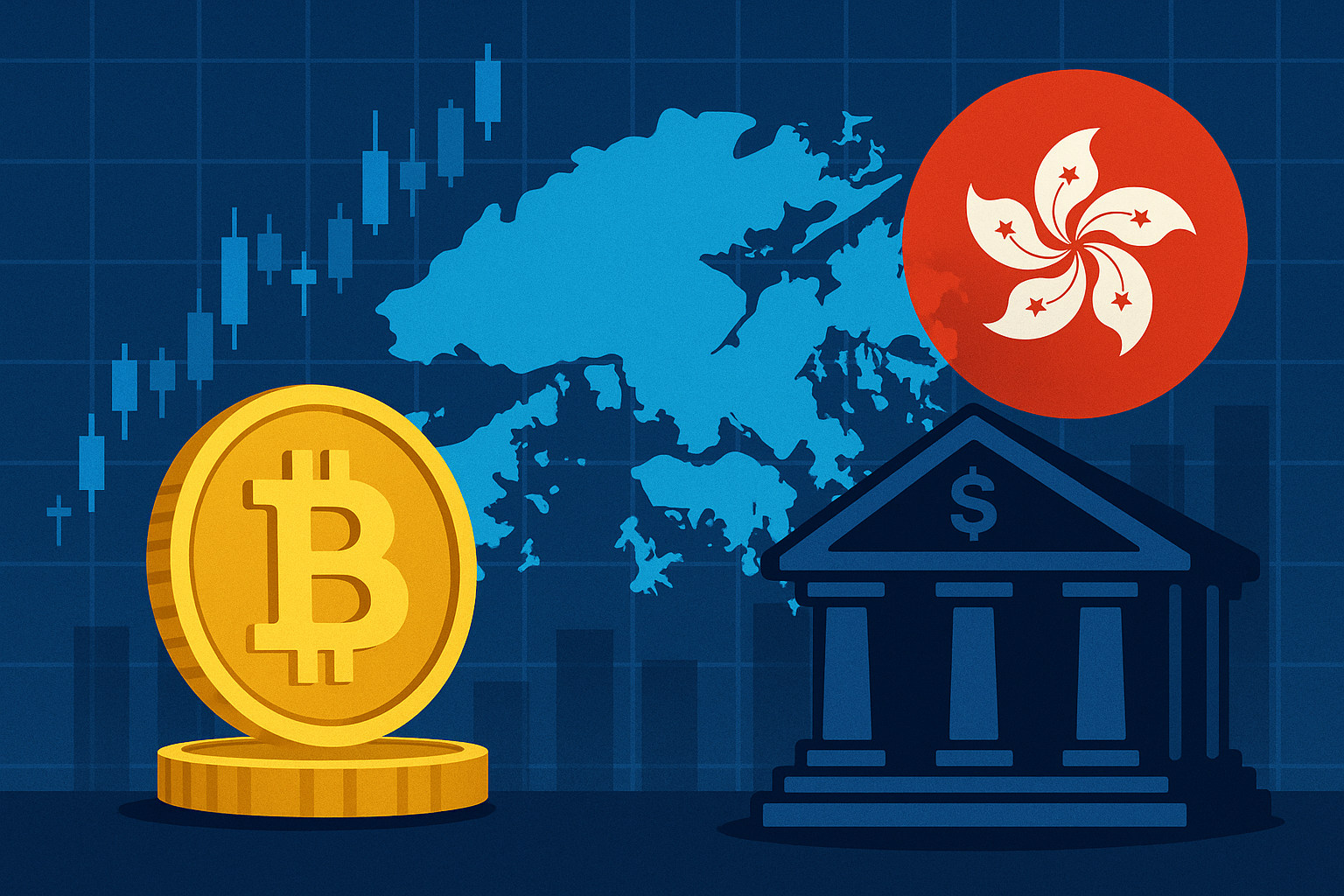
  • Hong Kong crypto rules attract global banks as AMINA wins new approval

    Hong Kong crypto rules attract global banks as AMINA wins new approval

    Hong Kong crypto rules attract global banks as AMINA wins new approval

    • The licence covers 13 cryptocurrencies, including Bitcoin, Ether, USD,C and Tether.
    • AMINA reported a 233% increase in Hong Kong trading volumes in early 2025.
    • Hong Kong launched new stablecoin rules and approved a Solana ETF this year.

    Hong Kong’s push to build a regulated digital asset market is drawing more interest from global financial institutions, and the latest example is Swiss crypto bank AMINA Bank AG securing approval to expand its services in the city.

    The bank received a Type 1 licence uplift from the Securities and Futures Commission, which makes it the first international bank allowed to offer regulated crypto trading and custody to institutional clients in Hong Kong.

    The move strengthens the city’s position as a regional digital asset hub and highlights rising demand for bank-grade crypto services among professional traders.

    AMINA plans to use the approval to provide institutional users with a regulated route into cryptocurrencies at a time when clients are looking for stronger safeguards and clearer rules.

    Hong Kong’s compliance standards have often limited the number of foreign institutions able to offer these services, which has left a gap in the market for firms with established banking frameworks.

    AMINA’s entry aims to fill that gap while giving clients a regulated platform backed by traditional financial infrastructure.

    AMINA expands in a fast growing market

    The licence uplift allows AMINA’s Hong Kong subsidiary to offer trading and custody for 13 cryptocurrencies.

    These include Bitcoin, Ether, USDC, Tether, and several leading decentralised finance tokens that are widely used across global exchanges.

    The approval creates new opportunities for institutional clients looking for a single regulated venue with access to a curated list of major digital assets.

    AMINA also reported a sharp rise in market activity.

    The bank recorded a 233% increase in trading volume on Hong Kong crypto exchanges in the first half of 2025.

    The increase points to stronger engagement from both institutional and retail segments, which are becoming more active as Hong Kong’s regulatory environment evolves.

    The bank expects the new approval to support a wider product range.

    It plans to expand into private fund management, structured crypto products, derivatives, and tokenised real-world assets.

    These additions would place AMINA among the firms offering institutional clients diversified exposure across multiple types of digital assets.

    Local players face new global competition

    While AMINA is the first international bank to receive this specific licence upgrade, it enters a competitive market.

    Hong Kong already hosts regulated local firms such as Tiger Brokers and HashKey, which serve institutional and retail clients under earlier permissions.

    AMINA’s approval signals that the market is open to more foreign institutions, which could change competitive dynamics for both global and local providers.

    Hong Kong officials have said on multiple occasions that attracting global firms is central to the city’s digital asset strategy.

    AMINA’s arrival may encourage more banks and brokerages abroad to consider similar applications as they assess opportunities in Asia’s regulated crypto markets.

    Policy changes shape Hong Kong’s crypto framework

    AMINA’s approval arrives during a period of rapid policy development in the city.

    Hong Kong introduced its new stablecoin rules in August, creating a formal licensing pathway for issuers.

    Following this, major regional banks such as HSBC and ICBC indicated they were examining licence applications as part of their digital asset plans.

    The city also approved its first Solana exchange-traded fund in late October.

    The approval placed Hong Kong ahead of the US in allowing a regulated Solana ETF and added another product to its growing list of crypto-linked investment options.

    Hong Kong tightened rules around self-custody of digital assets in August.

    The change focused on improving cybersecurity protections and reducing risks tied to individual key management.

    The decision was presented as a safety measure rather than a restriction on user access.

    The combination of new rules and rising institutional interest has created an environment that is now attracting more global firms.

    AMINA’s regulatory progress adds momentum to Hong Kong’s strategy of balancing strong compliance with market expansion.

    Source link

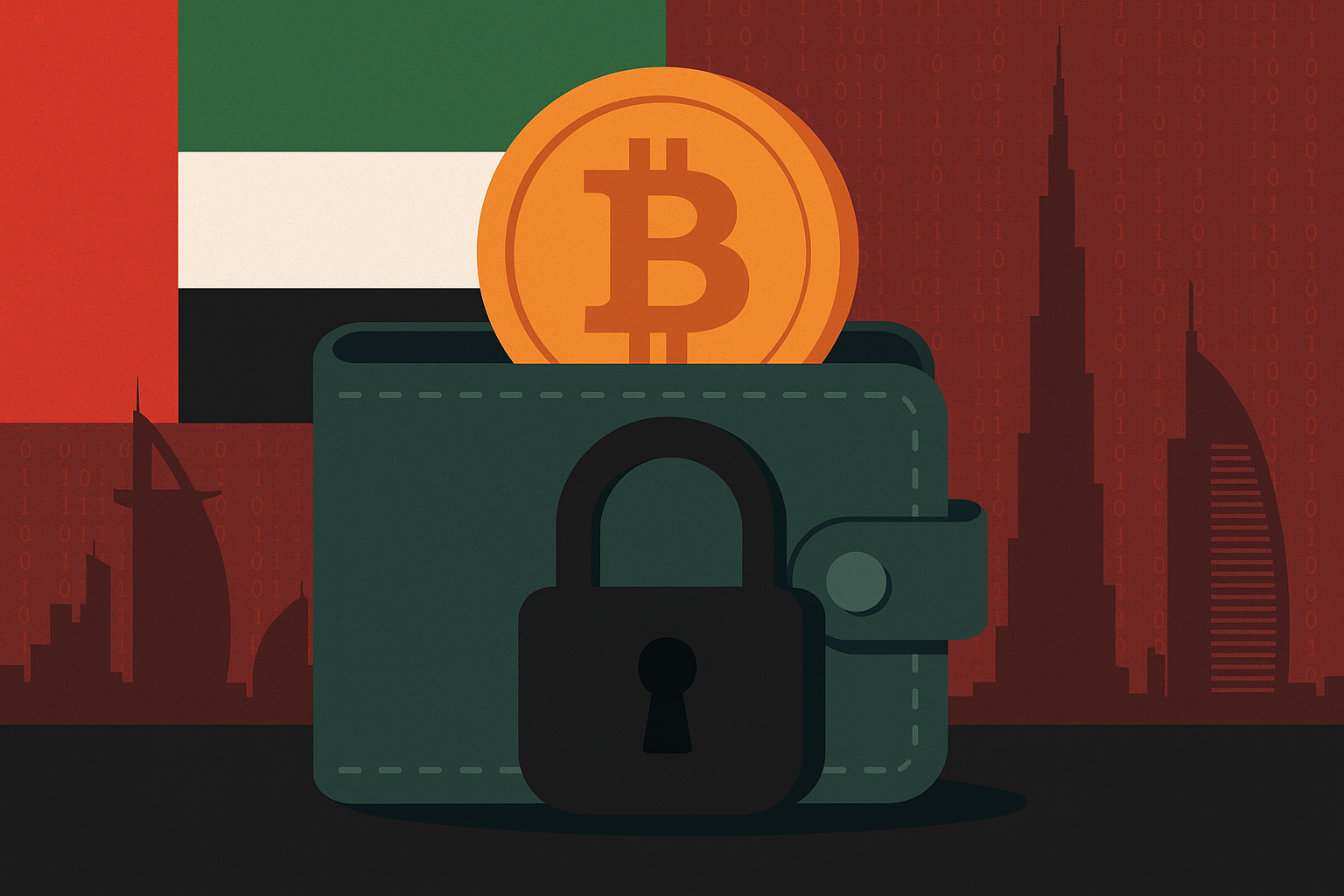
  • UAE makes Bitcoin wallets a crime risk in global tech crackdown

    UAE makes Bitcoin wallets a crime risk in global tech crackdown

    UAE makes Bitcoin wallets a crime risk in global tech crackdown

    • The UAE’s Federal-Decree Law No. 6 of 2025 came into effect on 16 September.
    • Article 62 places APIs, explorers, and decentralised platforms under Central Bank control.
    • Article 61 regulates all marketing, emails, and online posts about crypto services.

    In a sharp pivot from its crypto-friendly image, the United Arab Emirates has enacted sweeping new legislation that classifies basic cryptocurrency infrastructure, including Bitcoin wallets, as potentially criminal unless licensed by the Central Bank.

    Legal experts from Gibson Dunn have flagged the law’s scope as unusually broad, warning that its language introduces significant risk for global technology providers.

    This shift, embedded in Federal-Decree Law No. 6 of 2025, comes into force from 16 September and carries global consequences for developers and platforms offering crypto access.

    The law replaces the 2018 banking statute and significantly widens the definition of financial activity. What sets this legislation apart is not only its scope but also its enforcement teeth.

    Penalties for non-compliance range from fines of AED 50,000 to AED 500,000,000 (up to $136,000,000) and may include imprisonment.

    Importantly, this applies not just to entities operating within the UAE but also to those whose products are accessible from within the country.

    Licensing now applies to wallets, APIs and even analytics

    The most consequential element of the new law is found in Article 62. It grants the Central Bank control over any technology that “engages in, offers, issues, or facilitates” financial activity.

    The wording is broad enough to encompass self-custodial wallets, API services, blockchain explorers, analytics platforms, and even decentralised protocols.

    This marks a fundamental change in how crypto infrastructure is regulated in the UAE.

    Previously, licensing obligations focused on traditional financial entities, but the updated framework shifts this focus to include software and data tools.

    According to developer analysis, even public-facing tools such as CoinMarketCap and open-source Bitcoin wallets may now require licensing to remain accessible within the UAE.

    For the first time, developers may face criminal penalties for offering unlicensed crypto tools, even if they are based abroad.

    This extension of jurisdiction signals a new regulatory posture that treats access to crypto as tightly as its ownership or exchange.

    Communications and marketing now fall under regulation

    The crackdown does not stop at financial infrastructure. Article 61 of the same law defines the marketing, promotion, or advertising of financial services as a licensable activity.

    In practice, this means that simply hosting a website, publishing an article, or sharing a tweet about an unlicensed crypto service could be considered a legal violation if that content reaches UAE residents.

    This change dramatically expands the compliance footprint for companies and developers.

    Gibson Dunn highlights that these provisions materially broaden the enforcement perimeter, especially for firms with no formal presence in the UAE.

    The law applies to communications that originate outside the country but are accessible inside it.

    The result is a regulatory landscape where developers, content creators, and infrastructure providers must weigh whether their platforms are indirectly accessible by users in the UAE.

    In many cases, avoiding legal exposure may require disabling access or halting service altogether.

    Dubai’s free zones no longer shield crypto services

    Over recent years, the UAE has positioned itself as a hub for blockchain innovation.

    Jurisdictions such as Dubai’s Virtual Assets Regulatory Authority (VARA) and Abu Dhabi Global Market (ADGM) attracted global attention with purpose-built crypto licensing frameworks.

    However, the new federal law overrides these free-zone arrangements, asserting Central Bank control nationwide.

    Federal law supersedes any rules introduced by the UAE’s free zones, effectively dissolving the regulatory arbitrage that once drew companies to Dubai.

    The broader context includes the country’s history of digital restrictions.

    For instance, WhatsApp voice calls remain blocked across the UAE, reinforcing a consistent policy approach to centralised control over communications and digital tools.

    While this may bring the UAE in closer alignment with international pressure from groups like the Financial Action Task Force, it also puts crypto service providers in a difficult position.

    In other jurisdictions facing similar pressure, firms have withdrawn entirely to avoid enforcement risk.

    Enforcement begins in 2026, with further rules expected

    Entities have a one-year window from 16 September 2025 to come into compliance. This grace period may be extended at the discretion of the Central Bank.

    During this time, further regulations are expected to clarify how these broad rules will be applied in practice.

    Despite this, the scope of the law is already causing concern.

    The language around facilitation and communication, combined with the severe penalties under Article 170, suggests that firms offering crypto tools globally must now consider the risk of incidental exposure to UAE users.

    For software developers and platform operators, this marks a significant departure from the norms of decentralised access and open-source innovation.

    Source link

  • Mantle (MNT) kicks off 5-month global hackathon with $150K in rewards

    Mantle (MNT) kicks off 5-month global hackathon with $150K in rewards

    Mantle (MNT) kicks off 5-month global hackathon with $150K in rewards

    • The event is open to everyone, from startup teams to solo creators.
    • The hackathon runs until February 7, 2026.
    • Winning participants will enjoy a $150,000 prize pool.

    Blockchain network Mantle has officially opened its first-ever global hackathon, inviting creators and developers to build innovative blockchain solutions in a five-month online competition.

    The event has started today, October 22, and will run until February 7 next year, and offers up to $150,000 in incentives to winning projects.

    The hackathon is open to all enthusiasts globally, with renowned developer ecosystems HackQuest and OpenBuild offering tools, exposure to new projects, and mentorship.

    The event offers builders an opportunity to create practical innovations, and not hype-driven trends.

    Building to solve real-world problems

    Mantle has highlighted what it expects from participants of its hackathon: relevant products that tackle real user issues.

    Meanwhile, the evaluation procedure will prioritize five primary pillars, including scalability, product design, technical execution, Mante integration, and market potential.

    The Mantle team emphasized that successful entries should focus on market utility and not flashy demos.

    Indeed, this hackathon is a platform for serious builders and not short-term speculators. They said:

    Build what lasts, not just what trends. Focus on execution, usability, and real-world relevance. Most importantly, solve what users need.

    Meanwhile, participants have adequate time to design and shape their innovative projects.

    Registration and building start this month, with the winner announcement scheduled for February.

    Creators have the time to plan, test, and polish ideas before presenting their projects to the broader cryptocurrency community and judges.

    For context, the hackathon boasts a diverse judging panel comprising renowned figures in the blockchain world.

    The comprehensive list includes 0x Todd, Trustless State, Notaciccap, and multiple others with experience spanning venture capital, DeFi innovation, and product development.

    The massive judging team adds credibility to the event.

    Moreover, their experience signals high expectations as the panel boasts expertise in evaluating projects with real-world impact and creative innovations.

    Mantle and Bybit prioritize real-world solutions

    The five-month hackathon coincides with Mantle’s current alliance with centralized exchange Bybit, aimed at merging liquidity providers, real-world assets, and developers.

    The duo seeks to democratize the trillion-dollar industry of on-chain finance.

    The initiative reflects Mantle’s mission to expand beyond a blockchain network and create an international developer community to accelerate financial innovation.

    MNT price outlook

    Mantle’s native token mirrored broader sentiments today.

    MNT lost nearly 10% of its value over the past 24 hours to $1.64.

    The faded daily trading volumes indicate trader disinterest in the tokens, as bears rattle the cryptocurrency landscape.

    The value of all digital tokens plunged by 5% the past 24 hours to $3.65 trillion due to factors like tariff tensions.

    Nevertheless, analysts remain confident, predicting massive rebounds in Q4 and into 2026.

    Meanwhile, the ongoing hackathon could boost MNT’s utility and volumes in the coming times, which could catalyze stable price performances.


    Source link

  • DigitalX taps global crypto leaders in A$20M Bitcoin Treasury push

    DigitalX taps global crypto leaders in A$20M Bitcoin Treasury push

    DigitalX secures A$20.7M in strategic funding to expand its Bitcoin treasury

    Australian digital asset manager DigitalX has raised A$20.7 million (US$13.5 million) in a fresh round of strategic funding, deepening its commitment to a “Bitcoin-first” approach.

    The ASX-listed firm plans to use the funds to grow its Bitcoin treasury, with backing from heavyweight crypto investors like Animoca Brands, UTXO Management, and ParaFi Capital.

    DigitalX says it plans to allocate about AU$19.7 million (US$12.8 million) from its recent raise toward boosting its Bitcoin holdings, with the rest going toward offer expenses and general operations.

    In addition to the capital raise, DigitalX has bolstered its strategic advisory board with the appointments of Yat Siu, co-founder of Animoca Brands, and Hervé Larren, CEO of Airvey.io.

    Both bring deep experience in crypto and digital assets, and their involvement is expected to offer valuable insight into Bitcoin strategy and investor relations.

    The move further cements DigitalX’s position as a key player in driving institutional crypto adoption in Australia.

    Bitcoin-first Treasury approach

    DigitalX’s latest move aligns with the playbooks of global Bitcoin champions like MicroStrategy and Japan’s Metaplanet, both known for aggressively stacking Bitcoin.

    Since debuting on the ASX in 2014 as a Bitcoin miner, DigitalX has kept Bitcoin as a core asset on its balance sheet.

    Right now, it holds 65 BTC directly, along with 881,000 units of its own Bitcoin ETF (BTXX), which translates to roughly 193 BTC.

    Altogether, that adds up to a Bitcoin position worth around US$43.3 million.

    The placement, priced at A$0.074 (US$0.048) per share and bundled with attached warrants, drew strong interest from both institutional and strategic investors.

    Notably, Simon Gerovich, the CEO of Tokyo-listed Metaplanet took part in the round personally.

    The support from prominent global crypto players highlights rising institutional confidence in Bitcoin as a long-term store of value and points to a broader shift toward regulated, transparent ways to gain exposure to digital assets.

    Credibility boost

    Interim CEO Demetrios Christou called the investment a “significant milestone,” noting that both the capital and the backing from globally respected Bitcoin advocates will help DigitalX stay focused on its strategy and create long-term value for shareholders.

    Meanwhile, Yat Siu described Bitcoin as “the reserve asset of Web3 digital gold,” and pointed to DigitalX as one of the best ways for Australian investors to gain exposure to it.

    With this latest funding round, DigitalX isn’t just adding to its Bitcoin holdings, it’s also reinforcing its role as a regulated, ASX-listed bridge for both institutional and retail investors looking to tap into the Bitcoin space.

    Source link

  • Crypto market braces for impact amid Trump’s tense global tariff negotiations

    Crypto market braces for impact amid Trump’s tense global tariff negotiations

    Bitcoin, Ethereum, Crypto

    • Cryptocurrencies have seen a sudden dip as Trump proposes a 50% tariff on EU goods.
    • Bitcoin (BTC) has dropped by 4% while Ethereum (ETH) has dropped by over 3%.
    • As the market braces for tariffs’ impact, the recently held TRUMP memecoin gala dinner has stirred controversy and market volatility.

    The cryptocurrency market, known for its volatility, is now facing fresh uncertainty as US President Donald Trump intensifies global tariff negotiations, sending shockwaves through both traditional and digital financial systems.

    Bitcoin (BTC), which recently hit an all-time high of $111,814, has become increasingly sensitive to geopolitical developments, with its price movements closely tracking Trump’s latest trade threats.

    Notably, BTC has today experienced a sharp 4% decline, with Ethereum following closely with a 3.2% drop following Trump’s Truth Social post declaring that negotiations with the European Union were “going nowhere,” a statement that immediately rattled markets.

    As panic spread, over $300 million in leveraged positions were liquidated, showcasing how digital assets, often viewed as uncorrelated, are becoming more reactive to global policy decisions.

    90-day tariff pause almost coming to an end

    As the 90-day tariff pause nears its expiry, Trump has proposed a 50% tariff on EU imports, alongside a 25% tariff specifically targeting iPhones manufactured abroad, raising alarms about broader economic implications.

    Trump proposes 50% tarrof on EU imports

    Investors now fear that these tariffs could not only escalate trade tensions but also lead to retaliatory actions from the EU, further complicating global market conditions.

    Even though the EU has so far refrained from escalating the situation, the clock is ticking, with a 90-day tariff pause set to expire in July, placing immense pressure on ongoing negotiations.

    Only the United Kingdom has finalised a trade agreement so far, and while India is expected to sign within days, other major players remain in a tense waiting game.

    Market downturn amid fears of resumption of tariffs

    With July just a month away, market watchers like Crypto Caesar now see Bitcoin’s $110,000 level as a key resistance point, with traders emphasising the need for BTC to hold above $109,000 to preserve the current bullish structure.

    Ethereum (ETH) has not been spared from the volatility, holding a support level at $2,500 but struggling to breach the persistent resistance at $2,700, even as daily losses extend to 4%.

    Notably, the ETHBTC pair continues to drift downward, suggesting weakening momentum in altcoins unless the broader market stabilises or Ethereum regains relative strength.

    Pi Coin, another asset under scrutiny, showed signs of upward movement earlier this month but failed to maintain gains above $1.23 due to aggressive short-term selling and long-term investor scepticism.

    US tech stocks have mirrored the downturn in crypto, with Apple shares falling amid fears that higher costs could be passed on to consumers, hurting demand and corporate profits alike.

    Trump’s involvement in crypto stirs controversy

    Amid all this, Trump’s personal involvement in crypto has added an unexpected layer of controversy, culminating in a high-profile gala for top holders of the TRUMP memecoin.

    The event, attended by major figures like TRON founder Justin Sun, drew widespread criticism and accusations of corruption, especially as federal lawmakers call for investigations into presidential conflicts of interest in cryptocurrency ventures.

    Following the gala, the TRUMP token spiked to $16 before dropping to $13.81, reflecting how quickly sentiment can shift amid political spectacle and regulatory uncertainty.

    While Trump’s supporters argue that his aggressive trade stance is a strategic play to bring manufacturing back to the US, economists warn of rising consumer prices and slower economic growth.

    Crypto traders, already bracing for volatility, now find themselves navigating a complex intersection of policy, politics, and profit, where even a single headline can trigger billions in liquidations.

    As July approaches and the tariff deadline looms, the crypto market remains on edge, anticipating either a breakthrough in trade talks or another wave of volatility that could reshape investor confidence once again.


    Source link

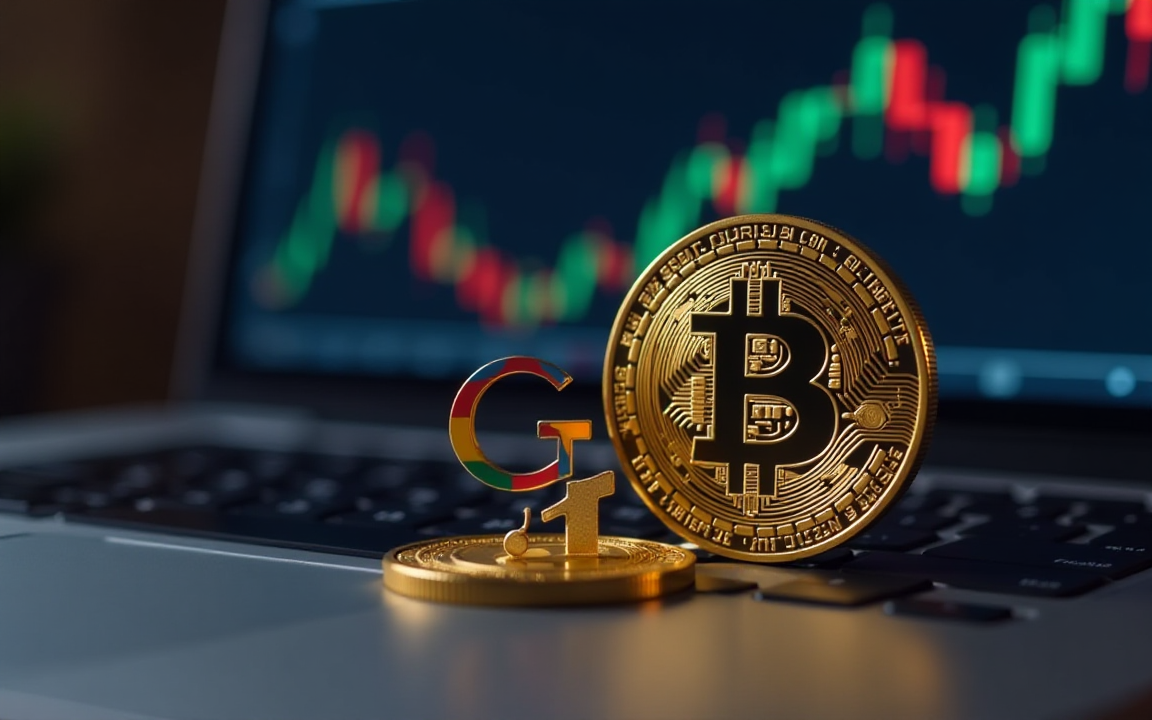
  • Best crypto to buy as Bitcoin (BTC) surpasses Google in global asset rankings

    Best crypto to buy as Bitcoin (BTC) surpasses Google in global asset rankings

    Best crypto to buy as Bitcoin (BTC) surpasses Goggle (GOOGL) in global asset rankings

    • Bitcoin recently surpassed Google in global market cap rankings.
    • Bitcoin Pepe is quickly approaching $10 million in its ongoing BPEP token presale ahead of exchange listing.
    • Bitcoin Pepe promises to bring meme coins to the Bitcoin network.

    Cryptocurrencies led by Bitcoin (BTC) are making waves as they disrupt the global asset rankings.

    Bitcoin (BTC) recently surged past $106,000, overtaking Alphabet (NASDAQ: GOOGL) to become the sixth-largest asset globally by market capitalisation.

    In another sign of crypto’s growing financial footprint, Tether—the largest stablecoin issuer—now holds more in US Treasury securities and gold reserves than Germany.

    According to data from the US Department of the Treasury, Tether’s holdings have exceeded Germany’s $111 billion in US Treasuries.

    These developments underscore the rapid momentum behind digital assets, as they increasingly rival and, in some cases, surpass traditional financial institutions in scale and influence.

    As capital increasingly flows into digital assets, investors are seeking the next high-potential projects that could ride this bullish wave.

    Among them, Bitcoin Pepe is quickly emerging among the best crypto to buy, especially for those looking to enter the market during this market resurgence.

    Bitcoin’s surge above Google in market cap

    On May 19, 2025, Bitcoin overtook Google’s parent company, Alphabet Inc. (GOOGL), in global asset rankings by market capitalisation.

    This came as Bitcoin’s price topped $106,000, lifting its market value past the $1.67 trillion mark.

    This development underscores a broader trend: institutional and sovereign-level confidence in Bitcoin is growing.

    Governments, hedge funds, and publicly traded companies are all adding BTC to their treasuries, with the most recent being Metaplanet, which added 1,004 bitcoins to its holdings.

    While traditional tech stocks have been a staple in investment portfolios for decades, Bitcoin’s narrative as “digital gold” and a decentralised store of value is winning hearts and capital across global markets.

    Its fixed supply, combined with growing demand, continues to push its valuation higher even amid periodic market corrections.

    Moreover, Bitcoin’s performance relative to top-tier equities is shifting perceptions. In previous market cycles, critics dismissed BTC as speculative or too volatile.

    That said, the rapid ascent of Bitcoin is also catalyzing interest in adjacent crypto projects, particularly those aiming to build on Bitcoin’s foundational strength.

    Bitcoin Pepe is emerging as a top buy as BTC surges

    As Bitcoin continues to dominate headlines, Bitcoin Pepe is quickly positioning itself as one of the most promising investment opportunities in the crypto market today.

    Built as the world’s first meme-based Layer-2 for Bitcoin, Bitcoin Pepe is more than just a viral token, it represents an ambitious plan to bring Solana-style speed and scalability to the Bitcoin network.

    Bitcoin Pepe’s native token, BPEP, is currently in the final stages of its presale.

    Having already raised over $9.8 million in the presale, Bitcoin Pepe has drawn significant interest from early backers who see both the narrative and technological edge it brings to the table.

    The current BPEP presale price is $0.0342. Notably, the token has seen a 62.9% price rise since the presale started a few weeks ago, with a 5% increase in each presale stage.

    Bitcoin Pepe’s roadmap is equally ambitious. Once the presale comes to an end, the price of BPEP is expected to rise substantially, especially after it hits centralised exchanges shortly after the presale ends.

    Beyond the presale hype, Bitcoin Pepe has introduced a new token standard by the name of PEP-20 token standard, which allows users to launch their own memecoins on Bitcoin’s blockchain.

    By introducing ultra-fast transactions and negligible fees, Bitcoin Pepe aims to empower a new generation of creators and investors to build directly on the most secure blockchain in existence.

    Despite the broader market experiencing a minor pullback today, the sentiment around Bitcoin Pepe remains overwhelmingly bullish, fueled not only by retail investors but also by crypto influencers and key opinion leaders (KOLs) who recognize the project’s unique positioning at the intersection of memes, Bitcoin, and scalable infrastructure.

    Source link

  • Blockchain Forum 2025: Global crypto leaders to meet in Moscow

    Blockchain Forum 2025: Global crypto leaders to meet in Moscow

    The countdown is on for the highly anticipated 14th Blockchain Forum, set to take place in the heart of Moscow on April 23-24, 2025.

    As the CIS market continues to solidify its global role in the cryptocurrency industry, this year’s forum is expected to attract over 15,000 participants, featuring some of the most influential names in Web3, cryptocurrency, and mining from more than 130 countries.

    The last event in Dubai generated significant buzz ahead of the bull run, bringing together industry leaders from Tether, TRON, Ledger, Trust Wallet, Tezos, Binance, TON, OKX, Ripple, Bitmain, Bybit, Animoca Brands, Circle, BingX, ICP, Kraken, Sandbox, Polygon, Litecoin, Sui, BNB Chain, Cardano, DYDX, VeChain, Osmosis, Chiliz, Algorand, Ether Fi, Manta, Mantle, and Delysium.

    As always, attendees can look forward to exclusive insights from market leaders, behind-the-scenes discussions, and countless networking opportunities. Founders and top executives from major companies will unveil strategies for capitalizing on current seasonal trends.

    Simultaneous translation of all presentations of worldwide stars into English will be provided free of charge.

    In addition, industry giants and opinion leaders will converge at the forum, vying for prestigious accolades at the Blockchain Life Awards, which will celebrate its 12th edition this year. This presents a unique opportunity to encounter CEOs of major exchanges and founders of renowned projects just on their way to the main stage, making exclusive connections more accessible than ever. Don’t miss your chance for invaluable networking opportunities!

    The presale is in full swing — secure your tickets now, as prices are expected to increase dramatically as the forum date approaches. We’ll see you there.

    Enjoy a 10% discount using the promo code COINJOURNAL at https://blockchain.forum/en

    Source link

  • Interview: NoOnes visionary mission for Bitcoin adoption and empowerment in the Global South

    Interview: NoOnes visionary mission for Bitcoin adoption and empowerment in the Global South

    Since its founding two years ago, NoOnes, a peer-to-peer (P2P) platform, has achieved a lot in a short space of time. As a visionary entrepreneur, Ray Youssef, NoOnes CEO, is helping lead the way in the evolving world of crypto. Using Bitcoin as a tool, Youssef and his team believe it’ll bring empowerment to the Global South.

    In this exclusive interview, Rebecca Campbell, crypto content editor at CoinJournal, spoke with Ray Youssef, co-founder and CEO at NoOnes, to discuss NoOnes vision and how it and Bitcoin are empowering the Global South. Youssef dives into the challenges they face, a financial apartheid in Africa, political pressures from the West, the limitless opportunities for the Global South, and how the relationship between crypto and people is evolving.

    Ray Youssef, founder and CEO of NoOnes

    Rebecca Campbell (RC): Can you tell me about NoOnes and where the name came from?

    Ray Youssef (RY): NoOnes is a super app for the Global South. We started as a peer-to-peer crypto marketplace, but we always planned on being much more than that. In less than two years we’ve added a spot exchange and a virtual VISA card, and we’re about to launch our NoOnes gift card. We’re also a messenger app and you can even top-up your mobile phone. NoOnes is built for the people of the Global South, so we don’t have the problems of a US-based business trying to serve people in the Global South.

    The way NoOnes got its name is a funny story. When NoOnes was just a dream, a series of brainstorming sessions with the guys who helped get it started, I’d been having these random thoughts about our family dog who had died about 15 years before. Her name was Heidie, but my mother gave her a nickname – Noons.

    I loved that dog and for some reason, she was constantly in my thoughts around that time, so one day as a joke I said, “We should call the company Noons.” I wrote it down on a piece of paper and saw that it read like NoOnes, and I thought it was perfect. It captures the truth about what we wanted to do with a decentralized marketplace. Your money is NoOnes business. Your data is NoOnes business. Your business is NoOnes business.

    RC: What are your vision and goals with NoOnes?

    RY: Ever since I realized the power of crypto and peer-to-peer, my vision and goals haven’t changed. There are a lot of people in crypto who want to get rich, but that’s never really motivated me. I saw crypto as a leveler, an equalizer. And I saw how it could make a difference to people constantly left behind by the financial system because their money is the wrong color or their passport is the wrong type.

    As soon as I saw the potential of crypto and peer-to-peer working together to create this eco-system that enables any form of money to become another form of money, I knew it was a mechanism that could end financial apartheid. I call it financial apartheid because that’s what the international financial system is – it discriminates against people because of who they are and where they come from. I’ve known that for a long time. With NoOnes, we can change that because we are based in the Global South and tailor our products to suit the people who need them most.

    My vision is to see hundreds of cities like Dubai all over the Global South, with people trading freely, building wealth and making their lives and their family’s lives better.

    RC: Can you talk about the role NoOnes and Bitcoin will play in empowering the Global South?

    RY: First of all, we are based here. That means we have boots on the ground and can talk to the people who use our marketplace to buy crypto, trade gift cards, make payments, remittances, whatever. Our products are not based on a Western model and then forced on people because they have no other option.

    Take KYC, for example. When I was in the US, we often had to file a suspicious activity report and lock a Global South customer’s funds when, for whatever reason, they were flagged on the system. Then we had to wait until the American regulators got back to us to say, “Ok, you can let these guys go.” Sometimes, we had to wait years until we could release a customer’s funds.

    Meanwhile, these people, who did nothing wrong, had to wait until the regulator said they could access their own money. In the meantime, they had to find money from somewhere else to cover what the regulators locked away. Even the banks can’t do that, but Uncle Sam can. It was crazy. Why should we put our customers through that kind of pain?

    The US still controls Africa to such an extent that it’s difficult for countries to trade with each other. That’s part of the financial apartheid I talk about. Look what happened recently with Binance. A new CEO comes in and the first thing they do is disable Pan-African trade on Binance peer-to-peer. Kenyans can only trade with Kenyans and Ghanaians can only trade with Ghanaians.

    That’s the exact policy the US has been using to keep Africa and the rest of the Global South poor. We are changing that. I spend a lot of my time advocating for Pan-African trade. It’s a crucial part of making the Global South wealthy. Imagine if some guy running a business in New York couldn’t trade with a business in New Jersey. Would any American put up with that? Why should Africans?

    RC: What are the challenges and opportunities you face in achieving this for Bitcoin to reach its full potential in the Global South?

    RY: There are lots of challenges facing us, but the biggest one is dealing with the political pressure from the West. Anyone who goes against the West and their central bankers is going to be resisted. The governments and elites who run the global financial system are strong because they have a series of sliders, a bunch of levers they can push and pull to control everything.

    They can pull one way and say, “Oh, Nigeria, you haven’t been listening to us, so we’re going to take your slider all the way down to zero.” They can move these levers at any time, so they have tremendous power, and they can control the economies of the world. They can punish or reward a marketplace, even whole economies, and we need to offset this.

    Crypto and peer-to-peer are the offsets, and that’s why the West has such a problem with crypto. It’s why they put people who don’t follow their model in jail.

    The opportunities in the Global South are unlimited. Africa has the fastest-growing population of any continent. It has 1.5 billion people, and the next 25 years will add almost another billion. There is a youth unemployment problem right now, but I see that as an opportunity. I’ve met so many young Africans who are savvy and dynamic and they all want to succeed. I’ve seen many of them use our marketplace to make money, to start businesses, and to change their lives.

    India also has amazing opportunities, as does Latin America. There are so many opportunities in all of these places for people to create businesses by piggybacking on our platform – that’s one of the greatest successes of NoOnes, I think. We can’t have success unless we help others have success, and the ethics of that is mostly missing in the corporate world today.

    Which companies are giving back 50% of their profits to the people who use their products? We are doing that at NoOnes. We have bonuses, incentives, and a Partner Program that rewards the people who help us grow because we want people to help us spread the word about the power of crypto and peer-to-peer. We need the Global South to know that it doesn’t have to settle for a Western model that doesn’t suit its needs.

    If we add up all of those things – dynamic, savvy young people who are hardworking and ready to grasp opportunities, a universal container for money that is also a store of wealth, and the NoOnes marketplace that gives the Global South access to finance and free trade – we will reach the full potential of the Global South, and I think it can happen quickly. Most people in the West will be astonished by it.

    RC: How is NoOnes different from what you did at Paxful?

    RY: Paxful had a major disadvantage – it was based in the US. I’ve already talked about KYC and all the problems we encountered trying to help people in the Global South as a US company. You can’t do it – and it’s getting worse. Look at what happened to Changpeng “CZ” Zhao, [the former CEO of Binance]. He went to jail. Look at what happened to Pavel Durov, the Telegram CEO – he went to jail the minute his plane landed in France.

    I had the same vision at Paxful that I have now, and maybe it took me too long to realize that I couldn’t achieve my mission of running a US company. But now the shackles are off. Nothing is holding us back now that we are based in the Global South.

    I learned years ago that my priority has to be to serve my users, my customers. They can fire the CEO. I learned that helping my parents run a newsstand on Columbus Circle in New York City when I was a kid.

    In the US, the first priority for most companies is to serve the government, then, if they’re happy, you can help your customers. That’s not right. And I won’t do that. We saw what happened with Binance. They gave up their user data to the [Israeli Defense Forces] IDF and hundreds of people lost millions of dollars – and some of them were killed. Compare the NoOnes privacy policy to the Binance privacy policy. We won’t give up our user data. I couldn’t say that when I was CEO of Paxful.

    RC: How do you see NoOnes evolving in the next 5-10 years?

    RY: NoOnes is going to get bigger, that’s for sure. Sometimes I have to remind myself that we didn’t exist two years ago because we’ve come so far in such a short time, but this is only the start. People might think of us as a crypto peer-to-peer marketplace, but we are always adding new products, making existing ones better, and we listen to our users so we can give them what they need.

    I talk about our business as an ecosystem because that’s the best way to describe how we are evolving. We created a marketplace for crypto and gift cards, we added a spot exchange and other products, and we feed profits back into that ecosystem. People are building their businesses on top of our platform.

    Expats working overseas send money home and realize our platform is a better, faster, and cheaper way of doing it than using a traditional money changer – so they start doing it for their friends and create a side hustle. Someone needs to make a payment in another country, but they don’t have a bank account, so they use our platform – they see how simple it is, so they start a business doing the same for other people. And it all feeds back into the ecosystem.

    Imagine all these businesses taking the place of the traditional banks and money changers – the wealth stays in the Global South instead of lining the pockets of all the executives working for banks and financial institutions in the West. That’s part of the reason they don’t like what we do.

    Imagine when all the people in the Global South realize how easy it is to make these changes. How easy it is to stop the drain on the resources of the Global South – it’s been happening for centuries and it has to stop, and it will. In five years, maybe less, NoOnes will be leading that drive and the Global South will be on the way to becoming a superpower.

    RC: How do you see the relationship between crypto and the wider population evolving?

    RY: That’s a great question because it’s the front line in the battle going on at the moment. Before I understood crypto I thought it was just “Internet funny money.” Most people still think that way now because they don’t understand it. I’m not sure governments understand it that well, but they know it’s a threat to the status quo. That’s why they tried to stop it, and that’s why they are trying to control it now.

    The real power in the world is the one that controls the money system. The people in power have levers they use to keep us in our place, and the manner in which we reverse engineer it must be explained very clearly and logically for people if we are to succeed in getting them to help us fix the current state of humanity.

    In simple terms, I’m talking about a currency war, and when I say currency I mean anything that is a store of value and can be traded. Eventually, the people will be won over to crypto because its power cannot be denied – even governments recognize this now. Some countries banned it, then they realized its utility, and now they’re trying to regulate it. Crypto isn’t going away.

    The real question is whether the essence of it gets destroyed in the process of being accepted by the wider population. Crypto was designed to be trustless and permissionless – that means we don’t have to trust some government or corporation to have faith in its value.

    RC: What is NoOnes focusing on at the moment?

    RY: Our focus is on our three core values – everyone eats, bullish education, and revolutionary transparency.

    I’ve already talked about giving back 50% of our profits and our partner program, and that’s part of what we mean by “everyone eats.” I don’t want to get rich at the expense of the people who use our products. Some people laugh at me when I say I am on a mission, but I’ve been saying it for more than a decade because it’s true. We won’t be happy if we are successful and others around us are not, so that’s why everyone eats is important.

    Another principle is revolutionary transparency. Lots of businesses talk about being transparent, but most of them don’t follow through. This is why we get problems like we saw with FTX. NoOnes is different. Anyone who wants to see the business data I see about NoOnes can see it by looking at the CEO Dashboard on our app.

    Right now, our biggest focus is on education. I’ve talked about the opportunities in the Global South, but those opportunities won’t mean anything if people don’t know about them and become educated about how crypto can help them solve problems. We created the NoOnes Academy so people can learn not only how to trade profitably, but also how they can do it safely.

    Some people might want to make a payment or send money home, but they are scared of crypto because they’ve heard nasty stories in the media. We want to educate them so they understand how easy it works and how much utility it has. Some people might just use it in a small way – helping them pay for something because they don’t have a VISA card or a bank account. Others might be skilled and savvy, but they’re unemployed and they’re looking to earn money to pay the bills or to start a business – they might learn how to trade gift cards or crypto through the NoOnes Academy.

    If enough people become educated about how our super app works, the Global South will change dramatically.

    RC: What are your plans for NoOnes in terms of growth and development?

    RY: I’ve already talked about Dubai, but it’s a great example of the future of the Global South. A lot of people think Dubai has had massive growth because of oil, but that’s just not true. Sheikh Mohammed made trade easy and the environment business-friendly, and pretty soon the money flowed into Dubai like a river. The money that came in was then fed back into development and we can see the result today.

    My vision is to see cities like Dubai across the Global South, with NoOnes leading the way. We will provide the infrastructure, the education and the opportunities, and that means being on the ground, listening to people so we can give them what they need to help them grow. We’ve done it with our peer-to-peer marketplace, our spot exchange, a virtual VISA card, and gift cards – and new products are coming.

    We’re looking at a peer-review credit score so users will get a rating that can be used to provide financing for start-ups and business owners. We want to fine-tune our messaging function because that’s a great way to attract people we can educate on the benefits of crypto.

    We need more people to help us grow, so we’ll be hiring people on the ground wherever we do business. Already our users are helping us by making content to help educate their fellow citizens. Our growth and development always revolve around work. Free trade allows the money to flow and that puts people to work so they can create their wealth. I truly believe in universal wealth, but that only happens when the roadblocks to growth are removed. To do that we must have the people behind us, and that’s why education is so important.

    Our goal was for NoOnes to have a billion users within seven years, and if we do that we will bring the Global South closer to the wealth it’s been denied for so long.

    Source link

  • Mark Cuban: Inflationary Pressure Could See Bitcoin Become Global Reserve

    Mark Cuban: Inflationary Pressure Could See Bitcoin Become Global Reserve

    A photo image of mark cuban
    • Inflationary pressure and geopolitical uncertainty could see Bitcoin become a global reserve currency, states Cuban
    • The billionaire believes Trump’s lower tax rates and tariffs could push up Bitcoin’s price
    • Elon Musk plans to commit $45m a month to back Trump’s presidential run

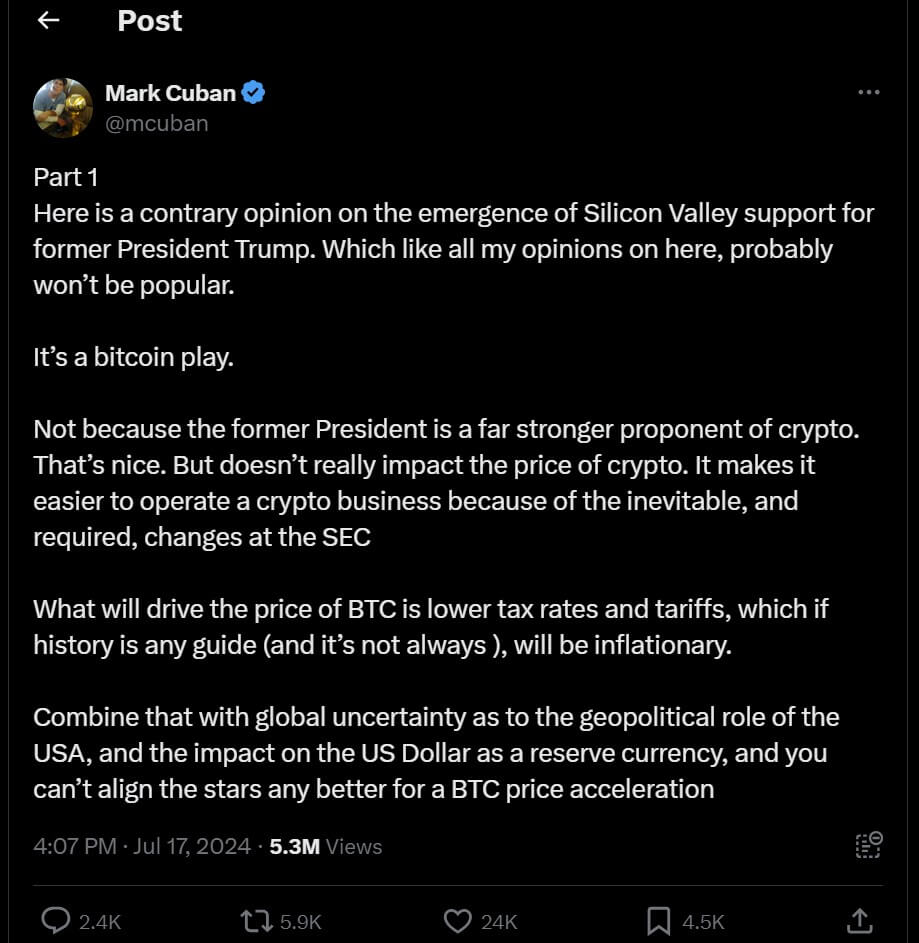
    US billionaire Mark Cuban believes that through a combination of inflationary pressure and geopolitical uncertainty, Bitcoin could become a global reserve currency.

    Taking to X, the billionaire indicated that Silicon Valley’s support for former President Donald Trump was a “bitcoin play” to boost its price. Cuban, who has backed Joe Biden for re-election, stated that lower tax rates and tariffs under Trump could push up Bitcoin’s price.

    “Combine that with global uncertainty as to the geopolitical role of the USA, and the impact on the US dollar as a reserve currency, and you can’t align the stars any better for a BTC price acceleration,” Cuban wrote.

    He added that this will make it easier to “operate a crypto business because of the inevitable, and required, changes at the” US Securities and Exchange Commission (SEC).

    How High?

    Questioning how high Bitcoin can go, Cuban didn’t give a figure, but wrote “way higher than you think,” adding that this is due to its global status, its 21 million Bitcoin limit, and the fact that the currency has unlimited fractionalisation.

    In Cuban’s view, Bitcoin could become a safe haven as countries turn to it as they seek to protect their savings if geopolitical uncertainty continues and the dollar declines as a reserve currency.

    While he only indicated that this was a possibility and isn’t saying it will happen, he added that it’s already happened in countries facing hyperinflation.

    Following Trump’s injury during an assassination attempt at a campaign rally in Pennsylvania, Musk officially endorsed the former GOP President by saying he plans to commit $45m a month to a new super political action committee backing Trump’s presidential run.

    In March, billionaire Elon Musk indicated he wasn’t voting for the Democratic Party in November. The tech mogul who owns Tesla and SpaceX, in addition to X, wrote “I voted 100% Dem until a few years ago. Now, I think we need a red wave or America is toast.”

    Source link