Tag: hedge

  • Taiwan eyes Bitcoin as hedge against inflation and US Treasury exposure

    Taiwan eyes Bitcoin as hedge against inflation and US Treasury exposure

    Taiwan eyes Bitcoin as hedge against inflation and US Treasury exposure

    • Lawmaker Ko Ju-Chun suggests adding Bitcoin to national reserves.
    • Taiwan has 423 metric tons of gold in its asset base.
    • New Hampshire in the US passed a law to include Bitcoin in state reserves.

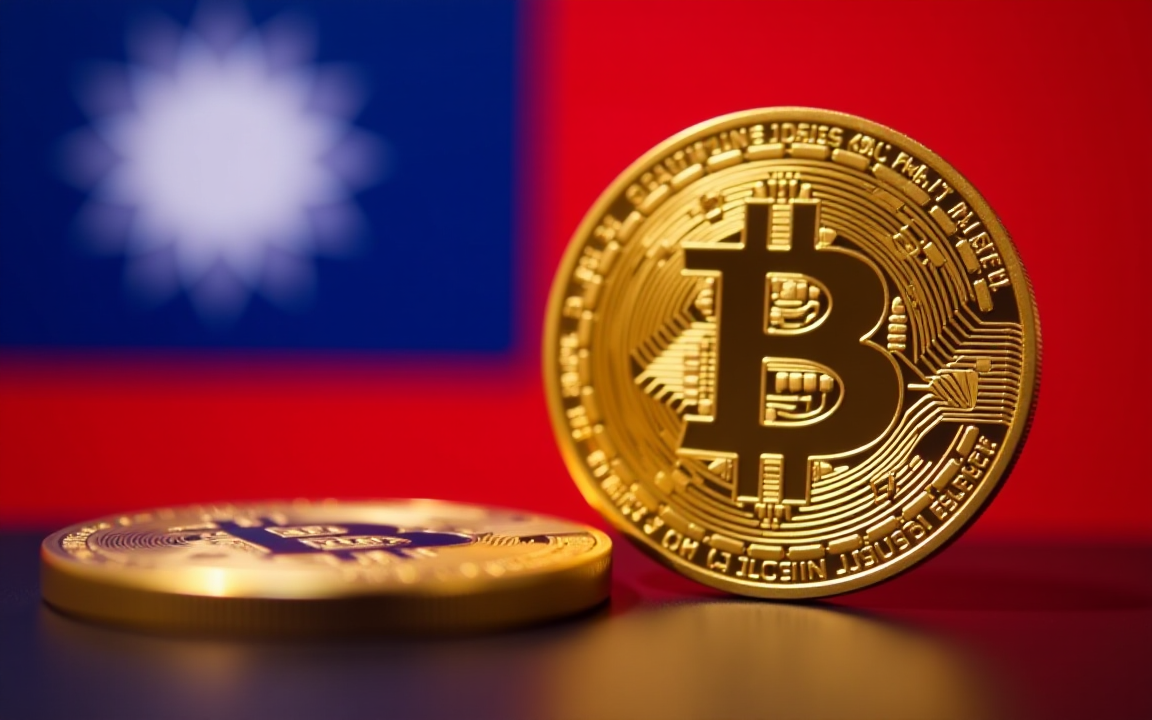
    Taiwan is considering a significant policy shift—one that could see Bitcoin join its national reserves.

    Faced with inflationary pressure, global trade tension, and increasing reliance on US Treasury bonds, the country is now questioning whether its financial buffers are truly secure.

    Legislator Ko Ju-Chun recently proposed the inclusion of Bitcoin in the central bank’s reserve mix, citing its decentralised nature and fixed supply as a strategic hedge against future financial instability.

    The proposal reflects a broader reassessment of traditional reserve assets, especially as over 90% of Taiwan’s US$577 billion in foreign exchange reserves are currently tied to US Treasuries, raising concerns about diversification and liquidity during crises.

    Rising currency risks and dependency on US Treasuries

    Taiwan’s export-led economy is particularly sensitive to geopolitical shifts and inflation trends.

    With growing tensions between the US and China and the risk of supply chain disruptions, lawmakers are increasingly alert to the vulnerabilities of the New Taiwan Dollar (NTD).

    Currently, Taiwan holds 423 metric tons of gold and nearly all its foreign exchange in US dollar-denominated assets.

    Analysts note that while these have been historically reliable, their over-concentration exposes the country to US monetary policy and potential sanctions should relations deteriorate.

    In an address to parliament, Ko Ju-Chun highlighted that Taiwan needs “strategic flexibility” in how it manages its reserves, especially under scenarios of financial decoupling or restricted access to dollar markets.

    Bitcoin floated as a hedge, not a replacement

    The core of the proposal is not to upend Taiwan’s current reserve strategy but to diversify it.

    Ko’s plan calls for allocating a small percentage of Taiwan’s reserves to Bitcoin, which he argues would provide an uncorrelated asset that is globally accessible and cannot be arbitrarily inflated.

    Bitcoin’s fixed supply of 21 million tokens, combined with its decentralised ledger system, is a key reason why it is being considered.

    According to Professor Liu Yiru of National Taiwan University, these features make it particularly resistant to inflationary dilution—unlike fiat currencies, which central banks can expand during economic shocks.

    Former Premier Chen Cong also weighed in, stating that although Bitcoin may not serve as a transactional currency at scale, its role as a digital store of value could help safeguard Taiwan’s financial sovereignty.

    Global momentum for Bitcoin reserves

    Taiwan’s deliberation comes at a time when other governments are also experimenting with Bitcoin at the state level.

    In the US, New Hampshire recently passed the Bitcoin Reserve Act, allowing the inclusion of the digital asset in its state reserves.

    The move has prompted discussions in other American states and emerging markets facing high inflation or currency instability.

    While Taiwan has yet to formalise any such measure, the conversation signals a shift in how policymakers view crypto-assets, not merely as speculative investments but as potential components of national financial infrastructure.

    In addition to legislative interest, Ko suggested that a task force be set up to study the feasibility, volatility, and custodial risks associated with Bitcoin reserves.

    The central bank has not publicly responded to the proposal, though it is expected to be discussed further in upcoming budget and monetary policy reviews.

    The broader context of these debates also includes Taiwan’s need to balance its strong technological sector with the risks posed by its geopolitical location.

    Diversifying reserve assets may serve not only economic goals but also broader strategic autonomy.

    Source link

  • Xapo Bank partners with Hilbert Group to launch $200m Bitcoin hedge fund

    Xapo Bank partners with Hilbert Group to launch $200m Bitcoin hedge fund

    • Xapo Bank and Hilbert Group will launch a Bitcoin-denominated hedge fund.
    • The BTC fund will receive an initial investment of $200 million from Xapo and other investors.

    Xapo Bank is teaming up with Hilbert Group to launch a Bitcoin (BTC)-denominated hedge fund, according to a press release on Aug. 27.

    In the announcement, Hilbert Group said the strategic partnership will involve its asset management arm Hilbert Capital and see an initial investment of over $200 million from Xapo as well as other investors.

    “Over the last 12 months, we have developed a close and strategic partnership with Xapo Bank, a veteran in the Bitcoin space and a tier-one financial institution in the digital asset space,” Niclas Sandström, CEO of Hilbert Group, said.

    He added, “Given the investment opportunity and the quality and experience of the team, we anticipate that the Fund will grow meaningfully over the next year.

    Fund to offer exposure to Bitcoin

    The newly-established BTC-denominated hedge fund will launch in September, Hilbert Group revealed in the press release. Corporates, businesses and professional investors will leverage the new fund to generate returns in bitcoin. The fund will offer institutional-grade credit arrangements that investors don’t get through direct market participation.

    Notably, the BTC-denominated fund will have fees lower than the 2% and 20% Hilbert’s other hedge funds charge.

    “We believe that offering the right products for participants in the space who are aiming not only for exposure to the Bitcoin price, but also structured ways to grow the Bitcoin value of those investments is a natural evolution of the asset class,” Joey Garcia, director of Xapo Bank commented.

    Hilbert, founded in 2018, primarily focuses on asset management of algorithmic trading strategies.

    The company also invests in blockchain and crypto related projects. Investments in the space include crypto data platform Coin360, blockchain-based self-service SaaS tool CapChap and HAYVN, a digital assets trading and custody platform.

    Meanwhile, Xapo is the first Bitcoin-enabled bank that integrates fiat with crypto. It recently announced its entry into the UK.

    Source link

  • Bitcoin’s “hedge” narrative is dead, as speculative price action continues

    Bitcoin’s “hedge” narrative is dead, as speculative price action continues

    Key Takeaways

    • Crypto has risen to start the year off the back of expectations that interest rates may be cut sooner than anticipated
    • This contrasts with the view that crypto is uncorrelated, proving it false
    • Assessing the price action of crypto through the pandemic and subsequent rate-raising cycle shows an extremely risky asset class that moves in line with other speculative asset classes

    Over the last couple of months, markets have turned green off the back of inflation data softening around the globe. Crypto hasn’t been left off the invite list, with digital assets surging to their strongest rally in 9 months.

    If there was ever any doubt (and by now, there really shouldn’t be), this proves once and for all that any narrative around crypto being an uncorrelated asset is dead.

    Pandemic bull run

    To quickly recap on the last few years in cryptoland, the asset class initially moved violently upward as central banks worldwide pursued ultra-low interest rate policy.

    As economies ground to a halt for the ultimate black swan, the COVID-19 pandemic, nations faced a highly uncertain outlook in Q1 of 2020. With lockdowns sweeping the world, central banks were forced to do what they could to stimulate these abruptly-shut societies. 

    Out came stimulus packages of an unprecedented scale. 

    With all this stimulus and generationally cheap money, risk assets went bananas. The biggest leader of all was cryptocurrency. Some argued that the assets were rising as a result of the inevitable inflation that would result from all this expansionary monetary policy, as crypto was a hedge against the fiat system. The argument wouldn’t hold.

    The transition to a new interest rate paradigm

    The year 2022 did indeed bring a spike in inflation, and this time central banks were forced to do the opposite – aggressively hike rates as the cost of living spiralled relentlessly.

    This has reined in risk assets, as per the playbook. Liquidity is sucked out of the system, suppressing demand. Investors now have alternate vehicles in which to park their wealth and earn a yield, with government-guaranteed T-bills now offering reasonable alternatives, as opposed to the zero rates previously (or negative in some nations).

    But cryptocurrency followed the rest of the world’s risk assets down. Not only that, but the scale of the meltdown in the sector was unlike anything we have seen in a major asset class in a long time. Bitcoin shaved over three-quarters of its market cap, and it came out favourably compared to altcoins, many of which were decimated.

    And now, the last couple of months have brought more optimistic readings regarding inflation. The numbers are still scary, but just a little bit of positivity has crept in that the worst may have passed. Of course, there is still a war ongoing in Europe and now fear has elevated that a recession may be imminent (if not here already), but hey – let’s celebrate whatever wins we can.  

    The stock market has cautiously crept upwards, as the market moves to the expectation that high interest rates will cease sooner than previously expected.

    The only thing is, crypto has also risen. Not only that, but it has printed gains which blow the moves in equity markets out of the water.

    Which, you know, kind of suggests that this may not be an inflation hedge at all. As inflation comes back down and the likelihood of lower rates and another expansionary period grows, crypto rises. Go figure.

    Correlation vs stock market remains high

    The proof is in the pudding. It is pretty clear by simply looking at the price chart of S&P 500 vs Bitcoin that the correlation here is stark – with the key lurking variable being interest rates. 

    Quite literally, crypto is the opposite of an uncorrelated asset – it has moved in lockstep with the stock market for the last few years. 

    Interestingly, there have been periods of decoupling, however. Unfortunately, they have come amid crypto-specific crashes. To show this, I plotted the Bitcoin/S&P 500 correlation against the Bitcoin price over the last couple of years. 

    The correlation has been high, aside from a few noticeable periods – all occurring when the Bitcoin price plummeted. The most recent example was November 2022, when crypto wobbled amid the FTX crash

    There really is no debate here. Crypto is a highly correlated, extreme-risk asset. The only question is whether it can shed this moniker in the long term. But any thought contesting that it is not currently wildly speculative is wide of the mark.

    Source link