
Tag: Iran

  • Bitcoin price holds above $70k as exchange outflows rise and Iran conflict impact eases

    Bitcoin price holds above $70k as exchange outflows rise and Iran conflict impact eases

    Bitcoin price holds above $70k

    • Exchange outflows reduce available Bitcoin, tightening the market.
    • Easing Iran tensions boosts investor confidence and trading activity.
    • Traders and institutions step in, supporting the price during dips.

    Bitcoin (BTC) has rebounded above $70,000 amid easing impact from the ongoing war between Iran, the United States and Israel.

    At the start of the war, the cryptocurrency dipped below $66,000 within days, but it has now stabilised and started to rise, though sluggishly.

    At press time, BTC was trading at $71,033, up 4.1% in 24 hours and 7% over the past week.

    Exchange outflows tighten available supply

    The decline in Bitcoin reserves on exchanges has become a notable trend in recent months.

    Holdings on centralised platforms have dropped to levels not seen since 2019, with millions of coins being withdrawn into private wallets or institutional custody.

    Bitcoin Exchange Reserve
    Source: CryptoQuant

    This trend reflects growing confidence among long-term investors, who are increasingly keeping their Bitcoin off-exchange to reduce exposure to sudden liquidations.

    Spot Bitcoin ETFs have also contributed to this reduction in available supply.

    Since their introduction, the Bitcoin ETFs have absorbed substantial amounts of BTC, storing them in secure cold storage.

    This accumulation limits the coins available for active trading, creating a tighter market environment.

    Corporate treasuries have further added to the trend, holding significant amounts of Bitcoin for strategic purposes.

    Together, these movements mean that while overall demand remains, fewer coins are actively circulating, creating potential for price support.

    Geopolitical tensions ease, risk appetite returns

    Furthermore, Bitcoin’s price rebound coincides with a decline in market fears over the Iran conflict.

    Earlier concerns about potential escalation had briefly pushed oil prices higher and fueled risk-off sentiment across global markets.

    But as the situation shows signs of stabilisation, investor confidence is gradually returning, especially after United States President Donald Trump hinted that the war could end very soon.

    The easing of these geopolitical risks has allowed traders to step back into Bitcoin positions that had been paused during periods of heightened uncertainty.

    Futures markets and institutional desks have also seen renewed activity, helping to support the cryptocurrency even amid broader market volatility.

    Oil price fluctuations, which previously pressured Bitcoin along with other risk assets, have also eased as markets adjusted to the changing risk landscape.

    Bitcoin price outlook

    Technical indicators suggest that Bitcoin is in a strong bullish rebound, although momentum has been uneven.

    Bitcoin price chart
    Bitcoin price analysis | Source: TradingView

    While short-term swings remain, the underlying supply-tightening trends and renewed institutional demand offer a structural basis for continued price resilience.

    Investors appear cautious but committed, signalling that the market may continue to hold its gains as long as supply pressures remain and macro conditions stabilise.
    Source link

  • Bitcoin price drops below $66k as Iran conflict escalates: Here’s what to expect

    Bitcoin price drops below $66k as Iran conflict escalates: Here’s what to expect

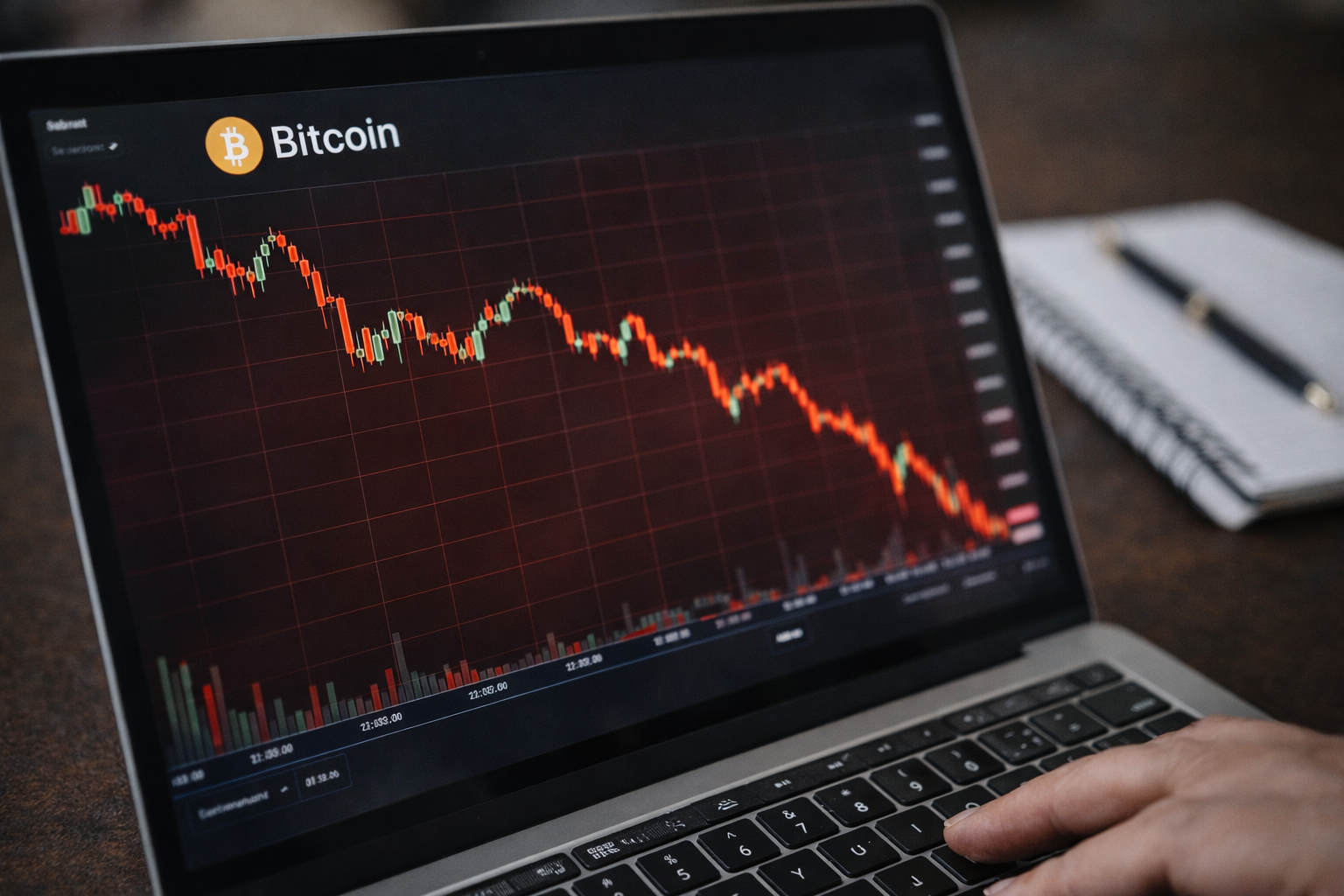
    bitcoin trading chart goes down

    • Bitcoin drops below $66K as Middle East tensions spark volatility.
    • $6.39 billion ETF outflows show weakening institutional crypto demand.
    • BTC swings between $63K–$65K; traders watch support and rate policy.

    Bitcoin (BTC) has slipped below the $66,000 mark as global markets react to escalating tensions in the Middle East.

    The rising conflict between Iran, the US, and Israel has prompted a wave of uncertainty that is affecting risk assets, including cryptocurrencies.

    Bitcoin, in particular, is showing sharp intraday swings in response to news developments.

    Early trading saw BTC fall as low as $63,000 before it recovered to above $65,000.

    This volatility reflects a mix of geopolitical fear and active liquidations in the derivatives market, with more than $130 million in long positions being forced to close and amplifying the downward pressure on the cryptocurrency.

    The US, Israel, Iran war has sent shockwaves across markets

    The current situation in the Middle East has made investors jittery.

    Traditionally, Bitcoin has sometimes been viewed as a hedge during global crises, but recent behaviour shows it acting more like a risk asset.

    Notably, Bitcoin’s price has been moving in close correlation with equities, particularly major stock indices, rather than holding steady in turbulent times.

    Gold and oil, however, have seen upward movements, with oil prices surging amid anticipation of supply disruptions.

    The price of Gold has also climbed modestly, reflecting its traditional safe-haven status.

    These shifts indicate that money is flowing away from riskier assets like Bitcoin and toward instruments perceived as more stable during geopolitical stress.

    Long-term BTC holders, however, are showing resilience.

    After the initial sell-off, many investors took the opportunity to buy at lower levels, which contributed to a partial recovery.

    This has prevented Bitcoin from falling as sharply as some other risk assets, demonstrating that there is still significant support at levels around $65,000.

    Institutional demand weakens

    US-listed spot bitcoin and ether exchange-traded funds have recorded sustained outflows over the past four months, pointing to a sharp cooling in institutional participation in digital assets.

    Investors withdrew $6.39 billion from bitcoin ETFs during the period, the longest continuous monthly decline since the products launched in January 2024, according to SoSoValue data.

    Ether ETFs also saw $2.76 billion in outflows.

    The retreat coincided with a steep fall in token prices, with bitcoin dropping from above $126,000 in early October, while ether has fallen more than 60% from its August highs near $4,950.

    Spot ETFs had previously served as a visible channel for institutional inflows after their debut and following pro-crypto political developments in 2024.

    However, demand weakened after the October market downturn, reportedly linked to pricing inefficiencies on offshore exchange Binance.

    Although recent sessions have seen intermittent inflows, analysts say a consistent return of capital is required for a durable recovery.

    What this means for Bitcoin going forward

    Traders should expect more volatility in the short term since Bitcoin is sensitive to headlines, and any further escalation in the Middle East could trigger additional sharp movements.

    Traders should keep a close eye on the technical support level near $63,000, while resistance around $68,000 to $70,000 remains a key target for recovery.

    Also, besides the Middle East war, monetary policy may also play a role in the next BTC price movements.

    If central banks respond to the conflict with interest rate adjustments or liquidity measures, Bitcoin could benefit indirectly.

    Historical trends suggest that geopolitical crises followed by rate cuts or monetary easing often support risk assets, and cryptocurrencies could be no exception.

    Source link

  • Crypto market on a free fall as Iran launches missiles into Israel

    Crypto market on a free fall as Iran launches missiles into Israel

    Crypto market on a free fall as Iran launches missiles into Israel
    • Crypto market drops as Iran launches missile strikes into Israel.
    • Bitcoin falls to $62k; Ethereum drops below $2,500.
    • The global crypto market cap declines by 2.72% to $2.18 trillion.

    The global crypto market has witnessed a sharp decline following reports of Iran firing missiles into Israel.

    The heightened geopolitical tensions have sent shockwaves through financial markets worldwide, with crypto assets taking a significant hit.

    As news of the missile strikes spread, cryptocurrency markets reacted swiftly. Bitcoin (BTC), the largest cryptocurrency by market capitalization, had dropped to $61,932.92 at press time while Ethereum (ETH), the second largest cryptocurrency, witnessed a 3.42% plunge, with its price dipping below $2,499.30.

    Altcoins, often more volatile, experienced even steeper declines, with Arweave (AR), Notcoin (NOT), Gala (GALA), and Worldcoin (WLD) dropping by double digits as investors scrambled to offload risky assets.

    As the market plunged, the global cryptocurrency market cap dropped by over 2.72% to $2.18 trillion.

    The sudden drop in crypto prices underscores the market’s sensitivity to geopolitical events. Historically seen as a hedge against inflation and economic uncertainty, cryptocurrencies have not proven immune to geopolitical shocks.

    Investors, rattled by the fear of broader regional instability and its potential impact on global markets, have moved to safer assets such as gold, which saw an uptick in prices.

    The attack marks a severe escalation in the already volatile Middle East region. Iran’s missile launches were reportedly in retaliation for the Israeli operations in Lebanon that have resulted in the elimination of Hezbollah’s leader.

    Israel has, however, responded swiftly, vowing to defend its territory, raising concerns of an impending large-scale conflict.

    While the full extent of the conflict’s impact remains unclear, the continued volatility in the Middle East is likely to keep the crypto market on edge in the coming days.

    Traders and analysts are now closely watching both diplomatic developments and market reactions.

    Source link