Tag: mining

  • CleanSpark to acquire two Bitcoin mining campuses for $9.3M

    CleanSpark to acquire two Bitcoin mining campuses for $9.3M

    • CleanSpark will complete the $9.3 million all-cash deal for the two turnkey Bitcoin mining facilities this week.
    • The facilities in Dalton, Georgia, will host 6,000 Antminer S19 XPs and S19J Pro+ rigs.
    • CleanSpark CEO Zach Bradford says the deal puts the miner on track to reach its year-end hashrate target of 16 EH/s

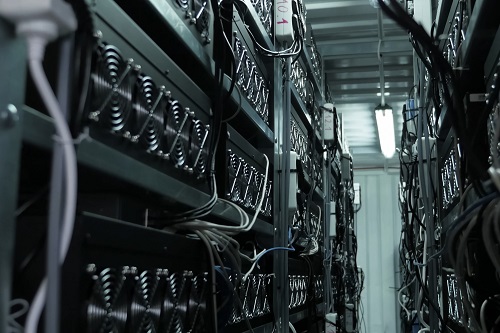
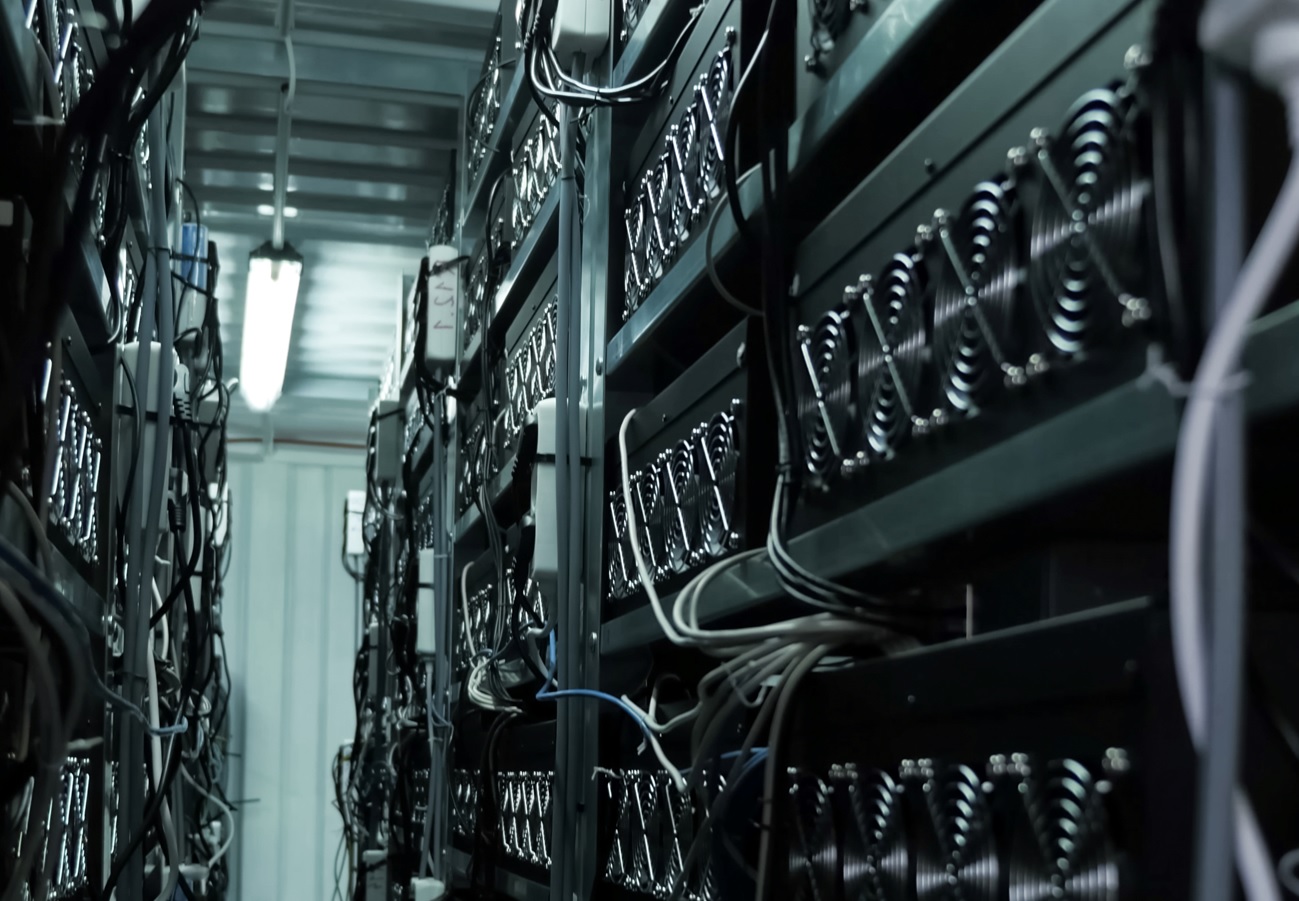
    CleanSpark (NASDAQ: CLSK), one of the largest Bitcoin mining firms in the world, has announced the acquisition of two BTC mining campuses in Dalton, Georgia.

    The company said in a press release that it had struck a definitive agreement to purchase the two turnkey facilities for $9.3 million, an all-cash deal expected to close later this week.

    CleanSpark targets 16 EH/s by end of year

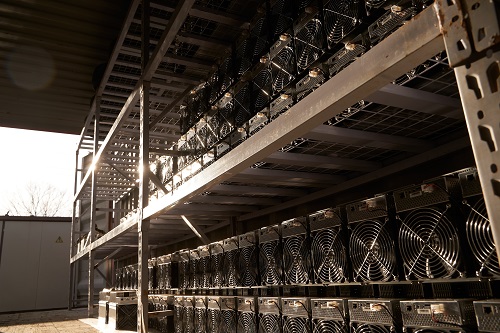
    According to the miner, the two campuses are set to host over 6,000 Antminer S19 XPs and S19J Pro+s, and will see the mining giant add just under 1 exahashes per second (EH/s) to its hashrate.

    This acquisition ensures that we have more than enough infrastructure to reach our year-end target of 16 EH/s. It also continues to position us as one of the most power-efficient miners on an energy-per-hashrate basis,” Zach Bradford, CEO of CleanSpark, said in a statement.

    CleanSpark’s latest purchase adds to multiple previous buys and acquisitions secured over the past several months. After purchasing 20,000 Antminer S19j Pro+ machines for $43.6 million in February, the company added 45,000 Antminer S19 XP units worth $144.9 million in April. In May, it bought 12,500 Antminer S19 XP rigs.

    CLSK traded at $4.86, up 10% on the day on Wednesday. The crypto stock has rallied more than 140% in 2023 and analysts expect it to reach $12.

    Source link

  • Bitcoin mining stocks are far riskier than Bitcoin itself

    Bitcoin mining stocks are far riskier than Bitcoin itself

    Key Takeaways

    • Bitcoin mining stocks have underperformed Bitcoin heavily over the last year

    • Greater competition among miners and higher amounts of energy required means margins are thinner

    • Rising electricity costs and lower value of Bitcoin have also hurt miners immensely 

    • Greater number of variables beyond merely the price of Bitcoin means mining stocks have been trading with greater volatility

    It’s a tough time to be a Bitcoin miner. This piece will succinctly break down how and why, as well as delving into why I believe mining stocks are far riskier than just investing in Bitcoin itself. Let’s get to it. 

    Mining competition is higher than ever

    Firstly, the competition within mining is higher than ever before. The beauty of the blockchain is that we can see all sorts of statistics regarding the Bitcoin network in real-time. One of these is the difficulty adjustment. For the uninitiated, the difficulty adjustment is a mechanism by which the difficulty of mining changes to ensure the new supply of Bitcoin released via mining remains consistent (at approximately ten-minute intervals).

    In other words, as more miners join the network, the difficulty increases so that Bitcoin is released at the same pace as prior. The same holds true the other way around – difficulty falls if miners stop operating. 

    As the below chart shows, Bitcoin mining difficulty recently smashed through the 50 trillion hash mark for the first time ever. Only three years ago, that number sat at 14 trillion.  

    This is great for the Bitcoin network: the more miners, the more secure the network. For the miners themselves, however, that means greater energy amounts are needed to complete this now-more-difficult assignment of validating transactions on the network. 

    Oh, and there is a double whammy. As you may realise if you have turned on a light, charged your phone or boiled a kettle in the last year, the price of electricity has skyrocketed around the world. The next chart shows the rise in electricity costs in the US, which according to the Cambridge Electricity Consumption Index, has the highest amount of miners (the nation is responsible for 38% of the network’s hash rate). 

    This means that higher amounts of energy are needed to mine, and the cost of that energy has also increased drastically. 

    People are using Bitcoin less 

    So, we know costs have risen. But the bad news isn’t over yet. 

    Bitcoin’s volumes have collapsed throughout the bear market. Perhaps the best barometer of this is to look at the trading volume on centralised exchanges, which fell 46% in 2022 compared to 2021. 

    Looking at Bitcoin fees shows a similar pattern, with fees far down on the heyday of the pandemic bull market. This was briefly interrupted in May when the Bitcoin Ordinals protocol sparked a revival in network activity. However, the below chart shows that fees have been falling for five consecutive weeks since (although they are still up significantly on the start of the year), giving up most of those gains. 

    Much like the cost side, which saw an increase in inputs required (greater demands via the difficulty adjustment) as well as an increase in the per-unit costs of those inputs (rising electricity costs), the revenue side for miners is also suffering from a brutal double whammy. 

    Not only is volume way down from the bull market and hence less fees (revenue) are recouped, but miners’ revenue (fees and the block subsidy award) is received in Bitcoin, which has also fallen in value. This means that, after earning Bitcoin by battling with the greater competition and toiling over increased costs, the value of that Bitcoin (revenue) on the market is substantially less – still 60% off its peak from November 2021. 

    Mining stocks are more volatile than Bitcoin

    So let’s think about these four variables:

    1. The amount of energy needed
    2. The cost of that energy (electricity)
    3. The fees and block rewards received (i.e. revenue)
    4. The value of those fees and block rewards (the Bitcoin price)

    Therefore, not only are mining companies dependent on the price of Bitcoin (variable number four), but it also depends on several other factors (admittedly variables 1 and 3 are heavily dependent on the price of Bitcoin too. In truth, economic incentives will drive mining to a certain price point, but I will discuss in another article). 

    Therefore, for the time being at least, the risk is greater with mining stocks than a direct investment in Bitcoin. As with all things, greater risk can mean greater reward, and there have been periods of mining stocks outperforming Bitcoin as a result. 

    However, over the last year or so, mining investors are in an even worse state than Bitcoin investors (who themselves are licking their wounds). I’ll let the below mining ETF, launched in February 2022, illustrate this:

    All this goes to show how tough mining has been. And that is without even mentioning the big bad wolf that is regulation. The regulatory crackdown in the US has been ferocious, and while Bitcoin has thus far been relatively unaffected, miners are more vulnerable (especially those that are publicly listed in North America) than Bitcoin itself, which is a decentralised asset theoretically immune to regulation (directly, at least). 

    This is not meant to be a pro-Bitcoin or anti-mining piece. It is just comparing the two as investments and showing why mining stocks tend to be more volatile. And when you’re more volatile than Bitcoin, that is really saying something.        

    Source link

  • Bitcoin mining difficulty hits all-time high, above 50 trillion hashes

    Bitcoin mining difficulty hits all-time high, above 50 trillion hashes

    Key Takeaways

    • Bitcoin mining difficulty has surpassed 50 trillion hashes for the first time ever
    • Higher difficulty means more competition and less profit for miners, but also more security for the Bitcoin network
    • Higher mining difficulty means greater energy input required to mine Bitcoin, meaning greater cost for miners
    • Mining stocks have underperformed Bitcoin significantly over the last year

    It has never been so difficult to mine Bitcoin. Literally. Bitcoin mining difficulty continues to rise incessantly, surpassing the 50 trillion hash mark for the first time ever last week.

    What is Bitcoin mining difficulty?

    If it were not for the Bitcoin mining difficulty adjustment, blocks would be appended to the blockchain at an increasing speed as more miners joined the Bitcoin network. In such a way, the Bitcoin mining difficulty adjusts via an automatic algorithm to ensure blocks are appended to the ever-growing blockchain at consistent 10 minute intervals.

    As more miners join the network, difficulty rises. In such a way, blocks do not get discovered quicker as more miners join the network. This difficulty adjustment is thus vital to ensure the supply of Bitcoin is released at a pre-programmed pace, as outlined by the anonymous Satoshi Nakamoto in the Bitcoin whitepaper. 

    This explains how, in the early days, mining could be carried out on a personal laptop, because Bitcoin was so niche and miners were so few and far between – hence the mining difficulty was far lower. This is why you hear stories of miners who find (or lose) stashes of Bitcoin on old hard drives which were close to worthless when they were mined. 

    Today, however, Bitcoin is well and truly in the mainstream, and mining difficulty has risen accordingly. Most mining is carried out by supercomputers, while there are many public companies carrying out the task.  

    What does increasing mining difficulty mean?

    Mining difficulty is increasing because more computational power is being put towards Bitcoin mining. The hash rate is what we refer to as the computational power of the Bitcoin network. Looking at the chart, this is at an all-time high – which makes intuitive sense, given mining difficulty is also at an all-time high. 

    For the Bitcoin network as a whole, this is a good thing. Bitcoin’s hash rate is a crucial indicator of the security of the network. A higher hash rate means Bitcoin is more resistant to an attack by a malevolent actor. This is because the higher the hash rate, the more expensive and implausible it is for an actor (or a group of actors) to seize control of 51% of the network, when Bitcoin could be exposed to what is known as a 51% attack (coins could be double spent and the veracity of the blockchain would be in doubt). 

    However, there are downsides to this, too. I detailed this in depth last week in a report on Bitcoin mining stocks. In summary, more hash power means greater cost for miners, as the increased difficulty means a greater amount of energy is required to power the computers working to validate the transactions on the blockchain. This is why miners margins are getting cut into as more miners join the network (rising electricity costs also do not help). 

    “The rapid decline in the Bitcoin price, down from $68,000 at the peak of the bull market in late 2021, has obviously hurt the mining industry”, says Max Coupland, director of CoinJournal. “However, that is far from the only problem facing miners. The mining difficulty hitting an all-time high means greater amounts of energy are required to mine, at a time when inflation and the Russian war have pushed the price of energy up immensely”. 

    The mining industry is hence extremely volatile, as not only is it sensitive to the volatility of Bitcoin itself, but it also suffers from rising energy costs. The below chart demonstrates how mining stocks have underperformed Bitcoin in recent times. It looks at the Valkyrie Bitcoin Miners ETF, which tracks mining companies and was launched in February 2022. 

    With Bitcoin mining difficulty hitting an all-time high, racing past the 50 trillion hash mark for the first time ever, things won’t get any easier for miners. However, like always, it will ultimately come down to the Bitcoin price. With block rewards and transaction fees recouped in the form of Bitcoin, and the entire industry built upon this asset, mining companies will go as far as the Bitcoin price takes them.

    If you use our data, then we would appreciate a link back to https://coinjournal.net. Crediting our work with a link helps us to keep providing you with data analysis research.

    Source link

  • Report: Bitcoin mining stocks – extreme volatility and underperforming Bitcoin

    Report: Bitcoin mining stocks – extreme volatility and underperforming Bitcoin

    Key Takeaways

    • Bitcoin mining stocks have traded with significantly more volatility than Bitcoin itself
    • Mining stocks have underperformed, as rising energy costs and increased competition has cut into profits
    • Miners also overleveraged during the pandemic, purchasing new equipment with debt and holding onto Bitcoin stashes as prices fell
    • Fees on the network rose with the Ordinals protocol and thus provided miners relief, but have since fallen back to normal levels

    Anyone remotely interested in the cryptocurrency world will attest to the fact that Bitcoin is incredibly volatile. At one point in March 2020, it was $4,600. By November 2021, at the peak of the bull market pandemic, it hit $68,000. A year after that, it was back down to $15,500. And it is currently ticking along around the $27,000 mark.

    As we said, volatile. And yet, there is something even more volatile: Bitcoin mining stocks. 

    First, a quick explainer into Bitcoin mining for the uninitiated. For those familiar with how the industry works, you can skip this little introduction. 

    Bitcoin miners are in the middle of what is a peculiar economic model. Miners act as “volunteers”, validating transactions on the Bitcoin blockchain. Because Bitcoin is a decentralised network, there is no central authority to maintain the blockchain, hence the need for these “volunteers” to validate transactions. 

    I put quotation marks around the word “volunteers” because miners get paid for their work, so don’t really have a claim to the volunteer title. Vitally, miner revenue comes in the form of Bitcoin. This revenue stream is split into two streams – the block reward subsidy, which halves every four years, and transaction fees. 

    The bottom line is that miners pay a cost to maintain the blockchain, in the form of energy/electricity, and receive revenue in return, in the form of Bitcoin.

    Mining share price performance

    Two things have been true about the performance of bitcoin mining stocks to date. The first is that they are extremely correlated with the price of Bitcoin itself. The second is that they have shown far greater volatility. 

    The Valkyrie Bitcoin Miners ETF is a good way to demonstrate the performance of mining stocks. It was launched in February 2022 and allocates at least 80% of holdings to companies which derive at least 50% of their revenue or profit from bitcoin mining operations. 

    Launched as the bear market started to engulf crypto, it has underperformed Bitcoin significantly, down 59% while Bitcoin is down 37% in the same timeframe. However, since the start of the year when markets have been a bit softer, it has outperformed: up 142% against Bitcoin’s rise of 62%. 

    Why have mining stocks suffered?

    This has been the pattern that has consistently held: mining stocks almost trade like a levered bet on Bitcoin. Obviously, their entire business depends on the popularity of Bitcoin. Not only is their revenue literally denominated in it, but the more people use Bitcoin, the more transactions there are to be validated and the more lucrative mining is. 

    As a result, mining stocks have struggled immensely during the bear market. Despite rebounding this year as crypto markets have turned more optimistic in line with the macro climate and expectations around the future path of interest rates, mining stocks are still far below the prices at which they traded at 18 months ago. 

    There are a few reasons why the fall has been more than one would have perhaps expected. The first is resource management. Bitcoin miners get paid in Bitcoin, but they can sell their holdings if they wish. As prices surged during the pandemic, on-chain data shows that this did not occur. Instead, miners largely held onto their stash. 

    We looked at this in a recent piece, and the below chart presents this well. It displays a relatively constant pattern of miners offloading Bitcoins. However, the behaviour or speed of selling does not waver as Bitcoin’s price spikes immensely, rising from $5,000 in March 2020 to $68,000 in November 2021. This is seen by the huge uptick in miner reserves in USD terms, while there is no change to the trajectory of reserves in BTC terms. 

    In essence, it implies that miners did not monetise an increased amount of their Bitcoin as those Bitcoins appreciated in dollar terms. The more Bitcoin you hold, the more volatile your stock is going to be. 

    In retrospect, this seems a mistake. While miners were always going to struggle with the price of Bitcoin falling so violently, a refusal to diversify their holdings meant they were betting even heavier on Bitcoin’s price holding. That proved to be a bad bet. 

    Bitcoin hash rate is at all-time highs

    Not only did miners not sell much Bitcoin as it rose in price, but many invested in more equipment as mining revenues surged in line with the rocketing prices during COVID. Even worse, many miners also turned to debt to finance new equipment – equipment which was selling for bloated prices as more and more miners entered the game. 

    This equipment has since fallen in price, just as the Bitcoin price has. The below chart shows the growth in hash rate on the network – a measure of the total computing power mining Bitcoin. The rise has been incessant. 

    While greater hash power is excellent for Bitcoin overall and is vital for the security of the network, it does make things more challenging for miners. More hash power in essence means more competition. 

    Due to the wonderful kaleidoscope of incentives laid out by Satoshi Nakamoto in their Bitcoin whitepaper, this also means a difficulty adjustment will kick in – meaning the more miners on the network, the harder it is to mine Bitcoins. This is necessary in order to keep Bitcoin on track to hit its final supply of 21 million bitcoins in 2140. Otherwise, an increase in miners would validate transactions quicker and hence more Bitcoin would be released into circulation. 

    This sounds complicated, and the intricacies of it are. But the bottom line is that more hash power on the network means it requires more energy to mine Bitcoin – another thing which is eating into the bottom line of miners. 

    And what happened to energy costs over the last year? Surging inflation and the war in Ukraine has sent electricity prices aggressively upward. The below chart shows the movement in the US, the most popular mining destination. 

    This means that miners are getting double squeezed – on the revenue side, a falling Bitcoin price is obviously reducing their revenue, while on the cost side, the price of energy has also risen. Higher costs and falling revenue is…not good. And down goes the share price. 

    Are Bitcoin mining fees rising?

    One point mentioned in crypto circles recently has been the increase of transaction fees on the Bitcoin network. As we covered recently, this can be attributed to increased activity on the network as a result of the Bitcoin Ordinals protocol. In other words, Bitcoin NFTs and memes, which exploded onto the scene in recent months. 

    The only issue is, this spike in fees proved to be brief. The below chart shows how the percentage of miner revenue derived from fees has fallen right back down to earth. 

    While the Ordinals protocol was certainly a bonus for miners, its effect has worn off and it appears unlikely to disrupt the age-old pattern: as the price of Bitcoin rises in bull markets, more people use the Bitcoin network, meaning more transaction fees. In bear markets, the opposite happens. This is what the below chart shows – the percent of miner revenue derived from fees tracks the Bitcoin price quite well (remember, the other part of revenue is the block subsidy award, which is pre-set and price agnostic, halving every four years).

    Final thoughts

    To wrap this mining report up, the reality is that miners will always suffer when the price of Bitcoin is falling, and outperform when it rises. This is because more people use Bitcoin when prices are rising, meaning more transactions and more revenue. 

    In the last year, miners have also been fighting a battle on the costs front, as inflation and an energy crisis have pumped the cost of electricity up, even if the worst of that may be in the rear window. Then there is the fact that many miners overleveraged themselves by purchasing more equipment at heightened prices on debt. Not to mention the decision by many to hold their revenue in Bitcoin rather than monetise into fiat. 

    Competition is now also fierce, input costs rising incessantly, the hash rate on the network near all-time highs. Put it this way: the days of college students mining on laptops are long gone.

    All these factors have contributed to what has been an extremely challenging environment for miners over the past year. It also explains why mining stocks are even more volatile than one of the most volatile mainstream financial assets: Bitcoin itself. 

    Source link

  • Bankrupt BlockFi plans to sell $160M Bitcoin mining hardware loans

    Bankrupt BlockFi plans to sell $160M Bitcoin mining hardware loans

    • BlockFi filed for Chapter 11 bankruptcy in November 2022 citing exposure to the just collapsed FTX.
    • The plan to sell off the loans backed by Bitcoin mining machines is part of the bankruptcy proceedings.
    • Bidders have until before the end of January to submit offers.

    About two months after BlockFi filed for Chapter 11 bankruptcy, the crypto lender now plans to sell off $160 million in loans backed by Bitcoin mining hardware as part of the bankruptcy legal proceedings. In total, the loans are backed by about 68,000 Bitcoin mining machines

    Although BlockFi cited FTX’s exposure as the main reason for its bankruptcy, the crypto lender had announced cutting its workforce by 20% in June 2022 citing the crypto prices meltdown. The layoff announcement came days after reports emerged that the lender was in talks to raise funding at a $5 billion valuation.

    Bidders have until January 24 to send offers

    According to reports from Bloomberg, BlockFi started the process of selling off the Bitcoin mining hardware-backed loans last year. It is believed some of the said loans have already defaulted since then and are candidates for under-collateralization following the drastic decline in the prices of Bitcoin mining hardware.

    In an interview with one popular media outlet, crypto lawyer Harrison Dell who is a director at Australian law firm Cadena Legal said that the loans are not worth their paper value to BlockFi if the Bitcoin mining equipment used as collateral is worth less than the value of the loans.

    According to Harrison Dell, the people bidding for the loans are most likely debt collection businesses saying that selling the debts is all that BlockFi can do at the moment.

    It is believed that BlockFi’s attempt to sell off its loans is likely a part of the lender’s efforts to pay off its creditors who are about 100,000 in total.

    Source link

  • Argo’s mining revenue fell nearly 28% in December 2022

    Argo’s mining revenue fell nearly 28% in December 2022

    • Argo Blockchain mined 147 bitcoins in December 2022, down from 198 in November.
    • Mining revenue was $2.49 million, compared to $3.46 million during the previous month.
    • Argo sold its Helios facility to Galaxy Digital for $65 million as it looked to avoid nose-diving into bankruptcy.

    Argo Blockchain, a leading Bitcoin miner that endured a terrible run in 2022 and came close to bankruptcy, has announced it mined 147 BTC only in December.

    The publicly-traded company’s total mined bitcoins for the month were lower than the 198 BTC mined in November — nearly 28% lower than its mining output in November.

    Mining revenue came in at $2.49 million (£2.07 million), down from $3.46 million (£2.94 million) in the previous month.  The firm’s mining margin in December 2022 was 48%, compared to 29% in November.

    As of 31 December, the miner held 141 bitcoins.

    Argo CEO on reduced mining results

    According to details provided in the miner’s operational update published on 11 January, the decline in mining revenue (decreased mined coins) was mainly a result of the reduced mining operations following the winter storm that hit the United States in December.

    Argo, like many other Texas Bitcoin miners, contributed to the stability of Texas’ power grid by cutting power usage during the storm.

    While our mining results for December were lower than anticipated, the primary driver was the winter storm which led us to curtail operations at Helios. We made this decision in order to not only reduce power usage on the grid, but also to prioritise the needs of the local community and safety of our Helios employees, Argo CEO Peter Wall said in a statement.

    Notably, Argo sold its Helios facility for $65 million to Galaxy Digital and also agreed a $35 million loan as it sought to firm its balance sheet. But despite mining fewer BTC in December, and the sale of the Helios facility, Argo’s total hashrate remains around 2.5 exahashes per second (EH/s).

    Source link

  • Bitcoin dips by 2% today as mining difficulty falls by 7.2%

    Bitcoin dips by 2% today as mining difficulty falls by 7.2%

    • Bitcoin is trading below $17k once again after losing roughly 2% of its value today.

    • Bitcoin mining difficulty is down 7.2%, the biggest drop in more than a year. 

    • The total crypto market cap is also down by nearly 2% in the last 24 hours.

    Bitcoin mining difficulty dips by 7.2%

    Bitcoin, the world’s leading cryptocurrency by market cap, has been underperforming over the last 24 hours. At press time, the price of Bitcoin stands at $16,900 and could dip lower before the end of the day.

    This latest cryptocurrency news comes after BTC.com revealed that Bitcoin mining difficulty is down 7.2%, the biggest drop since July last year. The recent decline in Bitcoin mining difficulty is the biggest one since the 28% plunge recorded following China’s crackdown on mining in the summer of last year.

    The broader cryptocurrency market has also been underperforming over the past 24 hours. At press time, the total cryptocurrency market cap stands at $851 billion, down by 1.9% so far today.

    Ether, the second-largest cryptocurrency by market cap, isn’t fairing any better. ETH is down by nearly 3% today and is now trading at $1,256 per coin.

    Key levels to watch

    The BTC/USD 4-hour chart remains bullish despite BTC underperforming over the past few hours. This is because BTC is still in the green zone when you look at its seven-day performance.

    The MACD line remains above the neutral zone but has been declining and could enter the negative region if the bears remain in charge. The 14-day RSI of 50 shows that BTC could enter the oversold region in the near term unless the bulls regain control of the market.

    With the bears now in control, BTC could test the first major support level at $16,368 before the end of the day. However, unless there is a massive bearish run, the bears could find it tough to drop BTC’s price below the $15,909 support level. 

    Where to buy Bitcoin now

    eToro

    eToro offers a wide range of cryptos, such as Bitcoin, XRP and others, alongside crypto/fiat and crypto/crypto pairs. eToro users can connect with, learn from, and copy or get copied by other users.


    Buy BTC with eToro today

    Bitstamp

    Bitstamp is a leading cryptocurrency exchange which offers trading in fiat currencies or popular cryptocurrencies.

    Bitstamp is a fully regulated company which offers users an intuitive interface, a high degree of security for your digital assets, excellent customer support and multiple withdrawal methods.


    Buy BTC with Bitstamp today

    Source link

  • Eco-friendly Bitcoin mining pool PEGA will launch in 2023

    Eco-friendly Bitcoin mining pool PEGA will launch in 2023

    • PEGA Pool is set to launch next year and will become the first eco-friendly Bitcoin mining pool in the world.
    • PEGA Mining is focused on reducing the environmental effects of Bitcoin mining.
    • Clients that join the “Early Access” waiting list would benefit from a permanent 50% reduction in pool fees.

    PEGA Pool will become the first eco-friendly Bitcoin mining pool 

    PEGA Pool is set to become the first eco-friendly Bitcoin mining pool and is expected to launch next year.

    PEGA Pool, a platform dedicated to reducing the environmental effects of Bitcoin mining, is expected to launch in 2023. The project focuses on making Bitcoin mining eco-friendly.

    PEGA Pool is owned and operated by PEGA Mining, a UK-based cryptocurrency mining firm. 

    According to the development team, PEGA Pool will focus on reducing bitcoin mining’s carbon footprint to create a more sustainable and eco-friendly industry. On its official website, the company said it would plant trees to help reduce the Bitcoin mining carbon footprint.

    PEGA Pool is currently in the pre-launch phase and will be open to the public in Q1 2023. Clients can join the early access waiting list until launch. The team added that the PEGA Pool is open to all bitcoin mining clients regardless of their renewable energy usage.

    PEGA Pool added that for clients that mine with non-renewable energy, it would use a portion of their pool fees to plant trees to help offset their mining carbon footprint. Clients that use renewable energy to mine cryptocurrencies will enjoy certain incentives. 

    For instance, clients that mine with renewable energy will enjoy a 50% reduction in pool fees. Furthermore, pool fees are 2% for non-renewable energy clients and 1% for renewable energy clients.

    Clients that join the early access waiting list will enjoy certain benefits

    The use of non-renewable energy to mine Bitcoin is a subject that gained wide coverage over the past few years. Companies like Tesla had to suspend accepting Bitcoin as a payment method due to concerns over its carbon footprint during mining. However, the company said it intends to start accepting Bitcoin as a payment option for its vehicles again in the future. PEGA’s effort toward ensuring eco-friendly Bitcoin mining could be what is needed to convince Tesla to start accepting BTC payments again. 

    With PEGA Pool currently in its pre-launch phase, the team said clients that join the “Early Access” waiting list would benefit from a permanent 50% reduction in pool fees.

    PEGA Pool said it had planted 41,715 trees so far, for an estimated annual CO2 offset of 1111T. According to their official website, the team said PEGA Pool was built by miners and is run by miners. With years of experience in the crypto mining sector, the team understands what it is that miners need in order to be successful and profitable.

    Source link