Tag: Nakamoto

  • Satoshi Nakamoto statue arrives at NYSE in major crypto culture shift

    Satoshi Nakamoto statue arrives at NYSE in major crypto culture shift

    • Satoshi Nakamoto statue arrives at NYSE, marking crypto’s growing Wall Street acceptance.
    • Artwork joins global series as Bitcoin’s history and mainstream adoption gain symbolic recognition.
    • Institutional embrace of Bitcoin accelerates as public entities hold over 3.7M BTC.

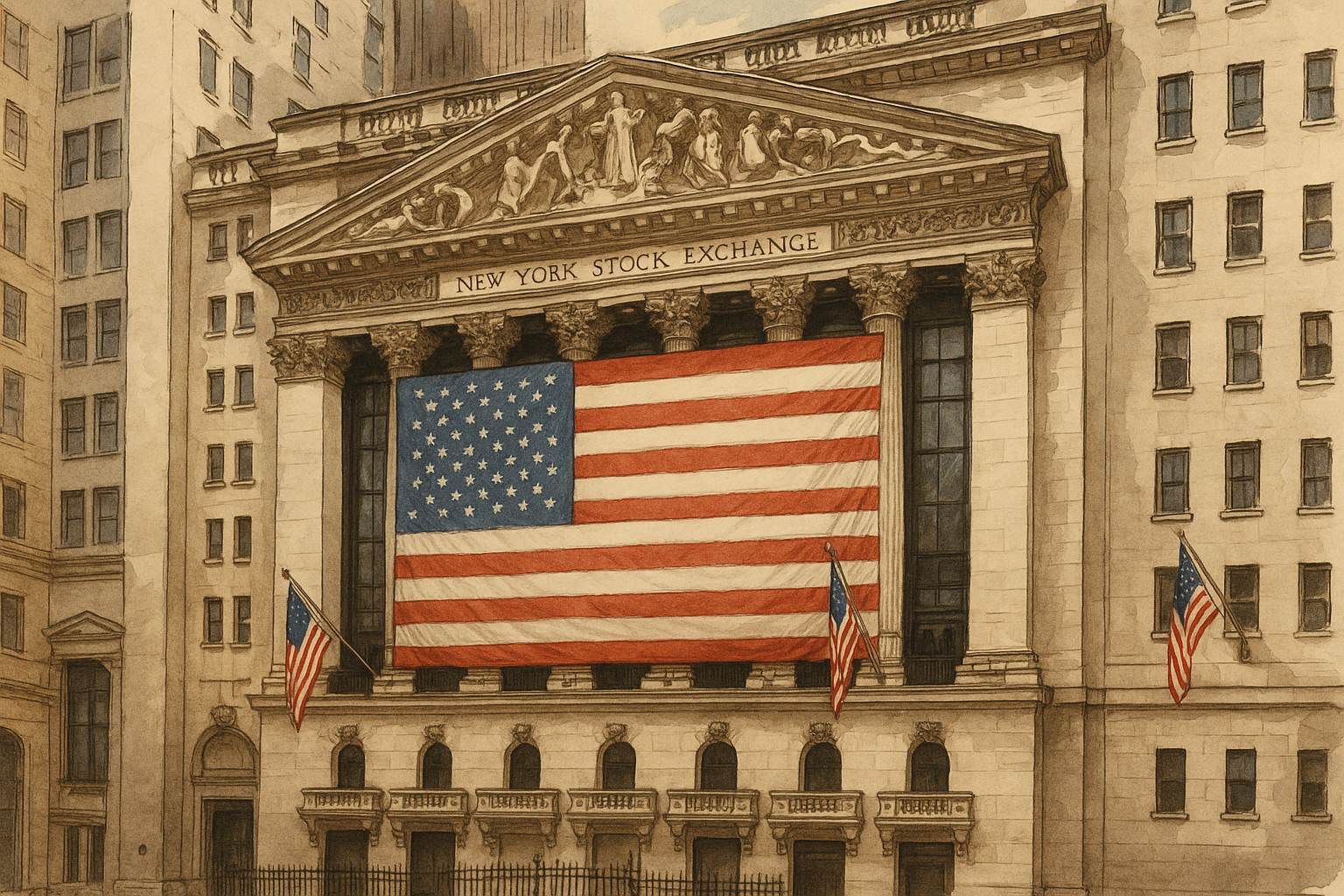
    The New York Stock Exchange has become the latest home for Valentina Picozzi’s “disappearing” Satoshi Nakamoto statue, signalling how far digital assets have travelled since the time when crypto was treated as unwelcome on Wall Street.

    The arrival of the piece was announced in an X post on Wednesday, positioning the NYSE as shared ground for traditional finance and emerging decentralised systems.

    The installation also aligns with the anniversary of the Bitcoin mailing list, launched on 10 December 2008, adding symbolic weight to a moment that highlights Bitcoin’s shift from niche idea to mainstream fixture.

    NYSE installation

    The statue was brought to the NYSE by Bitcoin company Twenty One Capital, which began trading this week.

    The artwork itself is by Picozzi, who has been developing her “disappearing” Satoshi series under her Satoshigallery handle.

    The New York installation is the sixth piece in a global project she plans to expand to 21 locations.

    Her post on X described the placement at such a prominent financial centre as a milestone for the ongoing series.

    The display at the NYSE contrasts sharply with the period when crypto was considered taboo across Wall Street.

    Bitcoin’s long path

    The statue’s arrival coincides with a key date in Bitcoin’s history, falling close to the anniversary of the Bitcoin mailing list launched by Satoshi Nakamoto on 10 December 2008.

    Nakamoto mined the genesis block on 3 January 2009, creating the first 50 Bitcoins and setting the foundation for the wider industry.

    More than a year after that, on 22 May 2010, Laszlo Hanyecz made the first documented Bitcoin purchase, spending 10,000 Bitcoin to buy two Papa John’s pizzas.

    In the years that followed, the asset faced significant resistance.

    Institutions and banks kept their distance, and governments attempted to restrict crypto activity through actions widely described as part of Operation Chokepoint 2.0.

    Even high-profile sceptics in global finance dismissed the technology before eventually revising their positions.

    Institutional shift

    The landscape began to change when major financial figures, such as BlackRock’s Larry Fink, shifted from doubt to active interest.

    Wall Street institutions moved quickly, increasing participation through exchange-traded funds and direct Bitcoin purchases for corporate treasuries.

    Public companies, private companies, countries, and ETFs now hold more than 3.7 million Bitcoin collectively, according to Bitbo.

    The total value exceeds 336 billion dollars, showing how deeply Bitcoin has entered mainstream portfolios.

    Against this backdrop, the installation at the NYSE serves as a visible marker of how crypto has become integrated into financial culture instead of remaining an outsider technology.

    Global statue project

    Picozzi’s work has taken the Nakamoto figure to five other locations: Switzerland, El Salvador, Japan, Vietnam, and Miami, Florida.

    The collection is intended to reach 21 statues worldwide, a nod to Bitcoin’s capped supply of 21 million tokens.

    Her design centres on the idea of disappearance, with the figure positioned as if fading into its surroundings.

    The artwork depicts Nakamoto as a hacker in a familiar seated pose, laptop open, representing both the anonymity of Bitcoin’s creator and the programmers who built the broader ecosystem.

    The NYSE installation marks the latest step in Picozzi’s effort to trace Bitcoin’s cultural footprint through public art, linking major global locations with the technology’s origins and evolution.

    Source link

  • Peter Todd denies he’s Satoshi Nakamoto after HBO documentary

    Peter Todd denies he’s Satoshi Nakamoto after HBO documentary

    Solv Protocol introduces Bitcoin staking on Base with cbBTC token
    • Film director, Cullen Hoback, points to Peter Todd as Bitcoin’s inventor
    • Hoback relies on a 2010 web forum post in which Todd responded to one of Satoshi’s post
    • Todd points out that he’s Satoshi “as is everyone else”

    HBO’s latest documentary has named Bitcoin core developer Peter Todd as Satoshi Nakamoto, the mysterious inventor behind Bitcoin.

    “Money Electric: The Bitcoin Mystery,” directed by Cullen Hoback, examines Bitcoin’s early days and some of its key figures. Using old and new clues, Hoback confronts Todd and Blockstream founder Adam Back with the evidence, according to a report from Politico.

    During the documentary’s finale when confronted with a question from Hoback, Todd said: “Yeah, I’m Satoshi Nakamoto.” This is far from being a confession, though, as Todd also said he was Craig Wright.

    Hoback’s reasoning behind Todd being Bitcoin’s creator lies in a 2010 web forum post in which Todd responded to one of Satoshi’s posts. According to Hoback, Todd’s post is a continuation of Satoshi’s that was mistakenly sent from Todd’s account rather than Satoshi’s.

    The film director cited another clue, in which Todd wrote in a blog post that he was “probably the world’s leading expert” on how to sacrifice Bitcoin, adding that he had “done one such sacrifice”. According to Hoback, this was an admission that Todd had sacrificed his ability to access Bitcoin.

    Not a confession

    Todd’s admission is by no means concrete proof that the Canadian developer is the cryptocurrency’s inventor.

    Todd is well known for saying the phrase “I am Satoshi,” In fact, during a 2019 interview in “What Bitcoin Did,” with podcast host Peter McCormack, Todd said, “I am Satoshi, as is everyone else.”

    Ahead of the documentary’s release, Todd denied he was Satoshi after it was leaked online. Following its release, Todd took to social media again to deny he was Satoshi after someone called him out, writing, “I’m not Satoshi.”

    During the documentary, Todd said to Hoback after he presented his theory: “This is going to be very funny when you put this into the documentary and a bunch of bitcoiners watch it.”

    Jameson Lopp, co-founder of Bitcoin company Casa, wrote on X that “wherever Satoshi may be, I like to think they’re having a laugh at this latest round of foolishness.”

    Source link

  • Stacks (STX) prepares for Nakamoto upgrade: here’s what to expect

    Stacks (STX) prepares for Nakamoto upgrade: here’s what to expect

    Stacks (STX) prepares for Nakamoto upgrade: here’s what to expect

    Stacks, the largest Bitcoin layer-2 network, is on the verge of a transformative upgrade known as Nakamoto. As the Nakamoto upgrade approaches, Stacks’ native token, STX, currently trading at $1.80, is up 68% from its August lows.

    Scheduled to begin this week, the Nakamoto upgrade promises to be a pivotal event for the platform, heralding significant changes in transaction efficiency and expanding use cases.

    Stacks Nakamoto upgrade

    The Stacks Nakamoto upgrade is set to drastically reduce average transaction times from 10 minutes to mere seconds.

    Such a leap in efficiency opens the door to a range of new applications, including the creation and utilization of liquid stacking tokens. These tokens can now be seamlessly integrated into Decentralized Finance (DeFi) platforms, allowing users to deposit, borrow, and leverage liquidity with greater ease.

    In addition to improved transaction speeds, the Nakamoto upgrade will introduce sBTC, a new asset pegged 1:1 to Bitcoin.

    Unlike wrapped Bitcoin (wBTC), which relies on a central custodian, sBTC aims to provide a decentralized alternative. This enhancement promises increased censorship resistance, cost efficiency, and robust security features.

    By simplifying Bitcoin’s use in DeFi, non-fungible tokens (NFTs), and gaming, sBTC is expected to differentiate itself from existing solutions and attract more creators to the ecosystem.

    The anticipated upgrade is not only poised to revolutionize transaction processes but also to bolster the DeFi and NFT sectors within the Stacks network.

    As developers roll out the Nakamoto upgrade, the Stacks is likely to see increased adoption and innovation, positioning it as a significant player in the evolving landscape of Bitcoin layer-2 solutions.


    Source link