Tag: Network

  • Plume network crashes to new all-time low as crypto sell-off deepens

    Plume network crashes to new all-time low as crypto sell-off deepens

    Plume Price Flames

    • PLUME hit an all-time low of $0.035, which had the token down 85% from its March peak of $0.247.
    • Losses came amid sustained bearish pressure, with a 26% single-day crash erasing millions off its market cap.
    • Plume Network saw a total of over $440,000 in futures liquidations, most of it longs.

    As markets bled, Plume Network’s price dropped sharply to hit an all-time low of $0.035 and rank among the top losers in the past 24 hours across crypto.

    PLUME, the native token of the blockchain platform dedicated to bridging traditional finance with decentralized ecosystems, plummeted as Bitcoin flipped red.

    BTC fell to a new multi-month low, erasing significant gains as bulls failed to defend levels all the way to $95,800.

    Plume price drops to a new all-time low

    The PLUME token traded at $0.0349 at the time of writing, having reached unprecedented new all-time lows amid a fresh crypto crash.

    Initially, the altcoin surged on hype surrounding Plume’s full-stack RWA chain to hit $0.247 in March. But its price has declined steadily since, and accelerated to the latest low amid heightened selling pressure.

    Plume Price
    Plume Network chart by CoinGecko

    In the past few months, whale addresses have sporadically dominated accumulation rounds.

    However, retail panic has taken on the upper hand. Market data shows over $440,000 in 24-hour liquidations, seeing long positions dominating at over $392,000.

    Per CoinGecko, Plume has recorded over $60 million in daily trading volume. That’s an 83% spike in the past 24 hours, which highlights the corresponding selling.

    What’s next for PLUME price?

    For Plume, a sustained break below $0.035 could invite further capitulation. Potentially, bears might fancy $0.03.

    Notably, this dump arrives despite robust fundamentals. Plume’s SEC registration as a transfer agent in Q3 2025 has unlocked pathways for regulated tokenized securities and on-chain IPOs.

    Furthermore, recent integrations, such as the acquisition of liquid staking protocol Dinero, bolster institutional appeal.

    However, social sentiment has soured amid macroeconomic strains, including jitters around the Federal Reserve’s interest path.

    Analysts say the odds of a rate cut in December have fallen, and reaction has largely been negative.

    Despite the carnage, Plume’s long term outlook could mirror expected rebounds for the crypto sector. Nest Protocol’s recent relaunch, with 100 million PLUME allocation to stakers, has drawn significant interest.

    This means recovery could hinge on bulls reclaiming $0.05 support.

    A broader uptick in RWA adoption and overall bullish strength could allow for a potential rebound to $0.075 and likely $1.

    Nonetheless,  the 26% dump could accelerate downside action if uncertainty further grips the market. That $0.03 mark is critical for bulls over the coming weeks.

    Over the past week, the Plume price has plunged by nearly 30%. It’s down 64% in the past three months.

    Source link

  • Venezuela to integrate Bitcoin and stablecoins into its banking network by December

    Venezuela to integrate Bitcoin and stablecoins into its banking network by December

    Venezuela to integrate Bitcoin and stablecoins into its banking network by 2025

    • Local banks will offer custody, transfers, and crypto-to-fiat exchange services.
    • The bolivar’s sharp depreciation has driven a surge in stablecoin adoption.
    • Conexus currently processes nearly 40% of Venezuela’s electronic payments.

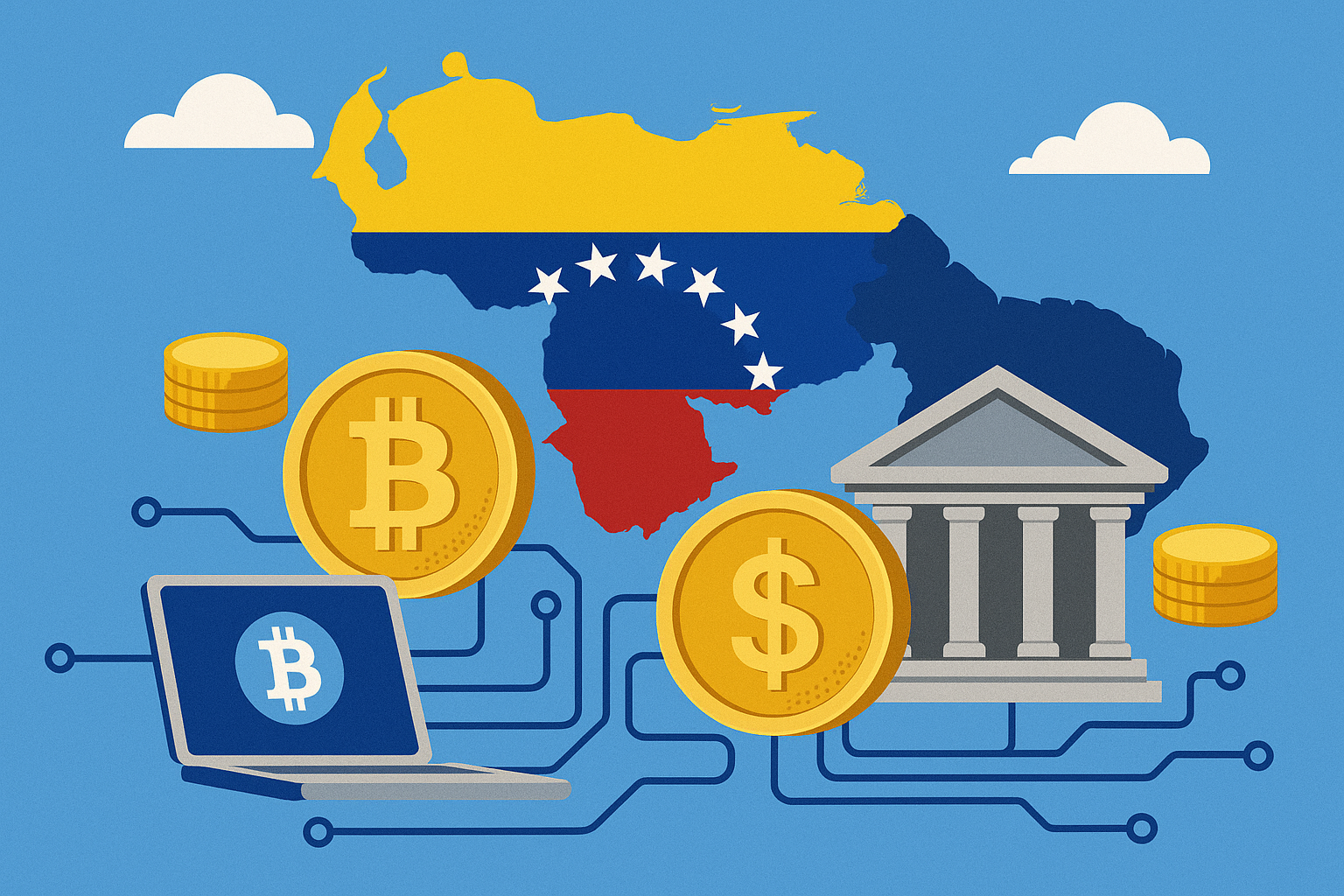
    Venezuela is preparing to merge its struggling traditional banking system with digital currencies as payment giant Conexus plans to integrate Bitcoin and stablecoins into the national banking infrastructure.

    The move, expected to launch in December 2025, marks a significant step in the country’s financial transformation, offering Venezuelans a regulated channel for cryptocurrency use.

    With the bolivar’s persistent depreciation and rising adoption of stablecoins, this development could make Venezuela one of the first nations to formally blend fiat and crypto operations under a unified system.

    The integration also reflects Venezuela’s long-standing struggle with international sanctions that have limited access to global banking.

    By adopting blockchain-based systems, Conexus aims to provide citizens with a more resilient alternative that can facilitate remittances, domestic transfers, and business payments without heavy dependence on foreign intermediaries and unstable local exchange rates.

    The initiative also seeks to improve financial inclusion nationwide, making digital transactions more accessible to individuals and businesses across the country.

    Conexus aims to bridge banks and blockchain

    Conexus, which currently processes nearly 40% of Venezuela’s electronic transactions, is leading this shift by allowing local banks to offer direct crypto services such as custody, transfers, and fiat conversion for Bitcoin and stablecoins.

    The integration seeks to make digital currency access seamless for customers within their regular bank accounts, eliminating the need for external wallets or apps.

    The new infrastructure will be built on blockchain technology to enhance transparency and transaction security.

    According to the company, the system will enable both individuals and businesses to move between digital and traditional currencies safely, reducing reliance on unregulated exchanges.

    Growing reliance on stablecoins amid inflation

    Years of hyperinflation have eroded confidence in the bolivar, pushing Venezuelans to rely heavily on stablecoins like Tether (USDT) as a store of value and medium of exchange.

    From small retailers to freelancers, many now prefer stablecoins to protect earnings from volatility.

    Conexus President Rodolfo Gasparri has highlighted that this surge in stablecoin transactions demonstrates a clear public demand for better integration between crypto and banking systems.

    The company’s upcoming model aims to formalise this reality by providing regulated access to crypto within Venezuela’s financial framework, allowing citizens to transact and save using digital assets with greater confidence.

    Potential blueprint for emerging economies

    The Conexus initiative could reshape not only Venezuela’s financial sector but also set an example for other economies facing currency crises.

    By offering a direct bridge between fiat and digital assets, the model could help millions gain access to stable, low-cost, and transparent financial services.

    Venezuela’s attempt to merge traditional finance with blockchain technology aligns with global trends toward digitalisation of money, particularly in regions where economic instability drives innovation.

    If implemented successfully, this system could serve as a prototype for countries in Latin America and beyond, where inflation and limited banking access continue to affect economic stability.

    Source link

  • Bio Protocol price surges 56% amid major network moves

    Bio Protocol price surges 56% amid major network moves

    • Bio Protocol’s native token (BIO) surged 56% to $0.1238 within 24 hours of its listing on Upbit, South Korea’s leading crypto exchange.
    • A network update has introduced advanced AI-driven BioAgents, multichain support and other developments critical to the Bio Protocol ecosystem.
    •  BIO’s market cap climbed to $196 million.

    Bio Protocol’s native token has experienced a dramatic surge, rising 56% in the past 24 hours to reach $0.1238, with trading volume exceeding $164 million.

    This rally comes after the token’s listing on South Korea’s premier cryptocurrency exchange, Upbit.

    Bio Protocol price skyrockets amid Upbit listing

    After a month-long decline, Bio Protocol (BIO) is showing signs of recovery.

    Since October 1, the cryptocurrency had been in a steady downtrend, falling from $0.15 to a low of around $0.078.

    The announcement of BIO’s listing on Upbit has acted as the immediate catalyst for the token’s explosive growth.

    Upbit commands over 80% of South Korea’s crypto trading volume and has a storied history of propelling altcoins to new heights.

    At the time of writing, BIO’s trading volume surged 820% in the last 24 hours to $311.55 million.

    This listing builds on BIO’s exchange momentum, following debuts on Binance and Kraken. 

    BIO’s price is currently trading at $0.11, having shattered resistance at $0.09, and its market capitalization now stands at nearly $196 million according to CoinMarketCap’s data.

    Bio Protocol price chart by CoinMarketCap

    However, traders warn of potential pullbacks if broader market corrections materialize, emphasizing the need for sustained adoption beyond hype.

    BIO surges amid major network update

    Adding to the momentum from the Upbit listing is the ongoing cheer of Bio Protocol’s recent news of a major network update.

    The update and its momentum have further energized its community. 

    The update introduces enhancements to Bio Protocol’s staking mechanisms.

    There’s also the integration of BioAgents, or AI-driven research assistants, with these aimed at automating hypothesis generation and experiment tracking. 

    “From AI co-scientists to biotech IP, over 8,000 participants joined the first wave of the new Bio Launchpad projects. These launches tokenized AI co-scientists and biotech IP, enabling communities to fund and own breakthroughs in stem-cell research, men’s health, and brain health. Each project bootstrapped onchain treasuries and liquidity, setting the foundation for incentive-aligned communities around real-world science.”

    While aspects such as network slowdown affect immediate community outlook, Bio Protocol’s ability to bridge biotechnology innovation with decentralized governance is huge for BIO.

    It redefines industry standards, offering investors a unique opportunity to participate in a transformative ecosystem. 

    Stakeholders are advised to monitor upcoming milestones, including the launch of new BioXP rewards and cross-chain developments. 

    The prevailing market conditions may count as potential hindrances to bullish advances.

    But with listings and other initiatives in place, buyers may target highs of $0.43, above which there’s the all-time peak of $0.92 reached in January 2025.

    Source link

  • Pi Network price forecast as crypto bloodbath sinks altcoins

    Pi Network price forecast as crypto bloodbath sinks altcoins

    Pi Network Token Price Down

    • Pi Network price fell more than 20% to $0.28, with an intraday low of $0.22.
    • Declines came amid a bloodbath across crypto, with Bitcoin falling to near $112k.
    • Over the coming weeks, the key levels to watch will be $0.28–$0.22 area.

    Pi Network (PI) has crashed more than 20% in the past 24 hours as a major crypto downswing has top altcoins bleeding.

    The PI token price now hovers around $0.28 after dropping below the key level of $0.30 amid Bitcoin’s sharp decline to near $112k.

    Amid a sector-wide sell-off, is PI’s trajectory set for further pain? Or can bulls defend critical thresholds in the short term?

    Pi Network nosedives 20% to key support

    Pi Network’s PI token plummeted more than 20% on September 22, 2025, settling near $0.28 at the time of writing.

    The altcoin’s price tested lows of $0.22, an all-time low for a cryptocurrency that spiked to highs of $1.24 in May and hit its all-time high near $3.00 in February 2025.

    PI price chart by CoinMarketCap

    Declines have propelled the PI token to a pivotal support zone around the $0.28–$0.30 zone.

    This downside has come amid a sharp ascent in daily trading volume, a scenario that points to the frantic activity as bulls look to the dip and bears eye fresh lows.

    Notably, Pi Network’s downturn mirrors a brutal market rout.

    Most major coins were bleeding red as Bitcoin crashed to near $112,000, and the global crypto market saw over $1.7 billion in value wiped off in one of the steepest price dips in months.

    Per Coinglass data, more than $1.7 billion was liquidated across the cryptocurrency market in 24 hours.

    Most of this, about $1.61 billion, was in long positions and only $85.8 million in short positions.

    Bitcoin and Ethereum saw $276 million and $483 million in 12-hour liquidations, respectively.

    As Ethereum dropped to near $4,100, down more than 6% on the day, other altcoins followed suit.

    Solana shed 8%, XRP nearly 7% and Dogecoin stumbled to near $0.23.

    Despite broader optimism, macroeconomic jitters allowed for a bearish flip.

    Analysts attribute the cascade of bloodbaths across leveraged positions to panic selling.

    PI price forecast – short-term outlook

    The market’s performance paints a likely short-term picture for Pi Network.

    Notably, technical indicators signal potential for prolonged consolidation or mild recovery if support holds.

    Over the coming weeks, the key levels to watch will be $0.28–$0.22 area, with subdued on-chain activity adding to this outlook.

    However, a bullish reversal might emerge if top alts and Bitcoin see a notable spike and prices stabilise above key levels.

    Recent ecosystem upgrades like token lock-ups for enhanced mining rewards and decentralised KYC are likely catalysts.

    The flipside is that bears take control and push for the $0.20 region.

    Source link

  • NEO price dips 7% as Binance ends support for Neo Legacy Network

    NEO price dips 7% as Binance ends support for Neo Legacy Network

    NEO price dips 7% as Binance ends support for Neo Legacy Network

    • The exchange has confirmed plans to halt deposits and withdrawals on Neo Legacy.
    • The phase-out will begin on August 25, with a complete shutdown scheduled for October 15.
    • NEO has plummeted amidst community uncertainty.

    The digital assets landscape endured a bloodbath on Monday as the global crypto market cap plunged 3.27% in the past day to $3.89 trillion.

    While most assets reflect bear dominance, NEO suffered the most after Binance confirmed it would end support for Neo Legacy.

    Starting August 25, the leading exchange will no longer support asset deposits through the NEO network and will halt withdrawals by October 15.

    Moreover, Binance will not credit any deposits made after the deadline.

    The announcement magnified NEO’s decline.

    The alt lost around 7.62% from $6.5012 to an intraday low of $6.0058.

    Affected tokens

    The halt decision will impact three key assets: NEO, NeoGas (GAS), and Kepple (QLC).

    While GAS and NEO holders can use other Binance-supported platforms to transact, Kepple investors encounter a harsher situation.

    The exchange has advised holders to cash out all QLC before the October 15 deadline. The team emphasized:

    It is strongly recommended for users holding QLC tokens to withdraw their remaining tokens before 2024-10-15 08:00 (UTC), as transfer of assets will cease after the shutdown.

    What prompted Binance’s decision

    The leading trading platform is known for delisting projects that do not meet certain standards.

    However, Neo Legacy’s case is different.

    Binance emphasized that the platform’s transition into a more advanced version, Neo N3, triggered the suspension.

    The Neo Legacy team announced the network’s shutdown in April to focus on the advanced platform “designed to replace Neo Legacy.”

    The official announcement read:

    As part of our commitment to advancing Neo’s technology and focusing our efforts on the future, we have made the decision to sunset the Neo Legacy Network.

    Meanwhile, Binance’s notice stirred the markets as it formalized the end of Neo’s older system.

    However, the suspension could be a necessary step as handling two active platforms often fragments user activity and liquidity.

    Focusing on Neo N3 might form a cleaner ecosystem that can bolster adoption in the coming times.

    What’s next for investors

    With the deadlines somewhat tight, Neo Legacy users may have to consider three primary things.

    Firstly, any deposit completed to Binance via Neo Legacy after August 25 will lead to asset loss.

    Secondly, the exchange will suspend withdrawals entirely on October 15.

    Lastly, enthusiasts should watch the native token’s performance.

    NEO could plummet further to test key price levels as investors seek clarity.

    NEO price outlook

    The alt exhibits significant bearishness at $6.06.

    NEO attempts to recover from earlier losses, but indicators signal sellers’ dominance.

    The 3H MACD and RSI confirm that bears control of NEO’s trajectory as they depict waning momentum.

    Moreover, the current broad market bias suggests further price dips for NEO.


    Source link

  • XDC Network price forecast amid Binance US listing news

    XDC Network price forecast amid Binance US listing news

    XDC Network price forecast amid Binance US listing

    • XDC Network token price surged above $0.10 after the Binance.US listing news.
    • The token’s price has since dipped, but it still holds strong above key support at $0.085.
    • Fundamentals like LayerZero and ETP launch fuel the uptrend.

    The XDC Network has been gaining traction in recent weeks, and its latest listing on Binance.US has only amplified the growing market interest.

    After months of steady progress, the blockchain project is now in the spotlight following a sharp price movement and renewed investor confidence.

    Binance US listing sends XDC price soaring

    On July 30, Binance.US officially opened trading for the XDC/USDT pair, following a brief deposit window that allowed users to prepare their accounts in advance.

    The announcement, which was made on July 29, pushed XDC prices sharply higher, with the token rallying more than 11% within 24 hours. It climbed from around $0.08985 to briefly break above the key $0.10 resistance, peaking near $0.10167.

    This move was not just about speculative hype. The breakout was supported by consistent trading volume and a steady formation of higher lows, indicating that buyers were stepping in rather than exiting the market.

    The surge through the psychological $0.10 level signalled a return of bullish sentiment, which could set the stage for further gains if momentum continues to build.

    Healthy pullback hints at a strategic entry

    Despite the initial rally, XDC experienced a modest retracement after touching the $0.10 mark.

    However, the dip has been largely viewed as a healthy correction within a broader uptrend.

    Importantly, the token remains well above its 20-day exponential moving average, which has consistently acted as dynamic support during the recent rally.

    XDC Network token price chart

    The price is now hovering around the $0.098 mark, with the $0.085–$0.088 region emerging as a critical support zone. This area coincides with former resistance and trendline support, making it a strong demand level.

    Should buyers defend this zone, the token could make another attempt at breaking above its recent high, potentially targeting $0.105 or even $0.115 in the near term.

    Strong fundamentals are driving the uptrend

    The recent price movements are not happening in isolation.

    Several strong fundamental factors have been reinforcing XDC’s upward momentum. Chief among them is its successful integration with LayerZero, which went live on July 9.

    This cross-chain upgrade has enabled seamless and zero-slippage transfers between XDC and major networks like Ethereum and Solana. This has significantly boosted XDC’s utility and interoperability, making it more attractive to both developers and long-term investors.

    Additionally, institutional interest in XDC is growing. The launch of the 21Shares XDC ETP on Euronext Amsterdam and Paris earlier this month marked a major milestone in XDC’s journey toward mainstream adoption.

    On top of that, its partnership with Archax — a regulated digital securities exchange — has positioned XDC well for compliance under the EU’s Markets in Crypto-Assets (MiCA) framework, signalling an alignment with regulatory expectations.

    What traders should watch for next

    With the Binance.US listing now live, traders are closely watching how the market reacts in the days following the event.

    While early price spikes are common during major listings, sustained growth depends on volume retention and broader market sentiment.

    XDC’s ability to maintain support above the $0.085 zone could be crucial in determining its short-term direction.

    If buyers continue to defend this level, and if broader crypto markets remain stable, XDC could soon challenge its next resistance levels at $0.11 and $0.12.

    However, a failure to hold key support could open the door for a retest of the $0.080 area, which may unsettle short-term bulls.

    For now, the current dip could be a potential buy-the-dip opportunity within a strong uptrend.

    Source link

  • Omni Network price jumps 90% as Upbit lists OMNI token

    Omni Network price jumps 90% as Upbit lists OMNI token

    Omni Network Listing On Upbit

    • Omni Network (OMNI) price recorded a near triple-digit gain to break from intraday lows of $2.5 to highs of $7.13.
    • The token traded around $5.37 at the time of writing, 90% up in the past 24 hours.
    • Gains came amid OMNI listing on South Korea’s largest crypto exchange Upbit.

    Omni Network (OMNI) trended as the top gaining token among the 500 largest coins by market cap on Tuesday, recording a double-digit gain to break from intraday lows of $2.5 to highs of $7.13.

    While the price has retreated from the intraday peak to currently sit around $5.37, it still sports an impressive 90% gain in the past 24 hours.

    The daily volume was up 455% to over $584 million, with the dramatic price gain aligning with a speculative rally largely attributed to the token’s latest milestone.

    Why is OMNI price exploding?

    OMNI hovered flat and under $3.2 since dropping from highs of $5.50 on July 11, 2025. Before then, Omni Network price had struggled with bearish pressure below $1.7.

    So why did OMNI explode today?

    Many small cap tokens have seen a notable flip amid overall gains for mega cap tokens such as Ethereum, XRP and Solana.

    However, some small caps are seeing huge moves, and for Omni, the primary catalyst appears to be the official listing of OMNI on Upbit, the largest crypto exchange in South Korea.

    As detailed in an announcement on X, Upbit, known for its substantial user base and high trading volumes, has added support for OMNI.

    The exchange’s listing news has often triggered meteoric rises in both price and activity for newly listed assets, and it looks to be no different for Omni Network.

    Upbit is listing the OMNI/KRW trading pair with the market commencing at 18:30 local time on July 29, 2025.

    OMNI’s price experienced a volatile swing following the news, with the token reaching a high of approximately $7.13.

    The near triple-digit gain saw OMNI extend gains over the past month to over 250%. Bulls were also up 285% since the all-time lows of $1.37 reached on July 6, 2025.

    The overall upward trajectory could see buyers target more gains.

    Omni Network price prediction

    Looking at the Omni Network price charts, technical indicators are largely bullish.

    However, the Relative Strength Index (RSI) currently hovers around 80 and is in the overbought territory.

    This signals potential correction in the near term amid profit taking. Bulls may nonetheless attempt to put bears off around key support at $3.45.

    OMNI price chart by TradingView

    This outlook will be helped by the Moving Average Convergence Divergence (MACD), which continues to signal bullish momentum with the MACD line above the signal line.

    If bulls hold above $4.50, which serves as a critical support level, they could target a breakout to $10.5 and probably December 2024 highs of $15. Downside pressure could see OMNI’s price slip to $3.45 and $2.


    Source link

  • Omni Network skyrockets 180% as Bitcoin hits $118K: is $10 next?

    Omni Network skyrockets 180% as Bitcoin hits $118K: is $10 next?

    • Omni Network’s price soared 190% from $1.43 to $5.50.
    • The token’s trading volume spiked 5,200% to $749 million, driven by Bitcoin’s breakout to a new all-time high above $118,000.
    • Analysts say the altcoin season is looming, which could see the OMNI price eye $10 next.

    Omni Network surged a staggering 190% in a single day as the cryptocurrency market experienced a seismic shift, with Bitcoin smashing through $118,000 for another record high.

    Bitcoin’s gains saw the global crypto market capitalisation climb 6.2% to over $3.68 trillion.

    Meanwhile, an explosive rally across crypto saw $1.2 billion in liquidations.

    As OMNI eyes gain, there’s speculation of an impending altcoin season, and price may add on the surge to $5.40 seen earlier in the day.

    OMNI explodes, price nearly doubles

    Omni Network is a layer-1 blockchain focused on interoperability and has captured market attention with a staggering 190% price surge in the past 24 hours.

    The token skyrocketed from a low of $1.43 to an intraday high of $5.40, reflecting intense buying pressure.

    Omni Network Price
    Omni Network price chart by CoinMarketCap

    Notably, the altcoin’s trading volume exploded by 5,200%, reaching over $749 million.

    This came as investors piled into the token amid the broader market rally.

    Omni Network’s growing relevance in the decentralized finance ecosystem helped bulls.

    Altcoin season?

    The broader crypto market continued its rally alongside Bitcoin, with total market capitalisation climbing to $3.68 trillion—a 6.2% increase over the past 24 hours.

    Altcoins posted strong gains, led by Sei and Ethena, each up 20%, and Cardano, which rose 11%.

    The moves suggest a rotation of capital within the ecosystem, fueling speculation that a broader altcoin season may be underway.

    Arthur Hayes, former CEO of BitMEX, said the market appears to be on the verge of an altcoin cycle.

    He cited Bitcoin’s rise on strong volume and referenced geopolitical developments, including Trump’s stance on tariffs, as contributing factors.

    The bullish momentum is being supported by continued institutional inflows, reduced supply as investors move Bitcoin off exchanges, and growing interest in altcoins.

    As Bitcoin approaches the $120,000 mark, other major tokens like Ethereum, XRP, and Solana are also showing signs of accelerating upward.

    Projects such as Omni Network could also benefit from renewed altcoin interest as sentiment across the sector improves.

    Omni Network price prediction

    While the token remains well off its all-time high of $29.93, it’s up more than 230% since touching its all-time low of $1.37 reached on July 6, 2025.

    Omni Network Price Chart
    OMNI price chart by TradingView

    From a technical point of view, the RSI on the daily chart sits at 84, suggesting the OMNI token is deeply overbought.

    In this case, there’s potential for profit-taking, a risk that has cut across the market given recent gains.

    However, the MACD suggests bulls still have room for growth with the histogram rising.

    If buying pressure holds in the coming months, the OMNI price could target $10 next.

    Source link

  • Pi Coin slumps amid renewed migration activity on Pi Network

    Pi Coin slumps amid renewed migration activity on Pi Network

    Pi Coin under pressure amid fresh Pi Network migration prompts

    • Pi Network users are reporting second migration prompts amid unresolved KYC issues.
    • 276M PI tokens are set to unlock in June, raising sell-off concerns.
    • Currently, Pi Coin trades below $0.66 with bearish technical indicators.

    The Pi Network is facing renewed tension as community frustration grows over a fresh wave of migration prompts and persistent Know Your Customer (KYC) issues.

    These developments have surfaced just weeks before a massive PI token unlock, placing additional pressure on the project’s native token, Pi Coin.

    While the network attempts to revive user engagement through new initiatives like gaming and decentralised apps, the market has responded with declining confidence, reflected in the token’s recent price performance.

    Pi Network users are getting fresh migration prompts

    Many Pi Network users have been frustrated by unexpected second migration prompts showing up in their apps.

    For some, this has come as a shock, especially those who believed they had already completed the initial migration phase.

    On the social media platform X, users, including Pi Network miners who have mined for some time now, have voiced strong criticism, accusing the Pi Core Team of poor communication and inconsistent requirements.

    Frustration is particularly high among those stuck in unresolved KYC verification states.

    These users claim they are being asked to migrate their balances again, despite never completing the first migration due to verification delays.

    Notably, the situation has caused confusion across the community, as the Pi Core Team has not yet officially confirmed a second migration phase through any verified channels.

    276 million PI tokens unlock scheduled for June

    Adding to the mounting concerns, a scheduled unlock of 276 million PI tokens in June looms large according to data from PiScan.

    Valued at approximately $176 million, this influx of supply could potentially flood the market.

    With trading volumes currently subdued and investor sentiment fragile, analysts warn that this event might lead to significant downward pressure on the Pi Coin price.

    The Pi Core Team’s silence regarding major bullish developments ahead of this unlock is further worsening sentiment.

    Historically, token unlocks tend to trigger selloffs, especially in markets lacking strong fundamental catalysts.

    With Pi Coin already struggling to maintain critical support levels, the risk of a steep decline is real.

    Pi Coin technical analysis

    Technically, Pi Coin remains entrenched in a bearish trend. It is currently trading around $0.6481, having fallen roughly 22% over the past week.

    On the 4-hour chart, the token is displaying an inverse cup and handle pattern, a classic bearish setup.

    Moreover, Pi is currently trading below its 50-day moving average, reinforcing the negative outlook.

    On the 12-hour chart, a descending wedge pattern has formed.

    Although such patterns can signal a reversal, in this case, the wedge lacks confirmation due to insufficient lower-bound tests.

    Indicators like the Money Flow Index (MFI) and On-Balance Volume (OBV) continue to reflect declining momentum and persistent selling pressure.

    Pi Network price prediction

    Currently, Pi’s fundamentals remain weak, with major concerns surrounding its lack of major exchange listings, unresolved decentralisation issues, and low validator participation.

    The Pi Foundation reportedly controls over 92 billion tokens across more than 2,000 wallets, further raising questions about centralisation.

    In the absence of bullish news and with continued migration confusion, Pi Coin’s short-term outlook remains bleak.

    In the short term, charts show that Pi Coin struggles to break past the $0.66 resistance level.

    According to the tweet from crypto analyst Joe Swanson, if the current support at $0.5547 fails to hold, analysts believe the token could drop toward the psychologically significant $0.40 range.

    To reverse the trend, the network must address user concerns, resolve KYC issues, and deliver tangible utility through real-world applications and wider exchange listings.

    Without a surge in demand, reclaiming previous highs appears unlikely in the near term.

    On a longer horizon, analysis presents two contrasting scenarios.

    If Pi Network gains widespread adoption for payments, DeFi applications, and e-commerce, the token could soar to $1.25 by the end of 2025, as we had previously predicted.

    However, if the project fails to move beyond speculation and hype, its price might remain capped below $1.


    Source link

  • Analyst holds $5 target for Pi Network ahead of major token release

    Analyst holds $5 target for Pi Network ahead of major token release

    Pi Network will rise to $5 despite 5.6M token unlock

    • The over $$138.252 million Pi Network token unlock on over the next 30 days may pressure Pi’s price.
    • Whales have moved 41M PI off exchanges, hinting at a rebound.
    • Analysts predict $5 target with market and ecosystem growth.

    Pi Network token has had a rough patch recently, with the Pi Network price dipping 80% from its all-time high to around $0.63 and struggling to gain momentum amid daily token unlocks.

    Despite the immense bearish pressure exerted by the token unlocks, a bold Pi Network price prediction has emerged from analysts, one of whom foresee the PI token climbing to an impressive $5.

    Why the $5 Pi Network price prediction could be realistic

    To start with, Pi Network price today sits at around $0.63 with a sturdy support at $0.60, a zone some experts believe could serve as a springboard for a breakout toward higher valuations.

    Technical analysis reveals a double-bottom pattern with a neckline at $0.7857, hinting at a possible breakout, while price prediction models suggest a climb to $1.83 by May 2025; a 190% jump from today.

    Adding fuel to the optimism, Pi Network founder Nicolas Kokkalis is slated to speak at Consensus 2025, a major crypto event, signaling a boost in credibility for the project amid the latest Pi Network news.

    Notably, Kokkalis’ appearance at Consensus 2025 alongside crypto giants like Eric Trump and Bo Hines coincides with the unlock of 5.6 million tokens, a move that could either weigh on the price or be absorbed by growing demand, depending on market dynamics.

    At the same time, Pi token whale activity is turning heads, with a single investor withdrawing 7.5 million PI token valued at $4.82 million from OKX, part of a broader $48 million accumulation now worth $31 million.

    From a broader perspective, whales have move approximately 41 million Pi tokens from crypto exchanges, signaling at massive accumulation.

    Such large-scale accumulation suggests confidence in the Pi Network value, potentially foreshadowing a price surge as these investors position themselves ahead of key milestones.

    Analysts also point to several drivers that could spur a potential recovery, including an improving cryptocurrency market, clearer Pi Network tokenomics, listings on top-tier exchanges, and broader ecosystem growth; all critical for the Pi Network price prediction to materialize.

    A listing on exchanges like Binance or Coinbase could also ignite investor enthusiasm, pushing the Pi Network price beyond its stubborn resistance at $0.70, a level it has repeatedly failed to breach.

    Beyond that, expanding real-world use cases for the PI token, such as applications or services accepting it, could solidify its utility and bolster long-term value.

    Possible handles that could curtail Pi Network’s rise

    The planned unlock of 219,065,154.07 tokens over the next 30 days and over 1.5 billion tokens over the next year raises concerns about dilution.

    Pi Network token unlocks over the next month

    And to make things worse, 35 billion PI tokens are held by insiders against 65 billion allocated to the community, a factor that could challenge the Pi Network price.

    In addition, the Pi Network open mainnet launch problems, as users struggle to migrate to the mainnet, has limited exchange presence, keeping its market cap at $4.3 billion and its price in a holding pattern.

    Nevertheless, the team has unveiled an elaborate Pi Network tokenomics with a total supply of 100 billion tokens; 65% allocated to community mining rewards, 10% to the foundation, 5% to liquidity, and 20% to the Core Team, and designed to scale with community migration to the mainnet.

    This tokenomics structure aims to ensure fairness and prevent early dumping, tying the network’s progress to the speed of Pioneer adoption, a unique approach that could stabilize the Pi Network value over time.

    In essence, while the 5.6 million tokens unlock poses a near-term risk, the $5 Pi Network price forecast hinges on Pi Network overcoming its challenges and capitalizing on its ecosystem expansion, making the Pi Network mainstream adoption a critical watchpoint.


    Source link