Tag: reveals

  • CoinDCX data reveals India’s rising appetite for diversified digital assets

    CoinDCX data reveals India’s rising appetite for diversified digital assets

    CoinDCX data reveals India’s rising appetite for diversified digital assets

    • CoinDCX users now hold an average of five tokens, up from two to three previously.
    • Women investors doubled year on year with broader diversification trends.
    • Millennials remain the dominant user base as the average age rises to 32.

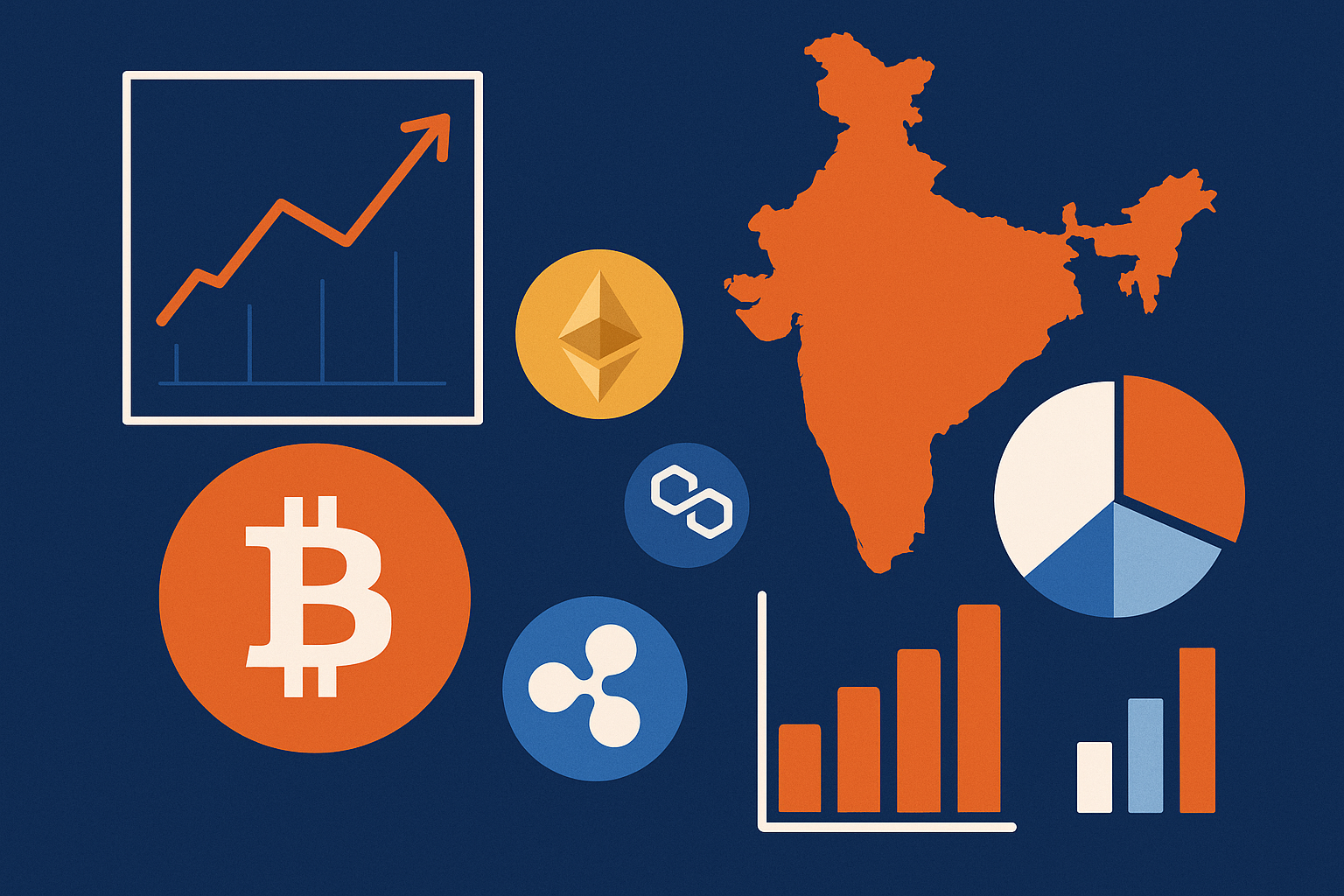
    Indian crypto investors are showing a stronger preference for diversified digital asset portfolios, marking an early shift toward more deliberate and long-term allocation behaviour.

    CoinDCX’s annual report, released on Thursday, suggests that the country’s retail investor base is gradually moving away from the idea that crypto is synonymous with Bitcoin, signalling broader maturity in market participation in 2025.

    This trend reflects a market becoming more confident, curious, and willing to explore varied opportunities across the expanding digital ecosystem.

    The exchange found that the average user now holds around five tokens, compared with two to three in 2022.

    This steady expansion of holdings indicates a growing awareness of portfolio construction and a willingness to explore different parts of the crypto market beyond the most established assets.

    Layer-1 tokens lead activity

    CoinDCX reported that layer-1 assets accounted for 43.3% of portfolio volumes.

    Bitcoin, priced at $93,133, held a 26.5% share of allocations. Memecoins made up 11.8% of user portfolios, showing that speculative interest remains a part of broader diversification trends.

    According to the exchange, Indian traders have become increasingly comfortable navigating different digital asset categories as adoption widens across the country.

    The report noted that crypto is emerging as a natural extension of the financial products already familiar to many users.

    Millennials dominate participation

    The platform’s user base is ageing upward, with the average trader now 32 years old. Millennials continue to make up the majority of users, outpacing Gen Z in adoption, though younger traders remain active.

    Gen Z users, aged 18 to 24, tend to favour emerging narratives such as layer-2 ecosystems, memecoins, and non-fungible tokens. Their behaviour reflects a greater appetite for thematic or speculative sectors.

    CoinDCX also saw its number of women investors double year on year. These users are diversifying beyond Bitcoin and Ether, priced at $3,183, into tokens such as Solana at $143.04 and Sui at $1.67.

    Founded in 2018 and backed by Coinbase, CoinDCX is one of India’s largest crypto exchanges with more than 20 million registered users. It remains a key gateway for retail access to digital assets.

    India shows wide but shallow adoption

    CoinDCX noted that India continues to lead in early indicators of digital asset awareness, including mobile-first trading behaviour and high engagement across educational content on the platform.

    These signals reflect strong nationwide interest in crypto as a financial category.

    However, the exchange found that deeper, research-driven participation remains limited. Many users enter the market through popular assets or trending narratives rather than sustained ecosystem involvement.

    As a result, the platform characterised India’s adoption as “wide” but not yet “deep”.

    CoinDCX said the country is still in the early stages of its digital asset journey, leaving significant room for education, innovation, and long-term growth as user sophistication develops.
    Source link

  • Glassnode report reveals Bitcoin’s growing stability amid ETF activity and RWA expansion

    Glassnode report reveals Bitcoin’s growing stability amid ETF activity and RWA expansion

    Glassnode report reveals Bitcoin’s growing stability amid ETF activity and RWA expansion

    • Bitcoin’s 2025 cycle shows rising institutional flows, lower volatility, and deeper liquidity.
    • Tokenized real-world assets surge to $24 billion, boosting institutional adoption and on-chain activity.
    • ETFs reshape Bitcoin liquidity as stablecoins remain key rails in a more mature digital asset market.

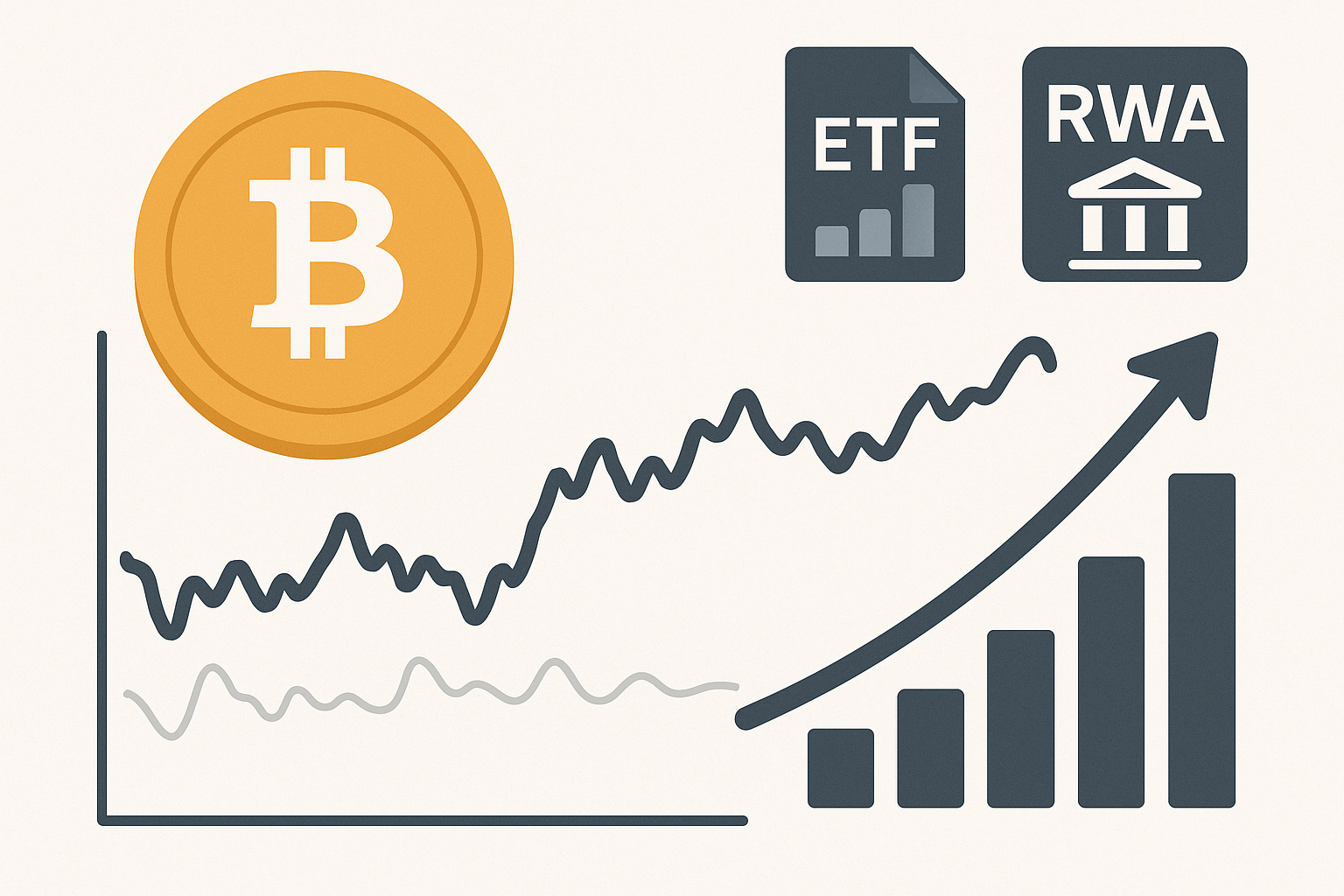
    Bitcoin’s latest cycle is developing under a very different market structure, with data from Glassnode and Fasanara Capital pointing to deeper institutional participation, rapid growth in tokenized real-world assets, and a notable drop in volatility.

    Their Q4 Digital Assets Report highlights how Bitcoin’s behaviour has shifted as regulated investment channels expand, and liquidity becomes more stable across spot, derivatives, and on-chain markets.

    The findings show how ETF flows, settlement activity, and broader adoption of tokenised instruments are shaping a more mature phase in the digital asset ecosystem.

    These structural changes are defining how capital moves through Bitcoin in 2025.

    Institutional flows reshape the cycle

    The report estimated that Bitcoin has absorbed around $732 billion in new capital during this cycle.

    This has occurred alongside a clear decline in one-year realised volatility, which has fallen by nearly half.

    Glassnode linked this trend to increased depth across major markets and a larger share of trading driven by institutional strategies.

    Glassnode also reported that Bitcoin settled approximately $6.9 trillion over the past 90 days.

    This puts Bitcoin in a range comparable to payment networks such as Visa and Mastercard.

    Even with more trading moving into ETF and brokerage channels, the report found that Bitcoin and stablecoins still dominate value transfer on public blockchains.

    ETF channels deepen liquidity

    ETF-linked demand has reshaped how investment enters and exits Bitcoin.

    Instead of relying mainly on on-chain movement or exchange activity, a greater share of flows now passes through regulated investment vehicles.

    According to the report, this shift has encouraged smoother liquidity conditions and fewer sharp price changes in spot markets.

    Traditional market makers and arbitrage firms have increased their presence due to ETF participation.

    Their involvement has tightened spreads and reduced disruption during periods of heightened selling pressure.

    This development reflects a broader alignment between digital asset markets and established financial infrastructure.

    Tokenized RWAs accelerate

    Tokenized real-world assets have expanded from $7 billion to $24 billion within one year.

    Glassnode stated that this rise reflects stronger institutional demand, including interest from pension funds, hedge funds, and corporations that want on-chain exposure to familiar financial instruments.

    Tokenized funds have gained momentum as asset managers test new distribution models and investors seek simplified access to traditional assets.

    Platforms involved in tokenised RWAs have strengthened custody, settlement, and compliance systems.

    This foundation has encouraged consistent inflows throughout 2025, supporting a growing segment of the market that links traditional assets with blockchain settlement rails.

    Stablecoin role strengthens

    Glassnode described the market structure as larger and more stable than in previous cycles.

    The data indicated deeper liquidity across spot, derivatives, and on-chain channels, which has contributed to a more measured trading environment.

    Reduced volatility has become a defining feature of the cycle, shaped by institutional trading strategies that tend to use steady allocation models.

    Stablecoins continue to serve as key connectors between traditional and digital financial systems.

    The report stated that stablecoin settlement demand remains substantial across centralised and decentralised platforms.

    Glassnode characterised the dual-rail system created by stablecoins and traditional infrastructure as a permanent part of the ecosystem, supporting both institutional flows and retail trading activity.

    Analysts referenced in the report expect institutional participation to expand as tokenised funds gain broader acceptance.

    Glassnode presented this phase as a turning point marked by heavier institutional flows, rising tokenisation, and reduced volatility.

    These factors suggest that Bitcoin and the wider digital asset sector are moving into a more structurally mature environment in 2025.

    Source link