Tag: risk

  • UAE makes Bitcoin wallets a crime risk in global tech crackdown

    UAE makes Bitcoin wallets a crime risk in global tech crackdown

    UAE makes Bitcoin wallets a crime risk in global tech crackdown

    • The UAE’s Federal-Decree Law No. 6 of 2025 came into effect on 16 September.
    • Article 62 places APIs, explorers, and decentralised platforms under Central Bank control.
    • Article 61 regulates all marketing, emails, and online posts about crypto services.

    In a sharp pivot from its crypto-friendly image, the United Arab Emirates has enacted sweeping new legislation that classifies basic cryptocurrency infrastructure, including Bitcoin wallets, as potentially criminal unless licensed by the Central Bank.

    Legal experts from Gibson Dunn have flagged the law’s scope as unusually broad, warning that its language introduces significant risk for global technology providers.

    This shift, embedded in Federal-Decree Law No. 6 of 2025, comes into force from 16 September and carries global consequences for developers and platforms offering crypto access.

    The law replaces the 2018 banking statute and significantly widens the definition of financial activity. What sets this legislation apart is not only its scope but also its enforcement teeth.

    Penalties for non-compliance range from fines of AED 50,000 to AED 500,000,000 (up to $136,000,000) and may include imprisonment.

    Importantly, this applies not just to entities operating within the UAE but also to those whose products are accessible from within the country.

    Licensing now applies to wallets, APIs and even analytics

    The most consequential element of the new law is found in Article 62. It grants the Central Bank control over any technology that “engages in, offers, issues, or facilitates” financial activity.

    The wording is broad enough to encompass self-custodial wallets, API services, blockchain explorers, analytics platforms, and even decentralised protocols.

    This marks a fundamental change in how crypto infrastructure is regulated in the UAE.

    Previously, licensing obligations focused on traditional financial entities, but the updated framework shifts this focus to include software and data tools.

    According to developer analysis, even public-facing tools such as CoinMarketCap and open-source Bitcoin wallets may now require licensing to remain accessible within the UAE.

    For the first time, developers may face criminal penalties for offering unlicensed crypto tools, even if they are based abroad.

    This extension of jurisdiction signals a new regulatory posture that treats access to crypto as tightly as its ownership or exchange.

    Communications and marketing now fall under regulation

    The crackdown does not stop at financial infrastructure. Article 61 of the same law defines the marketing, promotion, or advertising of financial services as a licensable activity.

    In practice, this means that simply hosting a website, publishing an article, or sharing a tweet about an unlicensed crypto service could be considered a legal violation if that content reaches UAE residents.

    This change dramatically expands the compliance footprint for companies and developers.

    Gibson Dunn highlights that these provisions materially broaden the enforcement perimeter, especially for firms with no formal presence in the UAE.

    The law applies to communications that originate outside the country but are accessible inside it.

    The result is a regulatory landscape where developers, content creators, and infrastructure providers must weigh whether their platforms are indirectly accessible by users in the UAE.

    In many cases, avoiding legal exposure may require disabling access or halting service altogether.

    Dubai’s free zones no longer shield crypto services

    Over recent years, the UAE has positioned itself as a hub for blockchain innovation.

    Jurisdictions such as Dubai’s Virtual Assets Regulatory Authority (VARA) and Abu Dhabi Global Market (ADGM) attracted global attention with purpose-built crypto licensing frameworks.

    However, the new federal law overrides these free-zone arrangements, asserting Central Bank control nationwide.

    Federal law supersedes any rules introduced by the UAE’s free zones, effectively dissolving the regulatory arbitrage that once drew companies to Dubai.

    The broader context includes the country’s history of digital restrictions.

    For instance, WhatsApp voice calls remain blocked across the UAE, reinforcing a consistent policy approach to centralised control over communications and digital tools.

    While this may bring the UAE in closer alignment with international pressure from groups like the Financial Action Task Force, it also puts crypto service providers in a difficult position.

    In other jurisdictions facing similar pressure, firms have withdrawn entirely to avoid enforcement risk.

    Enforcement begins in 2026, with further rules expected

    Entities have a one-year window from 16 September 2025 to come into compliance. This grace period may be extended at the discretion of the Central Bank.

    During this time, further regulations are expected to clarify how these broad rules will be applied in practice.

    Despite this, the scope of the law is already causing concern.

    The language around facilitation and communication, combined with the severe penalties under Article 170, suggests that firms offering crypto tools globally must now consider the risk of incidental exposure to UAE users.

    For software developers and platform operators, this marks a significant departure from the norms of decentralised access and open-source innovation.
    Source link

  • Bitcoin faces quantum risk: why SegWit wallets may offer limited protection

    Bitcoin faces quantum risk: why SegWit wallets may offer limited protection

    Bitcoin faces quantum risk: Why SegWit wallets may offer limited protection

    • SegWit wallets delay public key exposure until the point of transaction.
    • Holding Bitcoin in SegWit addresses offers temporary protection if left untouched.
    • Critics believe practical quantum computing remains decades away.

    Quantum computing’s long-theorised threat to Bitcoin is resurfacing in the crypto conversation.

    The idea that a powerful enough quantum machine could break cryptographic security and expose Bitcoin keys has moved from theoretical chatter to practical concern.

    Bitcoin analyst Willy Woo recently suggested a short-term safeguard: store Bitcoin in SegWit addresses for the next seven years.

    While the tactic has sparked debate, the broader community remains divided over whether quantum computers are a real, imminent threat or just the latest tech-driven scare.

    SegWit offers delayed public key exposure

    Segregated Witness (SegWit), introduced on 23 August 2017, is a protocol upgrade that changes how data is stored in Bitcoin transactions. Woo suggests that SegWit’s delayed public key exposure could act as a deterrent against quantum attacks.

    Unlike Taproot, which exposes the public key immediately within the address, SegWit only reveals it during transaction execution.

    This delay makes it harder for a quantum computer to reverse-engineer the private key from the public one before the transaction is completed.

    Under current conditions, exposing a public key does not present much of a problem. However, if and when quantum computing advances to the point of real-time decryption capabilities, the exposure window of Taproot wallets could be a key vulnerability.

    In contrast, SegWit’s hashing conceals the public key behind a layer of encryption until absolutely necessary. This may keep Bitcoin more secure during this anticipated transition period.

    Hodling in SegWit comes with major constraints

    While the SegWit method may offer protection, it carries a critical limitation. According to Woo, users must not move their Bitcoin from the SegWit address.

    Any outgoing transaction would expose the public key, potentially inviting a quantum attack if executed during the transaction.

    As such, this method is not viable for active traders or anyone needing liquidity in the short term. It is a static defence mechanism, not a dynamic solution.

    This approach effectively puts Bitcoin in a vault. It is safe but inaccessible. It is also only as secure as the continued absence of real-time quantum decryption.

    If a breakthrough comes earlier than anticipated, even SegWit-held coins could be compromised during withdrawal. Woo acknowledges that this is only an intermediary measure.

    It is meant to bridge the gap until a quantum-resistant Bitcoin protocol becomes available.

    Experts disagree over SegWit’s efficacy

    Not everyone agrees that SegWit provides any meaningful protection. Charles Edwards, founder of digital asset fund Capriole, has dismissed the idea as ineffective.

    He argues that SegWit is not a quantum-safe model and relying on it could delay necessary network upgrades.

    According to Edwards, the belief that Bitcoin has a seven-year buffer period could create complacency, weakening pressure to accelerate work on quantum-resistant algorithms.

    This disagreement underscores a broader lack of consensus in the crypto space on how seriously the community should take quantum risk.

    Although protocol upgrades are under development, there is concern among developers that current initiatives are progressing too slowly.

    Some argue that existing security layers were not built with quantum capabilities in mind, making them structurally vulnerable regardless of transaction format.

    Sceptics say quantum fears are overblown

    Despite the alarm, some in the community believe the risk is being overstated. Critics point to quantum computing’s persistent technical limitations.

    In a post in February, Bitcoin advocate Adrian Morris claimed quantum tech is “barely viable”, citing issues with thermodynamics, memory, and persistent calculations.

    Others argue that traditional financial systems and major banks would be far more attractive targets for early quantum attacks than a decentralised network like Bitcoin.

    Woo notes that Bitcoin held by custodians, such as ETFs or treasury firms, may be better shielded in the interim. This is only true if those institutions take proactive steps to secure their holdings.

    Until a comprehensive upgrade is implemented, the quantum debate will continue to shape discourse around Bitcoin’s long-term security.

    Source link

  • Bitcoin at risk of a 51% attack from two miners

    Bitcoin at risk of a 51% attack from two miners

    Bitcoin at risk of a 51% attack

    • Foundry USA and AntPool now control over half of Bitcoin’s hash power.
    • Bitcoin price is slipping toward $110,530, a crucial support level.
    • Macro fears and Fed shifts add pressure to already weak crypto markets.

    After Monero’s 51% takeover, two Bitcoin mining pools have sparked fears of a potential 51% attack on Bitcoin.

    Notably, the developments have raised critical questions about the security of the Bitcoin network and the stability of the wider crypto market.

    Also, the concerns over mining centralisation have intensified just as BTC faces steep price declines and broader macroeconomic pressures.

    Two mining pools dominate Bitcoin’s hash power

    Two major mining pools, Foundry USA and AntPool, now control more than half of Bitcoin’s total computing power.

    Foundry even mined eight consecutive blocks in a row, an event that is extremely rare and has heightened fears of network centralization.

    With over 51% of the hash power concentrated in just two entities, experts warn that Bitcoin is technically vulnerable to a 51% attack.

    In such a scenario, the dominant miners could potentially reorganize blocks, censor transactions, or undermine trust in the network.

    While such an attack would be extremely costly and perhaps self-defeating, the centralization trend has raised red flags across the community.

    Rising empty blocks and collapsing fees

    Alongside the hash power imbalance, analysts have noted an increase in the number of empty blocks being mined.

    Empty blocks generate lower transaction fees, which has led to collapsing revenues for miners and less efficient network usage.

    This situation has further fueled concerns about the long-term sustainability of the Bitcoin ecosystem, particularly as users demand greater efficiency from the blockchain.

    Although some commentators argue that a 51% attack would require an astronomical investment, estimated at around $1.1 trillion, they also admit that the risk of manipulation grows when power becomes too concentrated.

    Supporters of Bitcoin believe that no rational actor would spend such sums to destroy the very network that sustains their investment.

    Still, the perception of risk is enough to shake market confidence.

    Bitcoin price slides toward key support levels

    The security fears are unfolding at a delicate moment for Bitcoin’s price.

    After reaching an all-time high of $124,000 just last week, Bitcoin (BTC) has fallen sharply to around $113,000.

    The cryptocurrency is now approaching a crucial support level near $110,530, where buyers are expected to step in.

    If the price holds above that level, a rebound toward $120,000 and eventually $124,474 could follow.

    Some analysts like popular X commentator BitQuant are confident that Bitcoin is still on track to reach $145,000 without ever dipping below the six-figure mark.

    However, if Bitcoin breaks below the $110,530 support zone, the decline could deepen toward $107,000 or even $100,000.

    Short-term charts show bearish momentum, with the relative strength index in negative territory and the 20-day moving average sloping downward.

    Macro fears add pressure on crypto markets

    Beyond the technical charts, macroeconomic shocks are also weighing on sentiment.

    A recent shift in Federal Reserve policy, combined with Wall Street warnings about the newly passed Genius Act stablecoin bill, has unsettled investors.

    There are fears that the legislation could trigger a flood of withdrawals worth up to $6.6 trillion, posing systemic risks to both banking and crypto markets.


    Source link

  • Binance community vote puts FTT at highest delisting risk

    Binance community vote puts FTT at highest delisting risk

    • Voting ran from April 10 to April 16, 2025.
    • ZEC and JASMY followed with 8.6% of the votes each.
    • Binance says votes won’t be sole factor for delisting.

    FTT, the native token of collapsed exchange FTX, is facing renewed pressure as it topped Binance’s second “Vote to Delist” round with 11.1% of the community votes.

    The vote, which ran from April 10 to April 16, 2025, forms part of Binance’s broader governance programme, allowing users to weigh in on tokens marked with a Monitoring Tag.

    These tokens are deemed to carry greater risk or volatility, prompting deeper internal evaluations by Binance. While voting results alone do not determine delistings, they significantly influence the exchange’s decision-making process.

    The token has seen persistent downward momentum since the beginning of the year, and its association with FTX’s collapse in November 2022 continues to cloud investor confidence.

    At the time of writing, FTT was trading at $0.80, down 4.1% in the past 24 hours, with its latest decline echoing sentiment-driven selloffs seen in the first round of voting.

    Source: CoinMarketCap

    Binance expands governance tools

    Binance’s “Vote to Delist” initiative is aimed at improving transparency and strengthening user participation in governance. It targets assets flagged with Monitoring Tags, typically due to liquidity concerns, regulatory risks, or large price swings.

    Although community sentiment plays a key role, Binance has clarified that delisting decisions are not solely determined by voting outcomes.

    “The voting result will not be the sole deciding factor to determine the final delisting decision,” Binance stated on its Square platform.

    The review process will also consider internal metrics and compliance standards, and any final decision may be delayed depending on procedural requirements.

    FTT’s leading position among 17 tokens included in the second voting round suggests a strong community preference for removal, reinforcing the market’s wariness of its long-term viability.

    Altcoins face price drops, delisting risk

    Other tokens also registered notable levels of concern. Zcash (ZEC) and JasmyCoin (JASMY) each received 8.6% of the votes, reflecting increasing user doubt despite their historical popularity.

    GoPlus Security (GPS) followed with 8.2%, while PlayDapp (PDA) came in at 7.6%. Voxies (VOXEL), Alpaca Finance (ALPACA), and STP Network (STPT) also featured prominently, with 7.1%, 6.3%, and 5.9% of the votes, respectively.

    Price data shows these tokens have begun to react to the voting results. JASMY and STPT both dropped around 6% over the past 24 hours, with several other coins showing more modest declines.

    For instance, VOXEL, PDA, and ALPACA all posted red candles, suggesting investor anxiety may extend beyond FTT.

    Also included on the list were Flamingo Finance (FLM) with 4.3%, ARK (5.8%), Biswap (BSW) with 5.5%, and MovieBloc (MBL) at 4.2%.

    Smaller vote shares were seen for Wing Finance (WING) at 3.8%, Ardor (ARDR) at 3.6%, and Perpetual Protocol (PERP) at 3.4%. NKN and LTO Network closed the list with 3.2% and 2.9% of the votes, respectively.

    Market awaits Binance decision on FTT

    While Binance’s final delisting decisions are pending, the data signals a clear community trend away from tokens viewed as unstable or compromised.

    Market participants are expected to monitor Binance’s review process closely, particularly for tokens like FTT and JASMY, which continue to attract regulatory and public scrutiny.

    The exchange has not announced a firm delisting timeline and reiterated that internal reviews are still in progress.

    However, the market impact has already materialised, with sharp short-term price declines and trading volumes showing volatility across the affected tokens.

    With this round of votes concluded, Binance’s next steps could set a precedent for how much influence community feedback will hold in shaping the platform’s asset offerings moving forward.

    Source link

  • Weekly price analysis: crypto prices reel from risk off sentiments

    Weekly price analysis: crypto prices reel from risk off sentiments

    • The crypto market trended lower last week as US tariffs rocked the market, causing investors to flee to safe-haven assets like Gold
    • Crypto prices, which recovered slightly on Monday and Tuesday, continued trending downward as uncertainty looms
    • Meanwhile, spot ETF inflows remained positive despite some days of outflows

    Bitcoin

    Bitcoin’s price trended lower over the last week following US President Donald Trump’s announcement of tariffs on Canada, Mexico, and China. Investors fled to safe-haven assets like gold while risky assets, like crypto, trended lower.

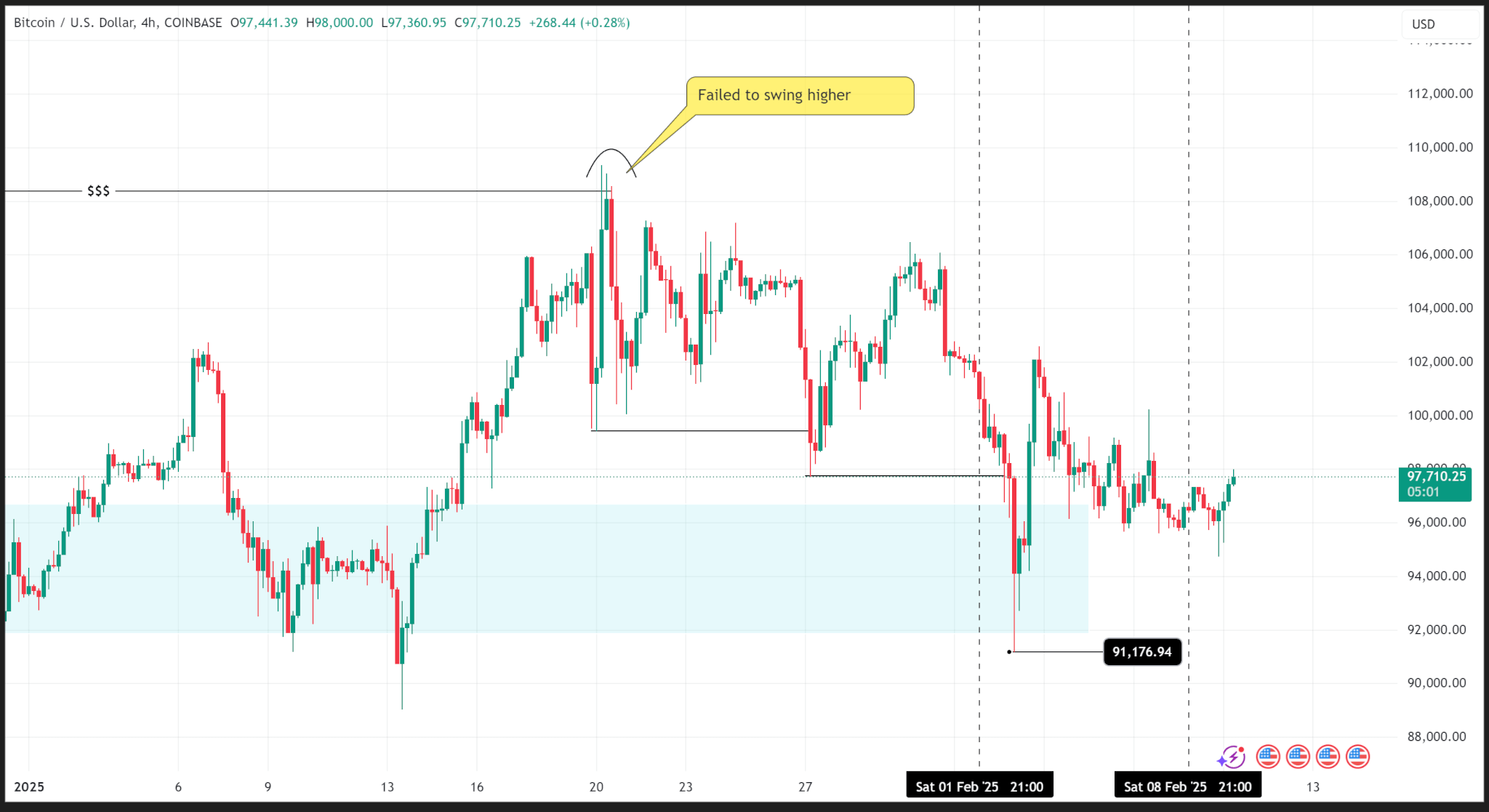
    However, the tariffs are a catalyst for faster price declines as price action shows that Bitcoin was already on a decline in its substructure after failing to swing higher than the $108,000 level three weeks ago.

    BTC/USD chart by TradingView

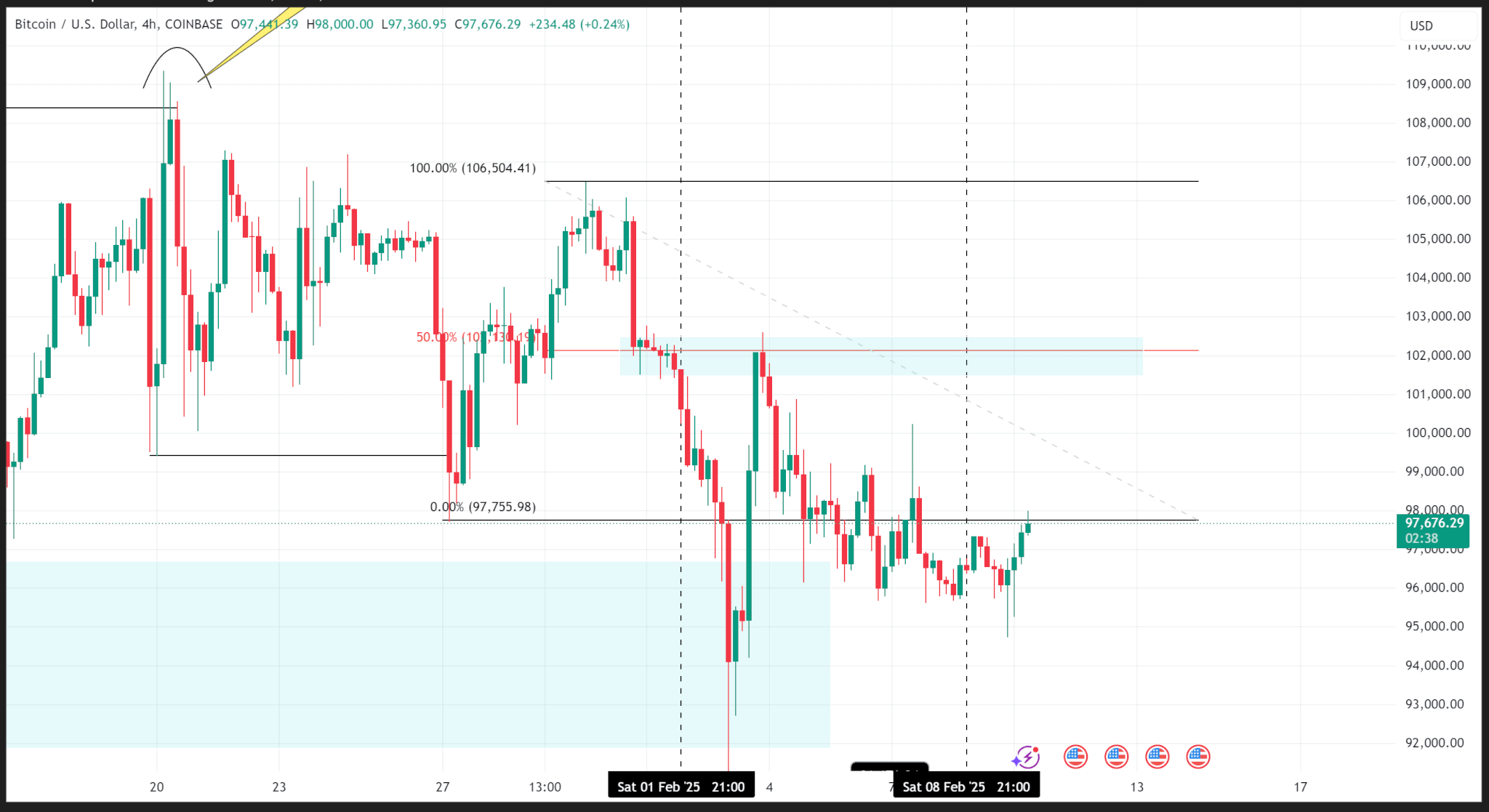
    BTC made two consecutive lower lows on the substructure over the last two weeks and traded into the daily demand zone early last week, logging a weekly low of $91,176.94.

    After buying from the demand zone, the price rose to an internal supply zone at $102,000, validated by the 50% Fibonacci level, and sold off that zone to end the week at $96,475.03.

    BTC/USD chart by TradingView

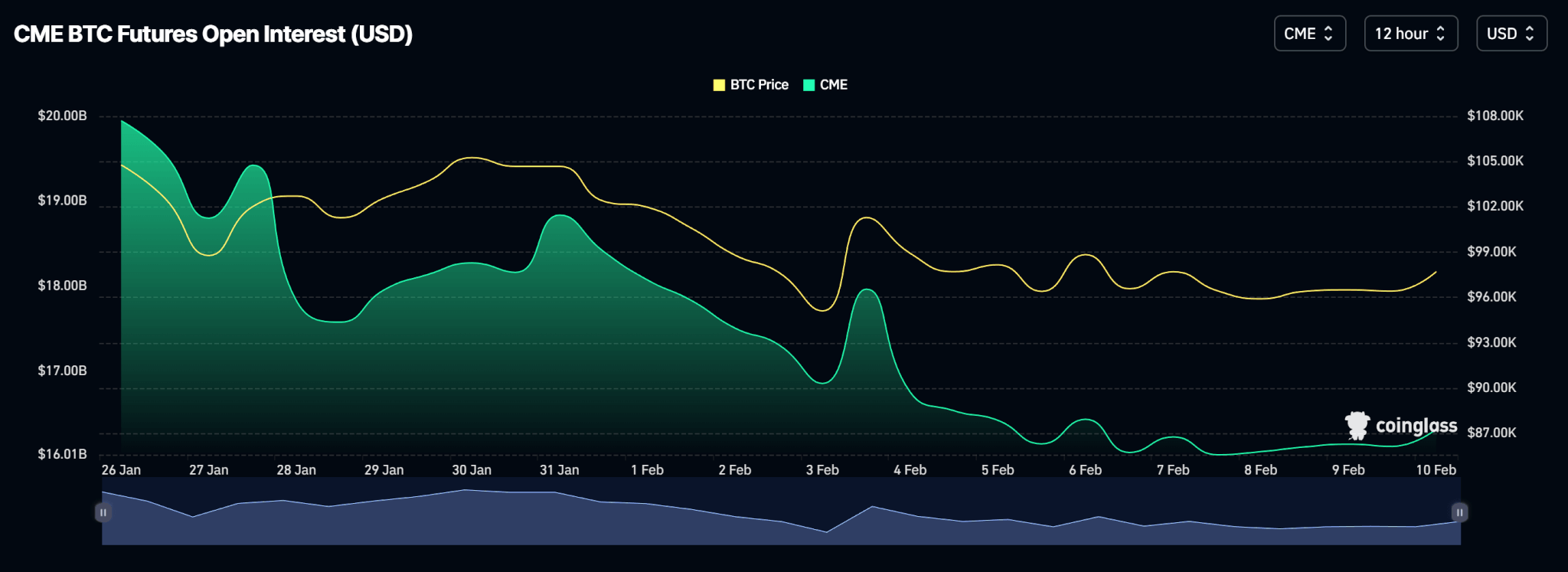
    On the CME, where Bitcoin Futures are traded the most, open interest fell last week as traders closed contracts due to uncertainty caused by Trump’s tariffs.

    Meanwhile, spot BTC ETFs logged a positive week as net flows printed $208.30 million despite two days of major outflows.

    Price Outlook

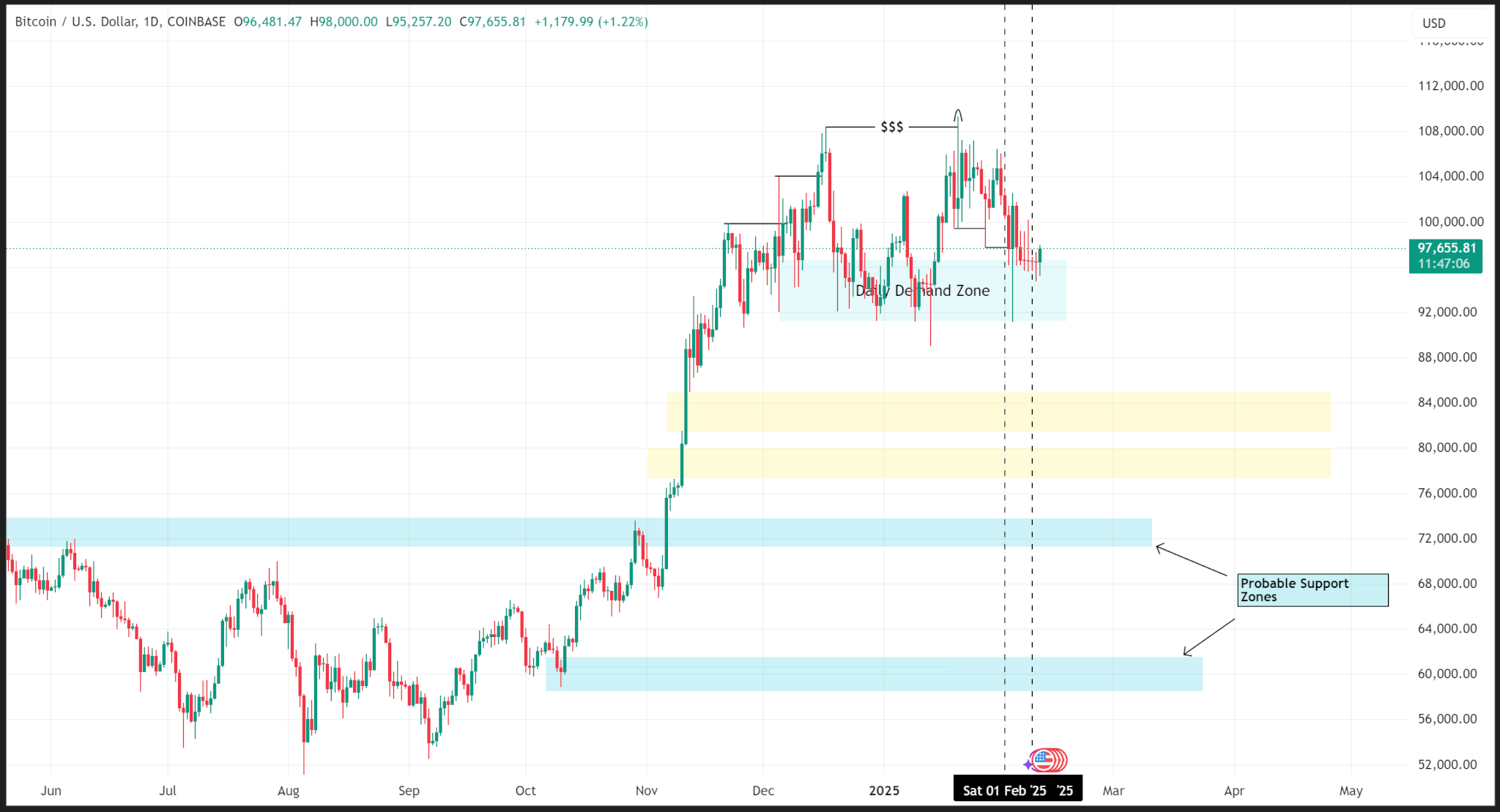
    Provided the price remains above the demand zone on the daily timeframe, then Bitcoin’s overall structure should remain bullish despite price declines on the substructure.

    However, a daily close below the demand zone, i.e., below the $90,000 level, may trigger a sell-off to support levels around $84,000 or lower.


    BTC trades at $97,624.73 as of publishing.

    Ethereum

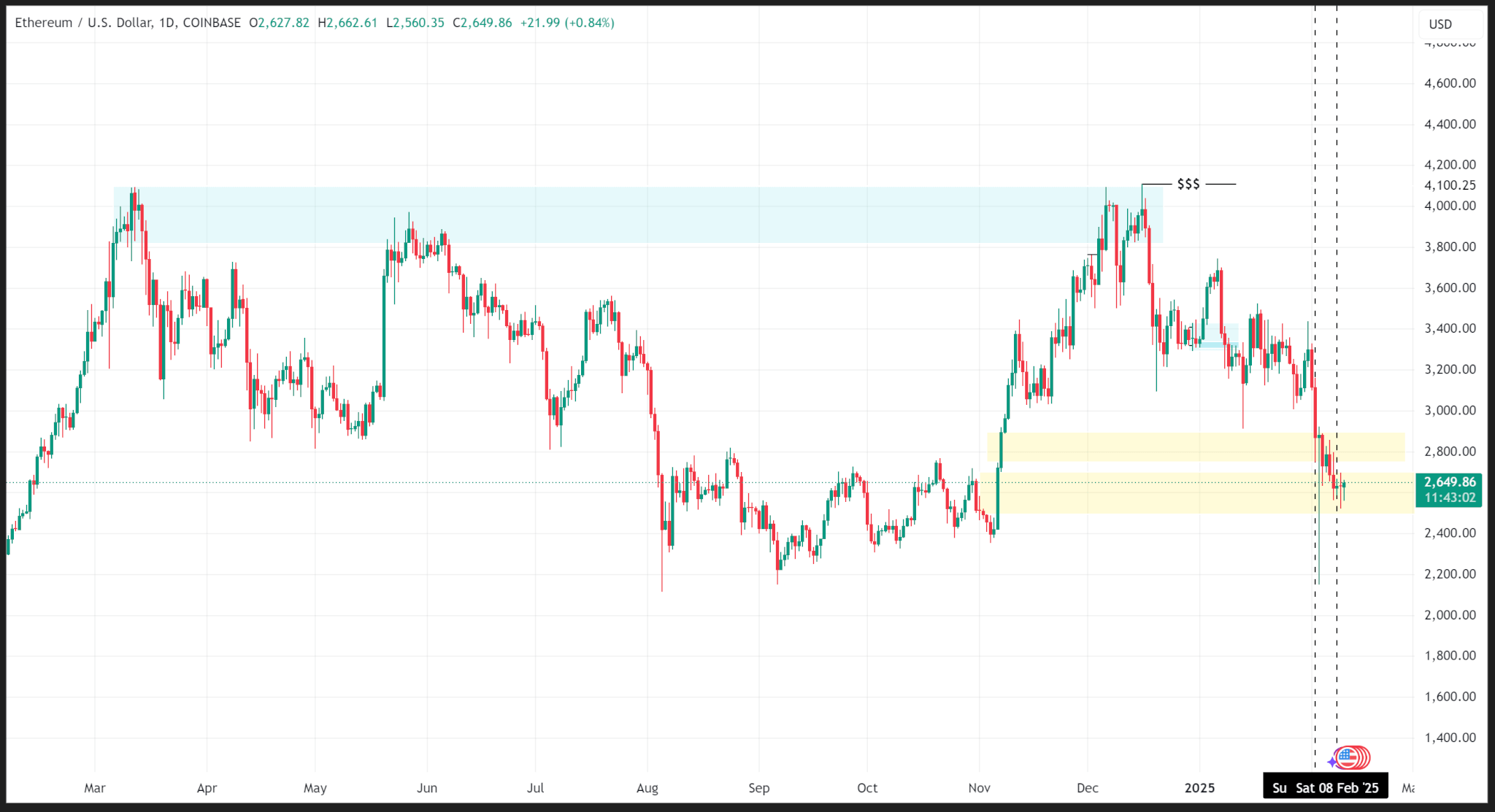
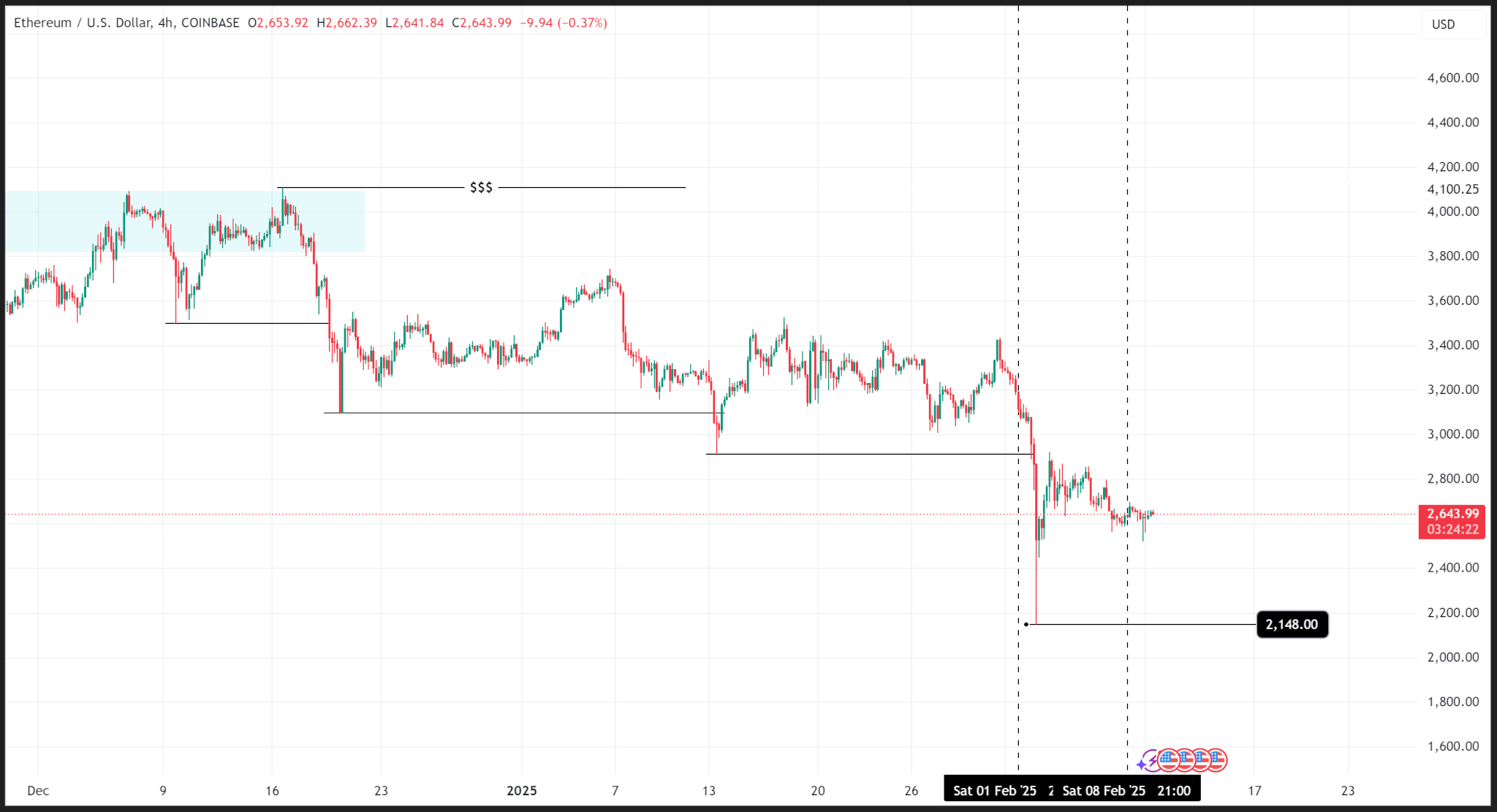
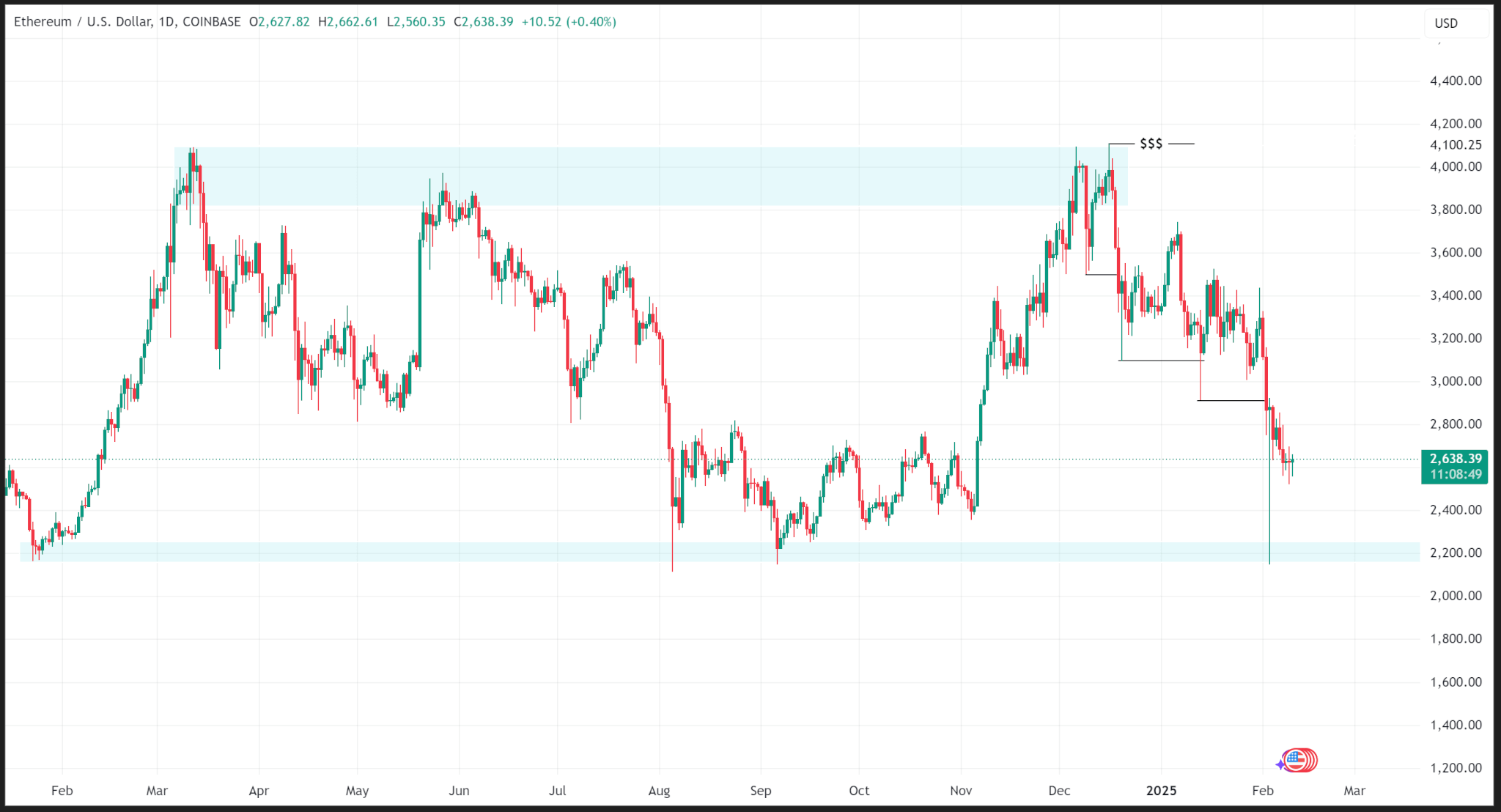
    After failing to break above March 2024 highs, Ethereum’s price has been on a downtrend on its substructure since mid-December 2024.

    On the 4-hour time frame, the price logged consecutive lower lows with the most recent low of $2,148.00 reached early last week. Price has improved since then, closing last week at $2,632.16.

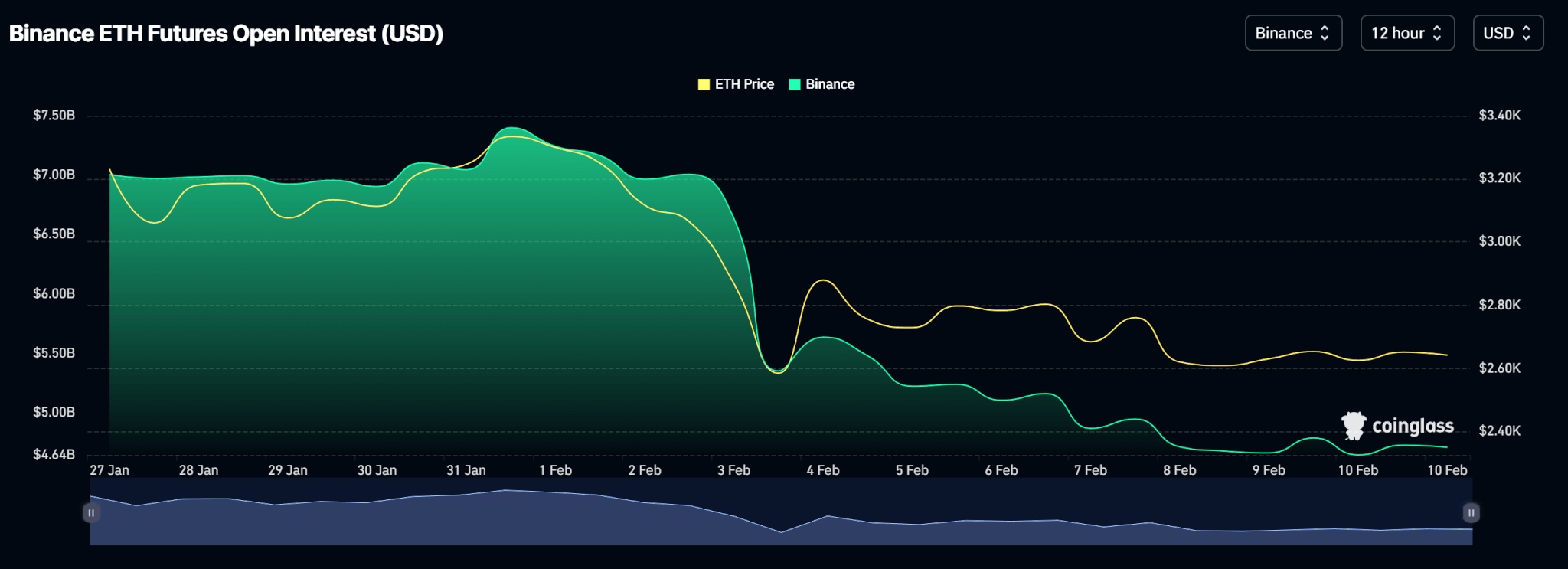
    Open interest on Binance, where Ethereum Futures are traded the most, shows a decline in the number of open contracts, which could be another catalyst for price declines.

    Meanwhile, spot ETH ETFs logged positive inflows on all days last week, aside from Friday when it logged no inflows (or outflows), totalling $420.20Mn for the week.

    Price Outlook

    The next probable zone for ETH’s price to fall is a major support zone around $2,200. With Trump planning to impose a 25% tariff on steel and Aluminum as well as a fresh round of retaliatory tariffs against trade partners, more uncertainty could push ETH’s price there soon.

    ETH trades at $2,640.05 as of publishing.

    Source link

  • Bitcoin still trading like a risk asset, despite claims of decoupling amid banking crisis

    Bitcoin still trading like a risk asset, despite claims of decoupling amid banking crisis

    Key Takeaways

    • First Republic has become the latest bank to collapse in the US
    • Bitcoin has bounced this week, as it did in March when SVB fell and the banking crisis was triggered
    • Our Head of Research, Dan Ashmore, contends that Bitcoin remains a risk asset, despite claims from enthusiasts that a decoupling is occuring
    • Correlation with stock market is still high, he writes, pointing to altered expectations around interest rate policy as the reason Bitcoin has moved upward

    There has been chatter amid the market recently (again) that Bitcoin is decoupling from stocks. Something about Bitcoin offering an alternate store of value outside the realm of the fiat world, a proposition that has suddenly become a lot more valuable as the banking turmoil striking the US rages. 

    Let me start by saying that I don’t think my opinion is very valid here. I can’t predict the future. But I want to look at the numbers because I believe they prove that this theory, that Bitcoin has decoupled, is objectively false. 

    I wrote a deep dive on Bitcoin’s correlation with stocks in March, when this theory originally surfaced as Silicon Valley Bank collapsed, while Bitcoin raced upwards. The same logic applies now, so let me try summarise it by refreshing the same numbers. 

    And a quick note – this article is nothing about my beliefs around Bitcoin’s trajectory in the long-term. Whether Bitcoin decouples in future and establishes itself as a store of value akin to gold, uncorrelated to other risk assets, is a debate for another time and not one I will delve into here. I’m purely looking at the price action today and saying that, as of May 2023, Bitcoin is trading like an extreme-risk asset, completely removed from this uncorrelated vision. 

    Bitcoin’s correlation with the Nasdaq

    The natural place to look is tech stocks, being one of the riskier subsectors of the equity universe. The Nasdaq, being a tech-heavy index, is often seen as the benchmark for this sector. So let us chart Bitcoin’s correlation with the Nasdaq over the past couple of years. 

    Using a 60-Day Pearson measure, the chart shows that the correlation has bounced around a lot over the past couple of years. For the most part, however, it has shown a relatively strong relationship, frequently residing above 0.5. 

    There were a couple of dips. The first is clearly May/June 2021, when Bitcoin cratered from $63,000 to $31,000 for no apparent reason, before climbing back up into the high sixties later that year. 

    The second large dip in correlation is in November 2022. This was none other than the FTX collapse, the staggering implosion sending shockwaves through the crypto industry. At the same time, stocks actually advanced significantly as softer inflation data cropped up and optimism increased around the future path of interest rates. Cue the big dip in correlation. 

    Therefore, there have been two periods of notable, and very large, decorrelations. Both of these occurred as crypto melted down, independently of the stock market. If you look closely over the last year – I have shown the correlation over the last year below – you will see another big deviation in the summer of 2022 when crypto “bank” Celsius shut withdrawals. 

    And most importantly, the correlation has come back up swiftly every time. Including in March, when Bitcoin outperformed in the aftermath of the banking crisis. 

    But, did it really outperform in March? The correlation above remained relatively high, certainly nowhere near previous episodes of decorrelation – and a lot more brief. Sure, Bitcoin raced upward further than the Nasdaq post-SVB, but it also fell further prior to the guarantee that deposits backing the second largest stablecoin, USD Coin, were safe. In reality, Bitcoin did what it has been doing – sold off more aggressively and then bounced back stronger. Because, well, it is riskier.  

    Besides, the elephant in the room is the Federal Reserve. Markets have been moving off expectations of Fed policy all year long, and this was the true cause of the movement in March, as well as this week. 

    With SVB’s collapse, the market reacted to the announcement of a large liquidity injection by the Fed, as well as the expectation that rates could not be hiked as much in future as a result of the creaking banking system. These are both good things for risk assets and so Bitcoin rose. Again, not because of any potential downfall of the fiat system. 

    Not to mention, these banking problems were borne out of duration risk management, completely distinct to the banking issues of the GFC in 2008, which were a full-blown insolvency crisis built upon terrible underlying assets (subprime mortgages). Today, the banking crisis is still a crisis, but a regional one borne out of the most aggressive hiking cycle in recent memory, which has seen bank assets dropping in value and deposits pulled to take advantage of those higher rates elsewhere, leading to an unsustainable bank run as confidence evaporates. 

    We have seen similar developments again this time around, as First Republic Bank fell last week after revealing it saw over $1 billion of withdrawal requests last quarter. 

    Again, the market reacted to these things breaking by saying: “OK, the Fed cannot hike much more. This is good for risk assets”. Looking at Fed fund probabilities, there is the expectation of a 25 bps hike today (May 3rd) and then….nothing. The market is viewing this as the final hike. 

    So, it is important to keep track of lurking variables (interest rate policy) when assessing correlations and trying to garner why Bitcoin is moving. For the time being, the numbers are pretty clear, and the conclusion is unequivocal: Bitcoin is trading like a risk asset. Perhaps we don’t even need to look at correlation. Take a glance at the below chart plotting Bitcoin’s returns since the start of 2022 against the Nasdaq. Do you really want to argue that these assets are uncorrelated?

    The numbers speak for themselves. Again, this is not speculating about what will happen in future. Tomorrow, Bitcoin could go to $1 million and the Nasdaq could go to zero for all I care. Bitcoin may one day reach that uncorrelated store of value status. But for now, the numbers are clear: it is trading like a risk asset. 

    Source link

  • Bitcoin price recovery at risk amid new Credit Suisse crisis

    Bitcoin price recovery at risk amid new Credit Suisse crisis

    • Bitcoin and other financial assets now have a Credit Suisse problem.

    • Credit Suisse credit default swaps signal that the company could collapse.

    • Credit Suisse stock price plunged by 20% and reached a record low.

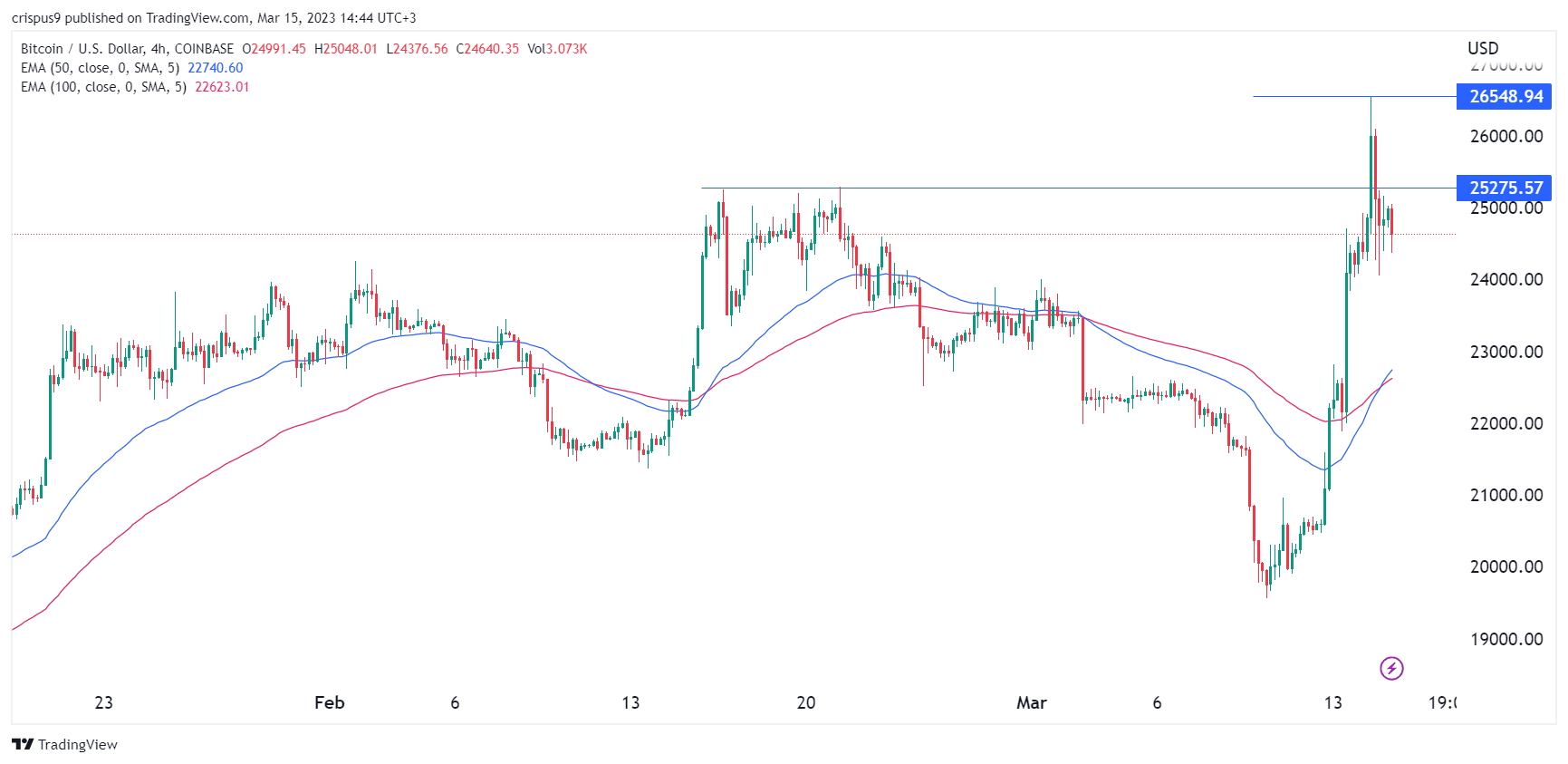
    Bitcoin price came under intense pressure on Wednesday as the banking sector came under a significant strain. BTC pulled back from the year-to-date high of $26,548, to a low of $24,526. It has retreated by ~7.8% from its highest point this week.

    Credit Suisse crisis deepens

    Bitcoin price has been in a strong bullish trend in the past few days as investors reacted to the ongoing performance in the banking sector. After falling to a low of $19,500 last week, the coin made a spectacular recovery as it jumped to a high of $26,548. 

    This rally happened after America’s regulators decided to bailout key banks like Silicon Valley Bank (SVB) and Signature Bank. They decided to provide a backstop for their depositors, many of whom were companies in the crypto industry, as we wrote here.

    The most important part of the bailout was the fact that it saved USD Coin, the second-biggest stablecoin in the world. Circle, the parent company of USDC, had over $3.3 billion deposited in the company. If it had failed, the ripple effect on the crypto industry would have been dire.

    Now, it seems like we have another bank crisis. Credit Suisse stock price plunged by more than 20% after the company lost confidence of another key investor. Earlier this month, the company’s biggest shareholder, Harris Associates, decided to sell its entire stake. 

    And on Wednesday, Saudi National Bank said that it will not provide more finance to the company. Therefore, there are significant risks that the company will fall. Indeed, its credit default swaps have risen, signaling that investors expect the bank to fall.

    A collapse of Credit Suisse would have some positives for Bitcoin prices. For one, it will lead to a pause in interest rate hikes by the Fed and other central banks.

    Bitcoin price forecast

    The BTC/USD price soared to a high of 26,548 on Tuesday and then pulled back to a low of 24,102. As it dropped, BTC moved below the key support level at 25,275, the highest point in February. On a positive note, the pair’s 50-day and 100-day moving averages have formed a bullish crossover. The coin has also formed what looks like a small head and shoulders pattern. 

    Therefore, I suspect that it will continue falling in the next key support at $23,000. A move above the key resistance point at 25,275 will invalidate the bearish view.

    How to buy Bitcoin

    eToro

    eToro offers a wide range of cryptos, such as Bitcoin, XRP and others, alongside crypto/fiat and crypto/crypto pairs. eToro users can connect with, learn from, and copy or get copied by other users.


    Buy BTC with eToro today

    Public

    Public is an investing platform that allows you to invest stocks, ETFs, crypto, and alternative assets like fine art and collectibles—all in one place.


    Buy BTC with Public today

    Source link