Tag: risks

  • Aster price risks dip below $1 despite major buyback plan

    Aster price risks dip below $1 despite major buyback plan

    Aster Bearish Price Outlook

    • The ASTER token is teetering near a critical support level of $1.03-$1.00.
    • A potential drop below $1 risks triggering further declines to $0.90.
    • The outlook is despite a buyback plan the Aster team announced on Friday.

    Aster DEX, a decentralized exchange backed by YZi Labs and linked to Binance co-founder Changpeng Zhao, has unveiled a significant buyback initiative to bolster its native token, ASTER.

    Announced earlier today, the plan proposes allocating 70-80% of Season 3 fees toward ASTER buybacks, contingent on market conditions.

    However, despite this bold move, market data and technical outlook suggest that ASTER faces substantial risks of dipping below the critical $1 psychological support level.

    Aster team plans major token buyback

    The ASTER token is currently trading at $1.06, just in the red.

    However, the DEX token faces notable selling pressure as has been seen in the past week and month.

    On Friday, the cryptocurrency failed to climb despite earlier gains.

    Intraday upticks saw the altcoin’s price reject in the $1.12 and $1.15 region, with gains and the subsequent selling pressure coming amid a major ASTER buyback announcement.

    Why is ASTER price down today?

    Aster fell amid negative news on Thursday. Today, the token’s price action reflects a fragile market, with technical indicators pointing to potential downside risks.

    Notably, Aster has lost over 55% of its value since the peak of $2.42 reached in September.

    The rally that saw the exchange platform challenge and even surpass Hyperliquid in volume has dissipated, and the altcoin’s 24-hour trading volume, while robust, has dropped below $800 million.

    Market sentiment is further strained amid overall crypto action.

    On Friday, following high anticipation, the Bureau of Labor Statistics released the Consumer Price Index inflation for September.

    After an initial uptick alongside stocks, Bitcoin and Ethereum as well as most cryptocurrencies showed subdued action.

    The US CPI report, which indicated cooling inflation, failed to inspire sustained bullish momentum across the crypto sector.

    While the Dow Jones Industrial Average had spiked by over 530 points as of writing, Bitcoin failed to rally above $111,000, and ETH pared gains from near $4,000.

    Aster price signalled a similar outlook despite the team’s buyback announcement.

    Is ASTER set to dump below $1?

    Technical indicators highlight that the current price is at a critical support zone.

    A downturn below $1.03 means bears could strengthen in the $0.93-$0.97 region. ASTER could drop to lows of $0.90.

    Meanwhile, robust resistance lies in the $1.12-$1.15 zone, with a break to above $1.24 potentially triggering an upward momentum toward $1.52 and then $1.60.

    Aster price chart by TraddingView

    In any case, ASTER’s ability to hold above $1 is crucial for this bullish outlook.

    The buyback plan’s execution and broader market stabilization will be key for buyers.

    The token’s institutional backing and multi-chain architecture may also offer a foundation for recovery.

    However, the overall crypto market outlook suggests uncertainty could deter short-term holders.



    Source link

  • Crypto hacks in August hit $163 million as exchange risks grow

    Crypto hacks in August hit $163 million as exchange risks grow

    Crypto hacks in August hit $163 million as exchange risks grow

    • The largest theft was $91.4 million from anonymous Bitcoin addresses.
    • Other victims included Odin.fun ($7 million), BetterBank.io ($5 million), and CrediX Finance ($4.5 million).
    • Weak audits, human error, and fast platform launches are driving security risks.

    The digital asset industry faced another blow in August as hackers stole $163 million across 16 separate incidents, according to blockchain security firm PeckShield.

    This was a jump from July’s $142 million, showing how attacks are becoming more frequent and technically advanced.

    The largest theft was $91.4 million from multiple anonymous Bitcoin addresses, underlining the vulnerability of individual investors as well as institutions.

    Beyond the immediate financial loss, these incidents raise questions about the security of centralised platforms and the long-term impact on investor trust in the wider crypto market, which continues to expand globally.

    $54 million BtcTurk hack highlights exchange weaknesses

    One of the biggest cases in August was the breach of BtcTurk, Turkey’s leading crypto exchange, which lost $54 million.

    This incident was particularly notable because the same platform had already been hit in June 2024 for another $54 million, bringing its total annual losses above $100 million.

    BtcTurk confirmed that unauthorised access had been detected, affected wallets were frozen, and investigations with local authorities were underway.

    The repeat nature of the attack highlights how centralised exchanges remain a high-value target, with security defences proving inadequate against persistent attackers.

    Other platforms lost $17 million in separate cases

    While BtcTurk dominated headlines, smaller but still damaging attacks hit other platforms. Odin.fun lost $7 million, BetterBank.io suffered $5 million in losses, and CrediX Finance was drained of $4.5 million.

    These examples show how cybercriminals are not only targeting major exchanges but also smaller platforms, often exploiting weak security audits or untested systems.

    The cumulative effect of these breaches demonstrates how no level of the crypto ecosystem is safe from exploitation, whether through technical loopholes or basic operational oversights.

    Human error and lack of audits fuel rising attacks

    PeckShield’s data shows that the crypto sector’s rapid growth is directly linked to the rising number of hacks. New platforms and protocols are often launched quickly without thorough security reviews, giving attackers multiple entry points.

    Alongside structural weaknesses, human error continues to play a major role. Users failing to enable two-factor authentication, relying on weak passwords, or falling victim to phishing scams leave both exchanges and personal wallets open to compromise.

    The combination of technical flaws and behavioural lapses is creating an environment where cybercrime thrives, forcing exchanges and investors to reconsider their defences.

    Regulatory authorities in multiple jurisdictions have noted these trends, pointing to the need for stricter compliance checks.

    Bitcoin dips as investor confidence weakens

    The impact of these hacks has extended into the wider market. Bitcoin (BTC) slipped 0.29% in the past 24 hours to trade at $108,361.50, with a market capitalisation of $2.15 trillion.

    Bitcoin price
    Source: CoinMarketCap

    Analysts warn that repeated breaches could slow mainstream adoption, as every incident erodes investor confidence and strengthens the case for stricter regulations to protect consumers and stabilise trading activity.

    Source link

  • Celestia price outlook: Here’s why TIA risks further losses

    Celestia price outlook: Here’s why TIA risks further losses

    Celestia Price Bearish

    • Celestia (TIA) trades at $1.81, down 13% in the past week.
    • The altcoin is paring gains seen following a bounce from lows of $1.32.
    • Celestia Foundation has announced it bought all remaining TIA from Polychain Capital.

    Celestia’s price of $1.81 today  is down double digits in the past week. While it has bounced 38% since hitting its all-time lows of $1.32 in June, it is 70% down in the past year and -91% from its all-time high above $20.9 reached in February 2024.

    As the cryptocurrency market navigates its latest pullback, is TIA at risk of fresh losses? Or could Celestia Foundation’s latest move catalyze a fresh recovery?

    Celestia Foundation buys back TIA from Polychain Capital

    As TIA price fell over the past year, most analysts pointed the finger towards the aggressive dumping by Polychain Capital.

    Celestia moved from being one of the most attractive coins at its mainnet launch, to lagging the market. Underperformance in the past year has pushed it further off its peak.

    An analyst on X called it one of the “most predatory VC tokens out there.”

    The Celestia Foundation has moved to flip the picture, announcing it acquired Polychain Capital’s remaining TIA holdings. It is a move that concludes a long-standing partnership with the VC that acquired coins under or at $1.

    Now after dumping tokens, Polychain has agreed to sell its 43,451,616.09 TIA tokens back to the Celestia Foundation for $62.5 million. Polychain is set to undelegate its staked assets to facilitate the deal.

    Why is TIA largely bearish?

    Despite the Celestia Foundation’s move, TIA’s price trajectory remains largely bearish.

    Token unlocks, which will gradually release the redistributed tokens into circulation, remains. This controlled release has the design of a strategy eyeing no sudden supply surge. New investors receiving the coins must therefore not adopt a sell-off strategy similar to Polychain Capital’s earlier actions.

    Otherwise, with a potentially aggressive divestment feature and rewards loophole, bears may yet take further hold.

    Recently, commenting on TIA price, crypto analyst zeroknowledge posted on X:

    “The structural selling pressure is not a side effect, it’s literally the primary feature of the tokenomics design.”

    Explaining further, the analyst added:

    “The most damning example is Polychain Capital, which invested approximately $20 million across Series A and B rounds. Through the staking rewards loophole (see screenshot below), Polychain already sold over $82 million worth of TIA (achieving a 4x return on investment) before a single one of their primary tokens has unlocked.”

    Is this changing? Market participants have pointed to Celestia restructuring its tokenomics and governance model.

    As Chaos Labs notes in the above post, Celestia will not just reallocate the Polychain stash, but has a proposal to cut inflation rate. But will this stem the selling?

    Celestia price technical outlook

    The token traded around $1.81 at the time of writing, with open interest down to $197 million.

    Technical indicators -the RSI and MACD on the daily chart give sellers the upper hand. Notably, the RSI is downsloping below 50 while the MACD is signaling a bearish crossover.


    Source link

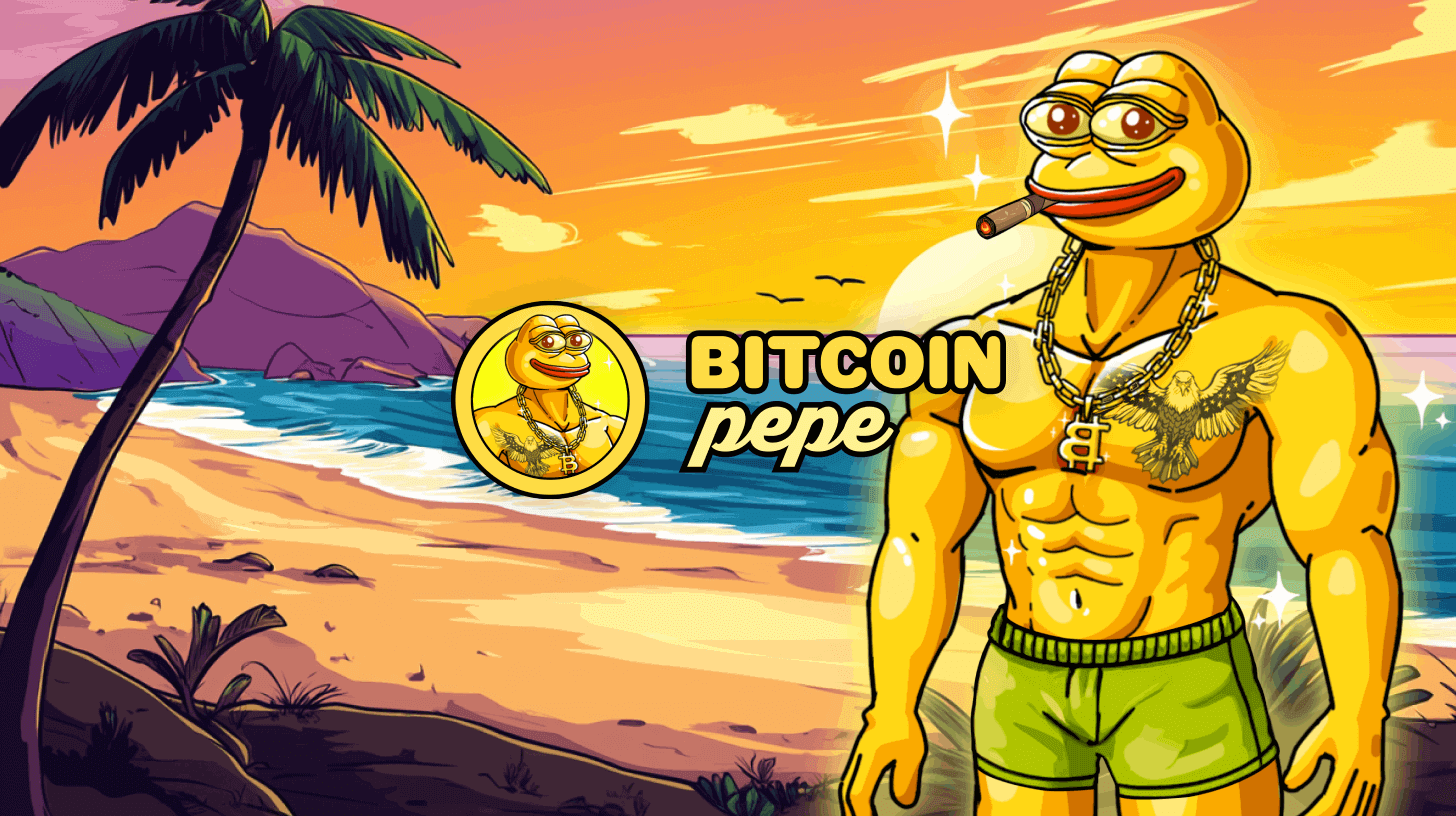
  • Bitcoin Pepe’s presale hits $2.77M as survey shows memecoins’ rewards outweigh risks

    Bitcoin Pepe’s presale hits $2.77M as survey shows memecoins’ rewards outweigh risks

    Bitcoin Pepe’s presale hits $2.77M as survey shows memecoins’ rewards outweigh risks

    • Bitcoin Pepe presale hits $2.77M as momentum builds.
    • Enthusiasts believe the LIBRA scandal calls for clearer memecoin regulation.
    • Kraken survey shows 76% of investors see memecoin rewards outweighing risks.

    Bitcoin Pepe, heralded as the world’s only Bitcoin Meme ICO, has made headlines by raising $2.77 million out of its $2.85 million presale target in its fourth presale stage.

    The Bitcoin Pepe presale is structured in such a way that the BPEP token price increases as the presale stages progress. For instance, with the fourth stage almost completed, the price is expected to rise from the current price of $0.0243 per token to $0.0255 in the fifth presale stage.

    Notably, the Bitcoin Pepe project aims to bring Solana-like technology to the Bitcoin blockchain, introducing concepts like a Meme Layer-2 for BTC with instant transactions and ultra-low fees. The initiative also includes the launch of a new token standard, PEP-20, allowing for meme coin creation directly on Bitcoin, which they argue is the only blockchain that will “live forever.”

    Regulatory challenges highlighted by the LIBRA scandal

    While Bitcoin Pepe seems to be a success, the memecoin market was recently thrown into confusion following the rug pull of LIBRA, which was expected to be a successful crypto project after it was endorsed by Argentine President Javier Milei.

    Following the LIBRA debacle, which is partly blamed on possible insider trading, Nic Puckrin from Coin Bureau has criticized US regulators for failing to provide a framework that could prevent such incidents.

    According to Puckrin, this vacuum has allowed for fraudulent schemes to proliferate, leading to calls for agencies like the SEC or CFTC to step in. However, there’s a counterargument, with some like Christopher Perkins suggesting that memecoins already enjoy a degree of regulatory clarity under commodity laws, though the broader legal landscape remains grey for these digital assets.

    76% of memecoin investors believe rewards outweigh risks

    Despite the risks associated with meme coins, a recent Kraken survey reveals a surprisingly positive outlook on memecoins.

    According to the survey, an overwhelming 76% of investors believe that the potential rewards of investing in memecoins justify the risks involved. This sentiment is backed by 85% of US crypto holders who have ventured into the memecoin market, driven by factors like price volatility, FOMO, and social endorsements.

    Interestingly, while both genders invest in memecoins at similar rates, the survey shows that women tend to be more cautious, generally allocating a smaller portion of their portfolio to these high-risk assets.

    The survey also highlights that while many are optimistic about memecoins’ performance in 2025, the majority still approach these investments with caution, dedicating only a small fraction of their portfolio to memecoins. This cautious optimism reflects a broader understanding of memecoins’ role in the crypto ecosystem, not just as speculative assets but also as a source of entertainment and diversification.

    With that said, the Bitcoin Pepe (BPEP) memecoin leverages Bitcoin’s security and Solana’s speed, offering investors a compelling memcoin alternative that will possibly outshine previously launched meme coins.


    Source link