Tag: Scientific

  • CoreWeave to acquire Core Scientific in a $9B all-stock deal

    CoreWeave to acquire Core Scientific in a $9B all-stock deal

    CoreWeave to acquire Core Scientific in $9B all-stock deal

    • CoreWeave has finalised a deal to acquire Core Scientific for $9 billion.
    • The deal adds 1.3 GW of power capacity for AI and HPC expansion.
    • Under the agreement, CORZ holders will get 0.1235 CoreWeave shares per CORZ share.

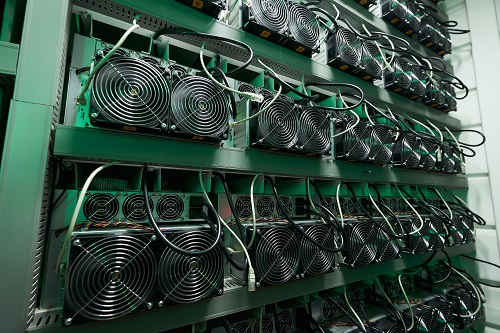
    CoreWeave has finalized a landmark $9 billion all-stock acquisition of Bitcoin mining giant Core Scientific, in a move that underscores the company’s ambition to dominate AI and high-performance computing infrastructure.

    The deal, announced on Monday, marks one of the largest takeovers in the AI infrastructure space this year and follows over a year of pursuit, with previous bids rejected for being undervalued.

    CoreWeave, a fast-growing cloud provider specializing in AI workloads, is leveraging the acquisition to significantly expand its power capacity and reduce long-term operational costs.

    The deal locks in $9B value with a major premium

    CoreWeave’s journey to acquire Core Scientific began with a $1 billion bid in early 2024, which was firmly rejected as undervalued.

    Since then, Core Scientific’s market capitalization has more than tripled, thanks to strong operational performance and renewed investor interest in crypto infrastructure.

    Now, with this $9 billion agreement, CoreWeave not only gets a foothold in crypto-hosting infrastructure but also gains critical assets to fuel its broader AI ambitions.

    Under the terms of the agreement, Core Scientific shareholders will receive 0.1235 shares of newly issued CoreWeave Class A common stock for every share of CORZ they own.

    This exchange values Core Scientific at approximately $20.40 per share, which represents a 66% premium over its closing price of $12.30 on June 25.

    The merger, expected to close in the fourth quarter of 2025 pending shareholder and regulatory approvals, will result in Core Scientific shareholders owning less than 10% of the combined company.

    The stock-based nature of the transaction signals CoreWeave’s long-term confidence in its equity value and future growth strategy.

    In the months ahead, attention will turn to how the company integrates these assets, repositions them for high-performance computing, and navigates potential legal challenges from shareholders.

    Power capacity takes centre stage

    One of the most strategic aspects of the acquisition is the scale of infrastructure CoreWeave will inherit.

    The company will assume ownership of approximately 1.3 gigawatts of gross power across Core Scientific’s US data centre footprint.

    In addition, the company has identified over 1 gigawatt of potential expansion capacity, giving it unprecedented leverage in scaling AI and HPC operations.

    This development is critical, especially as global demand for AI computing power continues to soar and data centre capacity becomes a key constraint.

    CoreWeave plans to repurpose much of this infrastructure for AI and HPC tasks, while also leaving open the option to divest some of Core Scientific’s crypto-mining assets in the medium term.

    Cost savings and vertical integration boost CoreWeave

    Beyond infrastructure, CoreWeave expects the merger to unlock over $500 million in annual run-rate cost savings by the end of 2027.

    These savings will come primarily from eliminating more than $10 billion in expected future lease obligations over the next 12 years.

    By owning its data centre assets outright, CoreWeave can streamline operations, avoid lease-related risks, and reallocate capital toward more strategic growth investments.

    This vertical integration also strengthens the company’s ability to host large-scale deployments of next-generation AI hardware, such as Nvidia’s GB300 NVL72 systems.

    Market reaction

    While the acquisition is seen as a transformative move for CoreWeave, the immediate market reaction was mixed.

    Core Scientific’s shares fell by over 15% following the news, suggesting that some investors felt the premium offered did not fully capture the company’s recent growth.

    Core Scientific’s earnings more than doubled in the first quarter of 2025 to $580 million, though its revenue was dampened by the effects of the recent Bitcoin halving.

    At the time of the acquisition, the company was the 33rd largest corporate Bitcoin (BTC) holder, with 977 BTC on its balance sheet.

    However, CoreWeave has made it clear that this acquisition is not about returning to crypto mining but about reallocating infrastructure for AI and HPC.

    Source link

  • The Blockchain Group, Smarter Web Company and Semler Scientific buy over 500 Bitcoin on Monday

    The Blockchain Group, Smarter Web Company and Semler Scientific buy over 500 Bitcoin on Monday

    Wintermute secures Bitcoin-backed credit line from Cantor Fitzgerald

    • The Blockchain Group and the Smarter Web Company have increased their exposure to Bitcoin.
    • US-based healthcare technology company Semler Scientific also reported a fresh Bitcoin purchase of 187 BTC.
    • Earlier in the day, Metaplanet announced adding 2,204 BTC to its treasury.

    France-based The Blockchain Group and the United Kingdom’s Smarter Web Company have increased their exposure to Bitcoin, joining a growing number of corporates bolstering digital asset reserves.

    In a Monday announcement, The Blockchain Group disclosed the purchase of 116 Bitcoin for approximately €10.7 million ($12.55 million).

    Meanwhile, the Smarter Web Company announced it had acquired 226.42 BTC for £17.9 million ($24.34 million).

    The acquisitions took place at an average cost of roughly $106,000 and $106,750 per coin, respectively.

    Following the purchases, The Blockchain Group’s Bitcoin holdings now stand at 1,904 BTC, while the Smarter Web Company holds around 1,000 BTC.

    Alexandre Laizet, deputy CEO of The Blockchain Group, stated in a post on X (formerly Twitter) that the firm’s Bitcoin yield in 2025 had reached 1,348.8%.

    The Smarter Web Company reported a year-to-date yield of 26,242%.

    Semler Scientific also buys BTC

    Also on Monday, US-based healthcare technology company Semler Scientific reported a fresh Bitcoin purchase of 187 BTC for approximately $20 million, according to an 8-K filing with the US Securities and Exchange Commission.

    The Nasdaq-listed firm acquired the coins at an average price of $106,906 per bitcoin between June 4 and July 2.

    As of July 2, Semler said it had sold 4.1 million shares under the ATM program, raising $156.6 million in net proceeds.

    The company’s total Bitcoin holdings now stand at 4,636 BTC, acquired at an average price of $92,753 per coin.

    Based on current market prices, Semler is sitting on approximately $72 million in unrealized gains, with total acquisition costs — including fees and expenses — amounting to $430 million.

    The corporate rush for Bitcoin

    The uptick in corporate Bitcoin purchases reflects a broader trend driven by favorable market conditions, ETF inflows, and rising institutional interest.

    Firms such as Strategy — the world’s largest corporate holder of Bitcoin — continue to lead this movement.

    Strategy on Monday disclosed that its unrealized gains had reached $14 billion in the second quarter of 2025, surpassing prior expectations of $13 billion.

    The company’s latest acquisition, announced on June 30, involved the purchase of 4,980 BTC for $531.1 million.

    Separately, Japan’s Metaplanet added 2,204 BTC to its treasury on Monday, spending $237 million.

    The company now holds 15,555 BTC at an average price of approximately $99,985 per coin.

    The continued accumulation by public companies underscores the growing perception of Bitcoin as a treasury reserve asset.

    As market participants await Q3 activity, corporate interest appears to be sustaining momentum amid macroeconomic uncertainty and evolving digital asset regulation.


    Source link

  • Semler Scientific loses $41.8M on Bitcoin in Q1 2025

    Semler Scientific loses $41.8M on Bitcoin in Q1 2025

    Bitcoin eyes $100K? Hayes cites treasury buybacks, weak dollar as catalysts

    • Company held 3,182 BTC worth $263.5 million.
    • Corporate BTC holdings rose 16.1% to 688,000 BTC.
    • Semler plans a $500 million securities offering.

    Semler Scientific has reported a $41.8 million unrealised loss on its Bitcoin holdings in the first quarter of 2025, underscoring the risks of crypto exposure among corporates.

    The healthcare technology firm disclosed the loss in an April 15 filing with the US Securities and Exchange Commission (SEC), citing a decline in the fair value of its Bitcoin portfolio between 31 December and 31 March.

    Bitcoin drops 12% in Q1

    Bitcoin’s price declined by 12% during the quarter, falling from $93,500 to $82,350. That drop led to a sharp markdown in Semler’s crypto holdings, which stood at 3,182 BTC, valued at $263.5 million as of March 31.

    The situation worsened in early April, with Bitcoin sliding below $75,000—a 32% correction from its all-time high.

    Despite this, the company has not altered its crypto strategy. CEO Doug Murphy-Chutorian had earlier noted Semler’s dual focus on healthcare innovation and Bitcoin acquisition, a stance that remains unchanged in light of the recent downturn.

    Corporate Bitcoin holdings rise 16%

    While Semler faced paper losses, public companies overall expanded their Bitcoin exposure.

    Data from Bitwise shows that listed firms added 95,431 BTC in Q1 2025—a 16.1% increase from the previous quarter.

    By March-end, these holdings totalled 688,000 BTC, with a combined valuation of $56.7 billion based on the quarter’s closing price of $82,445 per Bitcoin.

    According to blockchain tracker Bitbo, Semler is now the twelfth-largest corporate holder of Bitcoin, surpassing companies such as Boyaa Interactive.

    The trend highlights sustained institutional demand, even amid market volatility.

    Revenue and legal settlement update

    Semler’s quarterly revenue was estimated between $8.8 million and $8.9 million, with operating losses projected between $1.3 million and $1.5 million.

    The company also reported $10 million in cash and equivalents as of March 31.

    Along with this, Semler disclosed a preliminary agreement to settle a civil investigation by the Department of Justice for close to $30 million. The filing did not specify the nature of the probe.

    $500M securities offering planned

    Semler also filed plans to raise up to $500 million through securities offerings, with part of the proceeds potentially going towards further Bitcoin acquisitions.

    The company stated it may offer and sell securities “from time to time… up to an aggregate value of $500,000,000.”

    Shares of Semler, listed on Nasdaq under the ticker SMLR, are down 36% so far in 2025.

    The company acknowledged recent price swings and warned of continued volatility ahead, although it has not indicated any change to its digital asset strategy.

    At the same time, interest in Bitcoin at the policy level continues to build in the US.

    Data from Bitcoin Law indicates that 47 Bitcoin-related bills have been introduced across 26 states, with 41 still active.

    On April 5, Kentucky became the latest to adopt digital asset protections with the passage of House Bill 701—the “Bitcoin Rights” law—under Governor Andy Beshear.

    Source link

  • Core Scientific the first buyer of Block’s 3nm Bitcoin mining ASICs

    Core Scientific the first buyer of Block’s 3nm Bitcoin mining ASICs

    Core Scientific the first buyer of Block's 3nm Bitcoin mining ASICs
    • Core Scientific buys Block’s 3nm Bitcoin ASICs in a major deal between the two companies.
    • The deal boosts Core Scientific’s hash rate by 60%, enhancing efficiency and profitability.
    • The deal between Block and Core Scientific aims to redefine Bitcoin mining standards, leveraging advanced ASICs.

    Jack Dorsey’s financial services company Block has finalized a major deal with Core Scientific, marking the first sale of its highly anticipated 3 nanometer Bitcoin mining ASICs.

    This deal marks one of the largest ASIC agreements ever signed in the history of Bitcoin mining, underscoring Block’s commitment to advancing mining technology and Core Scientific’s strategic expansion in the sector.

    Block’s 3nm Bitcoin mining ASICs

    Developed by Block’s Proto team, the 3nm mining ASICs represent a leap forward in efficiency and performance for large-scale Bitcoin mining operations.

    By integrating cutting-edge technology into these chips, Block aims to significantly enhance the efficiency, reliability, and uptime of mining activities conducted by firms like Core Scientific.

    The 3nm ASCIs provides Core with 15 exahashes per second (EH/s) worth of chips and are set to increase the mining firm’s energized hash rate by a remarkable 60% as of June 2024.

    Core Scientific, a publicly traded Bitcoin mining giant, has emerged as a key player in the industry’s recovery following recent challenges. The company’s stock (CORZ) has surged, reflecting investor confidence in its ability to leverage advanced mining technologies to bolster operational capabilities and profitability.

    Core Scientific’s decision to purchase Block’s 3nm Bitcoin mining ASICs comes amidst a broader industry trend towards greater efficiency and sustainability in cryptocurrency mining, driven by technological innovation and environmental considerations.

    Block pioneering a new era in Bitcoin mining

    According to Russell Cann, Chief Development Officer at Core Scientific, the collaboration with Block marks a pivotal moment in scaling Bitcoin mining operations.

    Cann emphasizes that the new mining platform built around Block’s 3nm ASICs will not only optimize space and operational resources within their data centers but also contribute to the long-term vitality of the Bitcoin network.

    The partnership underscores a shared vision to redefine industry standards and accelerate the adoption of advanced mining technologies globally.

    The strategic alliance between Block and Core Scientific highlights the growing importance of technological innovation in sustaining and expanding Bitcoin mining capabilities.

    As the cryptocurrency landscape continues to evolve, advancements in ASIC technology are expected to play a crucial role in enhancing the efficiency and profitability of mining operations.

    With Core Scientific leading the charge as the first recipient of Block’s 3nm ASICs, the stage is set for further advancements that could shape the future of Bitcoin mining worldwide.

    Source link

  • Core Scientific agrees $70M loan facility from B. Riley

    Core Scientific agrees $70M loan facility from B. Riley

    • Core Scientific is seeking emergency relief from the bankruptcy court for it to secure a replacement loan facility.
    • According to court documents, the miner has agreed to a $70 million credit facility from investment banking firm B. Riley.
    • The company will use the funds to pay off an existing loan to avoid defaulting,

    Core Scientific, a Bitcoin mining firm that filed for Chapter 11 bankruptcy orotection in December last year, says it’s agreed to a $70 million financing facility from B. Riley Commercial Capital, LLC.

    Court documents the Bitcoin miner filed on Tuesday reveal that the crypto company seeks to use the loan facility from the investment bank to pay off an existing debtor-in-possession (DIP) facility.

    Core Scientific seeks emergency relief

    The miner seeks an emergency relief from the bankruptcy court, which it says is needed no later than 11:30 am CET on Wednesday, 1 February, 2023. As noted in the filing, the crypto miner would be in default under the terms of the original DIP facility.

    The Core Scientific team says if approved, the first part of the facility will be $35 million before the rest follow. Securing the new credit facility from B. Riley is key to the miner continuing its operations as it navigates its bankruptcy process.

    The past year proved to be particularly brutal for crypto mining companies, with the crash in Bitcoin prices and surging energy costs combining to hurt business. Core Scientific was one of the largest miners to seek bankruptcy protection as Bitcoin price collapsed once more following crypto exchange FTX’s implosion.

    At the time of its bankruptcy filing, Core Scientific revealed liabilities of $1 billion to $10 billion.

    Source link

  • Why are Bitcoin miners struggling so much? Core Scientific file for bankruptcy

    Why are Bitcoin miners struggling so much? Core Scientific file for bankruptcy

    Key Takeaways

    • Core Scientific was worth over $4 billion last summer, but is down 985 form all-time highs
    • Rising electricity costs are hiking costs with falling Bitcoin prices hurting revenue
    • With hash rate near all-time highs, the entire mining industry is struggling

    The crypto winter continues to take victims. The latest to succumb to Chapter 11 bankruptcy is Bitcoin miner Core Scientific.

    Bitcoin’s plummeting price has quelled revenues significantly and, while cashflow is still positive, the revenue is not enough to cover operational costs. The goal is for the company to restructure under the Chapter 11 process rather than entirely liquidate.

    Core Scientific has been struggling all year, in line with miners across the industry as they get squeezed on both ends – falling revenue in the form of Bitcoin prices and rising costs as a result of surging electricity costs across the globe.

    The stock was trading at a market cap north of $4 billion last summer, but has now fallen 98% from all-time highs, its current market cap $70 million.

    The share price did triple in short order last week when financial services company B. Riley offered to provide the company with $72 million in non-cash financing. The stock has since given up some of those gains.

    Mining industry struggling

    Across the entire industry, miners are finding it tough. Electricity costs and the Bitcoin price are the two most vital inputs for the bottom line of a bitcoin miner, and both have moved significantly against them this year.

    So too has the hash rate, with it straddling near all-time highs for a lot of the year. A higher hash rate means more computing power is demanded to verify transactions on the Bitcoin blockchain. While a higher hash rate is thus seen as a positive because it increases the security of the network – it would cost more energy and time to take over the network – it also weighs on miners’ profit margins.

    When the hash rate hit another all-time high of 250 TH/s in early October, blockchain analytics company Glassnode warned that “miners are somewhat on the cusp of acute income stress”. This latest story about Core Scientific proves that.

    Looking at miner reserves, the number of bitcoins held by the large mining pools has also been steadily decreasing this year.

    Mining stocks are a  levered bet on Bitcoin

    It’s a poignant reminder that with these mining companies’ revenue denominated in Bitcoin, they are obviously extremely volatile stocks. Unfortunately, this year has brought the perfect storm giving rise to not only falling Bitcoin prices, but rising costs in the form of electricity, meaning miners have been hit twice as hard.

    Looking at share prices, many companies have fallen further than the price of Bitcoin, which as I write this is trading at $16,800, down 64% on the year. Many mining companies are seeing losses that dwarf that in 2022.

    They’ll hope that 2023 will bring better fortunes. But for Core Scientific, the road head is murkier. Now embroiled in the Chapter 11 process, it will hope to restructure and weather the storm, but there is no getting around the fact that the market for miners is likely to remain torrid in the short to medium term, at least.

    Source link