Tag: South

  • Bitplanet becomes South Korea’s first listed firm to buy Bitcoin (BTC)

    Bitplanet becomes South Korea’s first listed firm to buy Bitcoin (BTC)

    Bitplanet becomes South Korea’s first listed firm to buy Bitcoin

    • Bitplanet bought 93 BTC in Korea’s first regulated corporate purchase.
    • The firm plans daily Bitcoin buys to reach a 10,000 BTC treasury.
    • Backed by major investors, Bitplanet leads Korea’s Bitcoin adoption.

    Bitplanet has made history in South Korea’s financial landscape by becoming the nation’s first publicly traded company to purchase Bitcoin (BTC) through a regulated domestic exchange.

    The KOSDAQ-listed technology firm recently acquired 92.67 BTC — worth approximately $10.9 million — marking a new chapter in the country’s corporate embrace of digital assets.

    Korea’s first regulated corporate Bitcoin buy

    The BTC acquisition positions Bitplanet as a pioneer in compliant Bitcoin adoption within Asia’s evolving financial ecosystem.

    It is the first time a listed company has acquired Bitcoin through a licensed exchange within the country’s regulated financial infrastructure.

    Executed entirely under the supervision of South Korea’s Financial Intelligence Unit (FIU), the transaction signals growing confidence among institutional investors that Bitcoin can serve as a legitimate, strategic treasury asset.

    The Seoul-based company described the move as a deliberate, rules-based initiative rather than a speculative trade.

    Co-CEO Paul Lee explained that the purchase marks the start of a disciplined, long-term accumulation plan designed to reduce timing risks while positioning Bitcoin as a strategic treasury reserve.

    The transaction was executed fully in compliance with domestic financial laws, a milestone that could encourage other listed companies to follow suit.

    Notably, the timing of Bitplanet’s move coincided with a strong rally in Bitcoin prices, which recently climbed above $115,000 amid optimism about US Federal Reserve rate cuts and increasing exchange-traded fund (ETF) inflows.

    By choosing this moment to make its first acquisition, Bitplanet demonstrated not only market awareness but also confidence in Bitcoin’s long-term role as a corporate asset.

    From its IT roots to a Bitcoin treasury company

    Founded in 1997 as SGA Co., Ltd., Bitplanet has deep roots in IT, cybersecurity, and education technology services.

    The company rebranded in September 2025 to reflect a broader shift toward blockchain and Bitcoin-focused ventures.

    Its pivot follows the full $50 million acquisition of SGA earlier in the year and the completion of a $40 million fundraising round to support its new treasury strategy.

    This strategic transformation underscores Bitplanet’s vision of becoming South Korea’s first institutional-grade Bitcoin treasury company.

    The firm has developed a comprehensive infrastructure for compliant digital asset management, including regulated custody solutions, secure storage, and real-time audit systems that meet government and financial oversight standards.

    Bitplanet’s management says it intends to accumulate Bitcoin daily through licensed domestic exchanges, aiming to build a reserve of up to 10,000 BTC over time.

    This steady, methodical approach minimises exposure to market volatility and mirrors similar strategies employed by firms such as Japan’s Metaplanet, one of Bitplanet’s key backers.

    Backed by global Bitcoin advocates

    Bitplanet’s Bitcoin strategy is supported by a global network of digital asset investors.

    The firm’s backers include Simon Gerovich of Metaplanet, AsiaStrategy, Sora Ventures, UTXO Management, KCGI, Kingsway Capital, and ParaFi Capital — groups known for advancing institutional Bitcoin adoption worldwide.

    Their involvement signals strong confidence in Bitplanet’s compliance-focused model and its potential to establish a new standard for Bitcoin treasury management in Asia.

    Industry observers believe the company’s regulated approach could pave the way for broader corporate participation in South Korea’s growing digital asset market.

    The BTC purchase also aligns with the country’s forthcoming Digital Asset Basic Act, scheduled to take effect by 2027, which will formalise the rules for cryptocurrency custody and corporate holdings.

    By moving early, Bitplanet positions itself to benefit from the regulatory clarity that this law is expected to bring.


    Source link

  • Lagrange price rockets 80% amid listing on South Korea’s largest crypto exchange

    Lagrange price rockets 80% amid listing on South Korea’s largest crypto exchange

    Bitcoin Soared Amid Wall Street Gains

    • Lagrange price skyrocketed by over 80% after South Korea’s largest crypto exchange, Upbit, announced trading support.
    • Upbit also listed Lombard, a Bitcoin DeFi protocol.
    • Both BARD and LA tokens pared gains amid rising profit-taking.

    Lagrange (LA), a zero-knowledge (ZK) infrastructure project, saw its price skyrocket by more than 80% following a listing announcement by Upbit, South Korea’s leading cryptocurrency exchange.

    As Upbit’s move sparked widespread interest, LA price reached intraday highs of $0.64 and ranked among the top gainers as it outpaced the likes of Wormhole, EigenLayer and Pudgy Penguins.

    Lombard, another token landing on Upbit, witnessed a sharp spike before swiftly paring gains amid profit-taking.

    Lagrange price soars 80% after Upbit listing announcement

    As noted, upward momentum for Lagrange gained traction with the announcement of its listing on Upbit.

    In an update, Upbit said it would list LA for spot trading against the Korean won, with the BARD/KRW pair available at 19:30 pm local time on Sept. 18.

    Following the news, LA’s price spiked by more than 80%, pushing the token’s value to highs of $0.64.

    LA price had hovered at lows of $0.35 prior to Upbit’s announcement.

    The price surge aligns with historical trends that have seen newly listed tokens, particularly on major exchanges like Upbit, go parabolic amid significant volatility.

    Lagrange price chart by CoinMarketCap

    Upbit also lists the Bitcoin DeFi platform Lombard

    South Korea’s Upbit has also expanded its list of supported cryptocurrencies with the listing of  Lombard (BARD).

    The exchange announced trading support for the native token of the Bitcoin DeFi platform on Thursday, adding trading pairs for BTC and Korean won.

    Upbit’s listing of BARD adds to the growing number of tokens that have found traction on the leading crypto exchange in South Korea.

    Investors interested in leveraging Bitcoin’s stability for DeFi applications will fancy Lombard, which aims to bring Bitcoin-based capital markets on-chain, and rallied amid a confluence of other factors too.

    BARD and LA price outlook

    Lagrange’s zero-knowledge proof generation platform has attracted support from global giants such as Nvidia, ZKSync developer Matter Labs and Polygon.

    Meanwhile, Lombard is a project looking to tap into Bitcoin’s growing DeFi ecosystem. Analysts note that both tokens are riding exchange momentum.

    Nonetheless, volatility may engulf both before a steadier growth trajectory emerges.

    As of writing, LA traded around $0.48, sharply paring gains amid a staggering 1,120% spike in daily trading volume.

    BARD meanwhile hovered around $1.08, again having sharply retreated from its intraday peak of $1.61.

    Analysts expect the buzz around these tokens will cool off and likely add to downward pressure.

    However, the overall broader market sentiment is bullish.

    As such, holding key levels at $0.40 and $1 could be key to LA and BARD’s short term price outlook.

    Source link

  • Optimism price spikes as OP lands on South Korea’s largest crypto exchange

    Optimism price spikes as OP lands on South Korea’s largest crypto exchange

    • Optimism price increased by more than 13% to highs of $0.84 amid gains for PancakeSwap, Ethena and SPX6900.
    • Upbit, South Korea’s leading crypto exchange, announced the listing of the Ethereum layer 2 scaling solution’s native token OP.
    • The price of OP could explode 100% as bulls eye $2.

    Optimism (OP) price is up double-digits, mirroring moves by PancakeSwap, Ethena and SPX6900 as top altcoins by 24-hour gains.

    Gains for the native token of the Ethereum layer 2 scaling solution come amid a major boost from Upbit, South Korea’s dominant crypto exchange.

    With new trading pairs set to launch for OP, price could follow.

    South Korea’s Upbit adds support for Optimism

    Upbit, a titan in South Korea’s crypto landscape, is rolling out new trading pairs for Optimism (OP).

    The exchange said this in an official announcement posted earlier today.

    In it, Upbit confirms that trading support will kick off at 16:30 KST, bringing massive trading volume and liquidity to OP.

    With South Korea being a big crypto market, this news has buoyed OP’s daily volume and price.

    As noted, Optimism has managed an impressive 13% spike from its recent trough of $0.71 to a peak of $0.84.

    The surge is accompanied by a staggering 420% spike in trading volume, which surged past $700 million.

    It’s a reaction that reinforces Upbit’s reputation as one of crypto’s biggest exchanges by daily volume.

    The listing may bolster bulls and bring new highs into the picture.

    OP has also traded higher in recent weeks after $956 billion asset manager Hamilton Lane expanded its flagship fund, Senior Credit Opportunities Securitize Fund (SCOPE), to Optimism and the Ethereum mainnet.

    Optimism price forecast: Another 100% gain for OP?

    As the crypto market holds onto bullish sentiment and analysts say altcoin season is yet to unfold, one of the coins to watch is Optimism.

    The OP token teeters on the verge of a breakout, with Upbit’s listing a potentially huge catalyst.

    Notably, the exchange’s vast user base and low 0.05% KRW trading fees could propel OP into the spotlight, potentially attracting both retail and institutional players.

    A look at technical indicators shows bulls have an upper hand.

    Optimism price chart by TradingView

    The daily chart has a rising Relative Strength Index (RSI), which signals robust buying pressure.

    OP’s price outlook is also positive as indicated by the Moving Average Convergence Divergence (MACD), currently sporting a bullish crossover.

    While Optimism price hovers near $0.82 at the time of writing, upside momentum amid fresh retail demand could help push it past $1.

    The token last traded at highs of $1.2 in April. If buyers reclaim this level, a break to $2 and YTD peak of $2.1 is likely.

    However, if sellers emerge amid the Upbit listing-driven hype, primary support levels are around $0.74 and $0.68.

    Source link

  • HBAR price soars as South Korean trading app Salt launches on Hedera

    HBAR price soars as South Korean trading app Salt launches on Hedera

    Hedera and Bitcoin

    • HBAR price rose 15% to hit highs of $0.20 as Bitcoin jumped to a new all-time high.
    • Salt app launch on Hedera amid overall bullish sentiment could push HBAR price to key resistance at $0.37.
    • The all-time high of $0.57 reached in September 2021 is a potential short-term target.

    HBAR, the native token of Hedera, has jumped by more than 15% in the past 24 hours to hit highs of $0.20.

    This comes amid Bitcoin’s spike and news related to the launch of Salt, a South Korean-based mobile trading application on Hedera.

    The token is also up amid the recent announcement of a milestone integration involving NVIDIA Blackwell, EQTY Lab’s Verifiable Compute, SCAN UK, Accenture Public Sector, and Hedera.

    Could these developments spark further adoption for HBAR and hence boost the token’s price?

    Hedera (HBAR) price spikes amid Salt beta launch

    Salt’s beta version is going live on Hedera, a move the Hedera Foundation announced early Friday.

    The integration has catalyzed a notable increase in HBAR’s price, which is up 15% in the last 24 hours and over 32% higher over the past week.

    Salt’s integration on Hedera is eyeing the MemeFi space, the Hedera Foundation said.

    The South Korea-based app will leverage the Hedera network’s scalability and efficiency, offering users access to over 30 chains and major decentralized exchanges (DEXs).

    The strategic importance of this partnership is that it expands Hedera’s presence in the Asia Pacific region. It will make DeFi on Hedera “fast, familiar, and fun”.

    “SALT is a mobile trading app on Hedera that makes DeFi feel fast, familiar, and fun. One-click wallets get you in, smart routing gets you the best trade, and a clean interface keeps you moving,” Hedera Foundation posted on X.

    This broad connectivity is expected to attract a diverse user base, fostering increased trading activity and liquidity for HBAR.

    Additionally, Salt’s reward system, which allows traders to earn points through swaps, referrals, and engagement, further incentivizes user participation, potentially driving demand for HBAR.

    Hedera price prediction

    As well as the overall Bitcoin-driven bullish sentiment, the surge in HBAR’s price is getting upward support from recent Hedera ecosystem milestones.

    One of these is an announcement that sees the NVIDIA Blackwell platform support EQTY Lab’s Verifiable Compute deployment.

    Per an announcement, the collaboration also involves computer hardware suppliers SCAN UK and Accenture Public Sector.

    The EQTY Lab’s initiative is built on Hedera, adding to the potential adoption exposure for HBAR.

    According to market analysts, HBAR price can target the robust resistance level at $0.37 if bulls go higher.

    Further legs up will bring the all-time high of $0.57, achieved in September 2021, into view as a potential short-term target.

    However, the key support levels remain around $0.13.


    Source link

  • Interview: NoOnes visionary mission for Bitcoin adoption and empowerment in the Global South

    Interview: NoOnes visionary mission for Bitcoin adoption and empowerment in the Global South

    Since its founding two years ago, NoOnes, a peer-to-peer (P2P) platform, has achieved a lot in a short space of time. As a visionary entrepreneur, Ray Youssef, NoOnes CEO, is helping lead the way in the evolving world of crypto. Using Bitcoin as a tool, Youssef and his team believe it’ll bring empowerment to the Global South.

    In this exclusive interview, Rebecca Campbell, crypto content editor at CoinJournal, spoke with Ray Youssef, co-founder and CEO at NoOnes, to discuss NoOnes vision and how it and Bitcoin are empowering the Global South. Youssef dives into the challenges they face, a financial apartheid in Africa, political pressures from the West, the limitless opportunities for the Global South, and how the relationship between crypto and people is evolving.
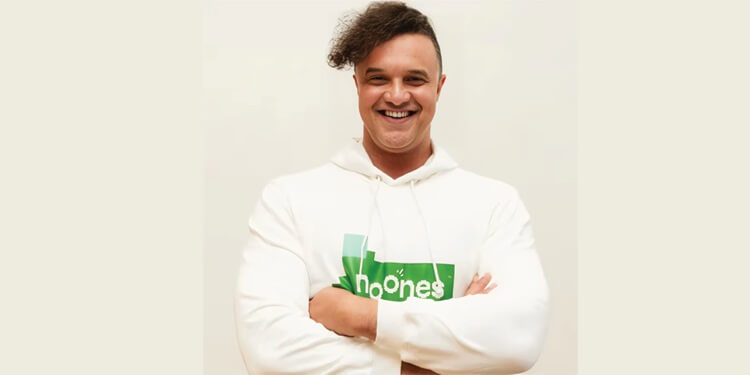
    Ray Youssef, founder and CEO of NoOnes

    Rebecca Campbell (RC): Can you tell me about NoOnes and where the name came from?

    Ray Youssef (RY): NoOnes is a super app for the Global South. We started as a peer-to-peer crypto marketplace, but we always planned on being much more than that. In less than two years we’ve added a spot exchange and a virtual VISA card, and we’re about to launch our NoOnes gift card. We’re also a messenger app and you can even top-up your mobile phone. NoOnes is built for the people of the Global South, so we don’t have the problems of a US-based business trying to serve people in the Global South.

    The way NoOnes got its name is a funny story. When NoOnes was just a dream, a series of brainstorming sessions with the guys who helped get it started, I’d been having these random thoughts about our family dog who had died about 15 years before. Her name was Heidie, but my mother gave her a nickname – Noons.

    I loved that dog and for some reason, she was constantly in my thoughts around that time, so one day as a joke I said, “We should call the company Noons.” I wrote it down on a piece of paper and saw that it read like NoOnes, and I thought it was perfect. It captures the truth about what we wanted to do with a decentralized marketplace. Your money is NoOnes business. Your data is NoOnes business. Your business is NoOnes business.

    RC: What are your vision and goals with NoOnes?

    RY: Ever since I realized the power of crypto and peer-to-peer, my vision and goals haven’t changed. There are a lot of people in crypto who want to get rich, but that’s never really motivated me. I saw crypto as a leveler, an equalizer. And I saw how it could make a difference to people constantly left behind by the financial system because their money is the wrong color or their passport is the wrong type.

    As soon as I saw the potential of crypto and peer-to-peer working together to create this eco-system that enables any form of money to become another form of money, I knew it was a mechanism that could end financial apartheid. I call it financial apartheid because that’s what the international financial system is – it discriminates against people because of who they are and where they come from. I’ve known that for a long time. With NoOnes, we can change that because we are based in the Global South and tailor our products to suit the people who need them most.

    My vision is to see hundreds of cities like Dubai all over the Global South, with people trading freely, building wealth and making their lives and their family’s lives better.

    RC: Can you talk about the role NoOnes and Bitcoin will play in empowering the Global South?

    RY: First of all, we are based here. That means we have boots on the ground and can talk to the people who use our marketplace to buy crypto, trade gift cards, make payments, remittances, whatever. Our products are not based on a Western model and then forced on people because they have no other option.

    Take KYC, for example. When I was in the US, we often had to file a suspicious activity report and lock a Global South customer’s funds when, for whatever reason, they were flagged on the system. Then we had to wait until the American regulators got back to us to say, “Ok, you can let these guys go.” Sometimes, we had to wait years until we could release a customer’s funds.

    Meanwhile, these people, who did nothing wrong, had to wait until the regulator said they could access their own money. In the meantime, they had to find money from somewhere else to cover what the regulators locked away. Even the banks can’t do that, but Uncle Sam can. It was crazy. Why should we put our customers through that kind of pain?

    The US still controls Africa to such an extent that it’s difficult for countries to trade with each other. That’s part of the financial apartheid I talk about. Look what happened recently with Binance. A new CEO comes in and the first thing they do is disable Pan-African trade on Binance peer-to-peer. Kenyans can only trade with Kenyans and Ghanaians can only trade with Ghanaians.

    That’s the exact policy the US has been using to keep Africa and the rest of the Global South poor. We are changing that. I spend a lot of my time advocating for Pan-African trade. It’s a crucial part of making the Global South wealthy. Imagine if some guy running a business in New York couldn’t trade with a business in New Jersey. Would any American put up with that? Why should Africans?

    RC: What are the challenges and opportunities you face in achieving this for Bitcoin to reach its full potential in the Global South?

    RY: There are lots of challenges facing us, but the biggest one is dealing with the political pressure from the West. Anyone who goes against the West and their central bankers is going to be resisted. The governments and elites who run the global financial system are strong because they have a series of sliders, a bunch of levers they can push and pull to control everything.

    They can pull one way and say, “Oh, Nigeria, you haven’t been listening to us, so we’re going to take your slider all the way down to zero.” They can move these levers at any time, so they have tremendous power, and they can control the economies of the world. They can punish or reward a marketplace, even whole economies, and we need to offset this.

    Crypto and peer-to-peer are the offsets, and that’s why the West has such a problem with crypto. It’s why they put people who don’t follow their model in jail.

    The opportunities in the Global South are unlimited. Africa has the fastest-growing population of any continent. It has 1.5 billion people, and the next 25 years will add almost another billion. There is a youth unemployment problem right now, but I see that as an opportunity. I’ve met so many young Africans who are savvy and dynamic and they all want to succeed. I’ve seen many of them use our marketplace to make money, to start businesses, and to change their lives.

    India also has amazing opportunities, as does Latin America. There are so many opportunities in all of these places for people to create businesses by piggybacking on our platform – that’s one of the greatest successes of NoOnes, I think. We can’t have success unless we help others have success, and the ethics of that is mostly missing in the corporate world today.

    Which companies are giving back 50% of their profits to the people who use their products? We are doing that at NoOnes. We have bonuses, incentives, and a Partner Program that rewards the people who help us grow because we want people to help us spread the word about the power of crypto and peer-to-peer. We need the Global South to know that it doesn’t have to settle for a Western model that doesn’t suit its needs.

    If we add up all of those things – dynamic, savvy young people who are hardworking and ready to grasp opportunities, a universal container for money that is also a store of wealth, and the NoOnes marketplace that gives the Global South access to finance and free trade – we will reach the full potential of the Global South, and I think it can happen quickly. Most people in the West will be astonished by it.

    RC: How is NoOnes different from what you did at Paxful?

    RY: Paxful had a major disadvantage – it was based in the US. I’ve already talked about KYC and all the problems we encountered trying to help people in the Global South as a US company. You can’t do it – and it’s getting worse. Look at what happened to Changpeng “CZ” Zhao, [the former CEO of Binance]. He went to jail. Look at what happened to Pavel Durov, the Telegram CEO – he went to jail the minute his plane landed in France.

    I had the same vision at Paxful that I have now, and maybe it took me too long to realize that I couldn’t achieve my mission of running a US company. But now the shackles are off. Nothing is holding us back now that we are based in the Global South.

    I learned years ago that my priority has to be to serve my users, my customers. They can fire the CEO. I learned that helping my parents run a newsstand on Columbus Circle in New York City when I was a kid.

    In the US, the first priority for most companies is to serve the government, then, if they’re happy, you can help your customers. That’s not right. And I won’t do that. We saw what happened with Binance. They gave up their user data to the [Israeli Defense Forces] IDF and hundreds of people lost millions of dollars – and some of them were killed. Compare the NoOnes privacy policy to the Binance privacy policy. We won’t give up our user data. I couldn’t say that when I was CEO of Paxful.

    RC: How do you see NoOnes evolving in the next 5-10 years?

    RY: NoOnes is going to get bigger, that’s for sure. Sometimes I have to remind myself that we didn’t exist two years ago because we’ve come so far in such a short time, but this is only the start. People might think of us as a crypto peer-to-peer marketplace, but we are always adding new products, making existing ones better, and we listen to our users so we can give them what they need.

    I talk about our business as an ecosystem because that’s the best way to describe how we are evolving. We created a marketplace for crypto and gift cards, we added a spot exchange and other products, and we feed profits back into that ecosystem. People are building their businesses on top of our platform.

    Expats working overseas send money home and realize our platform is a better, faster, and cheaper way of doing it than using a traditional money changer – so they start doing it for their friends and create a side hustle. Someone needs to make a payment in another country, but they don’t have a bank account, so they use our platform – they see how simple it is, so they start a business doing the same for other people. And it all feeds back into the ecosystem.

    Imagine all these businesses taking the place of the traditional banks and money changers – the wealth stays in the Global South instead of lining the pockets of all the executives working for banks and financial institutions in the West. That’s part of the reason they don’t like what we do.

    Imagine when all the people in the Global South realize how easy it is to make these changes. How easy it is to stop the drain on the resources of the Global South – it’s been happening for centuries and it has to stop, and it will. In five years, maybe less, NoOnes will be leading that drive and the Global South will be on the way to becoming a superpower.

    RC: How do you see the relationship between crypto and the wider population evolving?

    RY: That’s a great question because it’s the front line in the battle going on at the moment. Before I understood crypto I thought it was just “Internet funny money.” Most people still think that way now because they don’t understand it. I’m not sure governments understand it that well, but they know it’s a threat to the status quo. That’s why they tried to stop it, and that’s why they are trying to control it now.

    The real power in the world is the one that controls the money system. The people in power have levers they use to keep us in our place, and the manner in which we reverse engineer it must be explained very clearly and logically for people if we are to succeed in getting them to help us fix the current state of humanity.

    In simple terms, I’m talking about a currency war, and when I say currency I mean anything that is a store of value and can be traded. Eventually, the people will be won over to crypto because its power cannot be denied – even governments recognize this now. Some countries banned it, then they realized its utility, and now they’re trying to regulate it. Crypto isn’t going away.

    The real question is whether the essence of it gets destroyed in the process of being accepted by the wider population. Crypto was designed to be trustless and permissionless – that means we don’t have to trust some government or corporation to have faith in its value.

    RC: What is NoOnes focusing on at the moment?

    RY: Our focus is on our three core values – everyone eats, bullish education, and revolutionary transparency.

    I’ve already talked about giving back 50% of our profits and our partner program, and that’s part of what we mean by “everyone eats.” I don’t want to get rich at the expense of the people who use our products. Some people laugh at me when I say I am on a mission, but I’ve been saying it for more than a decade because it’s true. We won’t be happy if we are successful and others around us are not, so that’s why everyone eats is important.

    Another principle is revolutionary transparency. Lots of businesses talk about being transparent, but most of them don’t follow through. This is why we get problems like we saw with FTX. NoOnes is different. Anyone who wants to see the business data I see about NoOnes can see it by looking at the CEO Dashboard on our app.

    Right now, our biggest focus is on education. I’ve talked about the opportunities in the Global South, but those opportunities won’t mean anything if people don’t know about them and become educated about how crypto can help them solve problems. We created the NoOnes Academy so people can learn not only how to trade profitably, but also how they can do it safely.

    Some people might want to make a payment or send money home, but they are scared of crypto because they’ve heard nasty stories in the media. We want to educate them so they understand how easy it works and how much utility it has. Some people might just use it in a small way – helping them pay for something because they don’t have a VISA card or a bank account. Others might be skilled and savvy, but they’re unemployed and they’re looking to earn money to pay the bills or to start a business – they might learn how to trade gift cards or crypto through the NoOnes Academy.

    If enough people become educated about how our super app works, the Global South will change dramatically.

    RC: What are your plans for NoOnes in terms of growth and development?

    RY: I’ve already talked about Dubai, but it’s a great example of the future of the Global South. A lot of people think Dubai has had massive growth because of oil, but that’s just not true. Sheikh Mohammed made trade easy and the environment business-friendly, and pretty soon the money flowed into Dubai like a river. The money that came in was then fed back into development and we can see the result today.

    My vision is to see cities like Dubai across the Global South, with NoOnes leading the way. We will provide the infrastructure, the education and the opportunities, and that means being on the ground, listening to people so we can give them what they need to help them grow. We’ve done it with our peer-to-peer marketplace, our spot exchange, a virtual VISA card, and gift cards – and new products are coming.

    We’re looking at a peer-review credit score so users will get a rating that can be used to provide financing for start-ups and business owners. We want to fine-tune our messaging function because that’s a great way to attract people we can educate on the benefits of crypto.

    We need more people to help us grow, so we’ll be hiring people on the ground wherever we do business. Already our users are helping us by making content to help educate their fellow citizens. Our growth and development always revolve around work. Free trade allows the money to flow and that puts people to work so they can create their wealth. I truly believe in universal wealth, but that only happens when the roadblocks to growth are removed. To do that we must have the people behind us, and that’s why education is so important.

    Our goal was for NoOnes to have a billion users within seven years, and if we do that we will bring the Global South closer to the wealth it’s been denied for so long.

    Source link

  • South Korea’s national pension fund buys $34M of MicroStrategy shares

    South Korea’s national pension fund buys $34M of MicroStrategy shares

    The National Pension Service, South Korea’s national pension fund, has reported purchases of nearly $34 million in MicroStrategy shares.

    NPS is South Korea’s largest public pension fund and the third-largest in the world with over $729 billion worth of assets.

    Wu Blockchain shared the news via X:

    Details filed with the US Securities and Exchange Commission indicate the NPS acquired 245,500 of MicroStrategy shares at a total of $33.5 million. The filing relates to the fund’s investments in the quarter ending June 30, 2024.

    According to news outlet Infomax, the National Pension Service’s investment in shares of the US-based MicroStrategy accounts for 0.04% of the fund’s total investment in US stocks.

    Apart from MSTR, the fund also holds more than $51 million in Coinbase shares, $31.5 million in Roblox and over $61 million in shares of Block, Inc. The fund also holds shares of AI-chip powerhouse Nvidia, and tech giants Google and Microsoft.

    MicroStrategy shares up 92% YTD

    While the MicroStrategy stock has plummeted 20% as the crypto market struggles with choppy conditions. Despite falling from highs of $180 in mid-July to currently around $131, MSTR remains more than 92% up year-to-date.

    MicroStrategy, as well as top crypto related companies such as Coinbase, are largely bullish amid growth and projections for Bitcoin. For Michael Saylor-led MicroStrategy, part of the success has come after adopting the strategy of adding BTC to its balance sheet.

    MSTR has soared alongside Bitcoin since MicroStrategy first bought BTC in 2020, the latest surge coming amid Bitcoin’s push to reclaim $60k.

    Saylor said in a recent post on X that MSTR has outperformed 499 of the 500 stocks in the S&P 500.

    The company acquired an additional 12,222 BTC in Q2, 2024, adding more than $805 million in BTC to its haul. Currently, MicroStrategy holds 226,500 BTC worth over $13 billion.


    Source link