Tag: start

  • JPMorgan Chase to start accepting Bitcoin, Ethereum as loan collateral: report

    JPMorgan Chase to start accepting Bitcoin, Ethereum as loan collateral: report

    JPMorgan Chase to start accepting Bitcoin, Ethereum as loan collateral

    • JPMorgan will let clients use Bitcoin (BTC) and Ethereum (ETH) as collateral for loans.
    • The move marks a major shift from Jamie Dimon’s past crypto criticism.
    • Other major banks are expanding crypto custody and lending services.

    JPMorgan Chase & Co. is reportedly preparing to let institutional clients use BTC and ETH as collateral for loans by the end of the year, as per a Bloomberg report.

    The move marks one of the most significant steps yet by a major US bank toward integrating digital assets into traditional finance, signalling how fast cryptocurrencies are moving from the periphery to the core of global banking.

    JPMorgan’s changing tune on crypto

    For years, JPMorgan CEO Jamie Dimon was one of the fiercest critics of Bitcoin, calling it a “decentralised Ponzi scheme” and claiming that only criminals used it.

    Dimon’s comments often shaped how Wall Street viewed the cryptocurrency market.

    But Dimon’s tone has softened in recent years, especially since Donald Trump’s 2024 election win, which brought regulatory changes that have made it easier for banks to engage with digital assets.

    Now, Dimon’s JPMorgan is taking a major step that would have seemed unthinkable just a few years ago.

    The bank’s new program will reportedly allow institutional clients to pledge their Bitcoin and Ethereum holdings as collateral for loans.

    The assets will be held by a third-party custodian, ensuring compliance with existing financial and regulatory standards.

    From doubt to action

    Speculation about JPMorgan’s crypto-collateral plans first emerged earlier this year when the Financial Times reported that the bank was exploring such a move, potentially by 2026.

    At the time, scepticism ran high. Dimon’s long record of dismissing Bitcoin, combined with banks’ cautious approach to regulatory uncertainty, made the plan seem remote.

    However, the landscape has changed rapidly in 2025. With Bitcoin trading above $111,000 and Ethereum nearing $4,000, the digital asset market has reached unprecedented maturity and capitalisation.

    Bitcoin’s market cap has surged to over $2.2 trillion, while Ethereum’s market cap has climbed to nearly $478 billion.

    The rise in these asset prices, combined with increased institutional demand, has made cryptocurrencies more appealing as loan collateral.

    JPMorgan’s initiative will expand on its earlier decision to accept crypto-linked exchange-traded funds (ETFs) as collateral.

    Other banks are also integrating crypto

    JPMorgan’s shift mirrors a broader transformation across the financial sector.

    Morgan Stanley plans to open cryptocurrency access to retail investors through its E*Trade platform in the first half of next year.

    State Street, BNY Mellon, and Fidelity are all expanding their digital asset custody services, while BlackRock recently introduced new mechanisms allowing investors to convert Bitcoin directly into ETF holdings.

    Even long-time sceptics like Standard Chartered have revised their stance, recognising the growing importance of cryptocurrencies in global finance.

    These moves indicate that digital assets are no longer being viewed as speculative outliers but as legitimate components of diversified financial systems.
    Source link

  • SoFi Bank to start using Bitcoin for cross-border payments

    SoFi Bank to start using Bitcoin for cross-border payments

    SoFi Bank to start using Bitcoin for cross-border payments

    • SoFi will enable instant cross-border transfers using Bitcoin and UMA.
    • Transfers will convert USD to Bitcoin via Lightning, then to local currency.
    • The service will first launch in Mexico with lower fees than traditional remittances.

    SoFi Bank is preparing to shake up the global remittance industry by introducing a blockchain-powered international money transfer service.

    The US digital bank has partnered with Lightspark, a Bitcoin infrastructure company founded by former PayPal president David Marcus, to bring faster and cheaper cross-border payments directly into its app.

    SoFi steps into blockchain payments

    The new service will allow SoFi customers to send money abroad without relying on traditional remittance providers or third-party platforms.

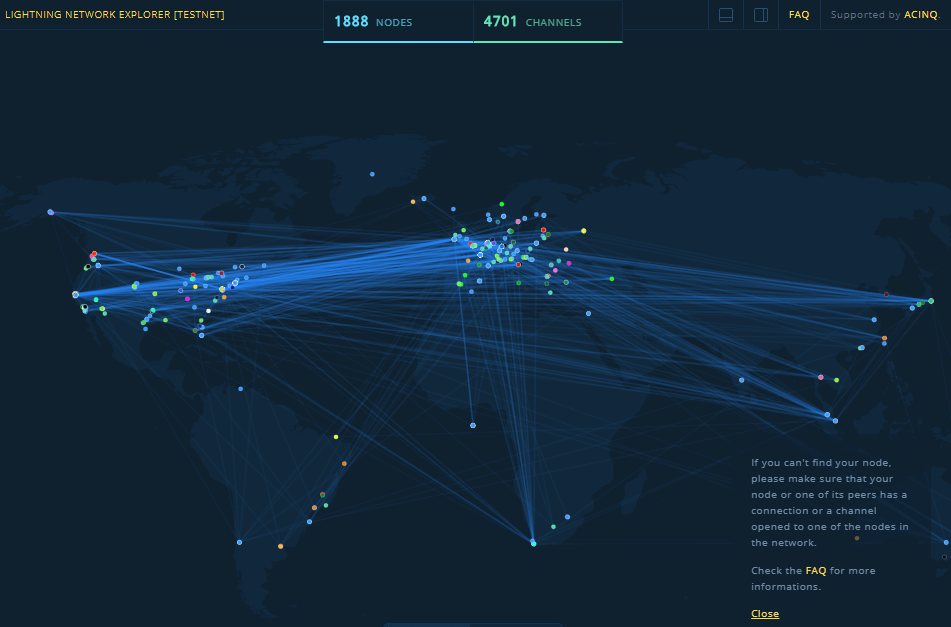
    Instead, transfers will be powered by the Bitcoin Lightning Network and Lightspark’s Universal Money Address, or UMA.

    This technology is designed to move dollars across borders instantly, at any time of the day, while ensuring that fees and exchange rates are displayed clearly before each transaction.

    SoFi says the service will debut later this year, beginning with Mexico, a key remittance corridor from the United States.

    Once rolled out, users will be able to initiate transfers directly through the SoFi app, where US dollars will be converted into Bitcoin, routed across the Lightning Network, and then converted back into the recipient’s local currency before being deposited in their bank account.

    Notably, this is not SoFi’s first step into the digital asset space.

    The bank began offering crypto trading in 2019, but later scaled back the service following regulatory concerns during the collapse of FTX.

    However, with a federal banking license secured and new rules under the GENIUS Act offering greater clarity, SoFi is reentering the sector more aggressively.

    During its most recent earnings call, the company outlined ambitions beyond remittances.

    These include plans for stablecoin issuance, crypto-backed loans, and staking infrastructure for other institutions.

    By positioning itself as a bridge between traditional banking and Web3, SoFi hopes to secure a long-term advantage over pure-play crypto platforms.

    Faster and cheaper transfers

    The promise of speed and lower costs is central to SoFi’s plan.

    Traditional remittances often take days to clear and can cost families as much as 6% of the amount being sent.

    By embedding blockchain rails into its platform, SoFi expects to deliver a service that is available around the clock and significantly below the national average cost of remittances in the United States.

    Anthony Noto, SoFi’s chief executive, emphasised that many of the bank’s members rely on sending money to loved ones overseas.

    He said that building blockchain transfers directly into the SoFi app will give users “faster, smarter, and more inclusive access” to their funds.

    The bank is also opening a waitlist to meet early demand and gauge interest from members who frequently send money abroad.

    Lightspark provides the backbone

    Lightspark, which launched in 2022, has been positioning its UMA as a universal standard for moving money globally in a way that feels as simple as sending an email.

    According to Marcus, Bitcoin is the only open payments network that can power such transactions securely and at scale.

    Marcus added that UMA on SoFi will allow members to move dollars instantly with full transparency and control, while avoiding the delays of traditional systems.

    The collaboration makes SoFi the first US bank to integrate Bitcoin’s Lightning Network and UMA at this scale.

    It also comes at a time when other major institutions, including Bank of America and JPMorgan, are testing blockchain for their own transfer systems.


    Source link

  • After 8 years, Mt. Gox creditors may start receiving their BTC this month

    After 8 years, Mt. Gox creditors may start receiving their BTC this month

    • Mt.Gox Bitcoin exploit took place in 2014.
    • The exploit remains the largest Bitcoin exploit in the history of cryptocurrencies.
    • Mt.Gox creators may however start receiving their bitcoins this month.

    Mt.Gox creditors may have a reason to smile after the exchange’s January statement hinted that the creditors could start receiving their Bitcoin (BTC) this month.

    It is about 8 years since The Mt. Gox hack occurred in early 2014 resulting in the loss of about 850,000 BTC which at today’s bitcoin value is worth more than $20.060 billion making it the worst Bitcoin hack ever as detailed in our Bitcoin statistics research.

    Most Mt.Gox creditors lost hope of getting their bitcoins back since the issue has dragged on for years. One Mt. Gox creditor, Adam Back who is also the Blockstream CEO said via Telegram:

    “Well, for myself, I had pretty much written off the Bitcoin I still had on Mt. Gox in 2014 as a loss, so philosophically anything I get back now is a bonus to cold store. It has stretched on for many more years than anyone expected, and so it will be welcome I am sure by any creditors to finally get paid.”

    Early repayments to start from March 10

    According to Mt.Gox’s January statement, creditors are expected to start seeing early bitcoin repayments from March 10. The early repayment process is planned to continue for a period of about seven months up to September 30, 2023.

    The early repayments include early lump sum payments and intermediate payments. Further repayment amounts are to be made later.

    Mt.Gox creditors were supposed to register with an exchange and nominate it to receive the repayments on their behalf. Exchanges have however given various timelines for processing payments. BitGo crypto exchange, for example, said that they will take about 20 days to process the repayments, while Kraken said that processing the payments could take up to 90 days.

    Amount of bitcoin to be repaid

    It is not clear how much bitcoin will be repaid to the Mt.Gox creditors during the repayment period. However, it is clear that it will be a portion of Mt.Gox’s balance sheet that according to a balance sheet in 2019 totals about 142,000 BTC, 143,000 BCH, and 69 billion Yen. The balance sheet is believed to have not changed much since then.

    There are expectations that the claimants may receive about 21% of the civil rehabilitation claim value because the exchange rates have been revalued since the time of bankruptcy filing.

    According to a moderator of the MtGoxInsolvency subreddit, the first 200,000 Yen worth of each creditor’s claim will be paid in Yen. If the claim is greater than 200,000 Yen, the creditors will choose crypto and cash, where they will receive 71% repayment in crypto and 29% in cash after the initial payment.

    Source link

  • Why are crypto prices rising? 2023 off to hot start

    Why are crypto prices rising? 2023 off to hot start

    Key Takeaways

    • Crypto markets have jumped to the start the year off positive macro news
    • Next inflation reading is out on Thursday, which will cause further volatility
    • Fight against inflation has long way to go, with investors not out of woods yet
    • Solana has risen 65% since New Year’s Day, but fell drastically prior and problems remain

    After what was, to put it mildly, a rather disappointing year in cryptocurrency in 2022, the new year has jumped out to a positive start.

    Bitcoin, Ethereum and all their other friends got ravaged last year, but nine days into 2023 there is green on the board. Let’s look at why this is, and whether we will see more of the same, or if price action will reverse back to the 2022 pain.

    Macro provides impetus for crypto run

    The single biggest reason for the cryptocurrency jump this year is the same reason that pulled the entire space down last year: macro.

    The stock market has had a positive start to the new year. This comes off the back of inflation readings around the globe coming in lower than expected. While there is still a hell of a long way to go in the battle against this rampant cost of living crisis, the latest data has given investors hope that central banks may pivot off their policy of high interest rates sooner than previously anticipated.

    After a decade of low interest rates, the world transitioned to a new interest rate paradigm in 2022, as rates were hiked aggressively in response to the inflation crisis. This was aimed at reining in demand and ultimately spiralling prices. As a result, all risk assets peeled back, and there is nothing riskier than crypto. So, down the market went.

    Solana decouples from market

    Of course, while macro is clearly the big driver here, there still remains idiosyncratic risk and happenings in the crypto space. Look no further than last year, when three events (Luna, Celsius and FTX) caused large dropdowns and deviations from the stock market, which otherwise displayed extremely high correlation with Bitcoin.

    To start the year, we have seen Solana streak out ahead of the crowd, printing a remarkable 65% return thus far, having opened the year at $10 and now trading at $16.50.

    I wrote a piece last week diving deep on Solana, but suffice it to say the coin has big problems. Between repeated outages, has seen several big projects flee the blockchain and has also suffered as a result of its close ties with the disgraced Sam Bankman-Fired. The below chart shows that while this rebound seems large at 65%, it is still a drop in the ocean compared to the freefall it has experienced.  

    This rise over the last week may be at least partially attributed to Bonk, the latest meme coin phenomenon which I also analysed last week. We know by now not to read too much into doggy tokens, but nonetheless, the rise has at least eased some of the pain for Solana investors.

    What Bitcoin continue to rise?

    As for the future, that is anyone’s guess. The next big day is Thursday, when the latest CPI figures are revealed. If inflation in the US comes in softer than expected, you can expect markets to rally upwards on renewed hope.

    It really comes down to the same thing it has for the last year: the crypto markets will only meaningfully rebound once the Federal Reserve pivots away from its currently-hawkish interest rate policy.

    In turn, the Fed maintains that rates will continue to rise as long as inflation is elevated. With the employment market still tight and core inflation remaining stubborn (the headline rate has partially fallen due to energy prices, whereas core inflation is typically the number that lawmakers focus on), there is still a long way to go.

    Ultimately, 2023 in the crypto markets will likely be decided based on what happens with this tussle between the Fed and inflation. Until that much-fantasised-about pivot actually occurs though, it could remain a tough time for digital markets.

    Source link

  • Ethereum creator Vitalik Buterin gives start for new Shiba Inu Rival

    Ethereum creator Vitalik Buterin gives start for new Shiba Inu Rival

    • Ethereum co-founder joked about having THE Protocol (THE) crypto and it came to life a few days later.
    • Buterin becomes the largest holder with 100 million THE coins grabbing a 10 percent stake in the protocol.

    In an interesting turn of developments, Ethereum founder Vitalik Buterin’s jibe at some crypto projects ended up giving birth to a new meme coin rivaling Shiba Inu. Last Friday, Vitalik Buterin shared a random thought on his Twitter handle while joking saying that someone must create a project dubbed ‘THE Protocol’.

    Commenting on it, Buterin said that it would be easy to shill a project by referencing it ‘THE” by the influential crypto community members. “Someone should make a project called “THE Protocol” so that their shills can say “Look, so-and-so mentioned THE!” pretty much any time anyone says anything,” added Buterin.

    Just a few days later, an ERC20 protocol, THE Protocol (THE), has come to life. Interestingly the Twitter admins of the new memecoin have also taken a cue from Vitalik Buterin’s suggestion. Crypto analytics firm Nansen has shared some interesting insights about THE Protocol.

    Drawing a leaf from Shiba Inu playbook

    As per crypto analytics firm Nansen, THE Protocol has drawn a leaf from the Shiba Inu playbook. They have also decided to give Vitalik Buterin a 10 percent stake making him the largest holder with 100 million THE tokens. Interestingly, the cryptocurrency managed to grab the attention of some of the Ethereum investors. The data from Nansen shows:

    The largest token holder is @VitalikButerin who received 100M $THE, 10% of its total supply. Top 50 non-entity addresses hold 50.6% of $THE, and most of them got their $THE shortly after its release. The decentralizedvision.eth swapped 3 ETH for 13,614,311 THE at just $0.00028/THE. We see quite a bit of  Smart Money activity on $THE. Just 2hrs ago, “sisterofvitalik” and hxr.eth both sold their $THE, but hxr.eth still holds 2M tokens. 

    During the launch on Tuesday, October 18, the price of THE Protocol (THE) surged a staggering 1000 percent. As of press time, it has gained another 100 percent and is currently trading at $0.03352.

    Furthermore, THE cryptocurrency has made its way to popular crypto exchanges such as Hotbit and MEXC Global in less than six days. In a very short span, its market cap has also shot to $33 million.

    The launch of THE Protocol is a testament that the crypto community can stretch to new areas for excitement despite the crypto winter this year.

    Will SHIB Price Rise

    After a strong bull run last year, Shiba Inu (SHIB) price dropped significantly during this year’s crypto winter. However, the Shiba Inu ecosystem has been undergoing interesting developments. The recent one was the launch of the Shiba Eternity game on mobile platforms that saw more than 100,000 downloads.

    Furthermore, the Shiba Inu blockchain secured the second rank in the Web3 security leaderboard and a trust score of 93. The recent launch of Shiba Inu’s competitor could help in boosting the trading activity for the memecoin.


    Source link