Tag: tensions

  • Bitcoin drops to $115K amid third major wave of profit-taking, new tariff tensions

    Bitcoin drops to $115K amid third major wave of profit-taking, new tariff tensions

    Bitcoin drops to $115K amid third major wave of profit-taking, new tariff tensions

    • Bitcoin (BTC) fell 2.3% to ~$115,300, pressured by a third major wave of profit-taking and new US tariffs.
    • $6–8 billion in realized gains were recorded in late July, with an “OG whale” selling 80,000 BTC on July 25.
    • New tariff tensions, including measures targeting Canada, have rattled broader risk assets, including crypto.

    Bitcoin is poised to end the trading week in Asia on a weaker note, down 2.3% on the day and changing hands above the $115,300 mark.

    The leading cryptocurrency is grappling with a combination of renewed tariff pressure from the White House and a significant wave of profit-taking, following its historic run to new all-time highs.

    According to a new report by on-chain analytics firm CryptoQuant, the Bitcoin market has just experienced its third major profit-taking wave of the 2023–2025 bull cycle.

    A substantial $6–8 billion in realized gains were recorded in late July, indicating a significant number of investors chose to cash in on the recent price surge.

    Like the previous two phases of profit-taking in this cycle, this latest wave was defined by large spikes in the Spent Output Profit Ratio (SOPR), a metric that indicates whether coins being sold are in profit or loss. This was particularly evident among short-term holders.

    The wave was further intensified by a significant 80,000 BTC sell-off by an “OG whale” (an early, long-time holder) on July 25.

    The data provider also noted that “new whale cohorts”—those who have accumulated their Bitcoin within the last 155 days—were the dominant sellers during this period.

    In a clear sign of intent to exit positions at what were perceived as peak prices, exchange inflows surged to a massive 70,000 BTC in a single day after the OG whale’s sell-off.

    The selling pressure was not confined to Bitcoin alone; Ethereum-based whales holding assets like WBTC (Wrapped Bitcoin), USDT, and USDC also realized up to $40 million in daily profits, further supporting the narrative of a broad-based capital rotation out of some positions.

    Historically, these major profit-taking events have been followed by a two- to four-month period of market consolidation before the next major leg higher, CryptoQuant wrote in its report.

    That very pattern may be playing out again, particularly as appetite from US investors appears to be waning. The Coinbase premium, a key indicator that tracks the price difference between Coinbase and other global exchanges, has recently flipped negative.

    This suggests that American buyers are no longer willing to pay a premium for Bitcoin, a sign of cooling demand in a crucial market.

    Tariff jitters return, adding to market pressure

    Adding to this cautious internal market dynamic is the re-emergence of macroeconomic risk.

    A new round of global tariffs from the White House is dragging down markets in Asia, with Japan’s Nikkei 225 and South Korea’s KOSPI both opening in the red.

    Bitcoin, too, is not immune to these pressures. Historically, digital assets have tended to follow equity markets lower when the White House announces new tariffs, and while this correlation has shown signs of weakening, it has not disappeared entirely.

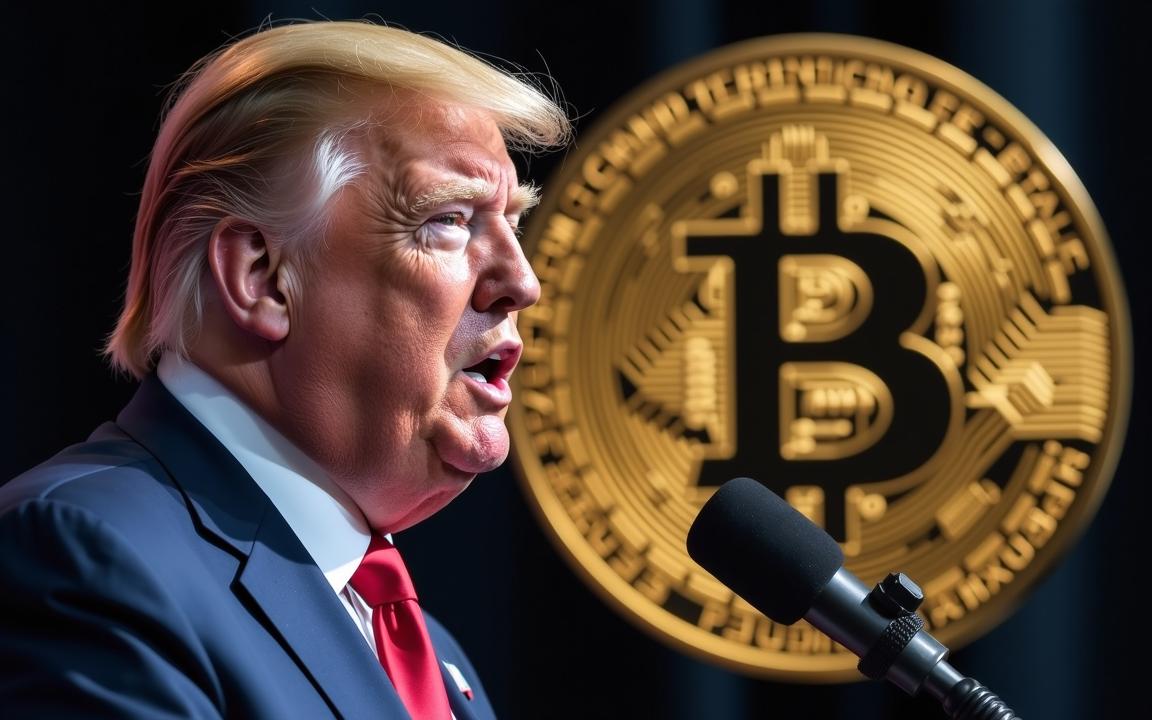
    President Trump’s latest tariff escalation, which includes new measures that specifically target Canada, has rattled broader risk assets, with equities, bonds, and crypto all seeing declines amidst fears of renewed inflation and further supply chain disruptions.

    Without a clear new macro catalyst or a resurgence of strong, structural inflows, risk-taking in the crypto market is likely to remain selective, with conviction being light. Market maker Enflux, in a note to CoinDesk, echoed this sentiment.

    “Until BTC or ETH can post a clean reclaim of recent local highs, price action may stay choppy and rotation thematic rather than trend-driven,” the firm stated, suggesting a period of sideways, volatile trading may lie ahead.

    Source link

  • Bitcoin trades around $105K amid Middle East tensions: what’s next?

    Bitcoin trades around $105K amid Middle East tensions: what’s next?

    Bitcoin trades around $105K amid Middle East tensions; options skew negative

    • Bitcoin (BTC) trades around $105K, stuck in a range due to Israel-Iran conflict uncertainty.
    • BTC options show decisive flip to puts, signaling heightened investor anxiety and downside hedging.
    • Despite near-term jitters, Bitcoin’s current cycle gain of 656% is impressive given its larger market cap.

    Bitcoin (BTC) is trading around the $105,000 mark as the Asian trading week gets underway, caught in a holding pattern as market participants grapple with uncertainty over whether the Israel-Iran conflict will escalate into a broader regional war.

    While near-term sentiment is dominated by geopolitical anxieties and signs of market “overheating,” longer-term perspectives and discussions around potential network upgrades offer a more nuanced picture for the leading cryptocurrency.

    The current market stasis, with Bitcoin seemingly “stuck in this range,” is largely attributed to the precarious geopolitical situation, according to a recent note from trading firm QCP Capital.

    In a Friday note published on Telegram, QCP highlighted that risk reversals have “flipped decisively.”

    This means front-end BTC put options (which protect against price drops) are now commanding premiums of up to 5 volatility points over equivalent call options (which bet on price increases).

    This is a clear indicator of heightened investor anxiety and an increased demand for hedging against potential downside risks.

    Despite this defensive shift in options market positioning, QCP noted that Bitcoin has demonstrated notable resilience.

    Even amid recent volatility, which saw over $1 billion in long positions liquidated across major crypto assets, on-chain data reportedly shows that institutional buying continues to provide meaningful support for prices.

    Nevertheless, QCP emphasized that markets remain “stuck in a bind,” awaiting clarity on geopolitical outcomes, and warned that the digital asset complex will likely remain tightly linked to headline-driven sentiment shifts for the foreseeable future.

    Adding to the near-term caution, a separate report from on-chain analytics firm CryptoQuant (as referenced in a related context, though not directly quoted in this specific source text) has suggested that certain metrics indicate the BTC market is “overheating.”

    This includes surging demand approaching previous peaks and a slowing pace of accumulation by large “whale” holders.

    These indicators suggest the recent rally, which pushed prices to a record near $112,000, might be nearing a short-term consolidation point, with $120,000 identified as a key resistance.

    Long-term perspective: cycle gains and maturation

    While recent volatility underscores short-term anxiety, data from Glassnode offers some reassurance for investors concerned about Bitcoin’s longer-term direction.

    Bitcoin’s current cycle gain stands at an impressive 656%.

    While this is lower than the returns seen in previous bull markets (1076% in 2015–2018 and 1007% in 2018–2022), it is arguably more notable given Bitcoin’s significantly larger market capitalization today.

    This suggests that investor demand is still keeping pace reasonably well with BTC’s maturation as an asset class, even as near-term macroeconomic jitters dominate current market sentiment.

    Beyond ‘spam’: the OP_Return debate and Bitcoin’s evolution

    Shifting focus to network-level discussions, Alex Thorn of Galaxy Research, in a recent note, addressed the sometimes contentious debate around OP_Return (a Bitcoin protocol feature allowing small amounts of arbitrary data on the blockchain).

    Thorn suggested that the furor over this feature was largely driven by a “loud but small group of critics” and that their reactions, characterized by “wild accusations of the ‘death of Bitcoin’,” were misplaced given the historically low levels of mempool congestion (the queue of unconfirmed transactions).

    On-chain data indicates that the mempool is virtually empty compared to a year ago.

    This counters the narrative prevalent in 2023 that a congested blockchain was suffocating Bitcoin, a notion that now appears significantly overstated.

    Thorn further highlighted the irony of labeling arbitrary data as “spam,” reminding observers that Bitcoin’s pseudonymous creator, Satoshi Nakamoto, famously embedded arbitrary text—the “chancellor on brink of second bailout” headline—in the blockchain’s very first (genesis) block.

    Instead of focusing on such debates, Thorn argued that the Bitcoin community’s attention would be better directed towards potential network upgrades like CheckTemplateVerify (CTV).

    CTV is a proposed opcode that would enable more sophisticated and strict spending conditions, often referred to as “covenants.”

    “We continue to believe [CTV] is a conservative but powerful opcode that would greatly enhance the ability to build better, safer methods of custody,” Thorn wrote.

    He also noted that around 20% of Bitcoin’s hashrate has already signaled support for this upgrade.

    Bitcoin upgrades are known to require extensive consensus-building within the community, a reflection of its open-source and decentralized ethos.

    Thorn emphasized that this cautious, deliberate approach to evolution remains critical for ensuring Bitcoin’s broader adoption and scalability in the long run.

    Source link

  • Bitcoin falls to $103K, options skew hits 3-month low as mideast tensions drive oil prices higher

    Bitcoin falls to $103K, options skew hits 3-month low as mideast tensions drive oil prices higher

    Bitcoin falls to $103K, options skew hits 3-month low as mideast tensions drive oil prices higher

    A sharp escalation in Middle East tensions sent shockwaves through global financial markets in the early Asian trading hours, triggering a significant spike in oil prices and prompting a flight to safety.

    Bitcoin (BTC) was not immune to the turmoil, experiencing a notable price drop as traders scrambled for downside protection, evidenced by a dramatic crash in short-term options skew.

    The seven-day skew for Bitcoin options, a key metric that measures the relative cost of bullish calls versus bearish puts listed on Deribit, plummeted to -3.84%.

    This marked its lowest point since April 16, according to data from Amberdata.

    In practical terms, this means put options, which offer traders protection against price declines, became the most expensive relative to call options in three months.

    The surge in demand for these protective puts also dragged the 30-day and 60-day skews into negative territory, signaling a broader shift towards caution among market participants.

    Traders typically purchase put options either to hedge existing long positions in the spot or futures markets or to directly profit from an anticipated fall in prices.

    The clear preference for puts indicates a growing unease about Bitcoin’s near-term trajectory amidst the heightened geopolitical uncertainty.

    Bitcoin’s price reflected this nervousness, falling to its 50-day simple moving average (SMA) at $103,150, extending its 24-hour losses to 4.59%, according to CoinDesk data.

    This decline represented a significant retreat from earlier in the week when prices had briefly topped the $110,000 mark.

    Market bulls are now likely hoping that the 50-day SMA will provide a crucial support level, as a sustained break below it could attract further selling pressure, a pattern observed when this support level failed back in February.

    Oil surges as geopolitical cauldron boils over

    The catalyst for this market turbulence was a dramatic escalation in the Middle East.

    The per-barrel price of WTI crude oil surged by over 6% to $74.30, reaching its highest level since February 3 and extending its weekly gain to an impressive 13%, according to data from TradingView.

    This sharp upward movement in oil prices reportedly followed news of Israeli airstrikes on Iran, which supposedly drew retaliatory missile action from Tehran, though details remained fluid.

    Inflationary shadows and Fed policy under scrutiny

    Sudden and significant spikes in oil prices tend to have a global inflationary impact, and this latest surge is no exception.

    Concerns are now mounting that this could inject fresh inflationary pressures into economies worldwide, at a time when President Donald Trump’s ongoing trade war already threatens to disrupt economic stability and fuel inflation, particularly in net-importer countries.

    This confluence of factors could significantly dent market expectations for Federal Reserve rate cuts.

    If inflation re-accelerates, the Fed may be less inclined to ease monetary policy, potentially adding to downside volatility in both stocks and cryptocurrencies.

    As of writing, futures tied to the S&P 500 were trading 1.5% lower on the day, reflecting the broader risk-off sentiment.

    Traditional markets reel from geopolitical shock

    The reaction in traditional markets was swift and pronounced. US stock index futures were down approximately 1.5% across the board following the news from the Middle East.

    European market futures mirrored this decline, also trading down by roughly the same margin.

    In a classic flight to safety, bond prices moved higher as investors sought refuge from the volatility.

    Gold, another traditional safe-haven asset, also saw increased demand, adding about 0.75% in the past hour to trade at $3,428 per ounce.

    Crude oil, as previously noted, had soared by an even more dramatic 9% to $74 per barrel in the immediate aftermath of the reports.

    The 10-year Treasury yield dipped two basis points to 4.32%, indicating increased demand for US government debt.

    Currency markets also reflected the shifting risk landscape, with the US dollar gaining against the euro and the British pound, but losing ground against traditional safe-haven currencies like the Japanese yen and the Swiss franc.

    Source link

  • will Bitcoin price soar past $100K as trade tensions ease?

    will Bitcoin price soar past $100K as trade tensions ease?

    Trump speech looms: can Bitcoin leverage exchange outflows, safe haven status for $100K?

    • Trump acknowledged that the existing 145% US tariff on Chinese imports is ‘too high’.
    • Currently, the US and China are locked in a steep tariff battle.
    • Bitcoin and Ethereum have shown strong performance during periods of dovish monetary policy and reduced inflation.

    US President Donald Trump has signaled a willingness to lower tariffs on Chinese goods.

    The announcement comes amid escalating speculation about how such a policy shift could impact inflation, interest rates, and digital assets like Bitcoin and Ethereum.

    Trump’s comments have already sparked renewed interest among crypto investors, who see a potential rally in the making.

    Speaking in a recent CNBC interview, President Trump acknowledged that the existing 145% US tariff on Chinese imports is “too high” and has effectively crippled bilateral trade.

    “At some point, I’m going to lower them,” he said, adding that China is eager to resume business with the United States.

    Trump’s remarks suggest that trade talks between the two global powers could be back on the table, with hopes of a more balanced economic relationship.

    Currently, the US and China are locked in a steep tariff battle, with Beijing retaliating by imposing a 125% duty on American goods.

    These tit-for-tat tariffs have disrupted global supply chains and contributed to higher prices for consumer goods ranging from electronics to clothing.

    Industry analysts believe that easing these levies could reduce inflationary pressure, thereby influencing the Federal Reserve’s monetary policy, particularly in holding back further interest rate hikes.

    From a crypto market perspective, the implications are significant.

    Historically, digital assets such as Bitcoin and Ethereum have shown strong performance during periods of dovish monetary policy and reduced inflation.

    With tariff reduction on the horizon, crypto investors are betting on a resurgence in prices.

    Bitcoin, for instance, recently dipped below $80,000 but has since bounced back, trading above $94,000 at press time.

    Analysts predict that if sentiment continues to improve, Bitcoin could breach the $100,000 milestone, triggering a broader market rally.

    Beyond Bitcoin, altcoins like Ethereum (ETH), Ripple (XRP), and Solana (SOL) also stand to gain from a more favorable economic environment.

    Reduced trade tension often translates to increased risk appetite, driving more capital into speculative assets like cryptocurrencies.

    Trump’s comments also hint at a broader economic recalibration.

    Lower tariffs could ease operational costs for American businesses and improve consumer sentiment, factors that indirectly feed into the crypto economy by increasing liquidity and investor confidence.

    While a final decision is yet to be made, the mere prospect of US–China trade normalization has already set the tone for a volatile yet potentially bullish phase in the crypto markets.

    As always, traders are advised to keep a close eye on policy shifts that could influence macroeconomic indicators and, by extension, digital asset prices.

    Source link