Tag: tightens

  • Crypto oversight in US tightens as CFTC and FDIC leadership near confirmation

    Crypto oversight in US tightens as CFTC and FDIC leadership near confirmation

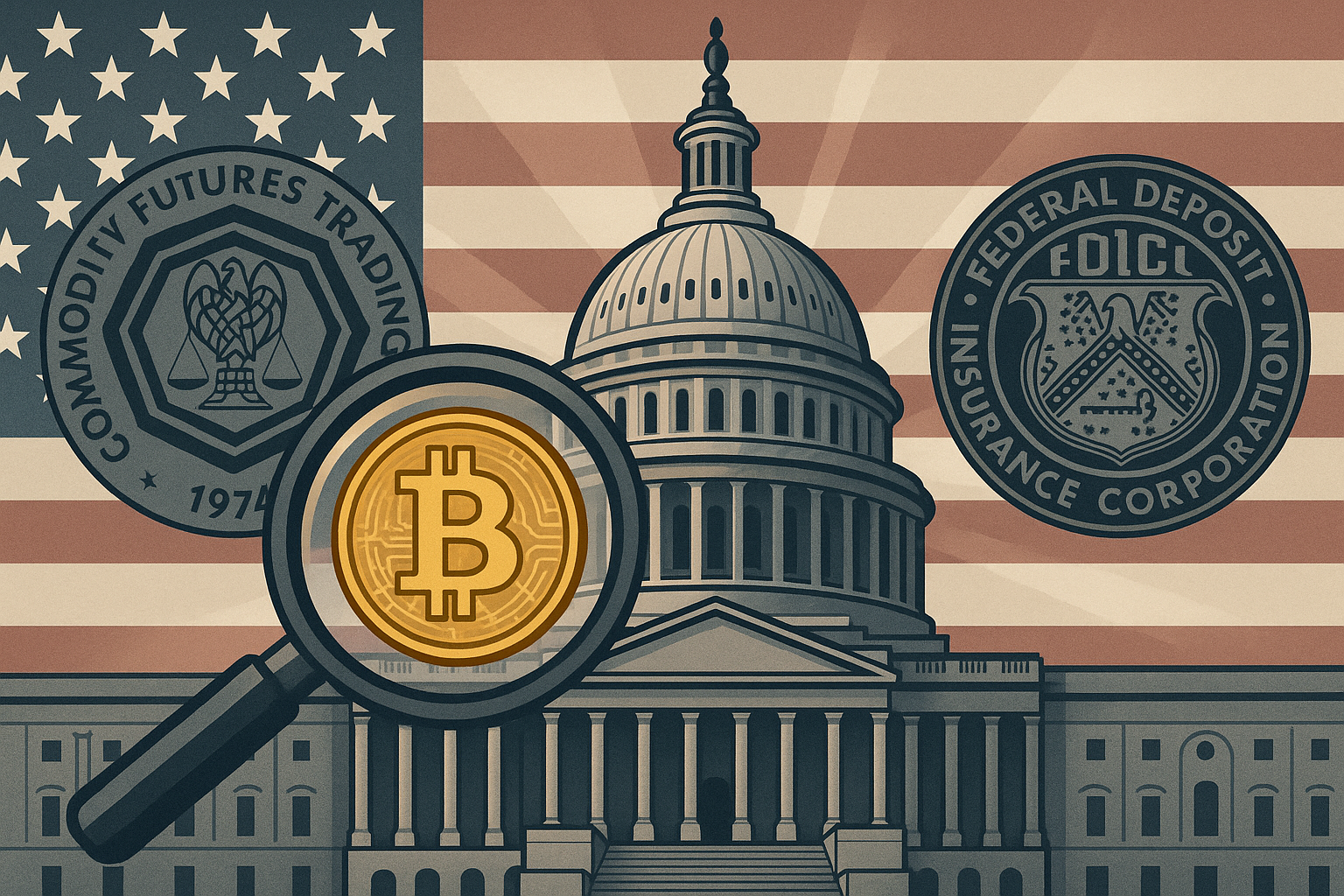
    Crypto oversight in the US tightens focus as CFTC and FDIC leadership nears confirmation

    • Mike Selig is positioned to replace Acting Chair Caroline Pham at the CFTC if confirmed.
    • The CFTC has already expanded crypto oversight through collateral approvals and spot trading permissions.
    • Travis Hill’s confirmation would formalise his interim role at the FDIC and continue crypto-friendly banking policies.

    Crypto regulation in the United States is entering a more defined phase as Senate procedures bring key financial watchdog appointments closer to completion.

    Two agencies with direct influence over digital assets, the Commodity Futures Trading Commission and the Federal Deposit Insurance Corp., are on the verge of formal leadership changes, as per a CoinDesk report.

    President Donald Trump’s nominees to chair both regulators have advanced through the Senate confirmation process, signalling a potential shift in how crypto markets and crypto-linked banking are supervised.

    While the final votes have not yet taken place, recent developments suggest that decisions are approaching, narrowing uncertainty around regulatory direction.

    Senate clears path for final votes

    The Senate moved the process forward on Thursday by approving a resolution that clears the way for final confirmation votes.

    The measure passed by a 52–47 margin and applies to a large group of nominees being considered together, reports CoinDesk.

    Mike Selig, nominated to lead the CFTC, and Travis Hill, nominated to become chairman of the FDIC, are among the names included.

    A spokeswoman for Senate Majority Whip John Barrasso said on X that the final vote is likely early next week, though the chamber remains days away from formally confirming the candidates.

    Republicans in the Senate have adopted a strategy of voting on dozens of nominations in batches rather than individually. In this round, lawmakers are deciding on 97 confirmation questions at the same time.

    Selig and Hill represent only two of those positions, but both roles carry outsized importance for the crypto sector.

    The approach has helped accelerate confirmations but has also compressed scrutiny of individual nominees.

    CFTC positions itself as crypto regulator

    Selig currently serves as a senior official at the Securities and Exchange Commission, where he has been working on crypto-related issues.

    If confirmed, he would replace Acting Chair Caroline Pham, who has guided the CFTC through a series of initiatives seen as supportive of digital asset markets.

    Under Pham’s leadership, the CFTC has positioned itself as an active player in crypto supervision, even as Congress continues to debate broader market structure legislation.

    The agency is widely expected to take a leading role in crypto oversight if lawmakers eventually pass a bill that formally assigns authority.

    Even without new legislation, the CFTC has already expanded its reach.

    It has created a CEO council to advise on policy matters, approved the use of Bitcoin BTC $92,157.53, Ether ETH $3,237.28, and USDC, along with other payment stablecoins as collateral, and allowed registered firms to offer spot crypto trading services.

    These steps have embedded crypto more deeply into regulated financial activity.

    FDIC banking stance comes into focus

    At the FDIC, Hill has already been serving as interim chief, meaning his confirmation would formalise an existing role rather than introduce new leadership, notes CoinDesk.

    During his interim tenure, Hill has pursued policies that indicate a more accommodating stance toward crypto banking.

    This includes engagement with banks that provide services to digital asset firms, an area that has previously faced uncertainty due to regulatory caution.

    Oversight framework begins to align

    Together, the pending confirmations point toward a more coordinated regulatory environment for crypto in the US.

    With leadership at both the CFTC and FDIC close to being finalised, oversight of crypto markets and crypto-related banking may soon operate under clearer and more consistent supervision.

    Source link

  • Australia tightens crypto rules: check out all the details

    Australia tightens crypto rules: check out all the details

    Australia tightens crypto rules as ASIC classifies stablecoins as financial products

    • Crypto firms offering financial products must obtain an AFSL by 30 June.
    • Bitcoin and NFTs are said to be excluded from the financial product category.
    • The Treasury has finished consultations on new crypto legislation.

    Australia has tightened its regulatory framework for digital assets, introducing updated guidelines that define how crypto service providers will be classified and licensed.

    The Australian Securities and Investments Commission (ASIC) announced revisions to its Information Sheet 225.

    Firms offering services tied to financial products will now need to apply for an Australian Financial Services License (AFSL) and join the Australian Financial Complaints Authority by June 30.

    The updated document aims to streamline compliance requirements, strengthen investor protection, and bring digital asset providers under the same regulatory standards as traditional financial institutions.

    This marks a significant shift in Australia’s approach to overseeing crypto-related businesses and ensuring greater market transparency.

    The move aims to bring greater oversight to the rapidly evolving crypto industry while maintaining flexibility for tokens like Bitcoin, which will not be treated as financial products under the new guidance.

    Bitcoin excluded, but stablecoins under scrutiny

    Under the revised guidelines, ASIC clarified that cryptocurrencies such as Bitcoin, gaming non-fungible tokens (NFTs), and tokenised event tickets do not fall under the financial product category.

    However, stablecoins, wrapped tokens, tokenised securities, and yield-bearing products like staking services and tokenised real estate will require licensing.

    ASIC also confirmed in-principle regulatory relief for stablecoin and wrapped token distributors to help transition into compliance ahead of broader legislative reforms.

    The updated framework outlines that services offering financial returns or lock-up periods will be classified as financial products, ensuring investors in yield-based assets are protected under existing finance laws.

    Industry welcomes clarity but warns of implementation challenges

    The update has been broadly welcomed across the blockchain sector for providing long-awaited clarity.

    Industry groups and legal experts said the move provides visibility on ASIC’s approach to regulating the digital asset ecosystem.

    However, they warned that the transition could create logistical hurdles due to limited local expertise, banking restrictions, and insurance access.

    Blockchain APAC’s CEO noted that ASIC’s approach of implementing policy ahead of final legislation brings short-term certainty but also leaves room for interpretation.

    These “structural bottlenecks,” including resource and compliance constraints, could shift risks from legal to operational levels if not addressed promptly.

    Transition underway as crypto firms prepare for licensing

    Industry players are now restructuring their operations to align with the new rules.

    The Digital Economy Council of Australia called the update a significant step toward mainstream regulation but expressed concern about ASIC’s capacity to process a large volume of licensing applications in time.

    The move follows the Albanese government’s proposal in March for a unified framework that places crypto exchanges under existing financial services laws.

    The Treasury concluded consultations last week on draft legislation that would formalise this transition, further aligning Australia’s crypto oversight with global regulatory trends.

    The update marks a turning point for Australia’s digital asset market, setting a roadmap for compliance while signalling the government’s intention to balance innovation with investor protection.

    Source link