Tag: UAE

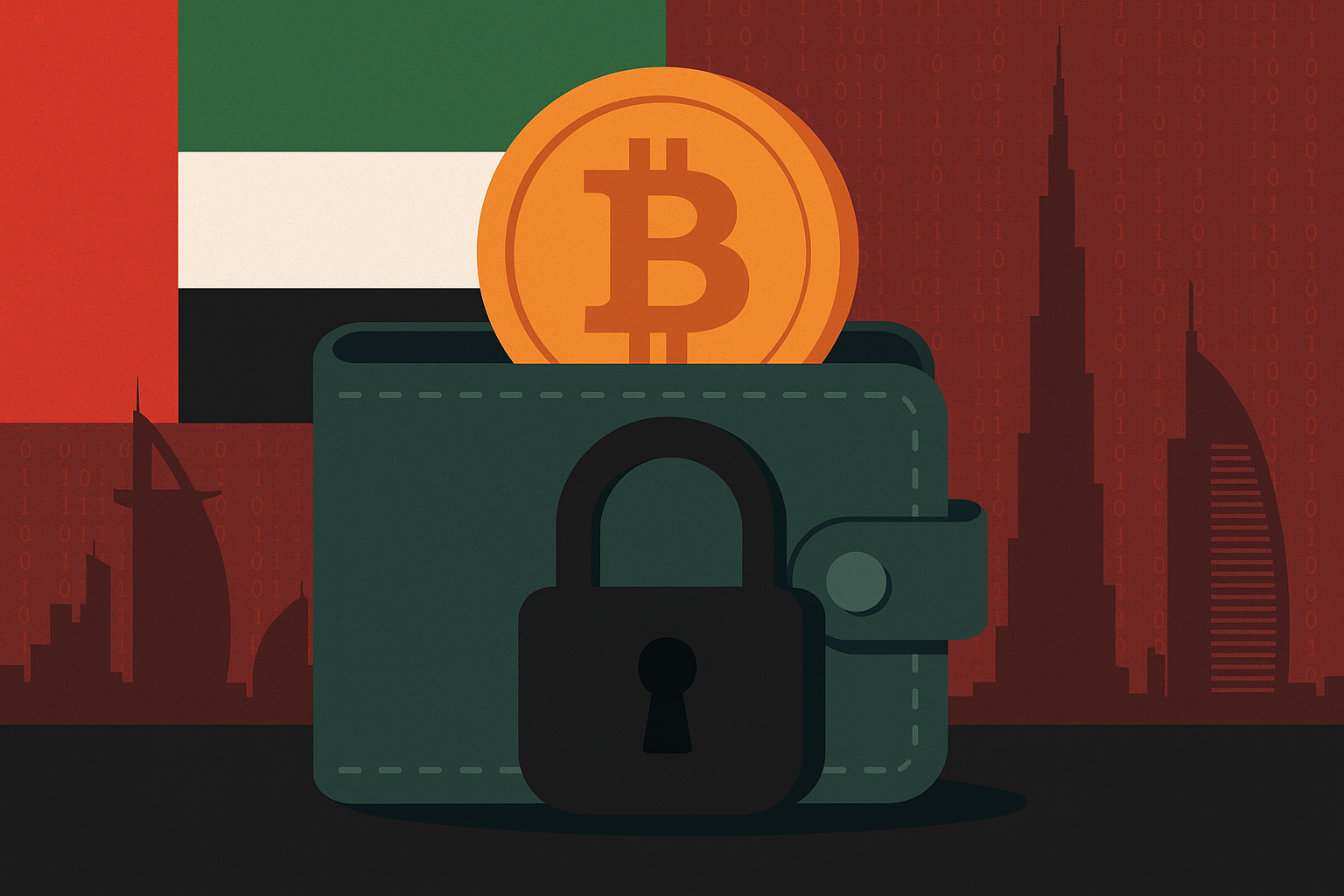
  • UAE makes Bitcoin wallets a crime risk in global tech crackdown

    UAE makes Bitcoin wallets a crime risk in global tech crackdown

    UAE makes Bitcoin wallets a crime risk in global tech crackdown

    • The UAE’s Federal-Decree Law No. 6 of 2025 came into effect on 16 September.
    • Article 62 places APIs, explorers, and decentralised platforms under Central Bank control.
    • Article 61 regulates all marketing, emails, and online posts about crypto services.

    In a sharp pivot from its crypto-friendly image, the United Arab Emirates has enacted sweeping new legislation that classifies basic cryptocurrency infrastructure, including Bitcoin wallets, as potentially criminal unless licensed by the Central Bank.

    Legal experts from Gibson Dunn have flagged the law’s scope as unusually broad, warning that its language introduces significant risk for global technology providers.

    This shift, embedded in Federal-Decree Law No. 6 of 2025, comes into force from 16 September and carries global consequences for developers and platforms offering crypto access.

    The law replaces the 2018 banking statute and significantly widens the definition of financial activity. What sets this legislation apart is not only its scope but also its enforcement teeth.

    Penalties for non-compliance range from fines of AED 50,000 to AED 500,000,000 (up to $136,000,000) and may include imprisonment.

    Importantly, this applies not just to entities operating within the UAE but also to those whose products are accessible from within the country.

    Licensing now applies to wallets, APIs and even analytics

    The most consequential element of the new law is found in Article 62. It grants the Central Bank control over any technology that “engages in, offers, issues, or facilitates” financial activity.

    The wording is broad enough to encompass self-custodial wallets, API services, blockchain explorers, analytics platforms, and even decentralised protocols.

    This marks a fundamental change in how crypto infrastructure is regulated in the UAE.

    Previously, licensing obligations focused on traditional financial entities, but the updated framework shifts this focus to include software and data tools.

    According to developer analysis, even public-facing tools such as CoinMarketCap and open-source Bitcoin wallets may now require licensing to remain accessible within the UAE.

    For the first time, developers may face criminal penalties for offering unlicensed crypto tools, even if they are based abroad.

    This extension of jurisdiction signals a new regulatory posture that treats access to crypto as tightly as its ownership or exchange.

    Communications and marketing now fall under regulation

    The crackdown does not stop at financial infrastructure. Article 61 of the same law defines the marketing, promotion, or advertising of financial services as a licensable activity.

    In practice, this means that simply hosting a website, publishing an article, or sharing a tweet about an unlicensed crypto service could be considered a legal violation if that content reaches UAE residents.

    This change dramatically expands the compliance footprint for companies and developers.

    Gibson Dunn highlights that these provisions materially broaden the enforcement perimeter, especially for firms with no formal presence in the UAE.

    The law applies to communications that originate outside the country but are accessible inside it.

    The result is a regulatory landscape where developers, content creators, and infrastructure providers must weigh whether their platforms are indirectly accessible by users in the UAE.

    In many cases, avoiding legal exposure may require disabling access or halting service altogether.

    Dubai’s free zones no longer shield crypto services

    Over recent years, the UAE has positioned itself as a hub for blockchain innovation.

    Jurisdictions such as Dubai’s Virtual Assets Regulatory Authority (VARA) and Abu Dhabi Global Market (ADGM) attracted global attention with purpose-built crypto licensing frameworks.

    However, the new federal law overrides these free-zone arrangements, asserting Central Bank control nationwide.

    Federal law supersedes any rules introduced by the UAE’s free zones, effectively dissolving the regulatory arbitrage that once drew companies to Dubai.

    The broader context includes the country’s history of digital restrictions.

    For instance, WhatsApp voice calls remain blocked across the UAE, reinforcing a consistent policy approach to centralised control over communications and digital tools.

    While this may bring the UAE in closer alignment with international pressure from groups like the Financial Action Task Force, it also puts crypto service providers in a difficult position.

    In other jurisdictions facing similar pressure, firms have withdrawn entirely to avoid enforcement risk.

    Enforcement begins in 2026, with further rules expected

    Entities have a one-year window from 16 September 2025 to come into compliance. This grace period may be extended at the discretion of the Central Bank.

    During this time, further regulations are expected to clarify how these broad rules will be applied in practice.

    Despite this, the scope of the law is already causing concern.

    The language around facilitation and communication, combined with the severe penalties under Article 170, suggests that firms offering crypto tools globally must now consider the risk of incidental exposure to UAE users.

    For software developers and platform operators, this marks a significant departure from the norms of decentralised access and open-source innovation.

    Source link

  • UAE identified as holding $700M in Bitcoin from mining operations

    UAE identified as holding $700M in Bitcoin from mining operations

    AI generated image for Bitcoin in a vault

    • According to blockchain analytics platform Arkham Intelligence, the United Arab Emirates holds about $700 million in Bitcoin.
    • Arkham traced the mining activity to Citadel Mining, which it said was established in Abu Dhabi in 2022.
    • Based on Arkham’s report and estimates from BitBo, the UAE ranks sixth among sovereign Bitcoin holders.

    The United Arab Emirates holds about $700 million in Bitcoin, primarily accumulated from mining operations, according to blockchain analytics platform Arkham Intelligence.

    In a post on X on Monday, Arkham said it had become one of the first to publicly identify the UAE government’s wallets, estimating that they contain about 6,300 Bitcoin.

    The holdings were attributed to mining conducted through Citadel Mining, a company majority owned by the government-backed International Holding Company (IHC).

    Arkham noted that, unlike the United States and the United Kingdom, where national Bitcoin holdings have largely come from police asset seizures, the UAE’s reserves are linked directly to mining.

    Speculation around the country’s Bitcoin exposure had previously suggested much larger reserves.

    Market rumors often placed the UAE’s holdings at around 420,000 Bitcoin, worth roughly $46 billion at current prices, and allegedly sourced from seizures of illicit activity.

    Those estimates, if accurate, would have positioned the UAE as the largest sovereign Bitcoin holder globally.

    Arkham’s findings, however, put the figure substantially lower.

    Mining operations tied to royal-linked conglomerates

    Arkham traced the mining activity to Citadel Mining, which it said was established in Abu Dhabi in 2022.

    The firm reported that the venture was developed in collaboration with Phoenix Group, a publicly listed UAE mining company, and the IHC.

    Arkham added that it corroborated the timeline of on-chain mining activity with satellite imagery showing the construction of the facility.

    The company said on-chain transactions between Phoenix and Citadel also matched figures disclosed in official documents.

    Based on its analysis, Arkham estimated that Citadel Mining has mined a total of 9,300 Bitcoin to date.

    Citadel Mining is 85% owned by 2pointzero, a holding entity controlled by IHC.

    The IHC itself is majority owned by the UAE Royal Group, a conglomerate led by Sheikh Tahnoon bin Zayed Al Nahyan of Abu Dhabi’s royal family, which holds a 61% stake.

    How UAE compares with other nation-states

    Based on Arkham’s report and estimates from BitBo, the UAE ranks sixth among sovereign Bitcoin holders.

    Its reserves place it behind Bhutan, which holds 11,286 Bitcoin, and ahead of El Salvador, which holds 6,246.

    The United States remains the largest holder with 198,012 Bitcoin, most of it originating from law enforcement seizures.

    China follows with 194,000, mainly stemming from its 2019 crackdown on the PlusToken scam, while the UK ranks third with 61,245.

    BitBo estimates that sovereign entities collectively hold about 517,000 Bitcoin, or 2.4% of the total circulating supply, with a total value exceeding $56 billion.

    In the corporate sector, Michael Saylor’s firm MicroStrategy is cited as the largest institutional holder, with a treasury of 629,376 Bitcoin, representing about 2.9% of the supply.

    The company continues to expand its Bitcoin reserves.

    Source link

  • M2 crypto exchange to allow UAE residents to trade crypto using bank accounts

    M2 crypto exchange to allow UAE residents to trade crypto using bank accounts

    M2 crypto exchange to allow UAE residents to trade crypto using bank accounts
    • M2 enables UAE residents to trade BTC and ETH directly with bank accounts.
    • Integration supports dirham deposits, withdrawals, and market-responsive trading.
    • UAE has strict regulations to ensure consumer protection and market transparency.

    In a significant development for the digital asset market in the United Arab Emirates (UAE), M2, a prominent crypto exchange, has announced that UAE residents can now buy and sell Bitcoin (BTC) and Ethereum (ETH) directly using their bank accounts.

    This new integration facilitates the direct conversion of UAE dirhams into BTC and ETH through M2’s spot market, marking a milestone in the accessibility of virtual assets in the region.

    M2 users can seamlessly convert dirhams into BTC and ETH and vice versa

    In an announcement shared with Cointelegraph, the M2 exchange highlighted that the new feature will enable users to convert dirhams into Bitcoin and Ether seamlessly through the trading pairs listed on M2’s spot markets.

    Additionally, the platform supports the deposit and withdrawal of dirhams, offering users greater flexibility in managing their assets.

    The M2 team emphasized that this integration would enable users to “swiftly adapt to market changes,” allowing them to easily convert their local currency into crypto.

    This is particularly beneficial for everyday investors who may not be fully immersed in the complexities of the trading environment.

    According to M2, the higher levels of familiarity and significant trading volumes of BTC and ETH make these cryptocurrencies ideal entry points for new investors looking to enter the digital asset space.

    UAE has the strictest regulatory framework globally

    Regulated by the UAE government, which is known for its stringent consumer protection measures, this move reflects the country’s commitment to safeguarding its residents in the evolving crypto landscape.

    The UAE has established a reputation for having one of the strictest regulatory frameworks globally, prioritizing consumer protection. In 2022, Dubai’s Virtual Asset Regulatory Authority (VARA) mandated greater transparency in crypto advertisements to better protect consumers.

    Moreover, in 2023, the UAE introduced a federal law aimed at preventing fraud in the crypto market, imposing fines of up to 10 million AED ($2.7 million) for violations.

    Commenting on the integration, Kimmel, an executive at M2, noted that the ADGM’s licensing process was demanding due to its high standards for multilateral trading facility permits. However, he affirmed that this rigorous due diligence ensures that licensed platforms meet the country’s security and transparency standards, thereby fostering trust among UAE users.

    Despite the challenges associated with the licensing process, the UAE continues to be a strategic region for the crypto industry.

    Favourable tax policies, access to global markets, and a safe environment for innovation make the UAE an attractive destination for crypto businesses.

    This new development by M2 is set to further enhance the accessibility and appeal of virtual assets in the UAE, making it easier for residents to participate in the burgeoning crypto market.

    Source link

  • Tether partners with RAK DAO to advance crypto education and adoption in UAE

    Tether partners with RAK DAO to advance crypto education and adoption in UAE

    The collaboration, solidified through the signing of a Memorandum of Understanding (MoU), marks a significant step towards fostering blockchain education and adoption in the region.

    Driving Crypto Adoption and Education

    In alignment with RAK DAO’s mission to promote web3 innovation and spur economic growth, Tether will collaborate closely to facilitate the integration of cryptocurrency payments within the region.

    Additionally, the partnership will see the development of comprehensive educational programs through Tether Edu, catering to individuals across various proficiency levels. These initiatives will cover a spectrum of cutting-edge topics including Bitcoin, blockchain, peer-to-peer technologies, stablecoin adoption, and real-world cryptocurrency applications.

    Paolo Ardoino, CEO of Tether, expressed enthusiasm about the collaboration, underscoring the transformative potential of Bitcoin and blockchain technology in the region. He emphasized Tether’s commitment to working alongside RAK DAO to materialize this vision.

    RAK DAO’s Vision for Blockchain Innovation

    Dr. Sameer Al Ansari, CEO of RAK DAO, echoed Ardoino’s sentiments, highlighting the partnership as a pivotal moment in RAK DAO’s journey towards becoming a leading blockchain innovation center.

    By harnessing the power of Bitcoin technology and cryptocurrencies, RAK DAO aims to drive economic growth, foster financial inclusion, and cement its position as a global leader in the digital economy.

    This partnership comes amidst Tether’s recent announcement regarding the implementation of a robust transaction monitoring system for USDT, aimed at safeguarding against illicit activities associated with the stablecoin.

    With Tether’s expertise in stablecoin issuance and RAK DAO’s dedication to blockchain innovation, this collaboration is poised to significantly accelerate the adoption and understanding of cryptocurrency technology in the UAE’s Ras Al Khaimah region.

    Source link