Tag: Wallet

  • Pi Network suspends wallet payment requests after scammers drain millions

    Pi Network suspends wallet payment requests after scammers drain millions

    Pi Network suspends wallet payment requests

    • Pi Network halts wallet requests after large-scale scams target users.
    • Scammers exploit public balances and impersonate trusted contacts.
    • PI trades near $0.20 amid low liquidity and token unlocks.

    Pi Network has temporarily disabled its wallet payment request feature in response to a surge of sophisticated scam activity that has led to the loss of millions of PI tokens from user wallets.

    The move, announced by the Pi Core Team on social platform X, comes as attackers increasingly exploit the platform’s payment request function to trick users into approving fraudulent transfers.

    According to on‑chain data shared by community observers and reporting outlets, scammers have siphoned off more than 4.4 million PI by sending deceptive payment requests to holders with large balances.

    One single scammer address reportedly received hundreds of thousands of tokens each month throughout 2025.

    Tokens approved through these requests are moved instantly to the attacker’s wallet and cannot be reversed, meaning victims have no recourse once a transfer is authorised.

    The Pi Core Team stressed that this issue stems from social engineering rather than a flaw in the network’s protocol.

    Because wallet balances and addresses are publicly visible on Pi’s blockchain, bad actors can identify high‑value wallets and impersonate trusted contacts, friends, moderators, or even official accounts, to convince users to authorise transfers.

    To curb further losses, the network has disabled the payment request feature across its ecosystem while assessing potential safeguards.

    The suspension is intended to be temporary, but the team has not yet announced a specific timeline for restoring the function.

    In the meantime, community moderators and safety advocates are urging users to refuse all unsolicited payment requests.

    Scam tactics and broader security concerns

    Experts and user reports indicate that the scams are part of a broader uptick in deceptive schemes targeting Pi users.

    Fraudsters cast a wide net, from phishing links claiming fake airdrops or price promotions to counterfeit portals that ask for wallet credentials or private keys, which can lead to full account takeovers.

    Pi Network’s core team has repeatedly warned against sharing sensitive information or engaging with unverified links circulating on social media and messaging platforms.

    While Pi Network itself is not widely regarded as an outright scam project by independent analysts, its rapid growth, mobile‑centric model, and referral‑based incentives have drawn scrutiny and made its large user base a target for scammers.

    Users are advised to stick strictly to official communication channels and exercise heightened caution when interacting with unverifiable contacts.

    Impact on PI token price

    The payment request suspension arrives amid mixed sentiment around the PI token’s market performance.

    While Pi token’s price forecast remains optimistic, it currently trades near the $0.20 level, up only 1% in two weeks.

    Notably, the PI coin price has been weighed down by low liquidity and ongoing token unlocks, with significant amounts entering circulation in recent months.

    The token has struggled to absorb the added supply, and daily trading volumes remain moderate.

    Source link

  • IMF advances talks with El Salvador on Bitcoin policy and Chivo wallet future

    IMF advances talks with El Salvador on Bitcoin policy and Chivo wallet future

    Why IMF negotiations are forcing changes to El Salvador’s Bitcoin strategy

    • IMF says talks with El Salvador continue, focusing on transparency, public funds protection, and Bitcoin-related risks.
    • Negotiations to sell or wind down El Salvador’s Chivo Bitcoin wallet are well advanced under the IMF loan program.
    • Despite IMF pressure, El Salvador continues daily Bitcoin purchases while GDP growth is projected near 4%.

    The International Monetary Fund (IMF) said discussions with El Salvador over its Bitcoin-related policies remain ongoing, with a focus on improving transparency, protecting public funds, and reducing financial risks.

    The update came as part of the IMF’s second review of El Salvador’s 40-month Extended Fund Facility (EFF), under which the country secured a $1.4 billion loan in 2024 after prolonged negotiations strained by its Bitcoin adoption.

    According to the IMF, talks are particularly advanced regarding the future of the government-run Chivo Bitcoin wallet, including a potential sale or wind-down of the platform.

    Chivo, launched in September 2021 as part of El Salvador’s Bitcoin rollout, has faced widespread criticism since its debut, including allegations of identity theft, fraud, technical failures, and frozen user accounts.

    Chivo wallet under negotiation

    The IMF confirmed that negotiations for the sale of the Chivo wallet are “well advanced,” marking a significant step in scaling back the government’s direct involvement in Bitcoin infrastructure.

    One of the architects of the wallet said last year that the application should be shut down due to the controversy it generated since its launch.

    As part of the EFF agreement, El Salvador committed to reducing public sector participation in Bitcoin-related activities.

    In March, the IMF formally asked the country to halt Bitcoin accumulation through purchases and mining and to dismantle public structures used to acquire the digital asset.

    The fund later said El Salvador has complied with these commitments, including initiating a full phase-out of the Chivo wallet.

    Despite these steps, several private-sector Bitcoin wallets are expected to continue operating in the country.

    At the time the IMF loan was agreed, Stacy Herbert, director of El Salvador’s National Bitcoin Office, said that while Chivo’s role would change, private wallet providers would continue to serve users.

    Bitcoin accumulation remains a point of tension

    Bitcoin policy remains a central source of friction between El Salvador and the IMF.

    The fund has repeatedly warned that Bitcoin’s price volatility poses risks to public finances and has pushed for limits on government exposure.

    Nevertheless, El Salvador continues to report ongoing Bitcoin purchases.

    Last month, the country added 1,098 BTC to its national reserves, worth nearly $100 million at the time, according to official disclosures.

    Data published by El Salvador’s Bitcoin Office shows that the country holds about 7,509 BTC, with purchases continuing on a daily basis, even during periods of high market volatility.

    In May, the IMF reiterated that “efforts will continue” to ensure El Salvador does not accumulate additional Bitcoin.

    President Nayib Bukele has publicly rejected the idea of stopping purchases, stating in March that the policy would continue regardless of external pressure.

    IMF praises economic performance

    While flagging ongoing concerns around Bitcoin, the IMF struck a positive tone on El Salvador’s broader economic performance.

    The fund said the economy is expanding faster than expected, with real GDP growth projected to reach around 4% this year and strong prospects for next year.

    The IMF also noted that fiscal targets remain on track, foreign reserves are increasing, and domestic borrowing has declined.

    Structural reforms have advanced, including new banking stability legislation, the adoption of Basel III standards, and updated anti-money laundering rules.

    The IMF said it will maintain close engagement with Salvadoran authorities as it works toward a staff-level agreement to complete the second EFF review, underscoring that Bitcoin-related risks remain under scrutiny even as the country’s macroeconomic outlook improves.

    Source link

  • Bitcoin trades near $119K after new all-time high; Coinbase rebrands wallet to ‘Base App’

    Bitcoin trades near $119K after new all-time high; Coinbase rebrands wallet to ‘Base App’

    Bitcoin trades near $119K after new all-time high; Coinbase rebrands wallet to 'Base App'

    Bitcoin is holding steady above the $118,800 mark as the market digests its recent powerful rally to a new all-time high of over $122,000.

    While on-chain data now indicates that the first wave of heavy profit-taking has begun, particularly among short-term holders sitting on significant gains, some analysts believe that historical patterns still suggest room for another push higher, though they are also warning that “overheating” signals are beginning to flash.

    In a recent report, on-chain analytics firm Glassnode highlighted that “short-term holders are now sitting on significant unrealized profits,” a condition that is pushing key indicators “towards overheated territory.”

    The Short-Term Holder Relative Unrealized Profit metric recently hit 15.4%, breaching a key statistical threshold (+1 standard deviation) before cooling slightly. Historically, this level “often marks the beginning of top formation,” according to Glassnode.

    The firm also pointed to the Realized Profit to Loss Ratio, which recently spiked to a staggering 39.8, “well above the +2 standard deviation threshold,” signaling a period of intense profit-taking from successful traders.

    Although this ratio has since declined to a more moderate 7.3, the elevated reading remains consistent with behavior typically seen in the late stages of a bull market.

    “So far, both the Percent of Spent Volume in Profit and the Realized Profit to Loss Ratio have signaled the first wave of excessive profit-taking,” the report concluded.

    While this doesn’t necessarily mark a definitive market top, Glassnode cautions that “such top formations tend to unfold across multiple waves,” with the next major resistance level for Bitcoin projected to be around the $130,000 mark.

    The great rotation: traders move into altcoins

    As Bitcoin’s near-term upside appears increasingly constrained by this profit-taking pressure, some traders are beginning to rotate their capital into major altcoins.

    Ethereum (ETH) surged an impressive 7.5% in the past 24 hours, outpacing Bitcoin and breaking out of a recent consolidation phase.

    Analysts have pointed to the recent advancement of the GENIUS Act, a stablecoin regulation bill, as a potential catalyst for ETH’s strong performance.

    Solana (SOL) also saw a significant jump, up 5%, buoyed by fresh on-chain data showing that Galaxy Digital had accumulated $55 million worth of SOL within a tight two-hour window, withdrawing the tokens from multiple centralized exchanges.

    This rotation into major altcoins like ETH and SOL suggests that while Bitcoin’s broader market structure remains intact, traders are seeking opportunities for higher returns in other parts of the crypto ecosystem.

    Coinbase’s big rebrand: from ‘Wallet’ to ‘Base App’

    In a significant development for the broader crypto ecosystem, Coinbase has officially rebranded its popular Wallet product as the ‘Base App’.

    This move confirms speculation that had been swirling since the company scrubbed its X profile earlier this week.

    The rebranding positions the app as a central gateway into the burgeoning Base ecosystem, which is now being pitched as a full-stack, on-chain platform designed for mainstream adoption.

    The rebrand was officially announced during Coinbase’s “A New Day One” event, which also unveiled a broader vision for the Base ecosystem, now built around three key pillars: the existing Layer-2 network, Base Chain; a new developer toolkit suite dubbed Base Build; and the newly launched Base App.

    Unlike its predecessor, the Coinbase Wallet, the new Base App is designed to be much more than just a place to store crypto.

    It will integrate chat functionalities, payments, trading, and a mini-app marketplace that supports a wide range of social and financial experiences.

    This is not Coinbase’s first attempt at a wallet makeover (long-time crypto users will remember its original wallet, “Toshi”), but it is arguably its most ambitious.

    With the Base ecosystem increasingly distancing itself from the parent Coinbase brand, the new app appears designed to emphasize Base’s distinct identity as a more decentralized, open ecosystem—one that is anchored in the core values of crypto but packaged in a user-friendly way for the everyday consumer.

    Source link

  • Unity Wallet COO: three factors are affecting crypto market prices

    Unity Wallet COO: three factors are affecting crypto market prices

    • The Bybit hack has increased fears over centralized exchange security vulnerabilities
    • US President Donald Trump’s trade tariffs are increasing market uncertainty
    • Trump’s crypto promises may have started as being great, but they could end up proving catastrophic

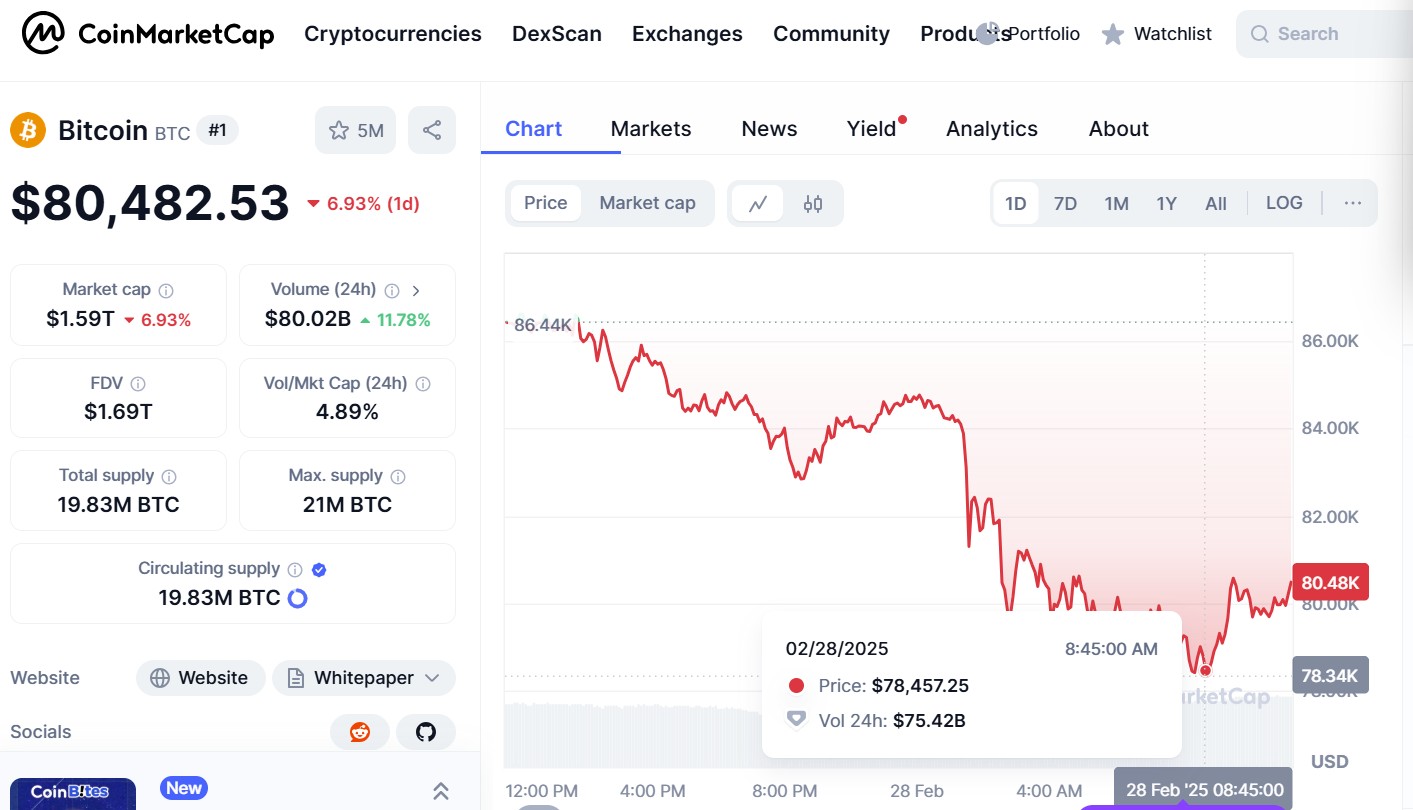
    Three things are contributing to the drop in crypto prices, which has seen Bitcoin fall 7.50% over 24 hours to $78,000, according to Unity Wallet’s COO.

    BTC price at $78,000. Source: CoinMarketCap

    It’s a significant drop from Bitcoin’s all-time high, which reached $109,000 in January ahead of US President Donald Trump’s inauguration.

    According to James Toledano, it feels like optimism around the crypto market post-election created a bubble and that the “reality post-inauguration is now setting in – and hard,” he said to CoinJournal.

    In Toledano’s view, the Bybit hack at the crypto exchange last Friday—which resulted in the theft of nearly $1.5 billion worth of Ethereum—is one of the contributing factors affecting crypto prices.

    Undermining investor confidence, it has led to panic withdrawals and a market-wide selloff across the board. While Bybit’s CEO, Ben Zhou, quickly responded to the hack, the situation has increased “fears about centralized exchange security vulnerabilities—which only solidifies the case for self-custodial services,” Toledano continued.

    Dom Harz, co-founder of BOB (“Build on Bitcoin”), a hybrid Layer-2, said to CoinJournal the theft at Bybit is a “stark reminder of the industry’s fundamental issues,” adding:

    “We’ve been hypnotized by price spikes, memecoin frenzies, and media spectacles, forgetting that crypto was meant to be a new financial system—one built on decentralized protocols that make finance accessible to everyone. Bybit just gave us a $1.5 billion reminder that we are nowhere near that reality.”

    Trump’s tariffs

    The continued market selloff follows Trump’s trade tariff announcement earlier this week.

    During his election campaign, the US president made promises regarding crypto, stating that America will be the “crypto capital of the planet.”

    Since entering the White House, he has appointed pro-crypto individuals to reshape government agencies, namely Paul Akins as the incoming chair of the US Securities and Exchange Commission (SEC).

    Mark Uyeda is currently acting chair of the SEC.

    Trump also signed an executive order to establish a crypto working group to provide regulatory clarity. It’s also expected that the working group will look into the potential of a national crypto stockpile.

    Yet, despite these steps, Trump’s trade wars—which could soon hit the EU, the world’s largest trading bloc, with a 25% tariff—is increasing market uncertainty.

    According to Toledano, Trump’s tariffs are “harming the global economy” and that many in the crypto space feel let down by the US president.

    “The promise was great and the reality is potentially proving to be catastrophic,” he added. “It does make me wonder if Trump understands that financial verticals are interlinked and increasingly converging.”

    Biggest economic risk

    The third contributing factor affecting market prices—according to Toledano—are questions around the overall governance of the US.

    An article by Chatham House suggests that the biggest economic risk from Trump’s presidency is a loss of confidence in US governance. It reads that while Trump’s policies may seem mild in the short term, steps that undermine the US and its international allies could have lasting effects.

    “I rarely get spooked from the peaks and troughs that crypto presents but when I combine what’s happening with traditional equities volatility, I think there is cause for concern right now,” said Toledano.

    Source link

  • Arkham: Tesla still owns $780m in Bitcoin following wallet movement

    Arkham: Tesla still owns $780m in Bitcoin following wallet movement

    • Tesla has split the 11,509 Bitcoin across seven wallets
    • Arkham Intelligence said some have speculated that the move was to a crypto custodian
    • Tesla remains the third largest publicly traded Bitcoin company being MicroStrategy and Marathon Digital Holdings

    Tesla still owns 11,509 Bitcoin despite the wallet movement last week, according to a blockchain analytics company.

    In a post on X, Arkham Intelligence said:

    “We believe that the Tesla wallet movements that we reported on last week were wallet rotations with the Bitcoin still owned by Tesla. Tesla moved their entire balance of 11,509 BTC ($776.9M) to new wallets.”

    Arkham noted that Tesla split the 11,509 Bitcoin into seven wallets, with the largest wallet holding 1Fnhp – 2109.3 BTC ($142.2M).

    “Some have speculated that this is movement to a custodian, for example to secure a loan against the BTC,” said Arkham.

    Third largest publicly traded Bitcoin holder

    Tesla’s Bitcoin transfers mark the first time the electric car company has interacted with its crypto wallet since 2022 when it initially sold off a significant portion of its holdings.

    At its height, Tesla owned around 43,000 Bitcoin after it invested $1.5 billion in the crypto asset in February 2021, according to data from BitcoinTreasuries. This resulted in the sale of $272 million worth of Bitcoin in the first quarter of 2021, creating a profit of $128 million.

    By the second quarter of 2022, Tesla sold another $936 million in Bitcoin, generating $64 million in gains as the market experienced volatility.

    With the recent transfers, some feared this would lead to a market dump. Tesla is expected to conduct its third-quarter earnings call scheduled on October 23 where it may reveal its plans for its Bitcoin.

    To date, Tesla remains the third largest holder of Bitcoin among publicly traded companies. It trails behind MicroStrategy and Marathon Digital Holdings.


    Source link

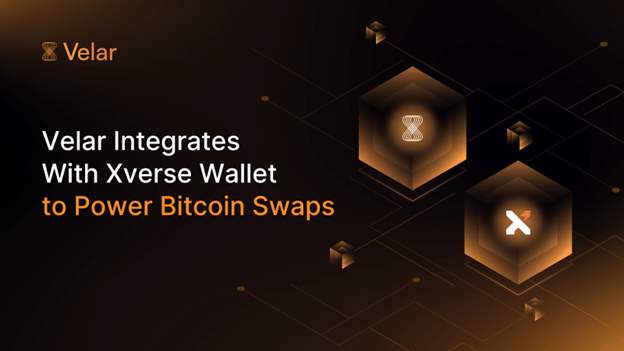
  • Velar Dharma partners with Xverse Wallet to enable Bitcoin L2 swaps

    Velar Dharma partners with Xverse Wallet to enable Bitcoin L2 swaps

    Velar Dharma partners with Xverse Wallet to enable Bitcoin L2 swaps
    • Velar Dharma integrates with Xverse to offer seamless Bitcoin L2 swaps in the wallet.
    • Velar is now the exclusive Bitcoin L2 swap provider for Xverse’s users.
    • The Partnership enhances Xverse users’ access to fast, secure, and competitive swaps.

    Velar Dharma, a Bitcoin layer 2 (L2) trading protocol, has integrated its services with Xverse, a leading non-custodial wallet designed for Bitcoin’s L2 ecosystem.

    This collaboration allows Xverse users to seamlessly trade assets, including BTC, STX, and stablecoins, directly within the wallet through Velar Dharma’s automated market maker (AMM) engine.

    Velar Dharma becomes Bitcoin L2 swap provider in Xverse

    As a result of this partnership, Velar Dharma becomes the exclusive provider of Bitcoin L2 swaps within the Xverse platform.

    Users will now be able to perform trades on the Stacks L2 network, with Velar’s deep liquidity pools ensuring fast, secure, and competitively priced swaps.

    Xverse is a popular web3 wallet known for providing a secure and user-friendly gateway to the Bitcoin ecosystem. The wallet allows users to store and trade a range of Bitcoin L2 assets, including BTC, Ordinals, and Runes.

    Available as both a mobile app and a browser extension, the wallet offers robust support for Bitcoin-based assets, including the option for enhanced security with built-in Ledger integration.

    Velar Dharma’s CEO, Mithil Thakore, praised the partnership, saying, “We’re thrilled to become the exclusive swap partner for Xverse, whose wallet gives unparalleled access to the Bitcoin L2 ecosystem. This collaboration brings Velar Dharma’s trading capabilities to Bitcoin natives who can now trade directly within the wallet while retaining full custody of their assets.”

    Ken Liao, CEO of Xverse, echoed this sentiment, stating, “The integration of Velar swaps in Xverse enhances user convenience and improves liquidity for Bitcoin L2 trading.”

    Notably, Velar Dharma’s entry into the Xverse wallet represents a significant milestone in its quest to become the leading decentralized exchange within the Bitcoin ecosystem. By supporting multiple Bitcoin L2 networks, Velar Dharma is expanding access to decentralized finance (DeFi) opportunities for a growing number of users.

    This integration marks a major step forward for both companies as they continue to innovate in the Bitcoin DeFi space, offering users secure, efficient, and flexible trading options.

    Source link

  • Bitflow integrates swap function into Leather Wallet

    Bitflow integrates swap function into Leather Wallet

    Bitflow integrates swap function into Leather Wallet
    • Bitflow integrates its swap function into the Leather wallet for 370,000 users.
    • The partnership enhances user experience and broadens Bitcoin DeFi accessibility.
    • Integration guarantees the best swap rates across various DEXs on Stacks.

    Bitflow, a decentralized exchange (DEX) that enables users to trade and earn using their Bitcoin, has announced the integration of its swap function into Leather Wallet, a leading Bitcoin ecosystem wallet.

    This partnership simplifies asset swapping on Stacks for over 370,000 Leather wallet users, removing barriers to deeper engagement with decentralized finance (DeFi).

    The integration promises to expand the user base and foster greater adoption and innovation within the Bitcoin Layer 2 (L2) ecosystem.

    Unlocking new opportunities for Bitcoin L2 Stacks

    The integration of the Bitflow Swap function in Leather marks a significant step forward in enhancing user accessibility and engagement with Bitcoin L2 Stacks.

    By enabling seamless asset swaps, Bitflow is opening the door for a broader audience to explore Bitcoin DeFi.

    Bitflow leverages technologies such as Runes, Partially Signed Bitcoin Transactions (PSBTs), Atomic Swaps, Layer-2 smart contracts, Stacks Bitcoin (sBTC), and decentralized liquidity pools, unlocking the full potential of Bitcoin.

    The integration of Bitflow into Leather Wallet not only broadens its user base but also enhances the utility and accessibility of Bitcoin L2 tokens, promoting greater adoption and innovation in the ecosystem.

    Mark Hendrickson, General Manager of Leather, emphasized the wallet’s vision to bridge the gap between the Bitcoin main chain and Bitcoin L2s like Stacks.

    Hendrickson has said that Leather aims to be the Bitcoin and Stacks wallet that makes using Bitcoin easy for everyone. He also said that the integration of Bitflow’s SDK into Leather’s native swap interface provides the most scalable, cross-protocol swapping experience, giving Stacks users the convenience of their wallet.

    Enhancing DeFi user experience with Bitflow Swap Aggregator

    The Bitflow Swap Aggregator is designed to integrate seamlessly with other decentralized applications and wallets through its SDK, enabling effortless token swaps directly within users’ preferred crypto wallets.

    This innovation makes it easier than ever for users to swap tokens, enhancing the overall user experience in the DeFi space.

    Dylan Floyd, Co-Founder and CEO of Bitflow, highlighted the benefits of this partnership saying that The integration of Bitflow SDK into Leather is a huge win for the in-wallet trading experience and users are guaranteed to get the best rate for swaps across all the DEXs on Stacks.

    Floyd also said that the partnership connects fragmented liquidity across Alex, Arkadiko, Bitflow, and Velar, propelling the whole ecosystem forward.

    Source link

  • Giddy Smart Wallet teams up with Stripe for seamless crypto purchases

    Giddy Smart Wallet teams up with Stripe for seamless crypto purchases

    • Giddy and Stripe integration offers users a fast and reliable crypto gateway with support for various payment methods.
    • Giddy also expands its groundbreaking multi-factor private key solution to include native support for the Bitcoin network.
    • Giddy’s mobile app is available on both the App Store and Google Play.

    Giddy, the self-custody smart wallet championing decentralized finance, has joined forces with leading payment provider Stripe to streamline cryptocurrency purchases. This collaboration marks a major leap in making cryptocurrencies more accessible to the public.

    Let’s delve into the details of how Giddy’s integration with Stripe and its native Bitcoin support are set to redefine the crypto landscape.

    Effortless crypto transactions for Giddy users

    The innovative smart wallet Giddy integration with Stripe, a renowned payment provider, enables Giddy users to purchase cryptocurrencies directly from the mobile app with unparalleled ease. By selecting Stripe as the crypto purchase option, users gain access to a seamless experience that supports various payment methods, including bank transfers, cards, and Apple Pay®.

    This integration addresses the longstanding complexity associated with buying self-custody crypto. According to Giddy CEO Eric Parker, Stripe’s reliability and efficiency make it one of the best ways to enter the crypto market. The fast and user-friendly nature of Stripe provides an optimal solution for both new and experienced users to engage with cryptocurrencies at the pace of dynamic markets.

    Blockchains supported by Giddy

    Besides integrating Stripe, Giddy is introducing native support for the Bitcoin network, adding to its existing support for Ethereum, Arbitrum, and Polygon networks. Giddy’s multi-factor private key solution, a cornerstone of its security features, now extends to the world’s most popular cryptocurrency.

    The multi-factor private key solution approach involves separating a user’s private key into multiple encrypted shares, linked to hardware and software controlled solely by the user.

    In addition, the unique security measures implemented by Giddy ensure that even if one share of the private key is compromised or lost, the wallet remains secure and recoverable. This groundbreaking security strategy not only enhances user confidence but also simplifies the crypto experience for everyday users.

    The Giddy mobile app, available on the App Store and Google Play, offers a user-friendly interface where individuals can buy, trade, send, earn, and shop using cryptocurrencies.

    Source link

  • OKX Wallet announces Ordinals Marketplace for BRC-20 trading

    OKX Wallet announces Ordinals Marketplace for BRC-20 trading

    • The Ordinals Marketplace will offer features that include minting and trading of Bitcoin Ordinals
    • OKX Wallet to support Lightning Network and staking for Stacks (STX) and BRC-20 tokens
    • OKX to attend the Bitcoin Builders Conference in Miami

    OKX, one of the leading cryptocurrency exchanges and Web3 technology company, today announced the launch of Ordinals Marketplace on OKX Wallet, making it the first multichain wallet to support BRC-20 trading. The new Ordinals Marketplace allows users to mint and trade Bitcoin Ordinals and BRC-20 tokens.

    OKX has always believed in the power of Bitcoin and we’re proud to be constantly at the forefront of bringing Bitcoin technologies to a wider market,” said Jason Lau, Chief Innovation Officer at OKX. He added:

    Whether it’s Ordinals, BRC-20, or Lightning, we see the potential of these technologies as they expand the design space and deliver new use cases. OKX Wallet is the best way to explore the world of Bitcoin Ordinals and BRC-20 tokens, and we can’t wait to launch even more features for the community.”

    Mint and trade ordinal inscriptions and BRC-20 tokens

    The new Ordinals Marketplace includes the following features: a “now live” that will allow users to view and transfer Ordinals; an “available this week” feature enabling trading of BRC-20 tokens (users will be able to buy, sell, and list). 

    Also accessible will be a “coming soon” feature that allows for minting of Ordinal inscription NFTs and BRC-20 tokens and a “coming soon: Trade Ordinals (buy, sell, and list)

    In addition to the new Ordinals Marketplace, OKX has also announced additional support for Bitcoin. 

    This includes support for Lightning Network to enable cheaper and faster bitcoin transactions. There is also staking support for Bitcoin Layer-2 token Stacks (STX) and BRC-20 tokens, and OKX BTC Explorer for BRC-20. With the latter feature, users can now validate BRC-20 transactions in real-time

    In addition to the above announcements, the company also revealed its team will attend the Bitcoin Builders conference, the first-ever conference focused on Bitcoin’s Layer-2 ecosystem. The event is set for May 17 in Miami, where OKX’s Chief Innovation Officer Jason Lau will speak on a panel alongside other industry leaders.

    Source link

  • Bitcoin wallet dormant for 10 years suddenly wakes up

    Bitcoin wallet dormant for 10 years suddenly wakes up

    • A dormant wallet from 2012 has woken up and moved 279 BTC.
    • According to on-chain data, the Satoshi era wallet holds 1,128 Bitcoin worth $31.6 million.
    • The wallet last transacted when Bitcoin prices ranged in the $12 to $95 zone. 

    While Bitcoin price continues to flirt with $28,000 after this week’s slump from $30,000, a new development related to the leading cryptocurrency has been observed.

    Dormant wallet wakes up and moves 279 BTC

    According to on-chain details shared by crypto account Whale Alert, a BTC wallet that has been dormant for over 10 years just reawakened.  The Satoshi era wallet reportedly holds 1,128 bitcoin worth approximately $31.6 million.

    And the dormant wallet has made some quick moves, with 279 BTC of the assets being moved to three new addresses in the past 24 hours. On-chain smart money platform Lookonchain tweeted:

    “A whale with 1,128 $BTC ($31.6M) that has been dormant for 10 years transferred 279 $BTC ($7.8M) to 3 new addresses just now. The whale received 1,128 $BTC in October 2012 and May 2013, when prices were $12 and $195.”

    Bitcoin price reached highs of $69,000 in November 2021, meaning the wallet would have been even richer had it activated then. While the sudden activity and why it happened remains to be unearthed, crypto twitter is reacting to the news with speculation that it is possible someone just found their seed phrase.


    Source link