Ethereum’s native token, Ether (ETH), slipped below $2,000 for the first time since March, but retail traders have not reacted with panic yet.
Key takeaways:
- Ethereum retail data shows rising “buy the dip” sentiment, which may lead to more downside ahead.
- Macro data, such as ETF net flows and whale behavior, show institutions are selling ETH.
Retail FOMO warns of further ETH price dips
As of Thursday, “buy the dip” calls on social media were surging after ETH lost the key psychological support level, according to data resource Santiment.
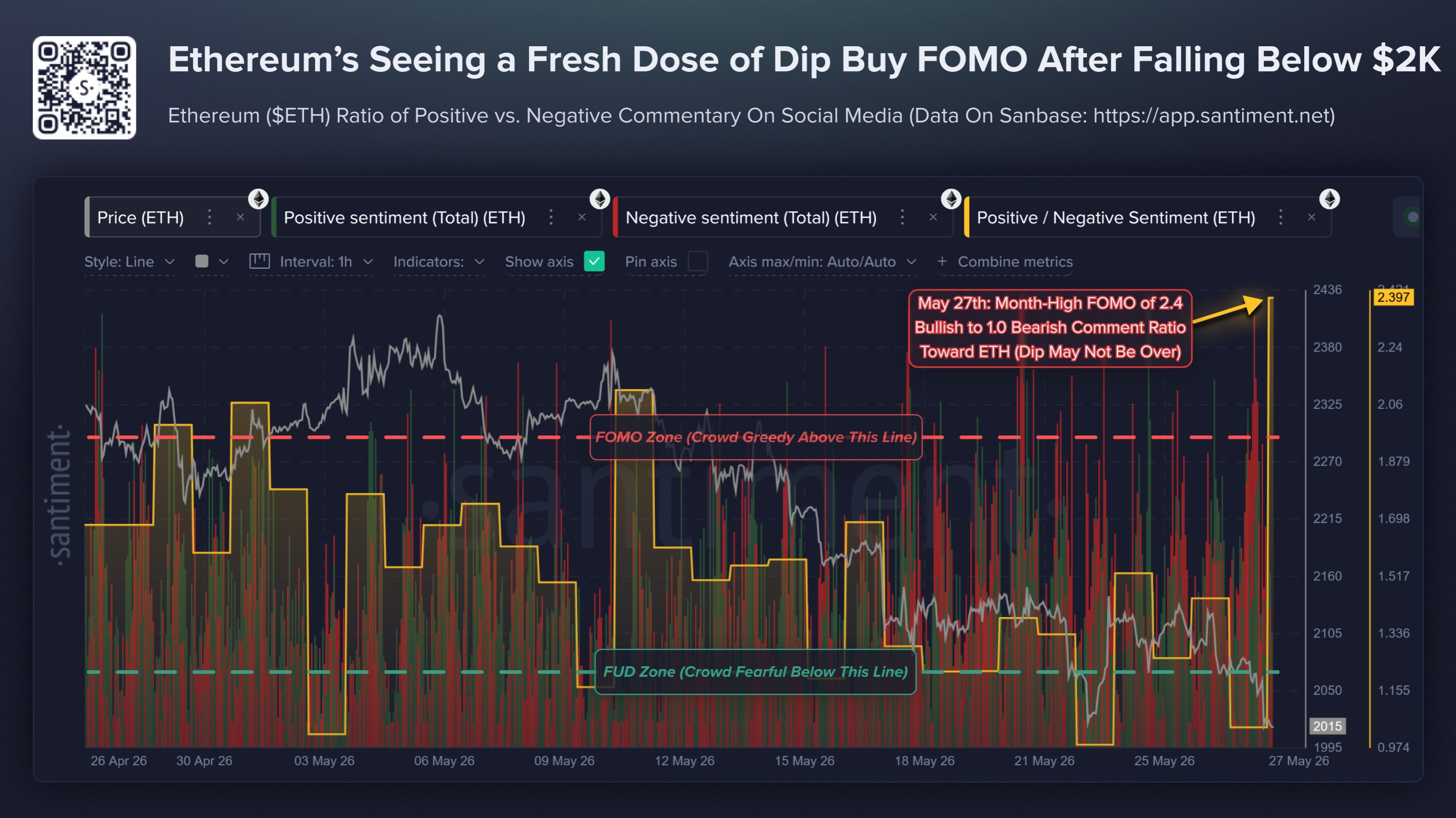
That suggests retail traders are treating the decline as a discount opportunity rather than a warning sign.
Historically, excessive crowd optimism after a sharp drop can signal more downside ahead, as retail sentiment often peaks before prices stabilize. A stronger contrarian buy signal may emerge only when FOMO fades and panic takes over.
“There will be an opportunity to buy Ethereum, but ideally you will want to wait for the majority to cool down their FOMO and begin to show panic,” Santiment said in a Thursday post, adding:
“This way, you will be buying while there is true blood in the streets.”
Institutional selling is overpowering bullish retail
Larger Ethereum investors appear to be moving against retail dip buyers.
Harvard University’s endowment fund recently liquidated its entire $87 million ETH position, while Bankless co-founder David Hoffman, one of Ethereum’s advocates, also disclosed that he had sold his ETH holdings.
US spot Ether ETFs have witnessed consistent outflows since May 7, recording more than $470 million in withdrawals in the past two weeks.
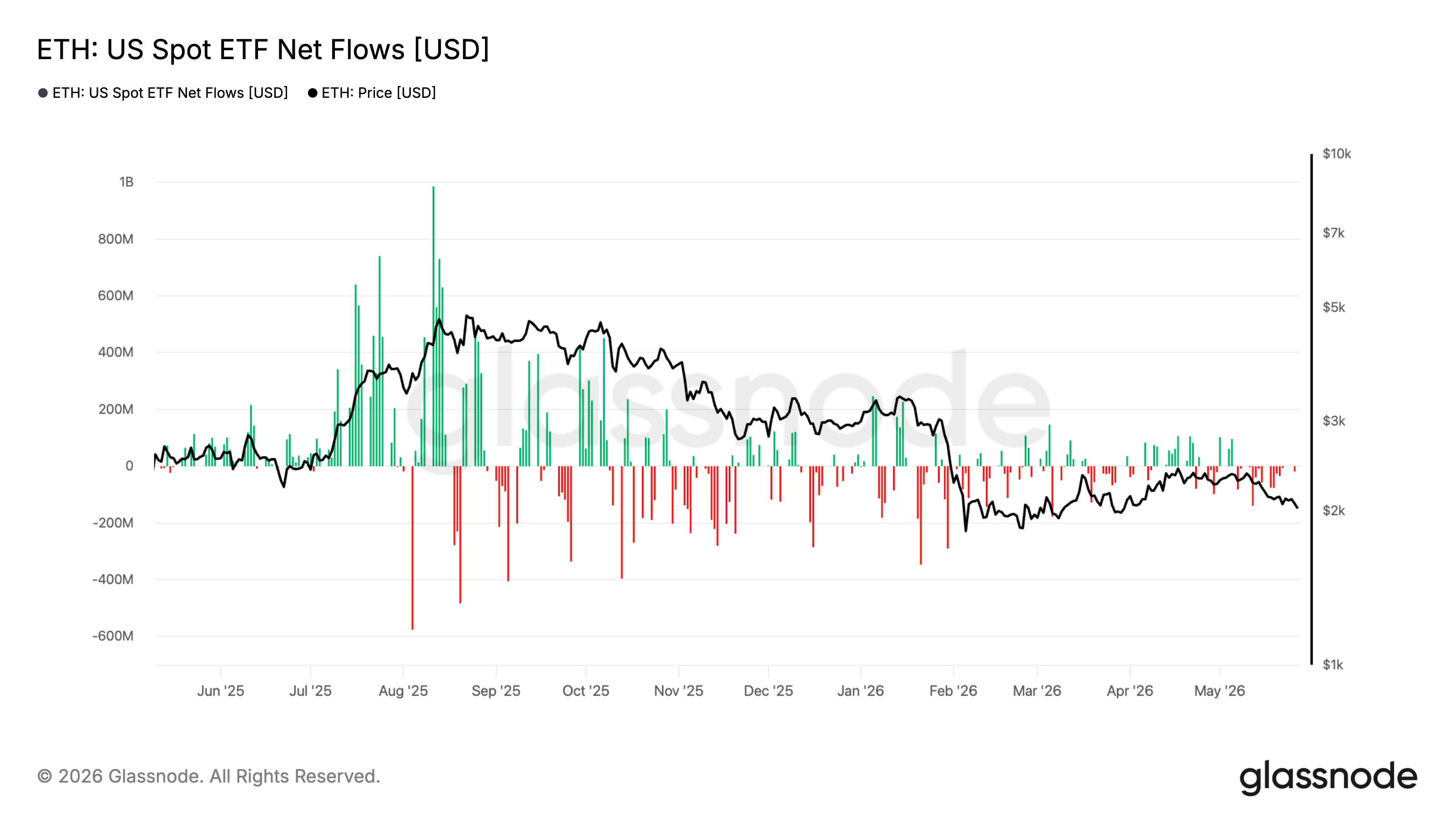
US Spot ETH ETF daily net flows. Source: Glassnode
Ethereum’s mega-whales, wallets that hold over 10,000 ETH, are also reducing exposure. So far in 2026, they have cut their balances by more than 5%, according to Glassnode data.
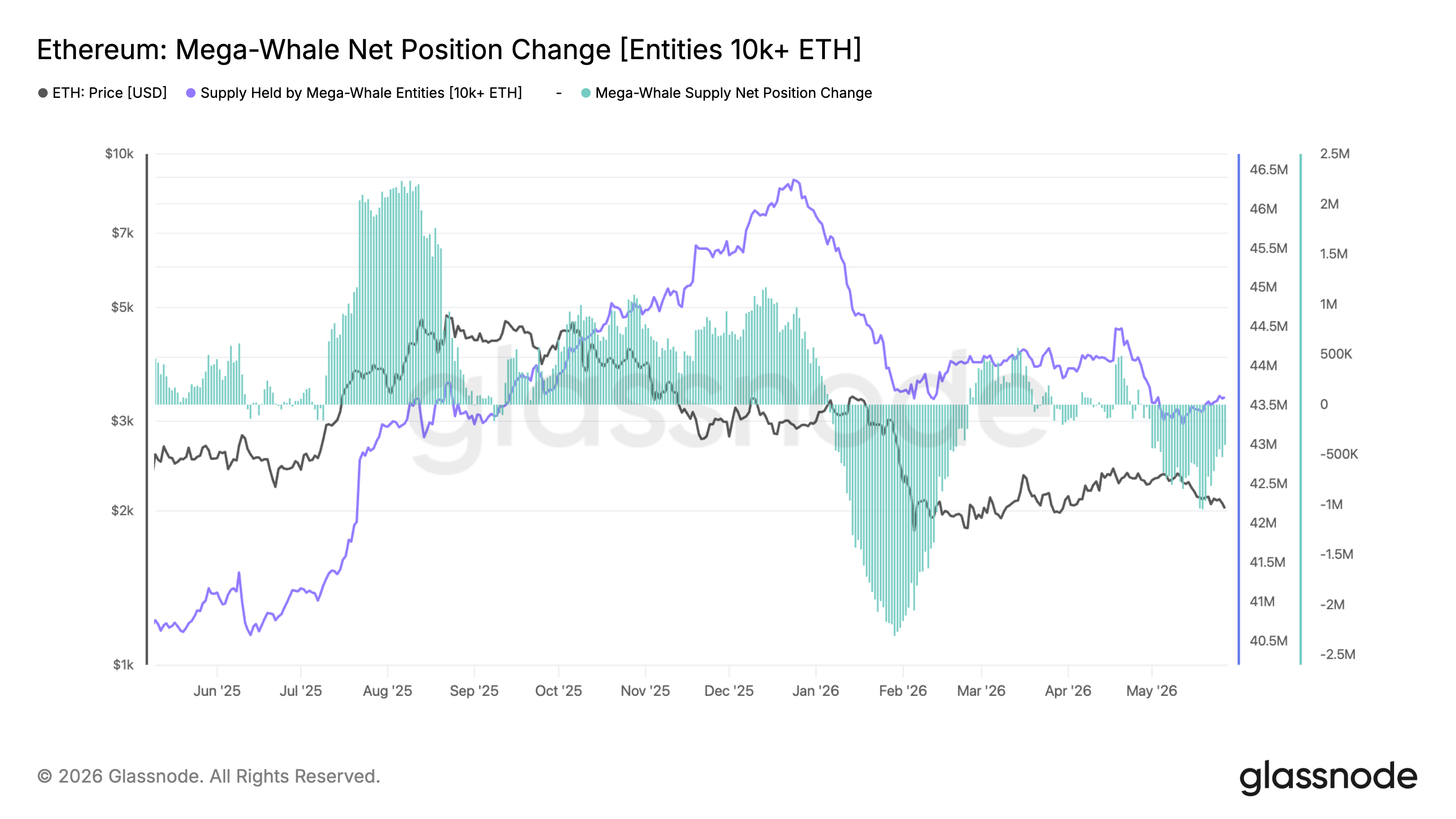
Ethereum mega-whale net position change and balance vs. ETH price. Source: Glassnode
Tom Lee’s BitMine remains the key counterweight, holding about 5.21 million ETH, or roughly 4.31% of supply, as part of its push to own 5% of the network.
Related: Bitmine slows Ethereum buys, targets December to own 5% of supply
Lee has argued that Ethereum is entering a long-term “supercycle” driven by Wall Street tokenization and AI agents using neutral public blockchains.
But that bet is now deeply underwater. BitMine’s average ETH purchase price sits near $3,484, while ETH trades around $1,990, leaving the firm with an estimated $8.07 billion unrealized loss, according to DropStab.COM.
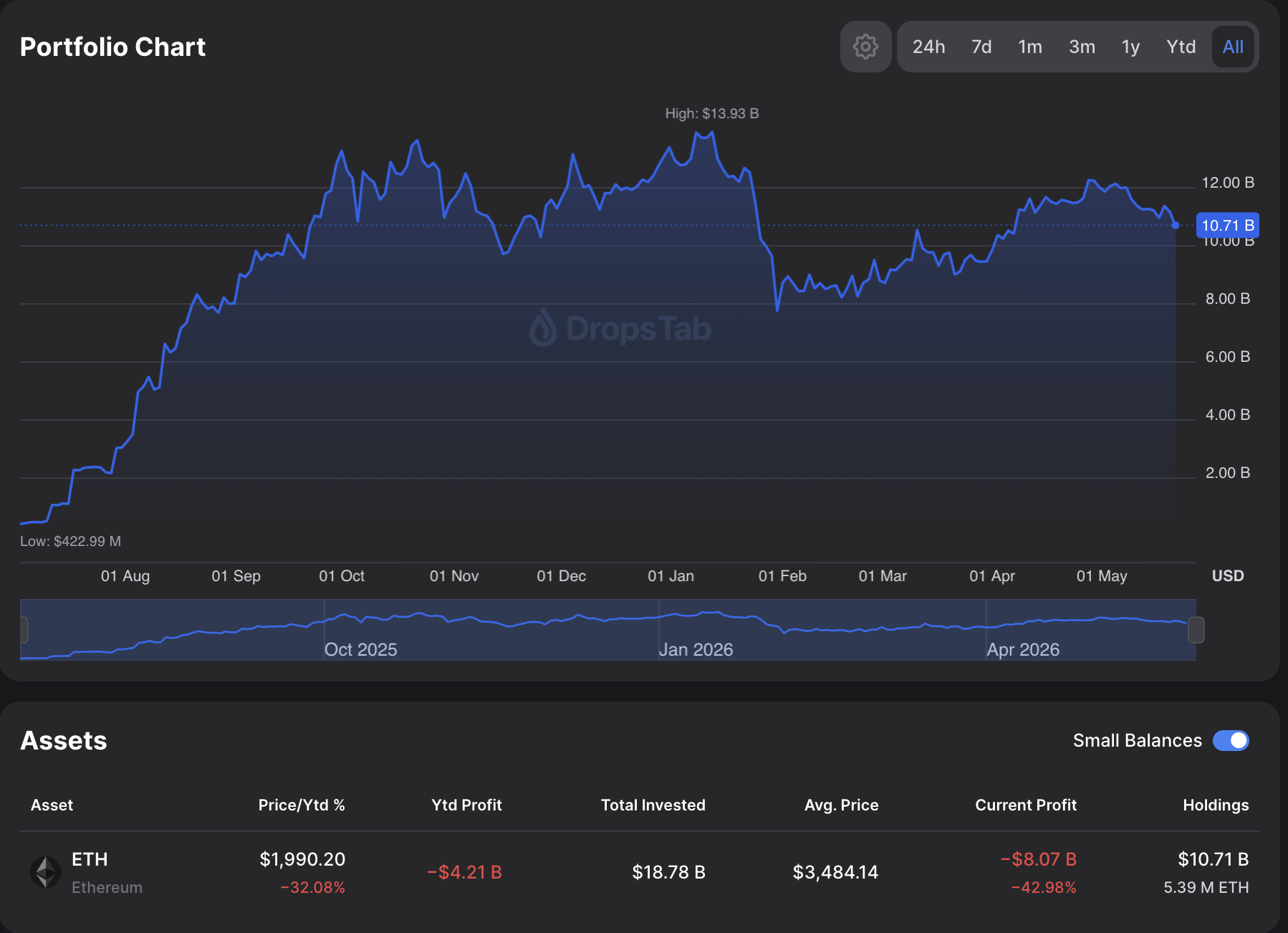
Bitmine’s Ethereum portfolio performance chart. Source: DropStab.COM
ETH price may retest the $1,750 macro low
As of Thursday, ETH had fallen as much as 3% intraday to around $1,965. The move also left Ethereum down more than 40% from its 2026 high near $3,400.
The latest decline followed a breakdown from what appeared to be a rising wedge, a bearish reversal pattern formed by two ascending, converging trend lines.
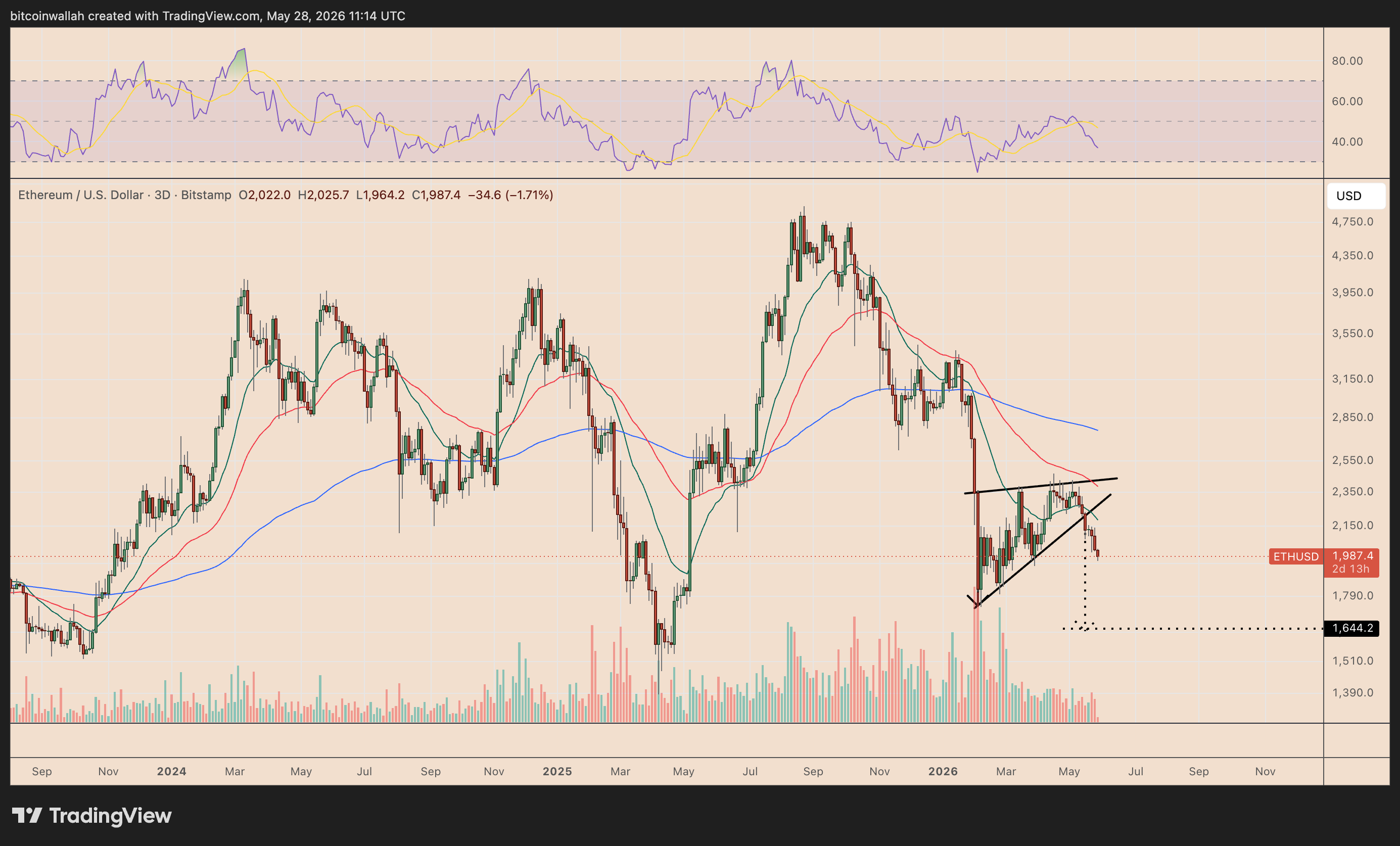
ETH/USD three-day price chart. Source: TradingView
Such setups typically resolve when price breaks below the lower trend line, with the downside target measured by subtracting the wedge’s maximum height from the breakdown point.
ETH entered the breakdown phase on Saturday and has since extended its losses, putting the measured downside target near $1,750 back in focus, down about 18.5% from the current levels.
In his Thursday post, analyst Ardi also projected $1,750 as the next ETH downside target.