Telegram founder Pavel Durov said Russian authorities designated him a “terrorist” after he refused government demands for mass surveillance and censorship on the messaging platform, responding publicly a day after Russia announced charges against him.
In a Telegram post on Thursday, Durov also said Russia had barred him from “publishing information on the Internet,” adding that authorities had “got confused about who can ban whom from the Internet.”
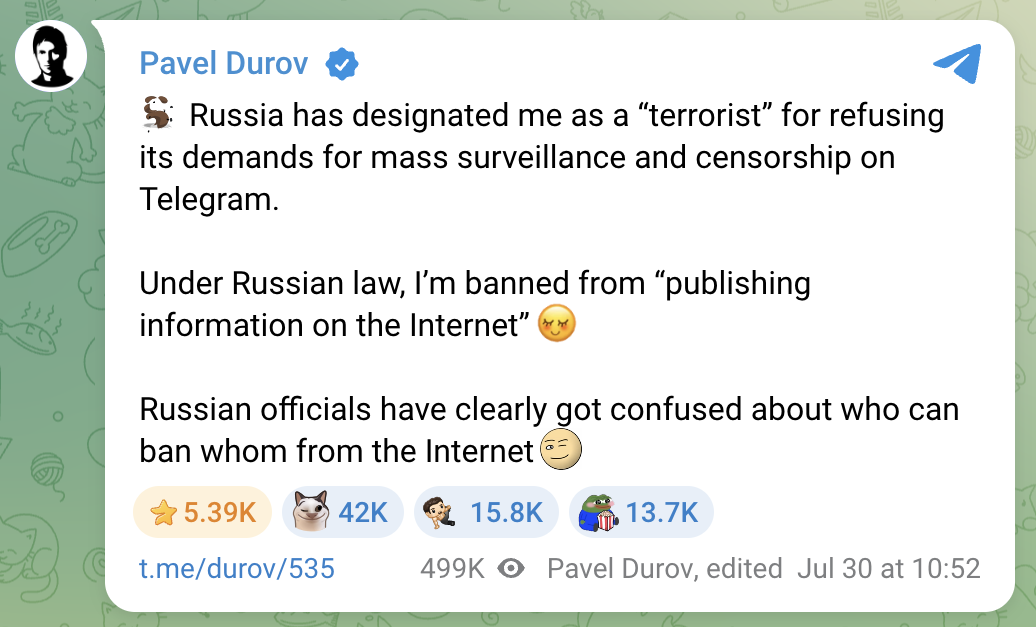
Source: Telegram, Pavel Durov
The comments came a day after Russia’s Federal Security Service accused Durov of facilitating terrorist activity, alleging Telegram failed to remove channels used by terrorist groups and Ukrainian intelligence services.
The case builds on a criminal investigation Russia launched in February, when regulators accused Telegram of leaving nearly 155,000 channels, chats and bots online despite claims they violated Russian laws covering extremist content, terrorism, drug trafficking and other illicit activity.
Related: Pavel Durov says Telegram to roll out native Gram crypto wallet
Durov’s legal battles extend beyond Russia
The Russian case adds to Durov’s legal challenges abroad. Durov was arrested in France in August 2024 and remains under judicial investigation over allegations that Telegram facilitated criminal activity by failing to adequately moderate illegal content and respond to law enforcement requests.
Durov has denied wrongdoing, arguing that French authorities failed to follow due process in seeking information from Telegram. His arrest also prompted a TON Community-backed campaign that collected more than 9 million signatures on an open letter urging French authorities to release him.
French authorities initially allowed Durov to temporarily return to Dubai in March 2025 before lifting his travel restrictions entirely later that year.
Telegram is also facing fresh legal pressure in Australia, where regulators this week launched court proceedings alleging the platform failed to remove terrorism-related content.
Durov has cast himself as a defender of free speech and digital privacy. In April, he warned the European Union’s proposed age-verification app could pave the way for broader online surveillance. The same month, he blamed alleged tax data leaks for a wave of crypto-related kidnappings in France and said Telegram would leave the country rather than grant authorities access to users’ private messages.
Magazine: A quantum roadmap would push Bitcoin much higher: Charles Edwards