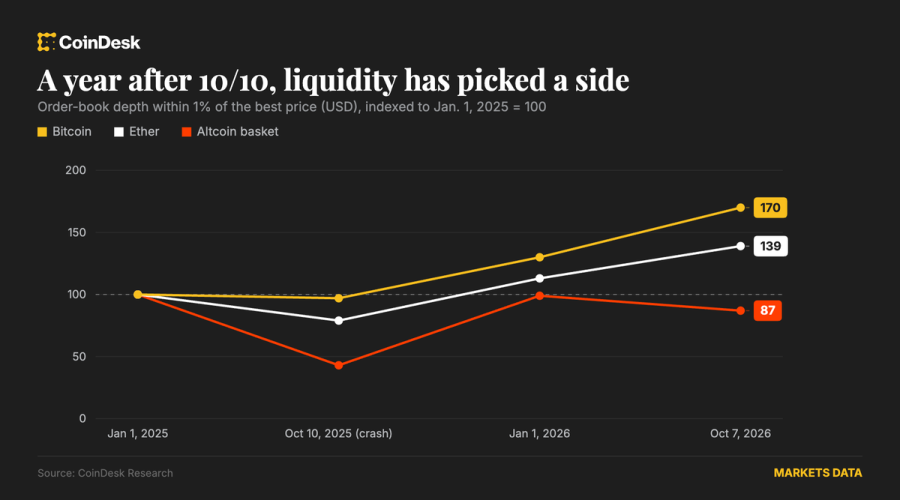
Altcoins left behind
For altcoins, the picture is reversed. In CoinDesk Research’s basket of altcoins, dollar depth was greatest on Jan. 1, 2025, and has been lower on each date measured since.
Depth at 5% from the price is down about a third since the start of 2025, to around $2 million. Closer to the price, at 1%, it has fallen by about a sixth.
Measured in tokens, alt depth looks healthier: it peaked on Jan. 1 this year and has eased only modestly since. But analysts said that token-unit recovery was mostly due to falling prices, masking a steady erosion in committed capital.

Spot trading thins out
Spot trading has not recovered. Weekly spot volume on centralized exchanges averaged around $279 billion over the four weeks to Sept. 27, according to CoinDesk Research, nearly two-thirds below the $801 billion traded in the week of the crash.
Activity bottomed out in August, when weekly volume fell to around $135 billion, and has doubled since. But it remains well short of levels seen around the crash.

What it means
Crypto’s liquidity vanished in hours on Oct. 10, 2025. Where it was next was the open question.
“A year ago, we wrote that liquidity was thin and fragmented, and that it was unclear where capital would rotate once the dust settled. We now have an answer: bitcoin and ether,” said Joshua de Vos, Research lead at CoinDesk. “Market makers have returned to majors, with liquidity above pre-crash levels, whilst altcoin liquidity continues to trend down as a whole. Beyond a select few alts, I expect this divergence to persist into next year as majors continue to dominate institutional interest and volumes.”