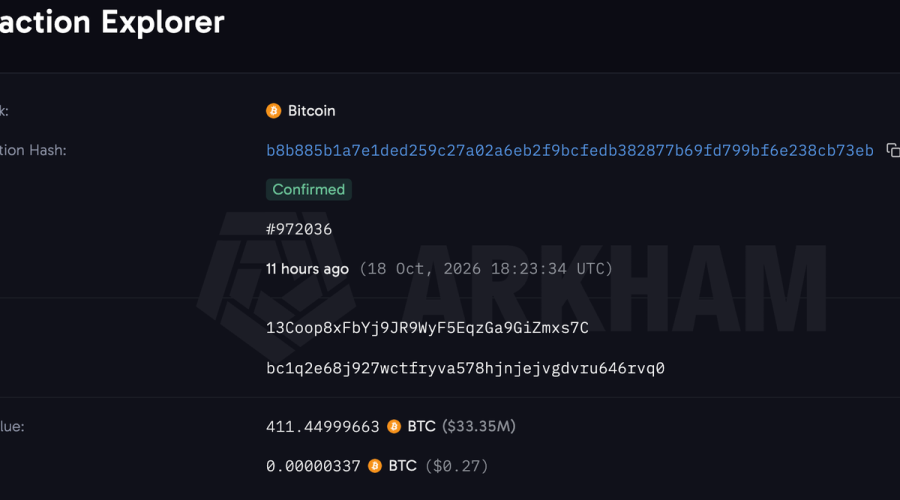
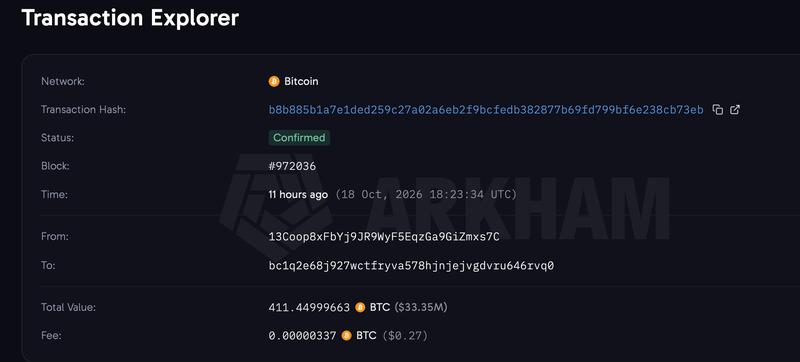
The specific wallet behind Sunday’s move received the bulk of its funds, some 411 BTC, on Sept. 11, 2013. Back then the cryptocurrency traded around $131. Over the next 13 years, the owner didn’t buy, sell, or move a single coin. They simply sat tight as the asset’s value skyrocketed more than 600 times, holding through three halvings, the 2017 boom, the 2022 FTX collapse, and the launch of spot bitcoin ETFs in 2024.
While the owner remained completely inactive, the wallet itself did see some activity over the years. Dozens of tiny deposits trickled in, each worth less than a dollar. Several came from addresses that Arkham labels as phishing. It’s a common scam tactic known as “address poisoning.” Fraudsters send trace amounts of crypto (“dust”) to high-value wallets, hoping the owner will accidentally copy the scammer’s address from their transaction history during a future transfer.
The whale didn’t fall for it.
At 18:23 UTC on Sunday, the owner sent the entire fortune to a new address, paying a transaction fee of just 337 satoshis, a fraction of a single cent.
So far, the funds have not been moved to an exchange. The new destination wallet has only received this single transfer and has not initiated any outgoing transactions. That lack of movement points to routine custodial housekeeping rather than a market sell-off.