Author: BTCLFGTEAM

  • AI-driven phishing scams and hidden crypto exploits shake Web3 security

    AI-driven phishing scams and hidden crypto exploits shake Web3 security

    AI-driven phishing scams and hidden crypto exploits shake Web3 security

    • SBI Crypto was breached, losing $21 million in assets via a suspected laundering operation.
    • A phishing scam targeting GMGN tricked 107 users into approving fake transactions.
    • Honeypot token scams rose 600% month-on-month, with over 2,100 tokens detected.

    Web3 has entered a new phase of cyber threats, with attackers now leveraging artificial intelligence, automation tools, and complex social engineering to exploit users across decentralised networks.

    According to GoPlus Security, over $45.84 million was lost in October alone from a surge of scams, phishing attacks, token exploits, and wallet hacks.

    The data reveals how scammers are evolving their methods, creating high-impact exploits that have affected thousands of users and platforms across Ethereum, Binance Smart Chain, and Base.

    Hackers use AI and automation to boost phishing campaigns

    GoPlus observed a sharp increase in phishing attacks that led to more than $3.5 million in losses.

    A growing number of these scams are powered by “Phishing-as-a-Service” platforms, where threat actors use AI tools to rapidly generate fake websites and deploy large-scale campaigns with lower operational costs.

    One of the largest phishing cases involved the trading platform GMGN.

    In this incident, 107 users were misled by a fake third-party website into authorising harmful transactions. Losses totalled more than $700,000.

    The phishing scam replicated legitimate wallet interactions, tricking victims into signing approval requests that gave attackers control over their funds.

    In another case, a trader approved a malicious “increaseAllowance” command, resulting in a $325,000 loss in Coinbase Wrapped Bitcoin.

    Separately, another user was hit with a $440,000 loss after signing a fraudulent “permit” transaction.

    Both exploits highlight the rise in fake contract approvals, often enabled by deceptive interfaces mimicking trusted apps.

    Sophisticated exploits linked to state-style laundering tactics

    The single largest exploit came from SBI Crypto, which suffered a breach that drained $21 million worth of digital assets. The losses included Bitcoin, Ethereum, Litecoin, Dogecoin, and Bitcoin Cash.

    Although SBI Crypto did not officially confirm the source of the breach, a joint investigation by ZachXBT and Cyvers suggested patterns similar to those used by North Korean hacker groups.

    The attackers allegedly funnelled funds through Tornado Cash, a known crypto mixer previously sanctioned for its role in laundering state-sponsored thefts.

    This laundering method closely mirrors activity linked to the Lazarus Group, though the report stressed that the connection remains unverified.

    Web3 platforms under attack from honeypot tokens

    Alongside phishing and exploits, the report found a dramatic spike in honeypot tokens.

    These are malicious smart contracts that allow users to buy tokens but prevent them from selling or withdrawing funds.

    Honeypot tokens surged 600% last month, reaching 2,189 identified tokens—though still far fewer than the 40,000 recorded in June 2025.

    Goplus honeypot tokens
    Source: GoPlus Security

    The Binance Smart Chain accounted for the bulk of these tokens at 1,780, followed by 216 on Ethereum and 131 on Base.

    These tokens are embedded with hidden restrictions that block transactions, stranding investor funds in illiquid assets.

    Their increase underscores a shift toward embedded contract-level fraud, which can bypass basic security tools.

    Tokens and socials compromised in wider exploits

    The wider ecosystem also saw losses from social media and platform-based breaches.

    Astra Nova’s official social account was hijacked, triggering a large-scale sell-off of its native token RVV and causing losses of approximately $10.3 million.

    In a separate exploit, decentralised finance platform Garden Finance was hit with a vulnerability that cost users around $10.8 million, according to ZachXBT.

    These incidents reflect a widening surface of attack across both user-facing interfaces and backend contract code.

    Source link

  • Crypto update: Bitcoin ETFs see $300M inflow as investors ‘buy the dip’

    Crypto update: Bitcoin ETFs see $300M inflow as investors ‘buy the dip’

    Crypto update: Bitcoin ETFs see $300M inflow as investors 'buy the dip'

    • US Bitcoin ETFs saw nearly $300 million in net inflows on Tuesday.
    • The inflows snapped a two-week streak of redemptions from the products.
    • Fidelity’s FBTC led the way with $165.9 million, followed by Ark’s ARKB.

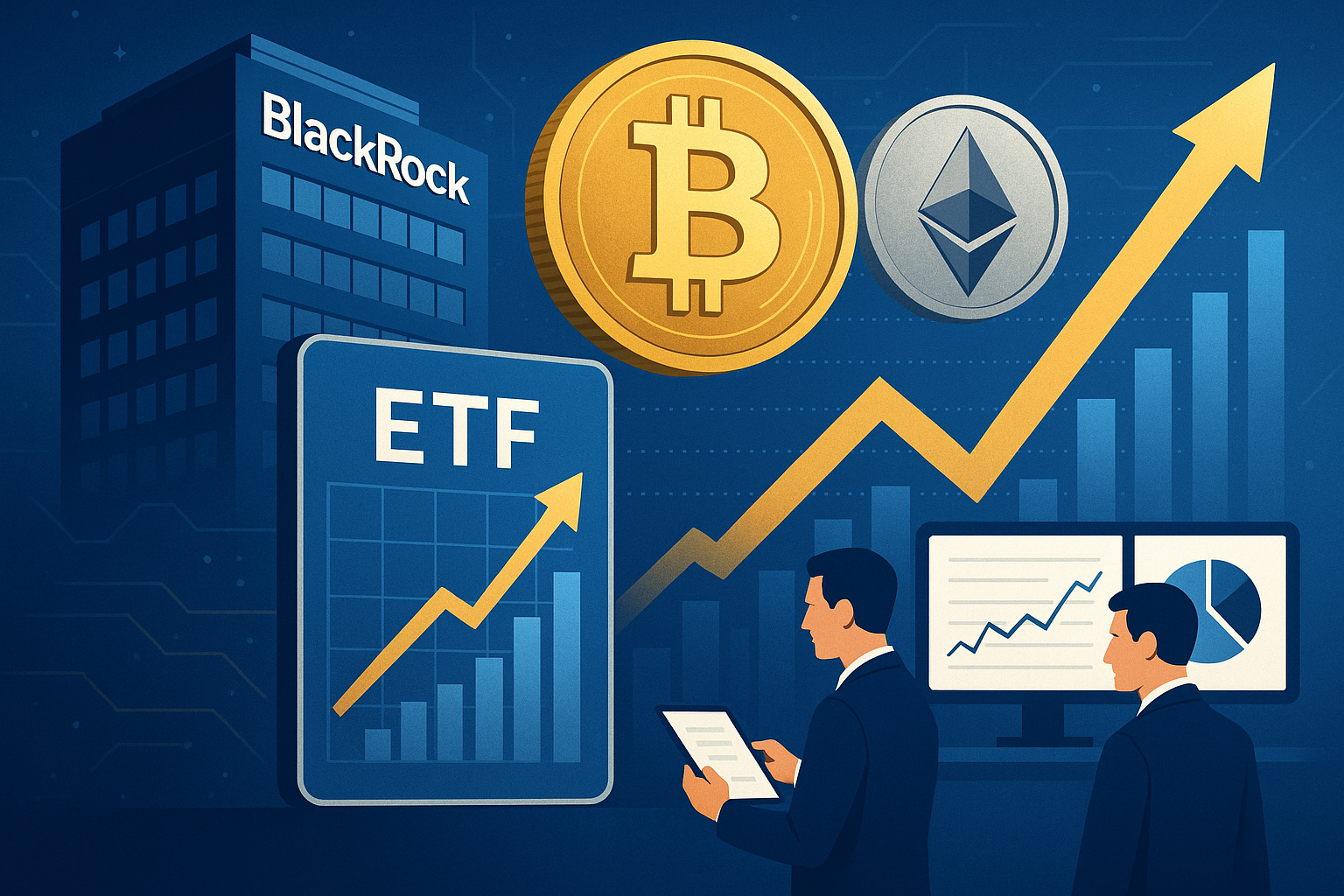
    US-based Bitcoin ETFs have snapped a two-week streak of redemptions, pulling in nearly $300 million in net inflows on Tuesday as investors took advantage of lower prices to rotate back into cryptocurrency-linked products.

    The renewed buying interest, which follows a period of significant outflows, suggests that institutional investors are viewing the recent market dip as a buying opportunity, reaffirming their long-term conviction in the asset despite short-term volatility.

    A decisive reversal after weeks of outflows

    Early data from SoSoValue shows a significant reversal of last week’s trend, which saw over $1.17 billion withdrawn from digital asset investment products.

    Fidelity’s FBTC led the charge with $165.9 million in fresh capital, while Ark 21Shares’ ARKB added $102.5 million.

    Notably, even Grayscale’s GBTC, which has experienced consistent outflows for months, posted a net inflow of $24.1 million.

    This return of capital to US products contrasts with the European market, which has continued to see steady inflows, suggesting a more consistent long-term positioning from investors outside the United States.

    Altcoins continue to attract capital

    While Bitcoin and Ether products have been subject to macro-driven volatility, certain altcoins have continued to attract steady investment.

    According to data from CoinShares, Solana-linked products notched another $118 million in inflows last week, bringing its impressive nine-week total to $2.1 billion.

    This pattern indicates that investors are differentiating between core assets sensitive to macro pressures and emerging networks with strong on-chain momentum.

    Fundamentals remain strong as supply milestone nears

    Despite the recent price turbulence, market experts maintain that Bitcoin’s underlying fundamentals remain robust.

    Thomas Perfumo, a global economist at Kraken, highlighted an upcoming supply milestone as a key factor in the long-term investment case.

    “In approximately seven days, Bitcoin’s circulating supply will cross 19.95 million coins, 95% of its max supply of 21 million coins,” he wrote in a note provided to CoinDesk.

    Perfumo said this event underscores Bitcoin’s programmable scarcity and its enduring role as a “credibly neutral, globally accessible store of value.”

    Gold nears record highs amid fiscal warnings

    In the broader macroeconomic landscape, gold continued to trade near record highs at $4,134.6 per ounce.

    The precious metal’s strength is being fueled by growing concerns over US fiscal stability.

    Economist James Thorne has warned that the US has crossed a fiscal “Rubicon” that could trigger a “Bretton Woods 2.0” style reset, potentially revaluing gold to manage soaring debt levels.

    The impact of surging bullion prices is already being felt, with major producer Barrick Mining reporting a $1.3 billion quarterly profit and a dividend hike.

    Source link

  • Lisk (LSK) token price has soared 62%: here’s what is fueling the rally

    Lisk (LSK) token price has soared 62%: here’s what is fueling the rally

    Lisk (LSK) token price has soared 62%

    • The Lisk (LSK) token has surged 62% amid altcoin rotation and ecosystem growth.
    • The key support lies at $0.2574, while the immediate resistance lies between $0.3372 and $0.4591.
    • The breakout has coincided with a dramatic surge in Lisk open interest.

    Lisk (LSK) has captured the attention of crypto investors today as the token experienced a remarkable 62.6% surge in just 24 hours.

    The sudden rally has pushed LSK to new short-term highs, outpacing a broadly flat cryptocurrency market.

    Analysts are pointing to a combination of technical triggers, ecosystem developments, and market rotation that are fueling renewed optimism in the once-sleepy token.

    Explosive breakout drives market attention

    Lisk (LSK) has broken out of a descending wedge pattern that had constrained its price since July.

    In a single trading session, the token rocketed from $0.18 to an intraday high of $0.42, generating significant trading volumes.

    The breakout coincided with a dramatic 258% surge in open interest, with $38.9 million added in just four hours.

    However, a slightly negative funding rate of -1.96% intensified short liquidations, triggering $1.6 million worth of forced exits across major derivatives markets.

    Market rotation and ecosystem growth

    The LSK rally is also closely tied to broader market dynamics, where Bitcoin dominance has fallen to 59.3%, signalling a rotation of capital into high-growth altcoins.

    Lisk (LSK) benefited from this flow, seeing its 24-hour trading volume surge by over 5,500% to $237 million.

    Investors appear to be favouring LSK as a promising, undervalued token amid muted Bitcoin volatility.

    Further bolstering sentiment, Lisk’s ecosystem has shown meaningful development with the launch of a $15 million EMpower Fund supporting Web3 startups across Africa, LATAM, and Asia, while DeFi integrations like Gearbox Protocol have expanded LSK’s lending and borrowing utilities.

    The Lisk Network has also migrated to the Optimism Superchain, bringing its app ecosystem in line with other OP stack chains like Base.

    These developments enhance Lisk’s credibility and long-term growth prospects, attracting speculative capital and encouraging active trading in the short term.

    Lisk (LSK) token price outlook

    The LSK token has demonstrated a remarkable ability to rebound even after extended periods of decline, and recent developments in Web3 applications and derivatives trading have reignited investor interest.

    A blend of technical momentum, ecosystem growth, and capital rotation into altcoins underpins a cautiously optimistic outlook for Lisk (LSK) in the near term.

    If the Lisk price can maintain levels above $0.32, the token may target the $0.42–$0.45 range, signalling continued bullish momentum.

    However, traders should remain vigilant, as sharp rallies like this often experience short-term retracements, especially seeing that the RSI is already in the oversold region.

    The key levels around $0.345 and $0.402 will be crucial in shaping market sentiment, and sustained trading volumes above $200 million per day would further reinforce the breakout.

    From a technical perspective, LSK needs to stay above $0.2574 to support its upward trajectory.

    Lisk (LSK) token price analysis
    Lisk (LSK) token price chart | Source: CoinMarketCap

    Breaking through the first major resistance at $0.3372 could pave the way toward $0.4591, with a potential third resistance level at $0.5629 if bullish conditions persist.

    But on the downside, a breach below $0.2574 may expose the token to a deeper correction, with the next support level at $0.1891 serving as a critical floor for buyers, according to CoinLore.

    Overall, the Lisk (LSK) token price reflects a delicate balance between renewed optimism and short-term caution.

    Source link

  • Bitcoin faces quantum risk: why SegWit wallets may offer limited protection

    Bitcoin faces quantum risk: why SegWit wallets may offer limited protection

    Bitcoin faces quantum risk: Why SegWit wallets may offer limited protection

    • SegWit wallets delay public key exposure until the point of transaction.
    • Holding Bitcoin in SegWit addresses offers temporary protection if left untouched.
    • Critics believe practical quantum computing remains decades away.

    Quantum computing’s long-theorised threat to Bitcoin is resurfacing in the crypto conversation.

    The idea that a powerful enough quantum machine could break cryptographic security and expose Bitcoin keys has moved from theoretical chatter to practical concern.

    Bitcoin analyst Willy Woo recently suggested a short-term safeguard: store Bitcoin in SegWit addresses for the next seven years.

    While the tactic has sparked debate, the broader community remains divided over whether quantum computers are a real, imminent threat or just the latest tech-driven scare.

    SegWit offers delayed public key exposure

    Segregated Witness (SegWit), introduced on 23 August 2017, is a protocol upgrade that changes how data is stored in Bitcoin transactions. Woo suggests that SegWit’s delayed public key exposure could act as a deterrent against quantum attacks.

    Unlike Taproot, which exposes the public key immediately within the address, SegWit only reveals it during transaction execution.

    This delay makes it harder for a quantum computer to reverse-engineer the private key from the public one before the transaction is completed.

    Under current conditions, exposing a public key does not present much of a problem. However, if and when quantum computing advances to the point of real-time decryption capabilities, the exposure window of Taproot wallets could be a key vulnerability.

    In contrast, SegWit’s hashing conceals the public key behind a layer of encryption until absolutely necessary. This may keep Bitcoin more secure during this anticipated transition period.

    Hodling in SegWit comes with major constraints

    While the SegWit method may offer protection, it carries a critical limitation. According to Woo, users must not move their Bitcoin from the SegWit address.

    Any outgoing transaction would expose the public key, potentially inviting a quantum attack if executed during the transaction.

    As such, this method is not viable for active traders or anyone needing liquidity in the short term. It is a static defence mechanism, not a dynamic solution.

    This approach effectively puts Bitcoin in a vault. It is safe but inaccessible. It is also only as secure as the continued absence of real-time quantum decryption.

    If a breakthrough comes earlier than anticipated, even SegWit-held coins could be compromised during withdrawal. Woo acknowledges that this is only an intermediary measure.

    It is meant to bridge the gap until a quantum-resistant Bitcoin protocol becomes available.

    Experts disagree over SegWit’s efficacy

    Not everyone agrees that SegWit provides any meaningful protection. Charles Edwards, founder of digital asset fund Capriole, has dismissed the idea as ineffective.

    He argues that SegWit is not a quantum-safe model and relying on it could delay necessary network upgrades.

    According to Edwards, the belief that Bitcoin has a seven-year buffer period could create complacency, weakening pressure to accelerate work on quantum-resistant algorithms.

    This disagreement underscores a broader lack of consensus in the crypto space on how seriously the community should take quantum risk.

    Although protocol upgrades are under development, there is concern among developers that current initiatives are progressing too slowly.

    Some argue that existing security layers were not built with quantum capabilities in mind, making them structurally vulnerable regardless of transaction format.

    Sceptics say quantum fears are overblown

    Despite the alarm, some in the community believe the risk is being overstated. Critics point to quantum computing’s persistent technical limitations.

    In a post in February, Bitcoin advocate Adrian Morris claimed quantum tech is “barely viable”, citing issues with thermodynamics, memory, and persistent calculations.

    Others argue that traditional financial systems and major banks would be far more attractive targets for early quantum attacks than a decentralised network like Bitcoin.

    Woo notes that Bitcoin held by custodians, such as ETFs or treasury firms, may be better shielded in the interim. This is only true if those institutions take proactive steps to secure their holdings.

    Until a comprehensive upgrade is implemented, the quantum debate will continue to shape discourse around Bitcoin’s long-term security.

    Source link

  • Bitcoin holds $106K as shutdown optimism fuels broad market rally

    Bitcoin holds $106K as shutdown optimism fuels broad market rally

    Bitcoin holds $106K as shutdown optimism fuels broad market rally

    • Bitcoin bounced back to trade near $106,000 on shutdown resolution hopes.
    • The end of the shutdown could release a $150-200B liquidity jolt into markets.
    • However, the shutdown is stalling crucial US crypto regulation bills.

    Cryptocurrency markets started the week on a strong footing, with Bitcoin holding above the key $105,000 level as growing optimism around a potential resolution to the US government shutdown helped steady broader risk sentiment.

    Following a volatile period, a weekend rally extended into Monday, with Bitcoin recovering from an early dip to trade near $106,000.

    However, analysts warn that while an end to the shutdown could provide a short-term liquidity boost, the prolonged political impasse has created a significant, under-the-radar threat to the crypto industry’s long-term regulatory future.

    The upbeat mood was felt across the asset spectrum.

    In the crypto space, Ether traded just under $3,600, while XRP led gains among major altcoins, jumping 9% on anticipation of a potential spot ETF.

    Crypto-related stocks, which suffered heavy losses last week, also rebounded strongly, with Coinbase (COIN) rising 4.1% and Robinhood (HOOD) gaining 4.8%.

    The rally mirrored gains in traditional markets, where the S&P 500 climbed 1.6% and the Nasdaq rose 2.2%.

    This recovery was largely fueled by growing confidence that the record-breaking 39-day government shutdown may be nearing an end, a sentiment bolstered by prediction market data and a weekend social media post from President Donald Trump.

    The shutdown’s double-edged sword for crypto

    While the market is cheering a potential resolution, the shutdown has created a complex “Jekyll and Hyde” scenario for the digital asset industry, according to David Nage, head of research at Arca.

    In a Monday note, Nage explained the positive side: an end to the shutdown could release a massive liquidity injection of 150–200 billion from the Treasury General Account into bank reserves. Historically, such a jolt has been a major tailwind for risk assets like crypto.

    However, there is a significant downside.

    “The larger story for digital asset adoption over the next three to five years is being shaped behind the scenes… and the Banking Committee staff rooms are currently dark due to the shutdown,” Nage explained.

    A race against time for US crypto regulation

    The ongoing shutdown has completely stalled progress on crucial crypto legislation, including the CLARITY Act and the Senate’s digital asset market structure bill.

    Nage warned that this delay poses a greater long-term threat to the industry than recent market volatility.

    With the 2026 midterm elections approaching, the window for passing comprehensive digital asset regulation is closing.

    “If comprehensive digital asset legislation is delayed until 2026 and then dies in midterm politics, the industry will miss out on the regulatory clarity needed to attract institutional capital and achieve sustainable growth,” Nage said.

    He concluded that the timing is critical. “If the shutdown ends in November, we may benefit from both a liquidity injection and a legislative opportunity,” he said.

    If it drags into December, the legislation may miss its window.

    Source link

  • UNI soars 12% as Uniswap v4’s $200B milestone fuels bullish momentum

    UNI soars 12% as Uniswap v4’s $200B milestone fuels bullish momentum

    UNI soars 12% as Uniswap v4’s $200B milestone fuels bullish momentum

    • Uniswap v4 has surpassed $200 billion in swap volume.
    • The breakthrough has renewed interest in Uniswap.
    • The update coincides with an over 10% increase in native UNI’s price.

    Cryptocurrencies recorded substantial gains on Monday after the United States Senate voted to end the ongoing government shutdown.

    Amidst the broad-based optimism, UNI extended its daily gains by over 12% as Uniswap Labs celebrated a remarkable breakthrough.

    The team protocol took it to X to confirm that Uniswap v4 has handled over $200 billion in swap volume, making it one of the most active networks in the DeFi industry.

    Notably, Uniswap released the version 4 upgrade in January this year to increase efficiency, reduce costs, and enhance developer activity through customized liquidity pools.

    The massive swap volume underscores demand and interest in the past months.

    The announcement coincided with UNI’s recovery.

    Moreover, it has sparked renewed interest in the DEX. The timing is also crucial.

    As the overall cryptocurrency market regains momentum, the $200 billion swap volume reflects Uniswap’s key role in decentralized trading.

    Enthusiasts react to rising activity

    The decentralized exchange sees renewed optimism from DeFi players and retail traders.

    UNI’s surge coincides with increased trading volumes across leading exchanges.

    Coinglass data shows Uniswap’s Open Interest has climbed to $344 million after a sharp rise today.

    Meanwhile, market watchers perceive the $200 billion milestone as a sign of a vibrant chain driven by demand, not only short-term stats.

    The robust swap volume reflects active participation, stable liquidity, and confidence in Uniswap’s future potential.

    One crypto enthusiast and X user:

    “While others talk decentralization, Uniswap quietly becomes the backbone of DeFi. $200B speaks louder than any narrative.

    Why is Uniswap v4 unique?

    Released in January 2025, Uniswap’s v4 upgrade introduced key changes in decentralized trading systems.

    For instance, the version introduces hooks, a mechanism that allows developers to create liquidity pools with custom features.

    That welcomed innovations like automated strategies, dynamic fees, and streamlined user experience.

    V4 has gradually gained traction among liquidity providers and developers since launching.

    Meanwhile, crossing $200 billion in swap volume confirms that the upgrade introduced practical improvements.

    At a time when the decentralized trading space sees intense competition from perpetual DEXs like Hyperliquid and Aster, Uniswap’s growth remains remarkable.

    The $200 billion swap volume signals the protocol’s relevance amid shifting preferences.

    UNI price outlook

    Uniswap’s native token traded in green as the community cheered the $200 billion swap volume.

    UNI climbed from $6.40 to $0.78 in the past 24 hours, a roughly 12% uptick.

    It is trading at $6.90 after correcting from intraday highs, with soaring trading volumes signaling renewed enthusiasm.

    While the swap volume milestone signals a brighter future for UNI, broader sentiments will shape its short-term performance.

    Continued overall market recoveries would extend the alt’s rally, whereas sudden selling pressure might erase the gains.


    Source link

  • Starknet (STRK) price soars 30%, but why is the altcoin rising?

    Starknet (STRK) price soars 30%, but why is the altcoin rising?

    Starknet (STRK) price soars 30%

    • Starknet (STRK) price technical breakout signals bullish momentum with new resistance near $0.214.
    • Bitcoin staking and BTCFi incentives drive STRK adoption and network growth.
    • S-Two prover deployment has also boosted throughput, privacy, and decentralisation on Starknet.

    Starknet (STRK) price has surged dramatically in recent days, catching the attention of traders and crypto enthusiasts alike.

    The altcoin has gained more than 30% in just 24 hours, fueled by a combination of technological upgrades, strategic integration with Bitcoin, and renewed market optimism.

    This sudden upswing has sparked questions about what is driving STRK’s momentum and whether the altcoin can sustain its gains in the near term.

    Bitcoin staking boosts STRK utility

    One of the primary drivers behind the rally is Starknet’s BTCFi initiative, which allows Bitcoin (BTC) holders to stake their BTC and earn STRK rewards while maintaining custody.

    The program has already attracted significant capital, with over $200 million staked on the network, including 880 million STRK and 835 BTC, according to the latest reports.

    By tapping into Bitcoin’s massive $2.1 trillion market capitalisation, Starknet positions STRK as a key rewards token and a practical asset for paying network fees.

    The BTCFi ecosystem expansion not only strengthens Starknet’s liquidity but also enhances its cross-chain utility.

    Investors are closely monitoring total value locked (TVL) in Bitcoin staking, which currently sits at around $1.5 billion, to gauge continued adoption and the altcoin’s potential growth.

    The influx of BTC and STRK into the network has bolstered confidence in the protocol’s future, creating a clear catalyst for the recent price surge.

    S-Two Prover accelerates adoption and decentralisation

    Another major factor propelling STRK is the deployment of StarkWare’s next-generation S-two Prover.

    Released on the mainnet a few days ago, this open-source zero-knowledge proof system is designed to increase throughput, reduce verification costs, and strengthen decentralisation.

    By producing validity proofs for every block up to ten times faster than its predecessor, the S-two prover allows real-time verification of off-chain transactions and supports new types of applications, from private DeFi protocols to zk-secured games and verifiable AI.

    S-two is designed to operate efficiently even on consumer hardware, meaning that anyone can participate in the network without relying on centralised data centres.

    This advancement not only improves network security and censorship resistance but also significantly enhances user experience.

    The combination of speed, privacy, and accessibility makes Starknet a more compelling platform for developers and investors alike, contributing directly to bullish sentiment surrounding STRK.

    Market analysts also note that the recent surge is supported by optimism surrounding Starknet’s v0.14.0 upgrade.

    The update introduces distributed sequencers, 6-second blocks, and EIP-1559-style fee burns, all of which improve decentralisation and network efficiency.

    While early migration caused temporary outages, the upgrade underscores Starknet’s commitment to building a secure, scalable Layer 2 ecosystem that can interact with both Ethereum and Bitcoin.

    Technical breakout fuels the STRK price rally

    From a technical perspective, STRK has confirmed a major bullish breakout.

    The altcoin surpassed the 38.2% Fibonacci retracement level at $0.1343 and remains above the 30-day simple moving average of $0.1216.

    Starknet price chart
    Starknet price chart | Source: CoinMarketCap

    Momentum indicators such as the RSI and MACD show strong upward trends, signalling that the altcoin has invalidated much of its previous yearly downtrend.

    With resistance set near $0.214, traders should closely watch whether the current momentum can push STRK to new highs.


    Source link

  • Arweave (AR) price forecast as it rides the DePIN sector momentum

    Arweave (AR) price forecast as it rides the DePIN sector momentum

    Arweave (AR) price forecast

    • Arweave price has rallied 25.5% today, leading the DePIN sector surge.
    • Arweave Day Asia has boosted the AO ecosystem and developer interest.
    • The immediate support sits at $5.03 while the resistance is found near $6.31.

    Arweave (AR) price has witnessed a powerful 25.5% rally in the past 24 hours, outpacing both the broader crypto market and its peers in the Decentralised Physical Infrastructure Networks (DePIN) sector.

    This comes amid renewed investor interest in decentralised storage projects as traders position themselves for a potential long-term breakout.

    DePIN sector sees renewed interest

    The DePIN sector has captured attention this week, surging 10.93% as investors rotate into decentralised infrastructure plays.

    Arweave (AR) and Filecoin lead the charge, posting impressive 37.9% and 51.8% weekly gains, respectively, coinciding with growing awareness of the risks tied to centralised cloud providers like AWS and Microsoft, which recently experienced widespread outages.

    The Microsoft and AWS outages have underscored the need for resilient, decentralised storage systems — an area where Arweave’s permanent storage model shines.

    By offering a censorship-resistant, immutable data layer, Arweave positions itself as a reliable alternative to traditional cloud giants.

    Traders and enterprises alike are beginning to recognise this value, as reflected in the 348% surge in Arweave’s 24-hour trading volume.

    Analysts note that Arweave’s technology offers more than just decentralised storage; it provides long-term data permanence.

    With Layer 2 networks such as Starknet and Optimism exploring Arweave for archiving purposes, the token’s fundamentals appear increasingly robust.

    If enterprise and blockchain adoption continue to expand, AR could cement its role at the heart of the DePIN movement.

    Arweave Day Asia adds fuel

    Arweave Day Asia, held in early October, played a major role in fueling optimism around the AR price.

    The event showcased AO, Arweave’s decentralised computing framework, and introduced “DevBot,” a tool that allows AI-generated decentralised applications to be deployed directly on Arweave’s network.

    Attendees witnessed live demonstrations of dApp creation, customised digital merchandise, and network upgrades — all aimed at lowering the barriers to decentralised development.

    The event generated significant excitement among developers and investors, reinforcing Arweave’s image as a versatile ecosystem rather than a single-purpose storage project.

    This renewed confidence in AO’s potential has added a strong narrative tailwind.

    Developers are increasingly drawn to the idea of building AI-assisted, on-chain applications that live permanently on Arweave.

    This has, in turn, contributed to sustained bullish sentiment, helping AR extend its gains amid a broader market slowdown.

    Arweave (AR) price analysis

    Technically, the Arweave (AR) price has broken key resistance levels, signalling growing bullish momentum.

    After crossing the 23.6% Fibonacci retracement at $5.03 and the 30-day simple moving average at $4.22, AR now eyes the next resistance at $6.31.

    The relative strength index (RSI) remains moderate at 64, suggesting room for further upside before approaching overbought territory.

    CoinLore’s analysis supports this outlook, emphasising that AR must hold above $4.82 to maintain its bullish structure.

    A sustained move above $6.20 could pave the way toward $8.31 and $10.40.

    On the downside, failure to defend $4.82 might open the door to deeper corrections toward $1.32, a level last seen during previous market cycles.

    Meanwhile, long-term projections remain highly optimistic.

    Analyst Render With Me identifies immediate support between $9.15 and $13.27, suggesting that the token could consolidate before pursuing a more ambitious rally.

    Render With Me’s forecast places short-term targets between $25.31 and $28.17, with a long-term horizon aiming as high as $61.97 to $71.46 if market and sector conditions align.

    However, sustaining momentum above the $5.03–$6.31 range remains critical as overall crypto liquidity declines.


    Source link

  • NEAR surges 24% as bulls break key resistance

    NEAR surges 24% as bulls break key resistance

    Bitcoin Soared Amid Wall Street Gains

    • NEAR price rose more than 20% to highs of $2.34.
    • The uptick comes amid gains for several altcoins despite ongoing crypto market weakness.
    • Bulls reclaiming the $2 mark could allow them to target $4.6 for a fresh 100% rally.

    NEAR Protocol’s native token has skyrocketed 24% in the past 24 hours, shattering a persistent resistance barrier and reigniting investor enthusiasm amid broader cryptocurrency volatility.

    NEAR currently trades at $2.27, slightly off the intraday high of $2.34 that marked its highest level since mid-October.

    Gains signal a potential shift in sentiment as multiple tokens eye bounce, including Tezos (XTZ).

    NEAR price today

    NEAR’s bullish performance has seen the token climb from lows of $1.83 to fresh highs of $2.34 in the past three days.

    Although the price is slightly off the intraday peak, market data shows aggressive buying.

    Per CoinMarketCap data, the token’s daily trading volume increased by over 300% to $753 million.

    It’s a significant show of conviction from bulls and the main metric behind the NEAR price breakout.

    Ostensibly, the move saw bulls decisively clear the $2.00 psychological resistance, allowing them to target fresh momentum.

    This outlook could gain additional tailwinds from parallel developments in the privacy sector.

    In particular, this is a market where Zcash (ZEC) has exploded nearly 700% in the past month, drawing renewed attention to shielded transactions and anonymous DeFi.

    Zcash’s resurgence is closely tied to NEAR’s innovative Intents protocol, a cross-chain coordination layer that simplifies complex swaps while preserving user privacy.

    Zcash’s official Zashi wallet has deepened its integration with NEAR Intents, enabling seamless on-ramps and off-ramps for shielded ZEC conversions from assets like BTC, SOL, and USDC.

    For NEAR, the linkage amplifies its appeal as the “blockchain for AI,” where Intents not only streamlines interoperability but also embeds privacy-by-design features.

    As Zcash’s shielded pool nears 30% of its supply, NEAR benefits from the spillover, with ecosystem projects like OceanPal committing $120 million to treasury-backed intents.

    Is NEAR price poised for a 100% bounce?

    The technical outlook for NEAR paints a decidedly bullish picture, with key indicators aligning for a possible 100% bounce from current levels toward $4.60.

    The Relative Strength Index (RSI) on the daily chart has surged to 51, hitting neutral territory after dipping into oversold readings of 28 on Nov. 4.

    Meanwhile, the Moving Average Convergence Divergence (MACD) histogram has flipped positive, with the line crossing above the signal.

    This suggests a potential bullish divergence, similar to what preceded NEAR’s June-July rally from $1.97 to $3.12.

    Trading volume, already elevated, shows sustained spikes, averaging the breakout above $2.00 as genuine rather than a fleeting pump.

    A sustained hold above $2.30 could trigger a breakout.

    NEAR Chart
    NEAR price chart by TradingView

    However, downside risks remain as the price hovers near $2.00.

    If the confluence of current support fails, bears could push the token’s value well below the psychological mark.

    Nonetheless, as Zcash’s boom reflects demand for secure, intent-based DeFi, NEAR stands to benefit from traction.


    Source link

  • Bitcoin’s new problem: it’s not leverage, it’s long-term holders cashing out

    • Long-term holders have sold approximately 400,000 Bitcoin ($45B) in the past month.
    • This sell-off is driven by spot markets and fading conviction, not high leverage.
    • Bitcoin fell below the key $100,000 level for the first time since June.

    Bitcoin has once again slipped below the critical $100,000 mark, but the force driving this latest downturn is different and potentially more concerning for the market.

    Unlike the leverage-fueled crash in October, this sell-off is being driven by a quieter, more sustained exodus: long-term holders are cashing out, creating a $45 billion supply glut that is testing the market’s conviction.

    The original cryptocurrency fell as much as 7.4% on Tuesday, marking a more than 20% decline from its record high a month ago.

    While it has since staged a modest recovery, the nature of the selling pressure suggests a fundamental shift in market dynamics.

    From forced liquidations to fading conviction

    The key difference in this downturn is the source of the selling.

    While October’s crash was defined by a cascade of forced liquidations from overleveraged traders, the current slide is being led by a steady drumbeat of selling in the spot market.

    According to Markus Thielen, head of 10x Research, long-time Bitcoin holders have offloaded approximately 400,000 Bitcoin over the past month—an exodus valued at around $45 billion.

    This sustained selling from seasoned investors is creating a market imbalance that new buyers are struggling to absorb.

    This analysis is supported by on-chain data.

    “Over 319,000 Bitcoin has been reactivated in the past month, mainly from coins held for six to twelve months — suggesting significant profit-taking since mid-July,” Vetle Lunde, head of research at K33, told Bloomberg.

    The whale problem: big buyers are disappearing

    With market leverage now relatively muted, attention has turned to the large, long-time holders who are choosing to sell.

    Thielen told Bloomberg that “mega whales”—entities holding between 1,000 and 10,000 Bitcoin—began offloading large volumes earlier this year.

    For a time, institutional players were able to absorb this supply, leading to choppy, sideways price action.

    However, since the October crash, broader demand has faded, and the accumulation by smaller whales (holding 100 to 1,000 Bitcoin) has dropped sharply.

    The result is a growing imbalance between sellers and buyers. “The whales are just not buying,” Thielen said.

    What comes next? A path to further declines

    This sustained selling from long-term holders could have lasting implications.

    Thielen warns that the current unwind could continue well into next spring, drawing parallels to the 2021–2022 bear market, where large holders sold over one million Bitcoin over the course of nearly a year.

    “If this is a similar pace,” he said, “we could see this situation going on for another six months.”

    While not predicting a catastrophic crash, Thielen sees room for further declines as the market consolidates.

    “I am not a believer in the cycle,” Thielen said, “but I would assume that we sort of consolidate and potentially drift even a bit lower from here. $85,000 is my maximum downside target.”

    Source link