Category: NEWS

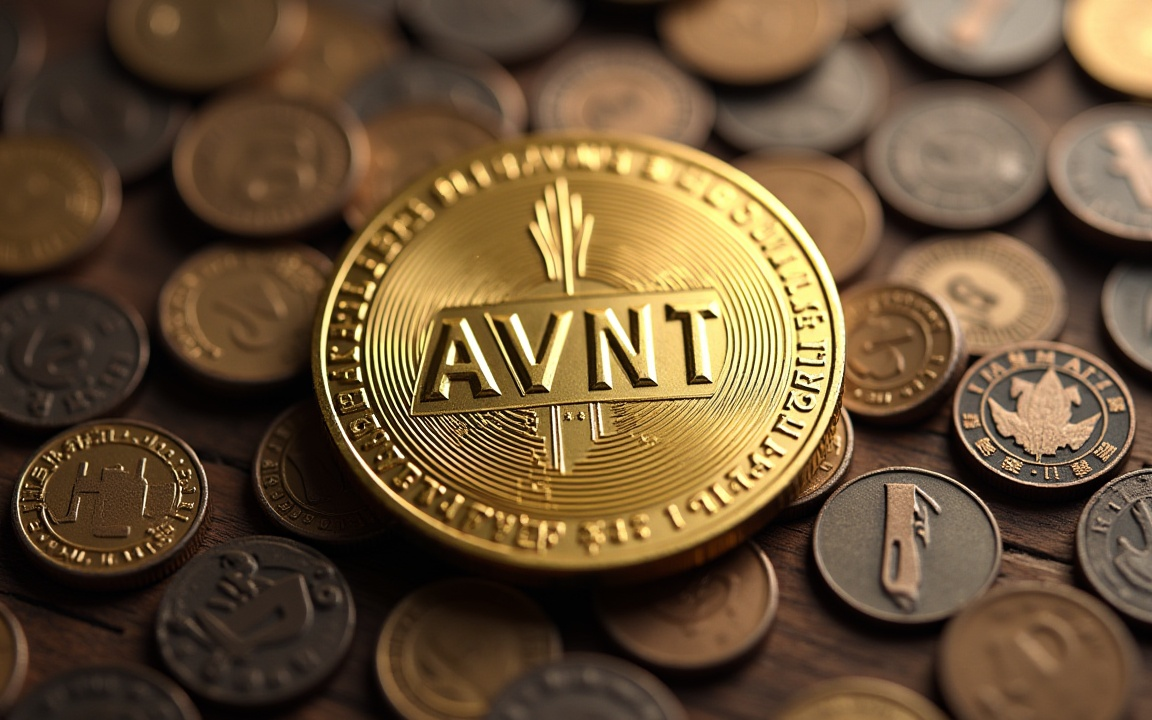
  • What next for Avantis price after the 73% recovery?

    What next for Avantis price after the 73% recovery?

    What next for Avantis price after the 73% recovery?

    • Avantis whale activity remains weak despite strong short-term price gains.
    • Technical breakout hints at reversal, but confirmation needs $1.00 break.
    • TVL surge and new listings boost adoption amid rising volatility.

    After a steep correction that erased much of its September gains, the Avantis price has staged an impressive rebound, rising 73% over the past week and 31.9% in the last 24 hours.

    The AVNT token is now trading around $0.86, still nearly 59% below its September peak of $2.66.

    While the recovery has rekindled investor optimism, the question remains — can this rally hold, or is it merely a temporary reprieve in a larger downtrend?

    Whales are still on the sidelines

    Despite the sharp recovery, large investors appear hesitant to jump back in.

    On the daily chart, the Chaikin Money Flow (CMF), a key indicator of whale participation, remains below zero, showing that major wallets are not yet accumulating AVNT.

    Avantis price chart
    Source: TradingView

    Historically, the Avantis price has moved in tandem with whale inflows; its September surge to an all-time high coincided with CMF turning positive.

    Since the indicator slipped below zero on September 26, the market has seen sustained selling pressure.

    While CMF has slightly improved in recent sessions, the momentum is weak.

    The lack of significant whale support casts doubt on the rally’s durability.

    For a genuine reversal to take hold, CMF needs to cross decisively into positive territory, confirming renewed institutional confidence.

    Technical patterns hint at a possible shift

    From a technical standpoint, Avantis appears to be trying to flip its bearish script.

    The token recently broke out of a falling wedge pattern on the 12-hour chart, a formation often associated with a trend reversal.

    The Relative Strength Index (RSI) sits at 52.1, and the MACD histogram has turned slightly positive at +0.0088 — both signs of growing bullish momentum.

    However, beneath these signals lies a warning.

    Between October 10 and 21, the Avantis chart formed a hidden bearish divergence, where prices made lower highs while RSI posted higher highs.

    This pattern can foreshadow weakening upside pressure.

    A close above $1.00 would invalidate this bearish setup, confirming stronger buying interest.

    Until then, traders remain cautious, especially with key support anchored around $0.57.

    Rising TVL and platform growth fuel optimism

    Fundamentally, Avantis’ ecosystem continues to show progress.

    The project’s Total Value Locked (TVL) recently surpassed $111 million, up more than 430% in a month.

    Much of this growth stems from its synthetic asset trading platform on Base Chain, which has attracted new liquidity and users.

    The development of composable yield products is also boosting engagement, as AVNT’s staking and governance features tie directly to network revenue.

    This rise in TVL not only reflects increasing adoption but also suggests stronger underlying demand for the AVNT token.

    The platform’s expansion reinforces its long-term utility case, even as short-term market sentiment fluctuates.

    Exchange listings have added liquidity — but also volatility

    AVNT’s recent listings on Binance, Upbit, and Coinbase have dramatically increased liquidity, with daily trading volume now exceeding $307 million — roughly 2.4 times its market capitalisation.

    Such high turnover indicates speculative enthusiasm, but it also underscores the market’s instability.

    Following the listings in September, AVNT soared by nearly 400% before correcting by 60% in the weeks that followed.

    The current rebound, though encouraging, remains fragile unless sustained by organic demand rather than short-term trading.

    Avantis price outlook

    In the short term, all eyes are on whether the Avantis price can maintain momentum above the $1.00 resistance.

    Breaking this level would signal the start of a broader trend reversal and could open the path toward $1.32 and potentially $2.66 — the previous all-time high.

    Failure to hold above $0.57, however, could invite renewed selling and a retest of lower levels near $0.46.

    Source link

  • Crypto wrap: Bitcoin, Ethereum, BNB, Solana, and XRP muted after CPI report

    Crypto wrap: Bitcoin, Ethereum, BNB, Solana, and XRP muted after CPI report

    Bitcoin Price

    • Cryptocurrencies including Bitcoin, Ethereum, BNB, Solana, and XRP traded higher and then pared gains.
    • Sentiment improved with the release of the US Consumer Price Index (CPI) report, but prices failed to rally.
    • Analysts say the CPI data makes a Federal Reserve rate cut on October 29 “highly probable”.

    Major cryptocurrencies including Bitcoin, Ethereum, BNB, Solana, and XRP have maintained steady prices despite Wall Street’s robust reaction to a key economic data release. 

    As such, the cryptocurrency market was largely muted on Friday October 24, 2025, with an initial price spike following the release of the US Consumer Price Index (CPI) report failing to flip into notable gains. 

    While several coins traded in the green, the subdued action meant the global crypto market capitalization, per CoinGecko, remained at $3.81 trillion.

    Sentiment was still largely negative as the Fear & Greed index hovered at 32 and was in fear territory.

    Meanwhile, global daily trading volume slipped to $153 billion.

    Bitcoin, Ethereum prices as investors react to CPI data

    The Bureau of Labor Statistics released the US CPI inflation report for September on Friday.

    Data showed inflation was cooler than expected, with headline CPI at 0.3% and core inflation at 0.2%.

    Meanwhile, both year-over-year measures for headline and core came in at 3%.

    Economist Mohamed El-Erian commented on what the data says:

    “This report makes a Federal Reserve rate cut next week highly probable. What happens beyond that, however, will depend on subsequent data, primarily confirmation of a softening labor market and continued disinflation.”

    Stocks however, soared amid the report and a host of other bullish factors.

    Bitcoin traded to highs of $111,842 before quickly retreating to $110,500.

    Ethereum on the other hand, rose slightly to near $4,000 before revisiting $3,870 and settling just above $3,900.

    Despite the cooling inflation data, analysts see a 99% likelihood of a Federal Reserve rate cut on October 29.

    This will feed into risk asset appeal and both BTC and ETH could rally past key supply walls around $115k and $4,250.

    BNB steady after Changpeng Zhao pardon

    BNB, the native token of Binance, has maintained its price at $1,106, with negligible movement post-CPI.

    The token is benefiting from Binance’s dominance in spot trading, and the news of President Donald Trump’s pardon of founder Changpeng Zhao buoyed the broader market.

    BNB price moved from lows of $1,048 to near $1,150 on October 24 before settling near the psychological $1,000 mark.

    Solana and XRP steady but below key levels

    Both Solana and XRP held steady at $190 and $2.49, respectively.

    Network activity, partnerships and acquisitions have complemented sentiment built around spot ETF anticipation and treasury strategy moves.

    However, SOL and XRP are below the key buy zones of $200 and $3.00, respectively.

    Confidence could skyrocket if bulls take out bears at these levels.

    News that Ripple is one of the crypto titans bankrolling donations for Trump’s White House ballroom project see XRP get further limelight.


    Source link

  • Aster price risks dip below $1 despite major buyback plan

    Aster price risks dip below $1 despite major buyback plan

    Aster Bearish Price Outlook

    • The ASTER token is teetering near a critical support level of $1.03-$1.00.
    • A potential drop below $1 risks triggering further declines to $0.90.
    • The outlook is despite a buyback plan the Aster team announced on Friday.

    Aster DEX, a decentralized exchange backed by YZi Labs and linked to Binance co-founder Changpeng Zhao, has unveiled a significant buyback initiative to bolster its native token, ASTER.

    Announced earlier today, the plan proposes allocating 70-80% of Season 3 fees toward ASTER buybacks, contingent on market conditions.

    However, despite this bold move, market data and technical outlook suggest that ASTER faces substantial risks of dipping below the critical $1 psychological support level.

    Aster team plans major token buyback

    The ASTER token is currently trading at $1.06, just in the red.

    However, the DEX token faces notable selling pressure as has been seen in the past week and month.

    On Friday, the cryptocurrency failed to climb despite earlier gains.

    Intraday upticks saw the altcoin’s price reject in the $1.12 and $1.15 region, with gains and the subsequent selling pressure coming amid a major ASTER buyback announcement.

    Why is ASTER price down today?

    Aster fell amid negative news on Thursday. Today, the token’s price action reflects a fragile market, with technical indicators pointing to potential downside risks.

    Notably, Aster has lost over 55% of its value since the peak of $2.42 reached in September.

    The rally that saw the exchange platform challenge and even surpass Hyperliquid in volume has dissipated, and the altcoin’s 24-hour trading volume, while robust, has dropped below $800 million.

    Market sentiment is further strained amid overall crypto action.

    On Friday, following high anticipation, the Bureau of Labor Statistics released the Consumer Price Index inflation for September.

    After an initial uptick alongside stocks, Bitcoin and Ethereum as well as most cryptocurrencies showed subdued action.

    The US CPI report, which indicated cooling inflation, failed to inspire sustained bullish momentum across the crypto sector.

    While the Dow Jones Industrial Average had spiked by over 530 points as of writing, Bitcoin failed to rally above $111,000, and ETH pared gains from near $4,000.

    Aster price signalled a similar outlook despite the team’s buyback announcement.

    Is ASTER set to dump below $1?

    Technical indicators highlight that the current price is at a critical support zone.

    A downturn below $1.03 means bears could strengthen in the $0.93-$0.97 region. ASTER could drop to lows of $0.90.

    Meanwhile, robust resistance lies in the $1.12-$1.15 zone, with a break to above $1.24 potentially triggering an upward momentum toward $1.52 and then $1.60.

    Aster price chart by TraddingView

    In any case, ASTER’s ability to hold above $1 is crucial for this bullish outlook.

    The buyback plan’s execution and broader market stabilization will be key for buyers.

    The token’s institutional backing and multi-chain architecture may also offer a foundation for recovery.

    However, the overall crypto market outlook suggests uncertainty could deter short-term holders.


    Source link

  • XRP on the edge: from 15% slump to supply shock — is a $12 breakout next?

    XRP on the edge: from 15% slump to supply shock — is a $12 breakout next?

    XRP on the edge

    • Recently, XRP dropped 15% as Bitcoin slipped just 1%, showing amplified volatility.
    • XRP ETF delays and $8.13M in liquidations deepened XRP’s monthly decline.
    • Analysts see XRP rebounding toward $5–$12 if ETF-driven supply shock hits.

    XRP price has become the focal point of heated debate after the token slid roughly 15% over the past month while the Bitcoin price barely moved.

    Market commentators and analysts are asking why XRP would suffer such a steep pullback when the broader market appeared comparatively steady.

    The answer, they say, lies in correlation dynamics, liquidations, regulatory lag and nascent institutional activity.

    The sharp divergence with Bitcoin

    In October, both Bitcoin and XRP rallied, with Bitcoin staying above the six-figure levels and XRP flirting with the $3 mark.

    Profit-taking followed quickly, and altcoins absorbed most of the pain.

    Traders who had piled into XRP were hit especially hard; one stretch of trading erased about $8.13 million of leveraged positions within four hours.

    That sequence amplified losses and sent XRP below the $2.50 support level it had failed to hold after the upswing.

    Charles Gasparino, a senior correspondent known for market coverage, spotlighted the paradox: Bitcoin fell only about 1% over the month, yet XRP plunged around 15%.

    The contrast underscores a structural reality where XRP has historically tracked Bitcoin’s moves but with greater intensity.

    When BTC stumbles or consolidates, that sensitivity can turn into outsized downside for XRP.

    XRP price and the ETF supply shock

    Beyond short-term mechanics, a longer-term narrative is reshaping investor expectations.

    Analyst Zach Rector has argued that the launch of multiple spot XRP exchange-traded funds and similar institutional vehicles could effectively remove a substantial portion of circulating supply from the market.

    According to Rector, that “supply shock,” Rector says, would create the conditions for a dramatic price re-rating, with conservative models pointing to targets ranging from $5 up to double-digit territory — even as high as $12 by December 2025.

    The regulatory backdrop also matters. Bitcoin and Ethereum have benefited from cleared paths to ETF adoption that flooded both markets with fresh capital.

    XRP, by contrast, still faces an unresolved approval picture for spot ETFs in many jurisdictions.

    That delay has likely depressed demand from risk-averse institutional buyers and made the token more sensitive to retail flows and sentiment shifts.

    At the same time, data points show growing institutional interest via derivatives: CME-listed XRP and Micro XRP futures have recorded substantial contract volumes over recent months, a sign that professional desks are increasingly engaging the token.

    XRP price analysis

    From a technical analysis standpoint, the $2.30 area acted as a concrete support during mid-month liquidations, and the bounce to around $2.50 suggests buyers remain interested at those prices.

    XRP price analysis
    Source: CoinMarketCap

    A sustained break above $3.40 would, in many analysts’ views, open a path toward $5.5, and if ETF-driven supply lockups occur, upside to substantially higher levels becomes plausible.

    On-chain signals constructively complicate the picture.

    The XRP Ledger is approaching a major transaction milestone, nearing 100 million recorded transfers.

    That activity signals ongoing utility and adoption within payments and DeFi niches where XRP has carved a role.

    Such resilience in on-chain throughput can buttress confidence even when price action looks shaky.

    Assessing the path forward means weighing an array of forces: correlation-driven volatility, liquidation dynamics, regulatory clarity, and institutional adoption through derivatives and potential ETFs.

    Short-term traders must manage the heightened risk that comes with XRP’s amplified moves.

    Long-term investors, on the other hand, should watch ETF developments and on-chain adoption as the main levers that could catalyse the next leg of momentum.


    Source link

  • JPMorgan Chase to start accepting Bitcoin, Ethereum as loan collateral: report

    JPMorgan Chase to start accepting Bitcoin, Ethereum as loan collateral: report

    JPMorgan Chase to start accepting Bitcoin, Ethereum as loan collateral

    • JPMorgan will let clients use Bitcoin (BTC) and Ethereum (ETH) as collateral for loans.
    • The move marks a major shift from Jamie Dimon’s past crypto criticism.
    • Other major banks are expanding crypto custody and lending services.

    JPMorgan Chase & Co. is reportedly preparing to let institutional clients use BTC and ETH as collateral for loans by the end of the year, as per a Bloomberg report.

    The move marks one of the most significant steps yet by a major US bank toward integrating digital assets into traditional finance, signalling how fast cryptocurrencies are moving from the periphery to the core of global banking.

    JPMorgan’s changing tune on crypto

    For years, JPMorgan CEO Jamie Dimon was one of the fiercest critics of Bitcoin, calling it a “decentralised Ponzi scheme” and claiming that only criminals used it.

    Dimon’s comments often shaped how Wall Street viewed the cryptocurrency market.

    But Dimon’s tone has softened in recent years, especially since Donald Trump’s 2024 election win, which brought regulatory changes that have made it easier for banks to engage with digital assets.

    Now, Dimon’s JPMorgan is taking a major step that would have seemed unthinkable just a few years ago.

    The bank’s new program will reportedly allow institutional clients to pledge their Bitcoin and Ethereum holdings as collateral for loans.

    The assets will be held by a third-party custodian, ensuring compliance with existing financial and regulatory standards.

    From doubt to action

    Speculation about JPMorgan’s crypto-collateral plans first emerged earlier this year when the Financial Times reported that the bank was exploring such a move, potentially by 2026.

    At the time, scepticism ran high. Dimon’s long record of dismissing Bitcoin, combined with banks’ cautious approach to regulatory uncertainty, made the plan seem remote.

    However, the landscape has changed rapidly in 2025. With Bitcoin trading above $111,000 and Ethereum nearing $4,000, the digital asset market has reached unprecedented maturity and capitalisation.

    Bitcoin’s market cap has surged to over $2.2 trillion, while Ethereum’s market cap has climbed to nearly $478 billion.

    The rise in these asset prices, combined with increased institutional demand, has made cryptocurrencies more appealing as loan collateral.

    JPMorgan’s initiative will expand on its earlier decision to accept crypto-linked exchange-traded funds (ETFs) as collateral.

    Other banks are also integrating crypto

    JPMorgan’s shift mirrors a broader transformation across the financial sector.

    Morgan Stanley plans to open cryptocurrency access to retail investors through its E*Trade platform in the first half of next year.

    State Street, BNY Mellon, and Fidelity are all expanding their digital asset custody services, while BlackRock recently introduced new mechanisms allowing investors to convert Bitcoin directly into ETF holdings.

    Even long-time sceptics like Standard Chartered have revised their stance, recognising the growing importance of cryptocurrencies in global finance.

    These moves indicate that digital assets are no longer being viewed as speculative outliers but as legitimate components of diversified financial systems.

    Source link

  • Bitcoin’s institutional surge widens trillion-dollar gap with altcoins

    Bitcoin’s institutional surge widens trillion-dollar gap with altcoins

    Bitcoin’s institutional surge widens trillion-dollar gap with altcoins

    • A trillion-dollar valuation gap now separates Bitcoin from other tokens.
    • Altcoin market capitalisation could be $800 billion higher, data shows.
    • A US-China trade selloff erased $380 billion from crypto markets.

    Bitcoin’s growing dominance in institutional portfolios has created a near-trillion-dollar gap between the world’s largest cryptocurrency and its altcoin peers, according to new data shared by 10x Research.

    The report attributes this widening divide to a structural shift in investor behaviour, particularly among retail traders in South Korea, who have redirected funds from altcoins to crypto-linked equities and exchange-listed vehicles that hold tokens.

    Retail shift weakens altcoin liquidity

    10x Research found that altcoin market capitalisation could be about $800 billion higher if retail investors—especially in South Korea—had not channelled their funds into crypto-related stocks and other equity markets.

    Altcoins, which typically rely on retail liquidity to sustain upward momentum, have failed to attract enough new capital in this cycle.

    Historically, South Korean traders have been a major force behind the altcoin boom.

    Local exchanges have seen altcoins account for more than 80% of total trading activity, a stark contrast to global platforms where Bitcoin and Ether dominate 50% or more of daily volume.

    But that pattern has shifted sharply this year, leading to a liquidity shortfall for smaller digital assets.

    South Korea’s trading activity declines

    From 5 November through 28 November 2024, the daily average trading volume on South Korean crypto exchanges stood at $9.4 billion, surpassing the $7 billion traded on the Kospi stock market during the same period, according to data from CCData and the Korea Exchange.

    However, since then, 10x Research noted a steep decline in crypto activity, suggesting that retail participation has cooled significantly.

    The report highlights that South Korea’s declining appetite for riskier altcoins has been instrumental in their recent underperformance.

    Retail investors who once drove speculative rallies in coins such as XRP, Cardano, and Solana have turned instead to listed blockchain firms and exchange-traded vehicles offering indirect crypto exposure.

    This shift has contributed to the overall weakness in altcoin prices.

    Market losses deepen amid trade tensions

    A recent selloff in the broader cryptocurrency market, triggered by escalating US-China trade tensions, exacerbated the situation.

    The correction wiped out about $380 billion from total market value, with roughly $131 billion concentrated in altcoins, according to 10x Research’s data.

    While Bitcoin and altcoins both suffered declines, smaller coins bore the brunt as investors sought safety in the more established and liquid assets.

    Bitcoin’s appeal as a hedge within the crypto ecosystem has strengthened, reinforcing its dominance during market stress.

    The selloff underscores a changing market structure where altcoins are increasingly viewed as speculative instruments, while Bitcoin’s perceived institutional legitimacy provides it with greater resilience during downturns.

    As capital concentrates around Bitcoin and select equities, the broader altcoin market faces challenges in regaining lost momentum.

    Source link

  • Succinct (PROVE) price eyes $1.74 peak amid volume spike

    Succinct (PROVE) price eyes $1.74 peak amid volume spike

    Succinct Token PROVE

    • Succinct price jumped 20% amid a 228% spike in daily volume.
    • PROVE outpaced most altcoins in the top 100 by market cap as bulls looked to break above $1.
    • The altcoin traded higher amid a zero-knowledge proofs milestone on Arbitrum.

    Succinct (PROVE) trends among cryptocurrency outperformers in the past 24 hours, with double-digit gains pushing the verifiable computation protocol’s native token to above $1.00.

    As Ethereum’s Layer 2 ecosystems push boundaries in scalability and security, PROVE’s latest momentum aligns with fresh investor confidence.

    Particularly, Succinct’s zero-knowledge proofs milestone on Arbitrum has coincided with the price surge.

    The PROVE token mirrors gains for SynFutures, Aster and World Liberty Financial. Ethereum is also up amid CPI anticipation.

    Succinct price tests $1 amid a 200% volume spike

    The Succinct token (PROVE) rose sharply on Friday to test the psychologically significant $1.00 threshold.

    Gains came as trading activity exploded, with PROVE climbing more than 20% from recent lows of $0.79 to highs of $1.02.

    The uptick positioned Succinct as a standout performer in the altcoin space, outpacing Ethereum and other top altcoins.

    Significantly, the upward pressure for the altcoin comes on the heels of a dramatic 228% spike in trading volume.

    Market data from CoinMarketCap indicated Succinct’s volume exceeded $146 million as PROVE hovered above $0.98 amid a slight retreat. 

    However, PROVE price has jumped by more than 137% since touching lows of $0.41 on October 11, 2025.

    Bulls could eye strengthening above $1 in the coming weeks, with the target on a new all-time high. 

    As PROVE hovers near $1, the combination of price appreciation and elevated volume suggests a breakout is likely.

    The token reached its all-time peak of $1.73 in August 2025. Downside action could rely on critical support around $0.75.

    Succinct Chart
    Succinct prove chart by CoinMarketCap

    Succinct hits key milestone

    The crypto market has shown lacklustre action these past few days. However, Succinct has jumped by more than 32% in the past week. 

    Amid this market outlook, Succinct has achieved a landmark advancement in its mission to democratize ZK proofs.

    The protocol recently announced the implementation of zero-knowledge proofs tailored for Arbitrum, Ethereum’s leading optimistic rollup.

    Through its SP1 zero-knowledge virtual machine, Succinct has verified real Arbitrum blocks while maintaining seamless compatibility with the Ethereum Virtual Machine and Stylus smart contracts.

    By enabling ZK proofs across all Arbitrum chains, including those built on the Orbit stack, Succinct unlocks new possibilities for modular DeFi, cross-chain bridges, and privacy-enhanced applications.

    For the Succinct ecosystem, it solidifies PROVE’s utility as the economic backbone for proof generation, staking, and governance. 

    In August, while disclosing a strategic partnership with Tandem, the Succinct team said the integration with Arbitrum could be key to PROVE revenue. 

    “Since Arbitrum chains account for ~50% of L2 TVS, our rollup market just doubled. If the SPN can monetize a fraction of that value, it will unlock hundreds of millions in revenue for our ecosystem,” they posted on X.

    While volatility remains inherent in crypto markets, the milestone and other developments affirm the Succinct’s edge against industry peers.

    Traders will watch the market closely for signals of upward momentum.

    Source link

  • Bitcoin climbs to $111K as a pardon for Binance’s ‘CZ’ fuels a broad crypto rally

    Bitcoin climbs to $111K as a pardon for Binance’s ‘CZ’ fuels a broad crypto rally

    Bitcoin climbs to $111K as a pardon for Binance's 'CZ' fuels a broad crypto rally

    • The crypto market is rallying, with Bitcoin climbing 2.7 percent to over $110,700.
    • The rally was fueled by a presidential pardon for the Binance founder “CZ.”
    • The pardon for Changpeng Zhao sent the price of BNB soaring by over 5 percent.

    The cryptocurrency market was firmly in rally mode on Thursday, with Bitcoin climbing back toward $111,000 in a powerful rebound that was fueled by sizable gains in the US stock market and a stunning presidential pardon for the founder of the crypto exchange Binance, Changpeng “CZ” Zhao.

    The broad-based rally marks another day of sharp, back-and-forth price action in a market that has been defined by extreme volatility in recent weeks.

    A presidential pardon sparks a relief rally

    The primary catalyst for the market’s improved tone was the unexpected news of President Trump’s pardon for the Binance founder.

    The move, which suggests a continuing friendly regulatory environment for the crypto industry in the US, had an immediate and powerful impact.

    The price of BNB, the native token of the Binance ecosystem, surged by more than 5 percent on the news.

    The positive sentiment spread across the broader crypto sector, with Bitcoin rising 2.7 percent over the past 24 hours to $110,700, and other major tokens like Ether, DOGE, and ADA all posting gains in the 2 to 3 percent range.

    Crypto-related stocks, which had suffered heavy losses in Wednesday’s sell-off, also bounced back strongly, with the Bitcoin miner Hut 8 climbing 7.3 percent after tumbling 17 percent in the previous session.

    A classic whipsaw pattern continues

    The powerful rebound comes just one day after a sharp decline that had pushed Bitcoin’s price below $107,000.

    That drop, in turn, had followed a steep rise on Tuesday that had seen the leading cryptocurrency climb as high as $114,000.

    This volatile, back-and-forth action is a classic whipsaw pattern, a market condition that often punishes traders who try to chase the trend.

    All eyes on a pivotal inflation report

    With the pardon now digested, the market’s focus is turning to the next major potential catalyst: the US government’s September Consumer Price Index (CPI) report, which is still set to be released on Friday morning despite the ongoing government shutdown.

    This will likely be the last piece of important economic data that the Federal Reserve will see before its crucial rate-setting meeting next week.

    The market is currently in full expectation of a 25-basis-point cut at that meeting, with another quarter-point reduction priced in for the final meeting of the year in December.

    The CPI report will be the final and most important test of that conviction.

    Source link

  • Crypto update: Bitcoin and Ethereum are stable as market’s focus shifts to US inflation data

    Crypto update: Bitcoin and Ethereum are stable as market’s focus shifts to US inflation data

    Crypto update: Bitcoin and Ethereum are stable as market's focus shifts to US inflation data

    • Crypto markets have entered a holding pattern, with Bitcoin near $108,164.
    • Traders are awaiting a key US inflation (CPI) report due out on Friday.
    • Hopes are rising for a de-escalation in the US-China trade war.

    Cryptocurrency markets have entered a midweek holding pattern, with prices for Bitcoin and other major digital assets remaining relatively flat as traders brace for a pivotal US inflation report and look for signs of a de-escalation in the US-China trade dispute.

    Bitcoin is trading around $108,164, up slightly from Monday but still down 2% for the week. Ether is changing hands near $3,815.

    The stabilization reflects what the analytics firm QCP Capital has described as a narrow-range equilibrium,” a period of calm before a potential storm.

    A singular focus on the US inflation report

    The market’s primary focus is now firmly on Friday’s Consumer Price Index (CPI) report, the only major US economic data release not delayed by the ongoing government shutdown.

    In a recent note, QCP said the CPI is the “singular anchor” for policy expectations and broader risk sentiment.

    A softer-than-expected reading, the firm noted, could “re-anchor the soft-landing trade” and provide support for Bitcoin as expectations for looser monetary policy improve.

    Hopes are rising for a US-China détente

    Adding to the market’s complex picture are the shifting dynamics of the US-China trade war.

    Sentiment has improved after a weekend of whiplash, in which President Trump first threatened a massive new wave of tariffs only to later soften his stance, stating that “the USA wants to help China, not hurt it.” 

    This has led prediction markets to re-evaluate the risks. Traders on Polymarket now assign a 77% probability that a tariff agreement will be reached by November 10, while the odds of Trump’s threatened 100% tariffs taking effect have fallen to just 16 percent.

    A cleaner slate after a brutal liquidation flush

    This fragile calm comes just days after a brutal market-wide sell-off that saw nearly $20 billion in leveraged positions liquidated.

    That massive flush has reset the market, creating a cleaner slate for macro traders as they head into the crucial CPI event.

    The key question now is whether the “soft landing” narrative will be confirmed by Friday’s inflation data, or if the volatility that has defined the market in recent weeks will be reignited.

    What to watch in the markets

    For Bitcoin, analysts at Standard Chartered have noted that while sellers are limiting any immediate breakout potential, a dip below $100,000 could represent a “last chance to buy” before the next major leg higher.

    For Ethereum, the picture is more divided.

    A recent $650 million transfer by the Ethereum Foundation triggered a wave of profit-taking and liquidations, leaving analysts split between a potential breakout toward $5,000 and a possible slide toward $2,850 if the key support level at $3,470 fails to hold.

    Source link

  • Mantle (MNT) kicks off 5-month global hackathon with $150K in rewards

    Mantle (MNT) kicks off 5-month global hackathon with $150K in rewards

    Mantle (MNT) kicks off 5-month global hackathon with $150K in rewards

    • The event is open to everyone, from startup teams to solo creators.
    • The hackathon runs until February 7, 2026.
    • Winning participants will enjoy a $150,000 prize pool.

    Blockchain network Mantle has officially opened its first-ever global hackathon, inviting creators and developers to build innovative blockchain solutions in a five-month online competition.

    The event has started today, October 22, and will run until February 7 next year, and offers up to $150,000 in incentives to winning projects.

    The hackathon is open to all enthusiasts globally, with renowned developer ecosystems HackQuest and OpenBuild offering tools, exposure to new projects, and mentorship.

    The event offers builders an opportunity to create practical innovations, and not hype-driven trends.

    Building to solve real-world problems

    Mantle has highlighted what it expects from participants of its hackathon: relevant products that tackle real user issues.

    Meanwhile, the evaluation procedure will prioritize five primary pillars, including scalability, product design, technical execution, Mante integration, and market potential.

    The Mantle team emphasized that successful entries should focus on market utility and not flashy demos.

    Indeed, this hackathon is a platform for serious builders and not short-term speculators. They said:

    Build what lasts, not just what trends. Focus on execution, usability, and real-world relevance. Most importantly, solve what users need.

    Meanwhile, participants have adequate time to design and shape their innovative projects.

    Registration and building start this month, with the winner announcement scheduled for February.

    Creators have the time to plan, test, and polish ideas before presenting their projects to the broader cryptocurrency community and judges.

    For context, the hackathon boasts a diverse judging panel comprising renowned figures in the blockchain world.

    The comprehensive list includes 0x Todd, Trustless State, Notaciccap, and multiple others with experience spanning venture capital, DeFi innovation, and product development.

    The massive judging team adds credibility to the event.

    Moreover, their experience signals high expectations as the panel boasts expertise in evaluating projects with real-world impact and creative innovations.

    Mantle and Bybit prioritize real-world solutions

    The five-month hackathon coincides with Mantle’s current alliance with centralized exchange Bybit, aimed at merging liquidity providers, real-world assets, and developers.

    The duo seeks to democratize the trillion-dollar industry of on-chain finance.

    The initiative reflects Mantle’s mission to expand beyond a blockchain network and create an international developer community to accelerate financial innovation.

    MNT price outlook

    Mantle’s native token mirrored broader sentiments today.

    MNT lost nearly 10% of its value over the past 24 hours to $1.64.

    The faded daily trading volumes indicate trader disinterest in the tokens, as bears rattle the cryptocurrency landscape.

    The value of all digital tokens plunged by 5% the past 24 hours to $3.65 trillion due to factors like tariff tensions.

    Nevertheless, analysts remain confident, predicting massive rebounds in Q4 and into 2026.

    Meanwhile, the ongoing hackathon could boost MNT’s utility and volumes in the coming times, which could catalyze stable price performances.


    Source link