Category: NEWS

  • SoFi Bank to start using Bitcoin for cross-border payments

    SoFi Bank to start using Bitcoin for cross-border payments

    SoFi Bank to start using Bitcoin for cross-border payments

    • SoFi will enable instant cross-border transfers using Bitcoin and UMA.
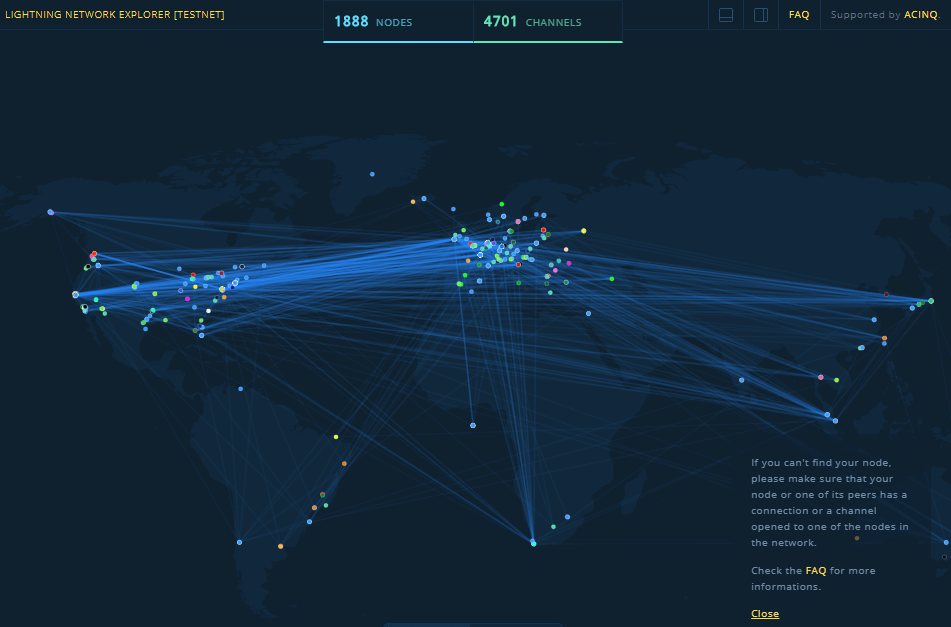
    • Transfers will convert USD to Bitcoin via Lightning, then to local currency.
    • The service will first launch in Mexico with lower fees than traditional remittances.

    SoFi Bank is preparing to shake up the global remittance industry by introducing a blockchain-powered international money transfer service.

    The US digital bank has partnered with Lightspark, a Bitcoin infrastructure company founded by former PayPal president David Marcus, to bring faster and cheaper cross-border payments directly into its app.

    SoFi steps into blockchain payments

    The new service will allow SoFi customers to send money abroad without relying on traditional remittance providers or third-party platforms.

    Instead, transfers will be powered by the Bitcoin Lightning Network and Lightspark’s Universal Money Address, or UMA.

    This technology is designed to move dollars across borders instantly, at any time of the day, while ensuring that fees and exchange rates are displayed clearly before each transaction.

    SoFi says the service will debut later this year, beginning with Mexico, a key remittance corridor from the United States.

    Once rolled out, users will be able to initiate transfers directly through the SoFi app, where US dollars will be converted into Bitcoin, routed across the Lightning Network, and then converted back into the recipient’s local currency before being deposited in their bank account.

    Notably, this is not SoFi’s first step into the digital asset space.

    The bank began offering crypto trading in 2019, but later scaled back the service following regulatory concerns during the collapse of FTX.

    However, with a federal banking license secured and new rules under the GENIUS Act offering greater clarity, SoFi is reentering the sector more aggressively.

    During its most recent earnings call, the company outlined ambitions beyond remittances.

    These include plans for stablecoin issuance, crypto-backed loans, and staking infrastructure for other institutions.

    By positioning itself as a bridge between traditional banking and Web3, SoFi hopes to secure a long-term advantage over pure-play crypto platforms.

    Faster and cheaper transfers

    The promise of speed and lower costs is central to SoFi’s plan.

    Traditional remittances often take days to clear and can cost families as much as 6% of the amount being sent.

    By embedding blockchain rails into its platform, SoFi expects to deliver a service that is available around the clock and significantly below the national average cost of remittances in the United States.

    Anthony Noto, SoFi’s chief executive, emphasised that many of the bank’s members rely on sending money to loved ones overseas.

    He said that building blockchain transfers directly into the SoFi app will give users “faster, smarter, and more inclusive access” to their funds.

    The bank is also opening a waitlist to meet early demand and gauge interest from members who frequently send money abroad.

    Lightspark provides the backbone

    Lightspark, which launched in 2022, has been positioning its UMA as a universal standard for moving money globally in a way that feels as simple as sending an email.

    According to Marcus, Bitcoin is the only open payments network that can power such transactions securely and at scale.

    Marcus added that UMA on SoFi will allow members to move dollars instantly with full transparency and control, while avoiding the delays of traditional systems.

    The collaboration makes SoFi the first US bank to integrate Bitcoin’s Lightning Network and UMA at this scale.

    It also comes at a time when other major institutions, including Bank of America and JPMorgan, are testing blockchain for their own transfer systems.


    Source link

  • Crypto update: Bitcoin slips as analysts warn of ‘fragile’ market structure

    Crypto update: Bitcoin slips as analysts warn of ‘fragile’ market structure

    Bitcoin slips as analysts warn of 'fragile' market structure

    • Bitcoin and Ether prices are falling despite positive industry news.
    • A key disconnect exists between weak price action and strong fundamentals.
    • Glassnode warns of market fragility and stretched leverage in the short term.

    A profound and unsettling disconnect is cleaving the cryptocurrency market in two as the trading day begins in Asia.

    While a torrent of structurally bullish headlines points to a maturing and increasingly powerful industry, the price action on screen tells a story of weakness, fear, and retreat.

    This growing chasm between the long-term promise and the short-term pain has left investors caught in a tense tug-of-war.

    The immediate picture is painted in red. Bitcoin is down 3% in the past 24 hours, struggling to hold the line at $113,000.

    Ether is suffering even more, having shed 5.6% to land at $4,100, extending a week of bruising losses across the major digital assets. This persistent pullback is happening in the face of news that would, in any other environment, be sending prices soaring.

    The view from the charts: a structure of sand?

    For one camp of market observers, the current weakness is a simple function of a fragile and overextended market structure.

    In a recent report, the analytics firm Glassnode frames the decline as a textbook case of exhaustion: spot momentum is fading, leverage is dangerously stretched, and the pressure from profit-taking is building to a critical point.

    They warn that even the massive $900 million in inflows into U.S.-listed spot ETFs last week is not enough to sustain the rally on its own.

    Without a renewed wave of conviction buying in the spot markets, Glassnode argues, the market’s positioning remains acutely “vulnerable to deeper deleveraging.”

    A foundation of steel

    This pessimistic view, however, is far from universal. Another camp argues that fixating on the short-term price action is a classic case of missing the forest for the trees.

    The Singapore-based market maker Enflux, in a note shared with CoinDesk, contends that the industry is maturing at a pace that the charts are simply failing to capture.

    They see the weak price action as a temporary “disconnect” and urge traders to focus on the truly significant headlines: Google becoming the largest shareholder in miner TeraWulf, Wyoming launching a state-backed stablecoin, and Tether hiring a former White House crypto policy official. 

    These are not fleeting signals, Enflux argues; they are proof that serious capital and top-tier talent are aligning around a future that is institutional, regulated, and built to last.

    The divergence in tone is telling. One side sees a house of cards, the other sees the scaffolding of a skyscraper being erected.

    The shadow of the Fed

    This internal conflict is being amplified by a powerful external force: the Federal Reserve.

    The entire market is holding its breath ahead of the Fed’s FOMC minutes and, more importantly, Chairman Jerome Powell’s pivotal speech at the Jackson Hole symposium later this week.

    With economists from institutions like Bank of America warning that Powell may argue for holding rates steady amid sticky inflation, the easy-money hopes that have buoyed risk assets are beginning to fade.

    This macro uncertainty is forcing a reckoning in the crypto market, where the short-term fragility is clashing head-on with the long-term fundamental strength. The question now is which narrative will break first.

    Source link

  • Bitcoin at risk of a 51% attack from two miners

    Bitcoin at risk of a 51% attack from two miners

    Bitcoin at risk of a 51% attack

    • Foundry USA and AntPool now control over half of Bitcoin’s hash power.
    • Bitcoin price is slipping toward $110,530, a crucial support level.
    • Macro fears and Fed shifts add pressure to already weak crypto markets.

    After Monero’s 51% takeover, two Bitcoin mining pools have sparked fears of a potential 51% attack on Bitcoin.

    Notably, the developments have raised critical questions about the security of the Bitcoin network and the stability of the wider crypto market.

    Also, the concerns over mining centralisation have intensified just as BTC faces steep price declines and broader macroeconomic pressures.

    Two mining pools dominate Bitcoin’s hash power

    Two major mining pools, Foundry USA and AntPool, now control more than half of Bitcoin’s total computing power.

    Foundry even mined eight consecutive blocks in a row, an event that is extremely rare and has heightened fears of network centralization.

    With over 51% of the hash power concentrated in just two entities, experts warn that Bitcoin is technically vulnerable to a 51% attack.

    In such a scenario, the dominant miners could potentially reorganize blocks, censor transactions, or undermine trust in the network.

    While such an attack would be extremely costly and perhaps self-defeating, the centralization trend has raised red flags across the community.

    Rising empty blocks and collapsing fees

    Alongside the hash power imbalance, analysts have noted an increase in the number of empty blocks being mined.

    Empty blocks generate lower transaction fees, which has led to collapsing revenues for miners and less efficient network usage.

    This situation has further fueled concerns about the long-term sustainability of the Bitcoin ecosystem, particularly as users demand greater efficiency from the blockchain.

    Although some commentators argue that a 51% attack would require an astronomical investment, estimated at around $1.1 trillion, they also admit that the risk of manipulation grows when power becomes too concentrated.

    Supporters of Bitcoin believe that no rational actor would spend such sums to destroy the very network that sustains their investment.

    Still, the perception of risk is enough to shake market confidence.

    Bitcoin price slides toward key support levels

    The security fears are unfolding at a delicate moment for Bitcoin’s price.

    After reaching an all-time high of $124,000 just last week, Bitcoin (BTC) has fallen sharply to around $113,000.

    The cryptocurrency is now approaching a crucial support level near $110,530, where buyers are expected to step in.

    If the price holds above that level, a rebound toward $120,000 and eventually $124,474 could follow.

    Some analysts like popular X commentator BitQuant are confident that Bitcoin is still on track to reach $145,000 without ever dipping below the six-figure mark.

    However, if Bitcoin breaks below the $110,530 support zone, the decline could deepen toward $107,000 or even $100,000.

    Short-term charts show bearish momentum, with the relative strength index in negative territory and the 20-day moving average sloping downward.

    Macro fears add pressure on crypto markets

    Beyond the technical charts, macroeconomic shocks are also weighing on sentiment.

    A recent shift in Federal Reserve policy, combined with Wall Street warnings about the newly passed Genius Act stablecoin bill, has unsettled investors.

    There are fears that the legislation could trigger a flood of withdrawals worth up to $6.6 trillion, posing systemic risks to both banking and crypto markets.


    Source link

  • Polygon price forecast: POL surges 6% as TVL reaches 2025 high

    Polygon price forecast: POL surges 6% as TVL reaches 2025 high

    Polygon POL Surges

    • Polygon token (POL) soared as most altcoins dipped on Monday and early Tuesday.
    • While POL has given up some of the gains to $0.26, bulls appear to be in control.
    • Gains for the altcoin come as its network’s total value locked (TVL) jumped to a year-to-date high.

    Polygon’s native token, POL (ex- MATIC) (POL), is one of the gainers in the past 24 hours as cryptocurrencies look to bounce off the latest dump.

    Altcoins such as Chainlink and XRP are eyeing fresh gains.

    While POL price has slipped from highs of $0.27, it’s currently holding above $0.25 as a potential rebound coincides with a spike in the network’s total value locked (TVL).

    Polygon price today

    The POL token’s price is up 3% in the past 24 hours at the time of writing, and nearly 12% in the past week.

    However, intraday gains reached 6% as POL rose to $0.27, with this coming amid growth in Polygon’s ecosystem, fueled by decentralised finance activity and strategic integrations.

    As the price of POL rose, Polygon’s TVL, which has jumped amid bullish momentum, topped a 43% increase year-to-date.

    The TVL spiking not only reflects the price gain, but the growing adoption, user trust and capital flows.

    Per Token Relations, Polygon saw its total value locked metric fall to $788 million in April.

    However, the metric has since witnessed a steady climb to break above $1.23 billion as of August, highlighting the blockchain network’s appeal and attraction as a DeFi player.

    Stablecoin growth

    Additionally, Polygon has seen a notable spike in stablecoin use.

    The recent integration of Agora’s stablecoin, AUSD, on Polygon by Miomi Game is a key development.

    Miomi is a web3 esports platform that boasts over 950,000 users.

    Polygon also surged to a record $2.56 billion in stablecoin payments in July, with peer-to-peer transfers rising as USDC active addresses jumped to 3.16 million.

    Meanwhile, USDT supply on Polygon rose to a new high of $1.29 billion during the month.

    Polygon’s surge in dApps, combined with stablecoin adoption and regulatory moves, spotlights the network’s utility.

    “Why are institutions building on Polygon? Trusted infrastructure, designed for greater efficiency and ready to scale for institutional demand,” Polygon Labs recently posted on X.

    Polygon price prediction

    Looking at Polygon’s price charts, the overall outlook is bullish.

    The network’s strategic initiatives and cross-chain interactions, which are contributing to organic growth, are evidence that bulls can establish the upper hand.

    Polygon’s price surge and TVL spike allude to this. Metrics such as active addresses and transactions are key to buyers breaching the supply wall around $26 and $30.

    On the flip side, bears can target the psychological support level at $20.


    Source link

  • Chainlink price forecast as key metrics point to increased onchain activity

    Chainlink price forecast as key metrics point to increased onchain activity

    Chainlink Price Outlook

    • Chainlink price broke to highs $26 before correcting slightly.
    • LINK is surging amid a spike in onchain activity.
    • Partnerships and adoption trends remain bullish for Chainlink.

    Chainlink (LINK) broke above $26 for the first time in months on Monday, surging amid a notable spike in onchain activity.

    As LINK pares gains amid broader profit taking, analysts are saying the recent explosion of key network metrics could allow bulls to breach the supply wall at $30 as they target the all-time high of $52 seen over four years ago.

    Chainlink sees significant surge in onchain activity

    According to Santiment, Chainlink’s onchain activity has witnessed a significant spike in the past week.

    For instance, on Sunday, August 17, a total of 9,813 unique LINK addresses executed at least one transaction, while the next day saw more than 9,625 new LINK wallets.

    Per the onchain analytics provider, both metrics represent the blockchain network’s highest levels for the year.

    “Onchain activity has been even more impressive than the price,” Santiment analysts noted.

    Partnerships and LINK reserve

    Recently, Visa’s head of crypto, Cuy Sheffield, explained via Visa’s Tokenized podcast, that Chainlink is a major pull for institutional entry into crypto.

    Apart from Visa, Chainlink has partnered with ANZ, China AMC, and Fidelity International to bring cross-chain, cross-border settlements to tokenized assets across Australia and Hong Kong.

    A Mastercard partnership is also huge for LINK.

    Chainlink Data Streams is another solution seeing huge integration. Data Streams are now live for U.S. equities and exchange-traded funds such as AAPL, NVDA and CRCL.

    Chainlink also recently partnered with Intercontinental Exchange, the parent company of the New York Stock Exchange.

    “Using ICE’s Consolidated Feed data as an input into Chainlink’s derived FX and precious metals rates onchain via Chainlink’s institutional-grade infrastructure is a watershed moment in the evolution of global markets,” said Fernando Vazquez, president of capital markets at Chainlink Labs. “This collaboration signals a pivotal shift towards a unified, globally accessible onchain financial system, with hundreds of trillions in assets on a clear path to tokenization.”

    Chainlink Reserve, an effort launched to support Chainlink’s traction in the DeFi and TradFi ecosystems, is also a major boost.

    As well as being geared towards establishing Chainlink as a standard solution for global crypto adoption, the program bolsters its tokenized assets growth.

    What’s next for LINK price?

    Chainlink’s price action amid the surge in network activity suggests bulls are confident in LINK.

    Chainlink price chart

    Having broken above $20 and strengthened to $26, Chainlink is showing resilience. While bears have a say on immediate LINK price action, analysts say the altcoin could be on the cusp of a significant breakout.

    While the key metrics indicate that Chainlink’s network growth is outpacing price gains, there are more bulls who are upbeat about.

    A confluence of catalysts such as network integration across decentralized and traditional finance, whale accumulation and macro conditions, is what could propel LINK toward its ATH and into price discovery mode.

    LINK traded at the all-time high above $52 in May 2021, a level bulls may target if market conditions align. Currently, the altcoin is on an uptrend since hitting lows of $16 on Aug. 6.

    Source link

  • Bitcoin sees strong accumulation despite BTC price pullback

    Bitcoin sees strong accumulation despite BTC price pullback

    Bitcoin Whales Buy The Dip

    • Bitcoin price is near $115,300 after bouncing off lows of $114k.
    • Despite sharp declines this past week, BTC is seeing robust accumulation.
    • Onchain data suggests aggressive whale buying.

    Bitcoin (BTC) price hovers around $115,300 in early trading on August 19, 2025, but despite the pullback that includes a dip to lows of $114k, the benchmark digital asset is witnessing robust accumulation.

    While on-chain data suggests whales are aggressively buying, technical analyses signal bullish support above the psychological $110k.

    Notably, BTC price reached its all-time peak above $124k on Aug. 14.

    Whales scoop Bitcoin on the cheap

    As noted, on-chain data shows bulls have used the sharp price decline in the past few days to buy Bitcoin.

    The overall trend, as analysts from CryptoQuant show, is that accumulation is on the up.

    Crypto analyst Axel Adler Jr notes in a post on X that there’s been a significant shift in Bitcoin’s exchange netflow.

    Per the CryptoQuant on-chain and macro analyst, the 30-day moving average of net outflow has jumped from -1.7K to -3.4k Bitcoin per day, which suggests that coins are exiting centralised exchanges at an accelerated rate compared to sales.

    This accumulation, against a backdrop of Bitcoin’s price drop to lows of $114k, speaks to bulls’ strong long-term conviction.

    In any case, a divergence between net outflows and price decline has historically pointed to a bullish reversal.

    “Against the backdrop of price decline, we see strengthening net outflow: the Exchange Netflow-30D moving average became more negative from -1.7K to -3.4K BTC/day. This means coins on CEX exchanges are being bought faster than they are being sold. Such a shift in a falling market is a bullish divergence, where participants are using the drawdown to buy back coins,” Adler Jr. said.

    Santiment’s onchain analytics also point to this trend. Notably, top whales and sharks have continued to accumulate even amid the mild dip.

    With BTC prices dropping more than 6% since its peak, wallets within the 10-10K range have scooped more than 20,061 BTC.

    “When we zoom out, this same group of key stakeholders has added 225,320 Bitcoin going back to March 22nd. There has been notable correlation between this group’s holdings and the direction of future price movement for the majority of the past five years,” Santiment noted.

    What’s the Bitcoin price outlook?

    Bitcoin’s price technical picture shows BTC lies within the broad range of support at $112k and resistance at $120k.

    Although panic selling in recent weeks has some holders in a downbeat mood, CryptoQuant says they may be dumping at a loss.

    “This loss-selling event becomes a critical barometer of market health. If absorbed quickly, it could mirror past resets that fueled strong rebounds. If not, it risks signalling a momentum breakdown,” noted crypto analyst Kerem.

    With on-chain data indicating strong accumulation and technical indicators supporting a bullish outlook, BTC remains largely bullish.


    Source link

  • Morphware (XMW) price pumped 450% and dumped immediately: what happened?

    Morphware (XMW) price pumped 450% and dumped immediately: what happened?

    Morphware (XMW) price pumps and dumps

    • UAE investment news and Reuters coverage sparked a rapid Morphware (XMW) rally.
    • Low liquidity and profit-taking fueled a sharp price reversal.
    • Contract risks and cautious sentiment have kept volatility high.

    The price of the Morphware (XMW) token jumped 450% earlier today, reaching a high of $0.2501 according to Coingecko, before erasing all the gains to trade at $0.04353 at the time of writing.

    The sudden pump-and-dump unfolded within hours, leaving traders scrambling for answers.

    Morphware (XMW) price chart

    Here’s a closer look at what triggered the move, why it collapsed, and what comes next for XMW holders.

    What caused the surge?

    The rally was sparked by Morphware’s announcements earlier this week.

    On August 12, the team revealed that a leading UAE investment firm had committed funds to its AI infrastructure and mining operations.

    The following day, the news was picked up by Reuters as a press release, bringing mainstream visibility to the project’s expansion into the UAE.

    This combination of social media hype and media coverage fueled a rush of speculative buying.

    The headlines not only attracted existing crypto traders but also drew in new investors who had never tracked Morphware before.

    Why the rally collapsed

    Despite the explosive move, the rally was unsustainable. The first reason was liquidity.

    Morphware’s 24-hour trading volume stood at just $241,276, far too low to support a rapid surge in valuation.

    As a result, even modest buying pressure was enough to send the price skyrocketing, and a relatively small wave of sell orders triggered the collapse.

    Second, speculative momentum quickly gave way to profit-taking.

    Traders who entered early rushed to lock in gains, while others, alarmed by the pace of the spike, chose to exit before the inevitable correction.

    Finally, lingering concerns around the project’s contract added to the selloff.

    Risk trackers have warned that the contract creator retains significant privileges, including the ability to change fees, mint tokens, or even disable sales.

    Fundamentals versus volatility

    Morphware has promoted itself as more than just a token play.

    The company emphasises its enterprise AI services powered by NVIDIA B200 and H200 GPUs, hydroelectric-powered data centres at Itaipu, and an integrated Bitcoin-mining operation that leverages surplus renewable energy.

    XMW is positioned as a utility and governance token supporting these services, with revenue drawn from both AI operations and Bitcoin mining.

    While these fundamentals create a compelling long-term narrative, they do not explain the extreme intraday volatility that traders experienced today.

    Risk signals traders are watching

    Morphware supporters have pointed to a reported $600,000 buyback, with tokens locked for ten years, as evidence of strong conviction from the team.

    However, sceptics argued that the token’s centralisation risks outweighed such commitments.

    Morphware price outlook

    Morphware’s spike-and-crash highlights how quickly sentiment can shift in thinly traded markets.

    A wave of hype can send prices soaring, but without liquidity and transparency, those gains can vanish in minutes.

    For now, XMW remains a highly speculative token, and traders will need to balance the project’s long-term ambitions with the risks of short-term volatility.

    Going forward, traders should keep a close eye on on-chain movements, order book depth, and any administrative changes to the contract.

    The traders could also watch for follow-up announcements from Morphware regarding its UAE expansion and whether the locked buybacks remain verifiable.


    Source link

  • BTC slips 1.1% to $116K as traders brace for August weakness

    BTC slips 1.1% to $116K as traders brace for August weakness

    Asian markets open: BTC slips 1.1% to $116k as traders brace for August weakness

    • Crypto markets show a split between institutional bulls and retail bears.
    • Prediction markets signal a bearish end to August for Bitcoin.
    • Derivatives data shows caution, with funding rates turning negative.

    A profound and unsettling divide is splitting the cryptocurrency market in two as the trading day begins in East Asia.

    While the world’s largest institutions are quietly building their positions for a long-term rally, a wave of short-term fear is gripping the retail and derivatives markets, creating a tense tug-of-war that is pulling prices lower.

    As the morning session unfolds, Bitcoin is trading at $116,263, down 1.1% and 2% lower on the week, while ETH sits at $4,322, seeing a sharper 3.8% drop in the last 24 hours.

    The broader market is feeling the pressure, with the CoinDesk 20 (CD20) index down 2.4%. This nervous price action is a direct reflection of a market caught between two powerful, opposing narratives.

    A tale of two markets

    On one side, the conviction of institutional players remains unshakable. The Singapore-based market maker Enflux described the dynamic perfectly in a note to CoinDesk. 

    “The market remains caught between strong underlying institutional conviction, highlighted by Strategy Inc.’s additional 430 BTC purchase and structural financing shift, and a lack of immediate retail follow-through,” the firm wrote.

    Enflux points to asset manager VanEck’s reiterated $180,000 year-end bitcoin target as clear evidence that the market’s giants are positioning for a significant move higher.

    On the other side, however, the retail-driven narratives that often fuel explosive rallies have fizzled, with potential ETFs for assets like XRP and DOGE stalled by SEC delays.

    One notable exception to this trend is Solana, which Enflux noted continues to show “quiet strength,” driven by its dominance in USDC transfers and its growing share of new token issuance via platforms like PumpFun.

    Whispers of warning from the derivatives market

    This lack of broad participation is creating a vacuum that is being filled with caution. Prediction markets are now flashing bearish signals for the remainder of August.

    On Polymarket, the odds now favor a month-end close for BTC below $111,000, with a 34% probability.

    The derivatives market is telling a similar story of defensive posturing.

    The analytics firm QCP reported in a recent market update that perpetual funding rates—a key indicator of trader sentiment—turned negative over the weekend, a setup that has preceded pullbacks in the past.

    Furthermore, options skews now clearly favor puts (bets on a price decline) across all timeframes.

    The calm before the storm: all eyes on jackson hole

    The result is a market that feels structurally sound at its core but is tactically fragile and defensive on the surface.

    This nervous energy is building ahead of the week’s main event: the Jackson Hole symposium, where Fed Chair Jerome Powell is expected to deliver a pivotal speech.

    Traders are anxiously awaiting guidance on how the central bank will navigate higher-than-expected inflation, especially under the glare of a White House that continues to challenge its neutrality.

    While the long-term foundation for a broader rally—fueled by four-year highs in crypto search interest and the promising GENIUS Act making its way through Washington—is still being laid, the immediate future appears uncertain.

    For now, the conviction is concentrated among the giants, while the rest of the market holds its breath, waiting for a spark.

    Source link

  • NEO price dips 7% as Binance ends support for Neo Legacy Network

    NEO price dips 7% as Binance ends support for Neo Legacy Network

    NEO price dips 7% as Binance ends support for Neo Legacy Network

    • The exchange has confirmed plans to halt deposits and withdrawals on Neo Legacy.
    • The phase-out will begin on August 25, with a complete shutdown scheduled for October 15.
    • NEO has plummeted amidst community uncertainty.

    The digital assets landscape endured a bloodbath on Monday as the global crypto market cap plunged 3.27% in the past day to $3.89 trillion.

    While most assets reflect bear dominance, NEO suffered the most after Binance confirmed it would end support for Neo Legacy.

    Starting August 25, the leading exchange will no longer support asset deposits through the NEO network and will halt withdrawals by October 15.

    Moreover, Binance will not credit any deposits made after the deadline.

    The announcement magnified NEO’s decline.

    The alt lost around 7.62% from $6.5012 to an intraday low of $6.0058.

    Affected tokens

    The halt decision will impact three key assets: NEO, NeoGas (GAS), and Kepple (QLC).

    While GAS and NEO holders can use other Binance-supported platforms to transact, Kepple investors encounter a harsher situation.

    The exchange has advised holders to cash out all QLC before the October 15 deadline. The team emphasized:

    It is strongly recommended for users holding QLC tokens to withdraw their remaining tokens before 2024-10-15 08:00 (UTC), as transfer of assets will cease after the shutdown.

    What prompted Binance’s decision

    The leading trading platform is known for delisting projects that do not meet certain standards.

    However, Neo Legacy’s case is different.

    Binance emphasized that the platform’s transition into a more advanced version, Neo N3, triggered the suspension.

    The Neo Legacy team announced the network’s shutdown in April to focus on the advanced platform “designed to replace Neo Legacy.”

    The official announcement read:

    As part of our commitment to advancing Neo’s technology and focusing our efforts on the future, we have made the decision to sunset the Neo Legacy Network.

    Meanwhile, Binance’s notice stirred the markets as it formalized the end of Neo’s older system.

    However, the suspension could be a necessary step as handling two active platforms often fragments user activity and liquidity.

    Focusing on Neo N3 might form a cleaner ecosystem that can bolster adoption in the coming times.

    What’s next for investors

    With the deadlines somewhat tight, Neo Legacy users may have to consider three primary things.

    Firstly, any deposit completed to Binance via Neo Legacy after August 25 will lead to asset loss.

    Secondly, the exchange will suspend withdrawals entirely on October 15.

    Lastly, enthusiasts should watch the native token’s performance.

    NEO could plummet further to test key price levels as investors seek clarity.

    NEO price outlook

    The alt exhibits significant bearishness at $6.06.

    NEO attempts to recover from earlier losses, but indicators signal sellers’ dominance.

    The 3H MACD and RSI confirm that bears control of NEO’s trajectory as they depict waning momentum.

    Moreover, the current broad market bias suggests further price dips for NEO.


    Source link

  • Bio Protocol defies crypto downturn with a 720% surge in volume

    Bio Protocol defies crypto downturn with a 720% surge in volume

    Bio Protocol Price

    • Bio Protocol price rose more than 50% as bulls defied broader market selling to hit $1.46
    • Despite overall sell-off pressure, BIO price is up double-digits in 24 hours as volume spikes 720%.
    • BIO has benefited from key network developments, including staking and partnerships.

    The price of Bio Protocol (BIO) shrugged off a broader crypto downturn to lead 24-hour gainers on Monday.

    With the project that’s targeting the decentralized science (DeSci) ecosystem hitting key milestones recently, buyers have upped the ante by pushing BIO higher.

    BIO price surges nearly 50% to lead top gainers

    The Bio Protocol (BIO) price saw a significant surge as top altcoins struggled amid profit taking.

    With Bitcoin shedding gains to below $116k and Ethereum dipping to $4,200, the BIO token climbed nearly 50% to lead the top gainers.

    Per CoinMarketCap, this put the decentralized science project among the 500 largest cryptocurrencies by market capitalization.

    Notably, Bio Protocol traded up from lows of $0.10 and topped $0.15.

    The uptick meant BIO defied overall declines across the market, with gains coming as its 24-hour volume spiked 720% to over $393 million.

    Although BIO remains double-digits up with over 21% upside in the past 24 hours, it has dropped from the $0.15 high. This shows the overall market weakness as sellers drive it to around $0.12.

    Bio Protocol price chart by CoinMarketCap

    Bio Protocol has hit key network milestones

    Bio Protocol has gained amid significant network milestones in the past week.

    As the DeSci economy picks up, the Bio Protocol team has positioned the project for greater traction with the launch of Bio Markets.

    The goal is a platform that brings real-time insights into projects within the Bio Protocol ecosystem.

    Markets bring growth trends and in-app trading for BioDAOs, and Bio plans to expand trading capabilities to IP-Tokens and new BioAgents.

    Staking activity has also soared, with over 125 million BIO tokens staked, up to 3.5% of the circulating supply.

    As the Bio team recently noted, staking generates BioXP, a key component for participating in upcoming Ignition Sales.

    Unveiling of Yapping BioXP, also set to go live in the app this week, includes a boost campaign for BioAgents, further incentivizing community engagement.

    What does it mean for BIO price?

    Bio Protocol also hit a major milestone with CLAW, Percepta’s IP-Token.

    Meanwhile, Molecule’s development of its v2 protocol targets the bridging of traditional corporate structures with DeSci.

    Listing on Coinbase, the top U.S.-based crypto exchange, allows for further institutional adoption.

    “From Bio V2’s launch and 100M+ BIO staked, to Coinbase listing $BIO and VitaDAO advancing longevity trials, the past month marked key steps in AI-driven science and DeSci adoption,” Bio Protocol recently posted.

    Achievement of these milestones could help bolster the price of BIO.

    Source link