Category: NEWS

  • Neptune adds 20 BTC to Bitcoin strategy, also buys 1m DOGE

    Neptune adds 20 BTC to Bitcoin strategy, also buys 1m DOGE

    • Canadian blockchain firm Neptune Digital Assets announced it purchased 20 BTC worth almost $2 million.
    • The company also bought Dogecoin, scooping the meme coin on December 27, 2024 at the average price of $0.37 per DOGE.

    Neptune Digital Assets, a Canada-based blockchain firm, has announced it added 20 Bitcoin (BTC) to its holdings.

    The publicly-traded company, whose operations include Bitcoin mining, staking and blockchain nodes, revealed it acquired the 20 BTC as it expanded its Bitcoin strategy between January 26 and Feb. 3, 2025.

    Neptune also buys Dogecoin

    According to a press release, Neptune scooped the BTC at the average price of $99,833 per coin. This means the company spent nearly $2 million to buy more of the flagship digital asset. Neptune’s total BTC holdings rose to 376 BTC with this purchase.

    Neptune is one of over 60 public companies that can issue debt and use the proceeds to buy BTC. The biggest hodler among these is US-listed MicroStrategy.

    Dogecoin is the other cryptocurrency to attract the blockchain firm. Per the announcement on Feb 4, the company acquired 1 million DOGE on December 27, 2024 at the average price of $0.37 per token. Neptune said it bought the meme coin via a “strategic derivative purchase.”

    “As stated in previous news releases, Neptune will be acquiring additional assets, leveraging our enhanced purchasing power through the Sygnum credit line. With a strong focus on BTC, these initial acquisitions show Neptune’s commitment to its growth strategy while meticulously managing leverage risk and debt levels,” Cale Moodie, Neptune’s chief executive officer, said in a statement.

    Both Bitcoin and Dogecoin have experienced sharp volatility in the past few days, with BTC and DOGE plummeting on Monday amid tariffs-driven sell-off across risk assets.

    BTC fell to lows of $92k before bouncing to retest resistance above the psychological $100k level. Currently, the benchmark asset trades just above $99,400.

    Meanwhile, DOGE slumped to below $0.22 and currently hovers near $0.27.


    Source link

  • Bitcoin tumbles to $92k as geopolitical headwinds roil markets

    Bitcoin tumbles to $92k as geopolitical headwinds roil markets

    • Bitcoin fell 4.72% over the weekend and another 3.50% during Monday’s Asian session as tensions driven by Trump’s tariffs have investors de-risking their positions
    • Over the weekend, China responded to Trump’s tariffs by indicating interest in imposing tariffs on US goods, while Canada imposed a 25% tariff on CA$155 billion worth of US goods

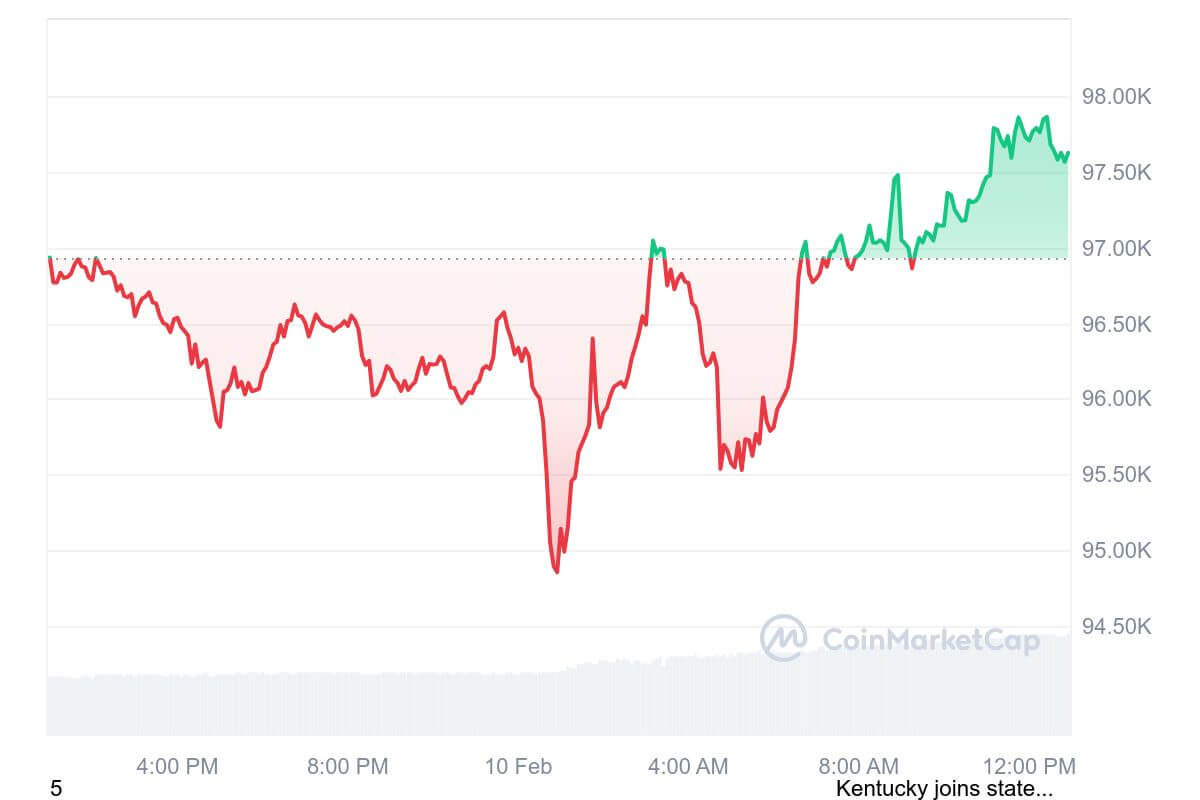
    Bitcoin tumbled below $100,000 over the weekend, extending losses into today as threats of a possible trade war rock markets worldwide.

    Bitcoin price chart. Source: CoinMarketCap

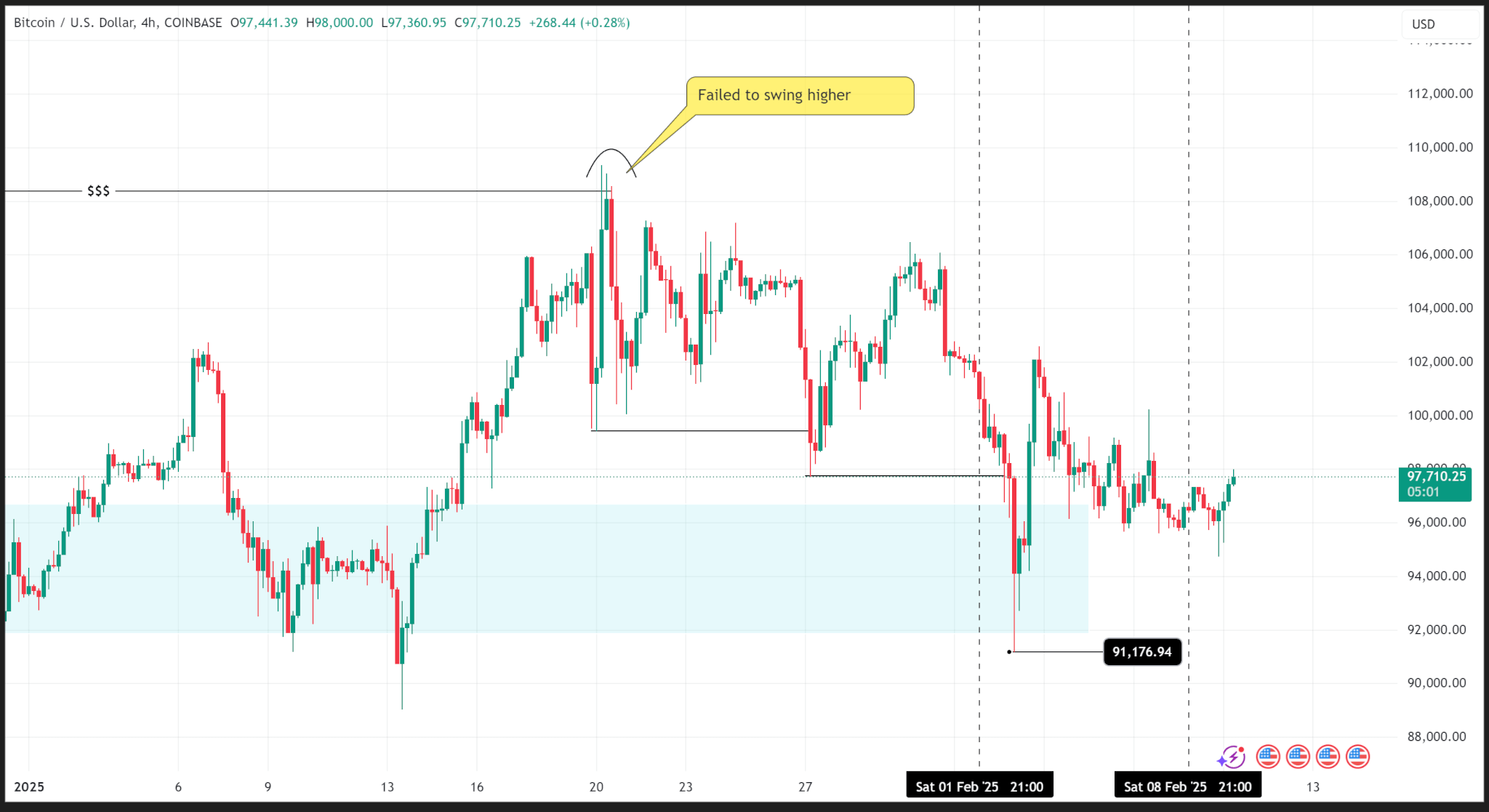
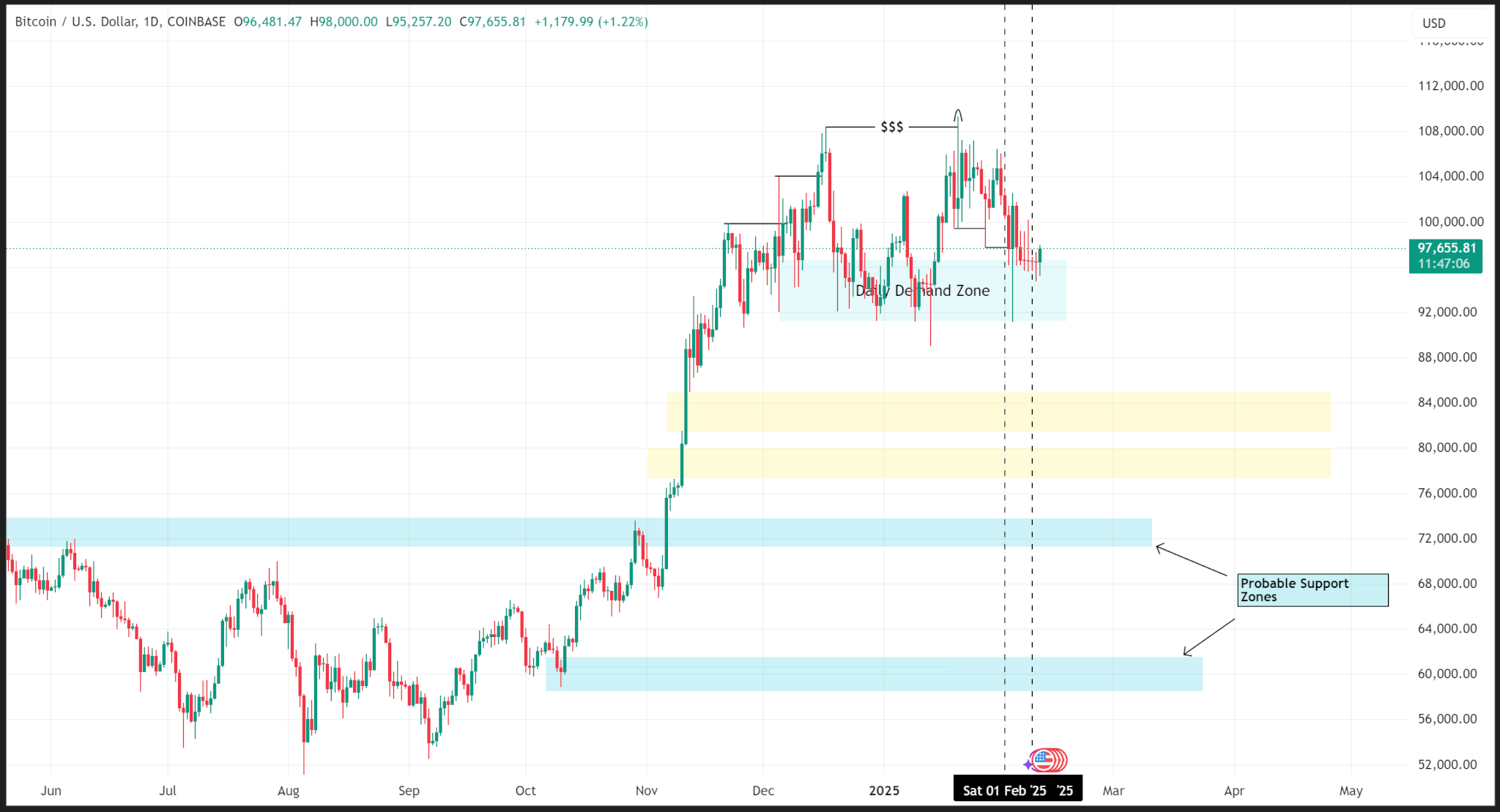
    While most of Bitcoin’s price decline came this weekend, weakness began when its price failed to swing higher than the $108,000 level two weeks ago (January 20).

    BTC/USD chart. Source: TradingView

    A failure to swing higher can signify insufficient buy pressure to push prices higher. If that is the case, prices will seek the next major liquidity level, which could mean lower prices in the interim, as seen over the last two weeks.

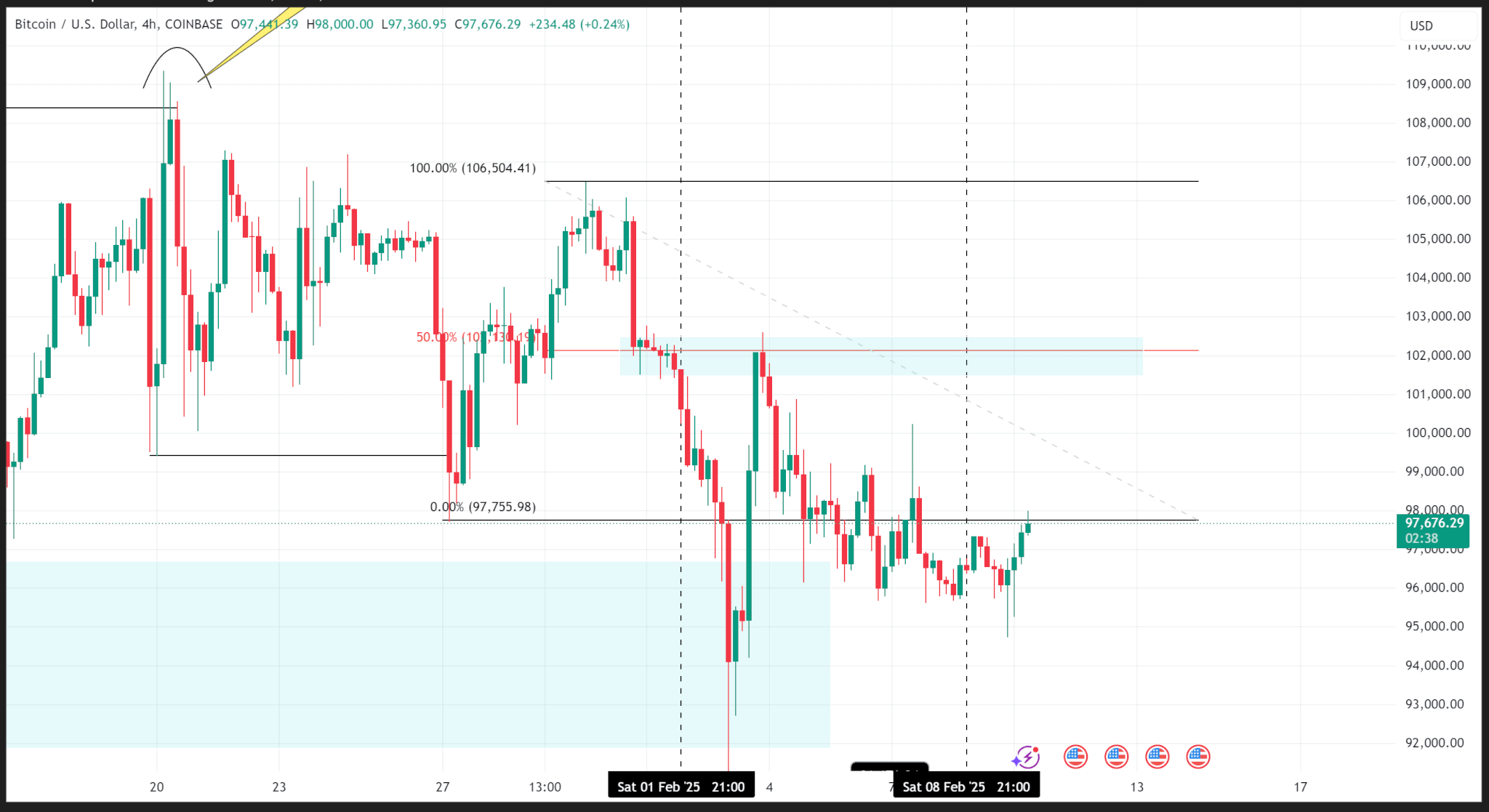
    Scaling down to a lower time frame, Bitcoin’s price continued to break lower below $99,000. This was before retracing to an internal supply zone between the 50.00% and 61.80% Fibonacci levels (the golden zone for retracements) on Thursday, January 30.

    BTC/USD chart. Source: TradingView

    After being rejected by internal supply, the price broke down further on Friday, January 31, and over the weekend to settle at the next major demand level, between $92,000 and $96,000.

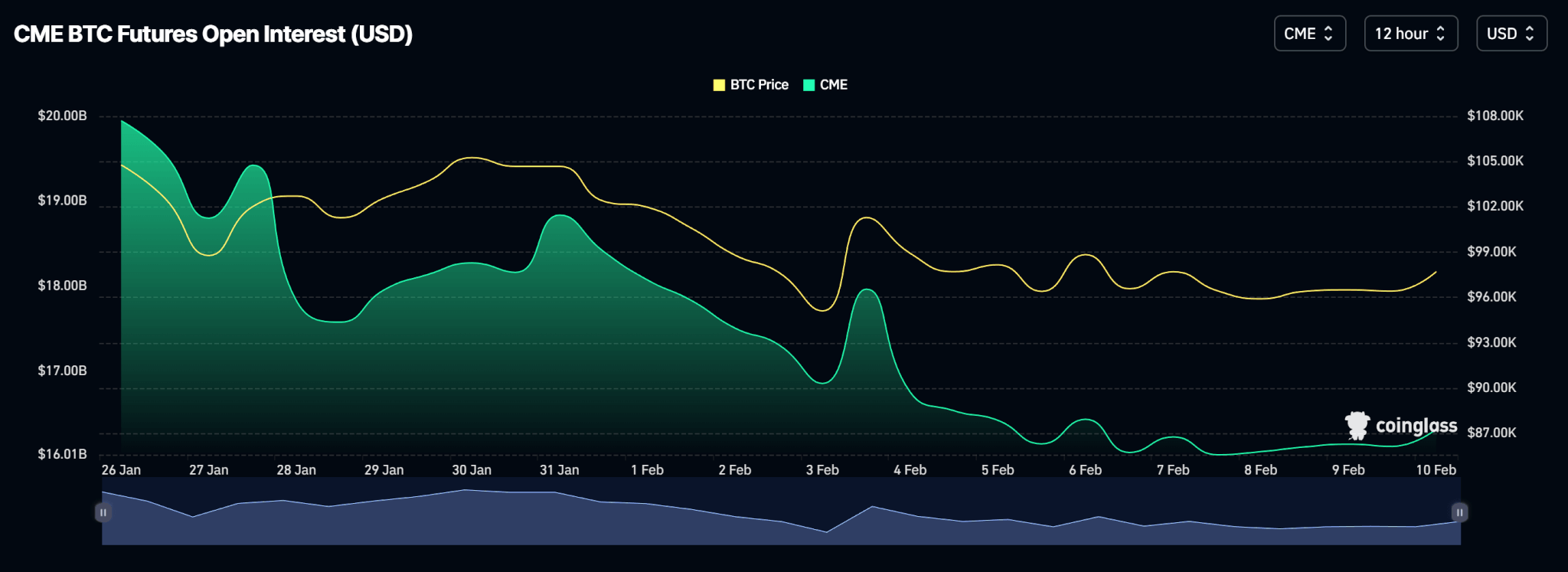
    BTC/USD chart. Source: TradingView

    Bitcoin’s price has found some support at $92,000 and is currently up 4.92% from Asian lows of $91,176.

    Wider trade wars stifle markets

    Meanwhile, the wider economic landscape faces uncertainty as a brewing trade war between the US and several of its trade partners, including Canada, Mexico, and China rocks various markets.

    The US tariffs on its largest trade partners, including a 25% tariff on imports from Canada and Mexico, and a 10% tariff on Chinese imports, have sparked tensions between nations.

    In response, Canada imposed a 25% tariff on CA$155 billion worth of US goods, Mexico has announced tariffs on US goods, but has not provided details, while China also announced plans to impose retaliatory tariffs on US goods.

    The result is uncertainty around the expansion of global trade and a de-risking of portfolios, with the crypto market being one of the first on the chopping block.

    Source link

  • The Runes marketplace and launchpad Odin.fun will replicate Pump.Fun

    The Runes marketplace and launchpad Odin.fun will replicate Pump.Fun

    The Runes marketplace and launchpad Odin.fun will replicate Pump.Fun
    • fun is set to replicate Pump.fun on Bitcoin.
    • fun aims to offer a 20-second finality for Rune trades.
    • The platform will be decentralized with no central control.

    The highly anticipated Runes marketplace and launchpad dubbed Odin.fun is set to revolutionize the Bitcoin ecosystem by emulating the success of Solana’s Pump.fun.

    Developed by the team behind the Bitcoin ordinals marketplace Bioniq, Odin.fun aims to provide a seamless experience for Bitcoin users interested in Runes, a new token standard on the Bitcoin blockchain.

    Direct integration with Bitcoin Runes

    Odin.fun stands out by directly working with the existing Runes meta-protocol, ensuring there’s no need for additional upgrades or programmability. This approach not only simplifies the user experience but also maintains the integrity of the Bitcoin network.

    Users can engage in buying, selling, creating, and swapping Runes with transactions finalized in just 20 seconds, offering the speed of Solana with the robustness of Bitcoin.

    Moreover, all bonded tokens can be withdrawn directly back to a user’s Bitcoin wallet at any time, with plans to expand support to BRC-20 tokens in the near future.

    The platform’s commitment to decentralization is evident through its use of a threshold signing setup (TSS) for securing Bitcoin and Runes deposits, mirroring the strategies used by other decentralized systems.

    By employing multisig smart contract control, Odin.fun eliminates the need for centralized custodians or control, thus providing a trustless environment for users to trade and interact with Runes.

    Redefining Layer 2 on Bitcoin

    Bob Bodily, co-founder and CEO of Bioniq, describes Odin.fun not as a traditional Layer 2 solution but as an appchain or an L2 in the broader sense of building seamless Bitcoin products.

    This innovative perspective allows Odin.fun to offer functionalities akin to Layer 2 solutions without the complexities often associated with them on Bitcoin. The underlying technology stack, named Valhalla, operates invisibly, supporting all current and future features of Odin.fun.

    Odin.fun’s capabilities are further enhanced through its integration with BLIFE, a platform designed to enrich user experiences across various blockchain applications. This integration means that BLIFE users receive exclusive benefits on Odin.fun, can complete Odin-related quests on the BLIFE platform, and their achievements on Odin.fun contribute to their BLIFE reputation.

    This synergy promises to not only boost user engagement but also foster a more interconnected blockchain ecosystem.

    When is Odin.fun launching?

    Currently, Odin.fun is in an early access beta, requiring an invite code for participation. However, this exclusivity will soon end as the platform prepares for a public launch on Monday, February 3, 2025, making it accessible to everyone interested in exploring the potential of Bitcoin Runes.

    The launch is anticipated to democratize access to the burgeoning Runes market, potentially replicating the meme coin frenzy seen with Pump.fun on the Solana network.

    Source link

  • Sam Bankman-Fried’s parents are seeking a presidential pardon from Trump

    Sam Bankman-Fried’s parents are seeking a presidential pardon from Trump

    US federal judge dismisses $100M class action suit against Atomic Wallet
    • Joseph Bankman and Barbara Fried have met with lawyers and members of president Donald Trump’s administration
    • Trump has already pardoned Silk Road creator Ross Ulbricht who served 12 years in prison
    • Early Bitcoin investor Roger Ver, who faces a 109-year prison sentence, has also asked Trump to help him

    The parents of former FTX CEO Sam Bankman-Fried are seeking to get their son a presidential pardon from Donald Trump.

    Stanford law professors Joseph Bankman and Barbara Fried have reportedly met with lawyers and members of Trump’s administration. According to Bloomberg, the pair hopes to receive clemency for their son, who is serving a 25-year prison sentence.

    Bankman-Fried was sentenced last March after being found guilt of fraud. The platform filed for bankruptcy in 2022.

    Pardoning Ulbricht

    The move comes as Trump gave a presidential pardon to Silk Road creator Ross Ulbricht in the first week of entering the White House.

    During his presidential campaign, Trump promised that he would release Ulbricht – who served 12 years in prison – if he was re-elected as president.

    According to the report, Bankman-Fried previously called his sentence “draconian” despite FTX customers having recovered most of their money. In December, it was reported that the crypto exchange would begin repaying customers in early January.

    Gary Wang, FTX co-founder, avoided a prison sentence in November with judge Lewis Kaplan sentencing him to time served. Nishad Singh, an ex-FTX executive, also avoided a prison sentence.

    However, Caroline Ellison, the former CEO of Alameda Research – the sister company to FTX – received a 24-month prison sentence in September.

    Last Sunday, early Bitcoin investor Roger Ver posted a video message on X calling on Trump to help him avoid a prison sentence of up to 109 years. In his message, Ver wrote: “Mr. President, I am an American, and I need your help. Only you, with your commitment to justice, can save me @realDonaldTrump.”

    Source link

  • Bitcoin price prediction 2025 – Will institutional inflow drive growth?

    Bitcoin price prediction 2025 – Will institutional inflow drive growth?

    The cryptocurrency market was bullish in 2024. Bitcoin, the leading cryptocurrency by market cap, added over 140% to its value last year, outperforming other major assets, including Gold (26%) and S&P 500 (23%)

    Last year’s rally saw Bitcoin break past the $100k mark for the first time in its history. This article will explore Bitcoin’s price performance so far this year and how far it can go. 

    Bitcoin Hit a New All-time High on Jan. 20

    New year, same Bitcoin. The leading cryptocurrency by market cap continued where it left off in 2024. The Bitcoin price surged to a new all-time high on January 20th after hitting the $109,114 mark. 

    The market has been volatile since then, with BTC slipping below $98k on Monday, January 27th. However, it has since recovered and now trades above $102k per coin. If the bullish momentum resumes, Bitcoin could set a new all-time high in the coming weeks or months. 

    How High Can Bitcoin Go?

    Bitcoin has already set a new all-time high in 2025, but many analysts believe it could go higher in the coming months. The predictions differ, ranging from $150,000 to $250,000.

    However, some macroeconomic factors could determine how high Bitcoin’s price could go in 2025. Here are the factors.

    inflation/ Interest rate

    The inflation and interest rates in the United States usually play a huge role in the Bitcoin price outlook. A low inflation rate will see the Federal Reserve decrease interest rates to stimulate the economy and try to raise inflation levels to their target range. The lower the interest rates, the higher the price of assets like Bitcoin and Gold. 

    The Federal Reserve is expected to cut interest rates twice in 2025, which could be bullish for Bitcoin and other major assets.

    Retail and Institutional Adoption

    2024 saw significant liquidity from institutional investors into Bitcoin and the trend could continue this year. Michael Saylors’ MicroStrategy leads the way and has already spent billions of dollars this year in adding bitcoins to its holdings.

    Thanks to the launch of Bitcoin ETFs last year, more players are also getting into Bitcoin. BlackRock’s ETF, now the fastest-growing in history, has simplified access for institutional investors. The growing participation indicates Bitcoin’s appeal to retail and institutional players. 

    A Possible U.S. Strategic Reserve

    There are talks of a possible digital assets strategic reserve in the United States. Donald Trump’s activeness in the crypto space in recent months has amplified this prediction.

    If the United States launches a digital assets reserve with Bitcoin at the helm, BTC’s price could surpass the $200k average prediction in 2025. 

    Top Analysts Forecasts

    Bitcoin has gone mainstream, so several leading analysts in the global financial markets are focusing on it. Some of these analysts shared their predictions for the Bitcoin price in 2025. 

    Markus Thielen, head of research at Matrixport, is bullish on BTC’s price prediction, setting it at $160,000 before the end of the year. He told CNBC that,

    “This outlook is supported by sustained demand for Bitcoin ETFs, favorable macroeconomic trends, and an expanding global liquidity pool. Bitcoin’s growing base of dip buyers and robust institutional support is expected to mitigate severe corrections.”

    Alex Thorn, head of research at crypto-focused asset manager Galaxy Digital, is also bullish, predicting BTC’s price to hit $185k in 2025. He said,

    “A combination of institutional, corporate, and nation-state adoption will propel Bitcoin to new heights in 2025. Throughout its existence, Bitcoin has appreciated faster than all other asset classes, particularly the S&P 500 and gold, and that trend will continue in 2025. Bitcoin will also reach 20% of Gold’s market cap.”

    Finally, Geoffrey Kendrick of Standard Chartered expects institutional flows into Bitcoin to continue, predicting Bitcoin’s price could hit $200,000 in 2025. He stated that,

    “Even a small allocation of the USD 40tn in US retirement funds would significantly boost BTC prices. We would turn even more bullish if BTC saw more rapid uptake by US retirement funds, global sovereign wealth funds (SWFs), or a potential US strategic reserve fund.”

    Bitcoin has already hit a new all-time high in 2025. Do you see it going higher or do you predict a market correction in the coming months?

    Source link

  • El Salvador approves new bill to comply with IMF deal

    El Salvador approves new bill to comply with IMF deal

    • The reform passed with 55 votes, with only two against
    • El Salvador became the first country to accept Bitcoin as legal tender in 2021
    • In December, El Salvador announced it was changing its Bitcoin law to secure a $1.3bn loan from the IMF

    El Salvador’s Congress has approved a bill to change its Bitcoin law to comply with a deal it struck with the International Monetary Fund (IMF).

    On January 29, Reuters reported that the bill was approved minutes after President Nayib Bukele sent it.

    The reform passed with 55 votes, with only two against. Under El Salvador’s Bitcoin law, it required businesses to accept Bitcoin if they were able to do so. Ruling party lawmaker Elisa Rosales said it was required to ensure Bitcoin’s “permanence as legal tender” while facilitating its “practical implementation.”

    Legal tender

    El Salvador became the first country to accept Bitcoin as legal tender in 2021. At the time, it was reported that all businesses must accept Bitcoin. The move soon attracted the attention of the IMF.

    Following El Salvador’s adoption of Bitcoin in 2021, the IMF sent a statement in November 2021 “recommend[ing] narrowing the scope of the Bitcoin law” while “strengthening the regulation and supervision of the new payment system.”

    This was again called for in January 2022, when the IMF advised El Salvador to reconsider its decision to make Bitcoin the country’s legal tender. More recently, the IMF recommended that El Salvador limit the public’s exposure to Bitcoin.

    New deal

    In December, El Salvador changed its Bitcoin plans to secure a $1.3 billion loan from the IMF.

    Under the plans, El Salvador would change a legal requirement making businesses accept Bitcoin as payment, making it optional instead. The government would also reduce the budget deficit by 3.5% of GDP over three years through spending cuts and tax rises while boosting reserves from $11 billion to $15 billion.

    The deal is also expected to unlock a further $1 billion in lending from the World Bank and $1 billion from the Inter-American Development Bank over the next few years.

    Source link

  • Czech National Bank governor wants to invest in Bitcoin

    Czech National Bank governor wants to invest in Bitcoin

    • If the plan is approved, the CNB could hold up to five percent of its €140 billion reserves in Bitcoin
    • Michl believes the Bitcoin trend will continue even without the Trump administration
    • The governor said he’s open to Bitcoin ending up becoming worthless

    The governor of the Czech National Bank has said that he’ll present a plan to the board to invest in Bitcoin as a way for the bank to expand its reserves.

    In an interview with the Financial Times, governor Aleš Michl, who is expected to present the plan on Thursday, said: “For the diversification of our assets, Bitcoin seems good.”

    If the board approves the plan, the bank could hold up to five percent of its €140 billion ($146 billion) reserves in Bitcoin.

    Trump impact

    Michl also pointed to US President Donald Trump’s impact on the crypto market. Last week, Trump signed an executive order for a crypto working group to provide regulatory clarity on crypto. It’s also expected to look into a national Bitcoin stockpile.

    Despite believing that the Trump administration could “create some bubble for Bitcoin,” Michl added that the Bitcoin trend “would be an increase without those guys as well, because it’s an alternative [investment] for more people.”

    Since being re-elected to the White House, Trump has appointed several pro-crypto candidates to top positions. Paul Atkins is expected to become the chair of the US Securities and Exchange Commission (SEC), a position previously held by Gary Gensler.

    Wider investor interest

    Michl pointed to the increased investor interest, thanks to the introduction of US spot Bitcoin exchange-traded funds (ETFs) last January.

    Yet, while the governor is presenting a plan to the board, he said that he was open to Bitcoin becoming worthless.

    “It’s possible to have a big range of outcomes, that Bitcoin will have a value of zero or an absolutely fantastic value . . . but in our history we have also had some stocks like Enron or the payment company Wirecard, so we have some experience with bad investments, so, yes, I’m ready [for a possible Bitcoin collapse].”

    Source link

  • What happened in crypto this week

    What happened in crypto this week

    We’ve had another busy week in the crypto market: Bitcoin hits $109,000, Trump and Melania launch memecoins, Elon Musk’s DOGE agency sued, Circle acquires Hashnote, Trump pardons Silk Road creator Ross Ulbricht, Taiwan is considering allowing banks to issue stablecoins, banks will embrace crypto with clearer regulations, and Trump signs executive order for crypto working group.

    Bitcoin hits $109,000

    Bitcoin hit a new all-time high of over $109,000 ahead of Donald Trump’s inauguration on Monday.

    On January 20, Bitcoin reached a new high as market sentiment remains optimistic about Trump’s plans for the crypto industry. The latest high surpasses its previous record of over $108,000, which it achieved in December.

    Trump also mentioned Bitcoin in a Sunday speech, highlighting its record performance since the US election.

    “Since the election, the stock market has surged and small business optimism has soared a record 41 points to a 39-year high,” Trump said. “Bitcoin has shattered one record high after another.”

    Over the past 90 days, Bitcoin is up nearly 60% and has a market cap value of $2.09 trillion.

    Trump and Melania launch memecoins

    Ahead of Trump’s inauguration on Monday, January 20, he announced the launch of his $TRUMP memecoin on his Truth Social platform.

    Within 24 hours of launching, the meme token rose 580% in value, topping $75, with a market cap of nearly $6 billion.

    Following Trump, Melania Trump launched her memecoin, $MELANIA, last Sunday, which saw the token reaching a high of over $13.

    At the time of publishing, $TRUMP and $MELANIA are trading at more than $33 and $2.60, according to data from CoinMarketCap.

    Elon Musk’s DOGE agency sued

    Elon Musk’s Department of Government Efficiency (DOGE) agency reportedly had three lawsuits filed against it within minutes of Trump’s inauguration on Monday.

    In a 30-page lawsuit from the National Security Counselors, a public interest law firm, it questions the legality of the agency Trump said he’d create to “dismantle government bureaucracy.”

    According to the complaint, DOGE violates the Federal Advisory Committee Act (FACA), which requires advisory committees to follow certain rules, including allowing public involvement.

    National Security Counselors state that DOGE meets the requirements to be considered a “federal advisory committee.” Yet, while similar agencies follow a “fairly balanced” representation, keep meeting records, and allow public involvement, as required by law, DOGE doesn’t.

    The two other lawsuits were filed by a group that includes the American Federation of Government Employees and the State Democracy Defenders Fund. In another case, the plaintiffs are the Citizens for Responsibility and Ethics in Washington and the American Federation of Teachers.

    Despite this, the US government launched the DOGE agency website the following day.

    Circle acquires Hashnote

    Stablecoin issuer Circle acquired Hashnote for an undisclosed amount earlier this week. As part of the acquisition, Circle is planning to integrate USYC as collateral on crypto exchanges.

    In a post on X, Circle said that the move, alongside a strategic partnership with DRW, a global trading firm, “is set to redefine the landscape of digital asset capital markets.”

    By integrating USDC, Circle’s stablecoin, and USYC, the platform is enabling interconvertibility between both assets, allowing USYC to be used as preferred collateral on exchanges and brokers.

    Trump pardons Silk Road creator Ross Ulbricht

    Donald Trump signed an order, giving Ross Ulbricht, the founder of darknet marketplace Silk Road, a full pardon this week.

    In a post on his Truth Social platform, Trump wrote:

    “I just called the mother of Ross William Ulbricht to let her know that in honor of her and the Libertarian Movement, which supported me so strongly, it was my pleasure to have just signed a full and unconditional pardon of her son, Ross.”

    The pardon comes after Ulbricht spent 12 years in prison following his arrest in 2013. Ulbricht created Silk Road in 2011; however, he was given two life sentences plus 40 years in 2015. Upon pardoning Ulbricht, Trump called Ulbricht’s sentence “ridiculous.”

    Taiwan is considering allowing banks to issue stablecoins

    Taiwan’s financial regulator is to propose legislation enabling local banks to issue stablecoins pegged to the New Taiwan Dollar (NTD).

    The draft law from the Financial Supervisory Commission (FSC) is expected to be introduced in June 2025. It aims to bridge the divide between fiat and digital currencies, enhancing investor access to the burgeoning crypto market.

    The proposal for banks to issue stablecoins is seen as a pivotal step in this regulatory evolution, providing a more secure and regulated environment for cryptocurrency transactions.

    The FSC emphasizes that all stablecoins issued within Taiwan will be under the joint management of the central bank, ensuring their stability and legitimacy.

    Zhuang Xiuyuan, director of a Taiwanese bank, has voiced concerns over existing stablecoins like Tether and USDC, criticizing their backing by non-government recognized assets.

    To address these issues, any new stablecoin in Taiwan will require explicit approval from the FSC, ensuring they meet specific qualifications regarding issuer credibility and reserve allocations.

    Banks will embrace crypto with clearer regulations

    Bank of America’s CEO has said that US banks will embrace crypto payments if clearer rules are in place from regulators.

    Speaking at the World Economic Forum, Brian Moynihan said that if rules come in and crypto payments are made “real,” then “the banking system will come in hard on the transactional side of it.”

    So far, US banks have been cautious about offering retail crypto services, instead focusing on providing institutional products such as US spot Bitcoin exchange-traded funds (ETFs).

    Trump signs executive order for crypto working group

    Less than a week into entering the White House, Trump has signed an executive order for a crypto working group designed to provide regulatory clarity.

    When signing the order, Trump appeared with his AI and crypto czar David Sacks who spoke about the order to the president. Sacks, who will be leading the working group if it’s implemented, said: “we’re going to be forming an internal working group to make America the world capital under your leadership.”

    In addition to providing regulatory clarity, the working group seeks to protect the US dollar through the development of lawful dollar-backed stablecoins worldwide. The working group also wants to prohibit “the establishment, issuance, circulation, and use of a [central bank digital currency] within the jurisdiction of the United States.”


    Source link

  • How the Fed’s latest decision could affect crypto markets in 2025

    How the Fed’s latest decision could affect crypto markets in 2025

    Bitcoin may have kicked off 2025 with a rebound back to $100,000, but since the release of the U.S. Federal Reserve’s December 2024 Federal Open Market Committee meeting on Jan. 8, the BTC/USD exchange rate dropped to as low as $91,220.84.

    Bitcoin has stabilized at around $95,000 since then, but concerns run high whether further news about the future direction of interest rates and monetary policy will result in an additional negative impact to the performance of Bitcoin and other cryptocurrencies.

    As cryptocurrencies have entered the financial mainstream, they have become increasingly sensitive to policy changes from the Federal Reserve. With this in mind, let’s take a closer look at the latest news from the Fed, and see what it could mean for the performance of both Bitcoins and altcoins in the months ahead.

    Why Cryptos Fell on The Latest Fed News

    As revealed in the aforementioned Fed meeting minutes, the central bank once again cut interest rates by 0.25%, or 25 basis points. This was in line with expectations. However, while the latest rate cuts arrived as expected, other takeaways from the meeting minutes caught investors off-guard.

    Namely, the Fed’s signaling of its plans to reduce the number of 25-basis point rate cuts in 2025. Before the meeting minutes hit the street, the market was still expecting four such cuts throughout the year. The latest remarks from Fed officials regarding quantitative tightening also suggested that the “Fed pivot” this year will not be as rapid of a shift from hawkish to dovish as previously anticipated.

    Taking this into account, it’s not completely surprising that Bitcoin has once again encountered negative volatility. Nor is it surprising that more volatile altcoins, like Ethereum, Solana, and Dogecoin, have all experienced double-digit declines over the past week. As “risk-on” assets, cryptocurrencies, especially altcoins, perform better during times of accommodative fiscal policy.

    Yet while the Fed may be not turning as dovish as previously expected, and is in fact continuing to engage in monetary tightening, the impact of these policy decisions on cryptocurrency prices in 2025 may not be as dire as it seems at first glance.

    What This Means for Bitcoin and Altcoin Prices in 2025

    Although the cryptocurrency market reacted negatively to the Fed’s current policy gameplan, said plans could still result in further upside for Bitcoin and other cryptocurrencies. For one, the planned implementation of fewer 25 basis-point rates still means a further loosening of monetary policy, helping to justify additional upside for this “risk-on” asset class.

    Second, with regards to Bitcoin, other positive factors are at play that could drive further upside for the largest cryptocurrency by market capitalization. These include increased institutional and retail investor allocation, as well as the specter of a more favorable crypto regulatory environment from the incoming Trump administration.

    Binance CEO Richard Teng commented on what we can expect in the crypto industry in 2025, “We expect to see development across all aspects. Crypto regulation saw great growth across the world in 2024 and we expect to see more in 2025. Given the recent U.S. presidential election and expected crypto regulation from its new government, we expect to see other countries follow the lead from the U.S. and enact more legislation across the world.”

    Teng continues, “In terms of institutional interest, financial giants like BlackRock and Fidelity entered the crypto business in 2024, and we expect to see more new players next year. More companies are learning about crypto and integrating crypto features like tokenization into their business. This is a trend that has grown for years and we expect to see more development in.”

    Admittedly, the recently-announced changes to the Fed’s rate cut plans could still negatively impact the performance of altcoins in the short-term. Altcoins are much more sensitive to changes in fiscal policy. Nevertheless, if a bull market continues in Bitcoin, chances are it will spill over into the altcoin space as well. Investors profiting from a continued run up in the price of Bitcoin could cycle their gains into Ethereum, XRP, Solana, and other major and emerging altcoins.

    The Bottom Line

    Over a longer timeframe, the Fed’s decision to more cautiously lower interest rates and loosen fiscal policy may do little to threaten the long-term bull case for cryptocurrencies. Due to a variety of trends, including the proliferation of exchange-traded cryptocurrency investment products, institutional and retail capital inflows into cryptocurrencies are poised to continue.

    Of course, nothing’s for certain. For instance, following the latest jobs report, there is growing doubt whether the Fed will further walk back its 2025 rate cut plans. Even if the Fed sticks to its current plan, this asset class is likely to stay highly volatile. Caution and patience remain key.

    Nevertheless, taking into account not just the Fed news,but the other positive trends at play as well, the opportunity for long-term price appreciation with Bitcoin and other cryptocurrencies is still on the table.

    Source link