Tag: crypto

  • Bitcoin ATMs appear in Nairobi malls as Kenya’s new crypto law faces early compliance test

    Bitcoin ATMs appear in Nairobi malls as Kenya’s new crypto law faces early compliance test

    Bitcoin ATMs appear in Nairobi malls as Kenya’s new crypto law faces early compliance test

    • They appeared soon after the Virtual Assets Service Providers Act of 2025 took effect.
    • CoinATMradar currently lists two Bitcoin ATMs in Kenya.
    • The Central Bank of Kenya and the Capital Markets Authority say no VASP is licensed yet.

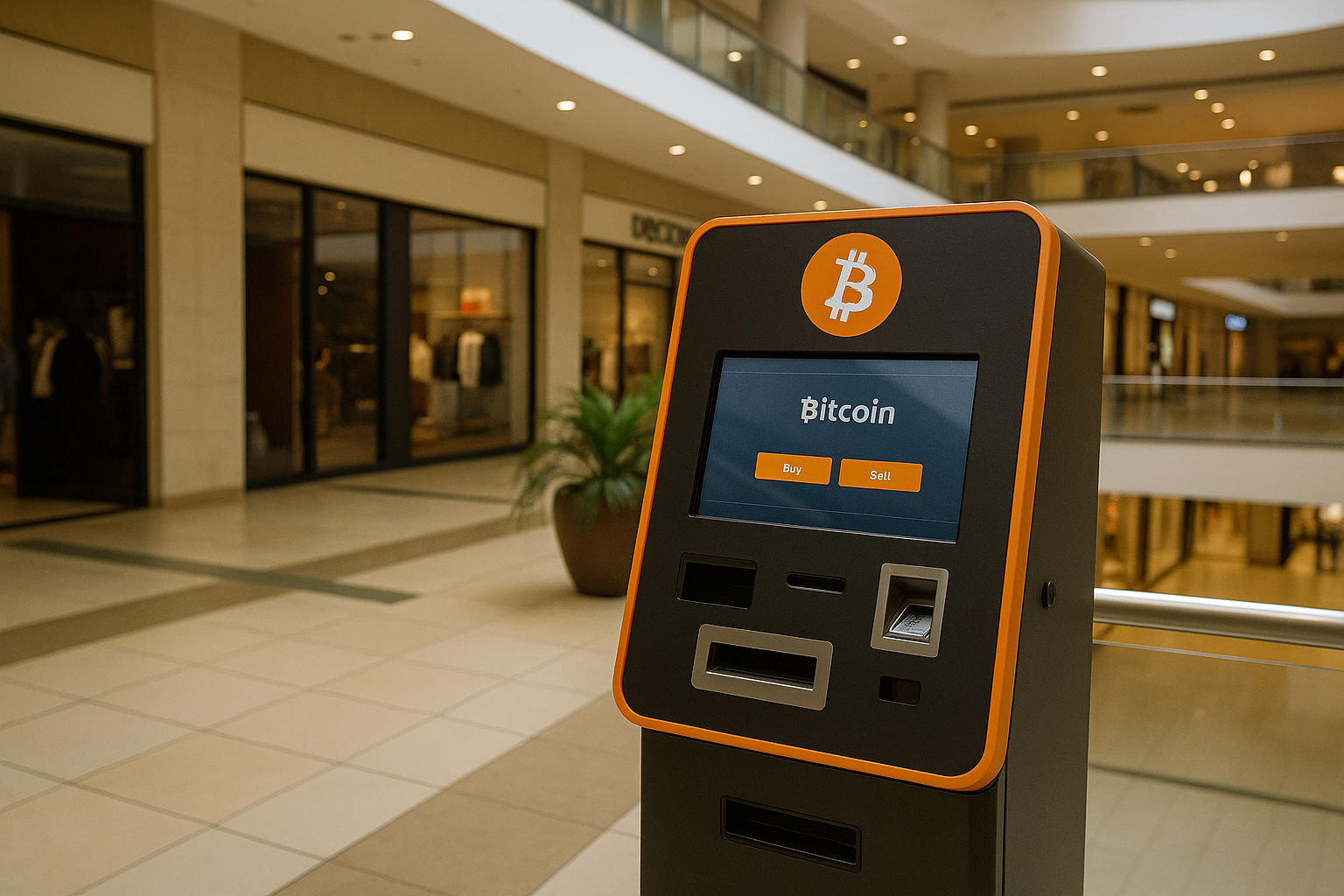
    Bitcoin ATMs have surfaced across major shopping malls in Nairobi, only days after Kenya activated its first comprehensive crypto law, creating an unexpected test for regulators who have not yet authorised any crypto provider to operate.

    The machines, branded Bankless Bitcoin, appeared beside traditional bank kiosks and offered cash to crypto services to shoppers.

    Their arrival coincides with the early phase of Kenya’s Virtual Assets Service Providers Act of 2025, which came into effect on 4 November and set the first formal rules for crypto businesses.

    Gaps in licensing

    Local outlet Capital News confirmed that multiple malls in Nairobi had new machines installed, expanding beyond earlier attempts to introduce crypto ATMs in Kenya.

    In 2018, The East African reported that BitClub deployed Bitcoin ATMs in the city, although the machines never reached mainstream retail spaces and adoption remained limited.

    Kenya currently has two reported Bitcoin ATMs, making the latest installations notable for their placement in high-traffic commercial environments.

    Regulators signal caution

    The new law assigns oversight responsibilities to two regulators. The Central Bank of Kenya will handle payment and custody functions, while the Capital Markets Authority will regulate investment and trading activity.

    However, the regulations required to begin licensing crypto firms have not yet been issued.

    In a joint notice released on Tuesday, the Central Bank of Kenya and the Capital Markets Authority stated that they have not licensed any VASP to operate in or from Kenya under the new Act.

    They also warned that companies claiming authorisation are doing so without approval.

    The National Treasury is developing the regulatory framework that will decide when licensing can begin, placing operators in a temporary environment where the law exists but permissions do not.

    This creates a visible gap. Bitcoin ATMs are entering public spaces even as regulators tell the public that no provider has met the requirements laid out in the law.

    The contrast places pressure on authorities to clarify enforcement and could shape how crypto firms approach compliance in the near term.

    Informal use grows

    The spread of Bitcoin ATMs into high end malls highlights Kenya’s evolving crypto landscape.

    Capital News reported that Bitcoin usage has long been active in lower income neighbourhoods such as Kibera, where residents use BTC as a form of banking in areas with limited access to formal financial services.

    People have relied on crypto to store value without extensive documentation or traditional banking infrastructure.

    The shift from informal areas to upscale malls suggests that consumer interest is expanding even while regulatory conditions remain unsettled.

    The coexistence of visible infrastructure and incomplete licensing rules places Kenya at an early crossroads as it moves from a largely informal crypto market to a regulated one.

    Source link

  • Starknet nosedives 20% amid broader crypto crash: is STRK done plummeting?

    Starknet nosedives 20% amid broader crypto crash: is STRK done plummeting?

    Starknet Price Bearish

    • Starknet price dropped sharply as top cryptocurrencies tumbled to key support levels.
    • On November 18, 2025, STRK plunged nearly 20% to touch lows of $0.17. 
    • STRK plunged as Bitcoin dropped to lows of $89,500.

    Starknet’s native token took a sharp hit as cryptocurrencies bled on Monday, November 17, 2025, with bears extending the dip to Tuesday as STRK plunged nearly 20% to lows of $0.17. 

    At the time of writing, Starknet traded 14% down in 24 hours at around $0.19. The decline contrasted with gains for Internet Computer, Hyperliquid, and others.

    Notably, the altcoin mirrored losses for Zcash, the top privacy coin by market cap, which was also seeing notable profit taking.

    Starknet nosedived 20% amid a broader crypto crash

    As the crypto market entered freefall on November 17, Starknet price plummeted.

    Triggered by a number of factors, including macro jitters and geopolitical tensions, amplified selling pressure across major assets cascaded into altcoins.

    For instance, Bitcoin, the bellwether of the market, shed more than 4% to drop to a low of $89,500.

    The move saw the global market cap fall to $3.13 trillion. Trading volume rose 45% on Nov. 18 to over $247 billion, with the Ethereum price falling to lows of $3,000.

    XRP, BNB, and Solana all recorded significant drops, pushing liquidations to above $1 billion globally.  

    Starknet, which rose amid recent privacy coin gains, followed suit.

    The zero-knowledge proofs-powered layer 2 solution saw its STRK token fall from highs of $0.22 to $0.17. Nosediving 20% allowed bears to erase much of the token’s recent 50% rally.

    As the chart below shows, Starknet price recently notched four straight green daily candles as price touched  high of $0.24. Following Monday’s dip, weekly gains are currently down to about 22%.

    Starknet Price Chart
    Starknet price chart by TradingView

    Is STRK done plummeting?

    Market observers note that while Starknet’s TVL (total value locked) remains robust at over $340 million, the token’s correlation with Bitcoin, left it exposed to the flagship coin’s volatility.

    The timing couldn’t be worse for Starknet. 

    Just this week, the project announced a multi-million dollar program aimed at Bitcoin staking. The milestone aims to bridge the Ethereum and Bitcoin ecosystems through Starknet’s BTCFi offering. 

    As the crypto market dusts off some of the sell-off pressure, finding a floor near the $0.16-$0.17 mark could be crucial for bulls.

    If this happens, STRK could eye $0.24 and potentially one year highs above $0.78. The main target in the short term remains the psychological $1 level.

    The platform’s Bitcoin integration positions it uniquely for cross-chain growth. Bitcoin DeFi growth, especially as Ethereum’s upgrades enhance layer-2 efficiency, adds to the bullish outlook.

    However, in the short term, risks such as a prolonged Bitcoin bear market could allow sellers to seek more pain.

    Bulls saw STRK price fall to an all-time low under $0.04 on October 10, 2025. Current prices nevertheless hover about 305% up since.

    Source link

  • Hong Kong crypto rules attract global banks as AMINA wins new approval

    Hong Kong crypto rules attract global banks as AMINA wins new approval

    Hong Kong crypto rules attract global banks as AMINA wins new approval

    • The licence covers 13 cryptocurrencies, including Bitcoin, Ether, USD,C and Tether.
    • AMINA reported a 233% increase in Hong Kong trading volumes in early 2025.
    • Hong Kong launched new stablecoin rules and approved a Solana ETF this year.

    Hong Kong’s push to build a regulated digital asset market is drawing more interest from global financial institutions, and the latest example is Swiss crypto bank AMINA Bank AG securing approval to expand its services in the city.

    The bank received a Type 1 licence uplift from the Securities and Futures Commission, which makes it the first international bank allowed to offer regulated crypto trading and custody to institutional clients in Hong Kong.

    The move strengthens the city’s position as a regional digital asset hub and highlights rising demand for bank-grade crypto services among professional traders.

    AMINA plans to use the approval to provide institutional users with a regulated route into cryptocurrencies at a time when clients are looking for stronger safeguards and clearer rules.

    Hong Kong’s compliance standards have often limited the number of foreign institutions able to offer these services, which has left a gap in the market for firms with established banking frameworks.

    AMINA’s entry aims to fill that gap while giving clients a regulated platform backed by traditional financial infrastructure.

    AMINA expands in a fast growing market

    The licence uplift allows AMINA’s Hong Kong subsidiary to offer trading and custody for 13 cryptocurrencies.

    These include Bitcoin, Ether, USDC, Tether, and several leading decentralised finance tokens that are widely used across global exchanges.

    The approval creates new opportunities for institutional clients looking for a single regulated venue with access to a curated list of major digital assets.

    AMINA also reported a sharp rise in market activity.

    The bank recorded a 233% increase in trading volume on Hong Kong crypto exchanges in the first half of 2025.

    The increase points to stronger engagement from both institutional and retail segments, which are becoming more active as Hong Kong’s regulatory environment evolves.

    The bank expects the new approval to support a wider product range.

    It plans to expand into private fund management, structured crypto products, derivatives, and tokenised real-world assets.

    These additions would place AMINA among the firms offering institutional clients diversified exposure across multiple types of digital assets.

    Local players face new global competition

    While AMINA is the first international bank to receive this specific licence upgrade, it enters a competitive market.

    Hong Kong already hosts regulated local firms such as Tiger Brokers and HashKey, which serve institutional and retail clients under earlier permissions.

    AMINA’s approval signals that the market is open to more foreign institutions, which could change competitive dynamics for both global and local providers.

    Hong Kong officials have said on multiple occasions that attracting global firms is central to the city’s digital asset strategy.

    AMINA’s arrival may encourage more banks and brokerages abroad to consider similar applications as they assess opportunities in Asia’s regulated crypto markets.

    Policy changes shape Hong Kong’s crypto framework

    AMINA’s approval arrives during a period of rapid policy development in the city.

    Hong Kong introduced its new stablecoin rules in August, creating a formal licensing pathway for issuers.

    Following this, major regional banks such as HSBC and ICBC indicated they were examining licence applications as part of their digital asset plans.

    The city also approved its first Solana exchange-traded fund in late October.

    The approval placed Hong Kong ahead of the US in allowing a regulated Solana ETF and added another product to its growing list of crypto-linked investment options.

    Hong Kong tightened rules around self-custody of digital assets in August.

    The change focused on improving cybersecurity protections and reducing risks tied to individual key management.

    The decision was presented as a safety measure rather than a restriction on user access.

    The combination of new rules and rising institutional interest has created an environment that is now attracting more global firms.

    AMINA’s regulatory progress adds momentum to Hong Kong’s strategy of balancing strong compliance with market expansion.

    Source link

  • Crypto loopholes across Canada enable silent cash transfers

    Crypto loopholes across Canada enable silent cash transfers

    Crypto loopholes across Canada enable silent cash transfers

    • A Toronto outlet handed over $1,900.00 in cash using only a $5 bill for verification.
    • Ukraine-based exchange 001k offered to deliver $1,000,000.00 in cash in Montreal.
    • Over 20 crypto-to-cash services were found operating unregistered across Canada.

    A report by CBC has revealed how Canada is witnessing the rise of unregulated crypto-to-cash services that enable large-scale anonymous financial transfers.

    These operations not only bypass anti-money laundering laws but also establish an untraceable money trail that financial intelligence agencies are unable to track.

    Across cities from Toronto to Montreal, crypto platforms are facilitating discreet cash handovers worth thousands and even millions, without requiring any identification from users.

    Despite rules that demand full verification for transactions over $1,000.00, services continue to hand over cash using only minimal confirmation.

    Experts have raised alarm over the role of these services in enabling potential money laundering, illicit trade, and financial crime.

    Investigative efforts have now revealed how this silent financial movement is escaping oversight in plain sight.

    Crypto-for-cash deals avoid ID checks

    In one midtown Toronto branch of a registered money transfer business, a $1,900.00 cash pickup was arranged through encrypted messages using the Telegram app.

    The only verification required was a photo of a Canadian $5 bill.

    The customer, who had earlier transferred 2,000 tether tokens to Ukraine-based crypto exchange 001k, showed the physical bill and received $100 notes from the teller with no further questions.

    Such transactions breach Canada’s anti-money laundering regulations, which require personal identification and transaction documentation for any transfer exceeding $1,000.

    The company later claimed that the arrangement had been made by a rogue manager using personal funds off the official books.

    The teller involved, they said, acted without knowledge of the transaction’s real nature.

    001k is not registered with FINTRAC, the Canadian financial intelligence agency, and therefore is not legally permitted to conduct business with Canadians.

    Yet the transaction went ahead and passed under the regulatory radar.

    Platforms offer million-dollar handovers

    The same pattern was uncovered in Montreal.

    Journalists engaged in anonymous conversations with crypto services, including 001k and another unnamed provider.

    Both offered to deliver $1,000,000.00 and $890,000.00 in cash, respectively, in exchange for tether sent to designated wallets.

    No identification was asked for at any stage.

    These platforms operate online, contactable via web directories and Telegram channels.

    Many advertise in plain sight and offer face-to-face cash deals in locations ranging from Halifax to Vancouver.

    According to experts, more than 20 such services were found in Canada, most operating without proper registration or regulatory checks.

    Despite Canada’s attempt to regulate the sector through FINTRAC, enforcement remains limited.

    The agency oversees over 2,600 registered money service businesses, but lacks the resources to track unregistered and underground operators.

    A growing global laundering channel

    Crypto analysis firm Crystal revealed to CBC that crypto-to-cash services in Hong Kong alone processed $2.5 billion in 2024.

    Canada’s rapidly growing market could mirror that figure if enforcement continues to lag.

    With the rise of digital tokens like Bitcoin, Ethereum, and Tether, it has become easier for money to move across borders and be converted into untraceable cash.

    Law enforcement depends on access to user identity at the point where crypto enters or exits the system.

    When transactions are carried out without registration, those points vanish, and the blockchain’s transparency becomes meaningless.

    Investigators lose visibility once digital assets are converted into physical currency anonymously.

    The flexibility of these services creates risk.

    Anyone can now move large sums in or out of Canada without detection, including organised crime networks and individuals involved in illegal activity.

    Without active compliance monitoring, these transactions take place without leaving any traceable connection.

    Canada struggles to enforce crypto regulations

    Canadian regulators are under-equipped to deal with the scale of the problem.

    Crypto platforms can connect users in seconds, bypassing traditional financial systems and enabling instant access to large volumes of cash.

    FINTRAC’s oversight is stretched, and its inability to track foreign operators or monitor encrypted platforms like Telegram leaves a major gap in financial security.

    The use of small signals, like a $5 bill serial number, to validate multi-thousand-dollar exchanges highlights just how far removed these services are from compliance.

    Unless significant regulatory action is taken, Canada could continue to serve as a silent hub for crypto cash transfers that avoid scrutiny, recordkeeping, and legal obligations.

    Source link

  • Kiyosaki defends Bitcoin and warns Wall Street as crypto volatility returns

    Kiyosaki defends Bitcoin and warns Wall Street as crypto volatility returns

    Kiyosaki defends Bitcoin and warns Wall Street as crypto volatility returns

    • Kiyosaki accused Wall Street of promoting paper assets that benefit insiders.
    • He said gold, silver, and Bitcoin provide value outside institutional control.
    • His Bitcoin forecast puts the price at $250,000 by 2026.

    As volatility grips the crypto market again, Rich Dad Poor Dad author Robert Kiyosaki has stepped up in defence of Bitcoin and decentralised assets.

    Amid renewed price swings and public doubt over digital currencies, Kiyosaki argued that Bitcoin remains a hedge against centralised financial systems and inflation.

    He described it as “people’s money,” contrasting it with what he calls “fake money” issued by the US Federal Reserve and Treasury.

    While Warren Buffett’s past criticisms labelling Bitcoin as “gambling” resurfaced online, it was Kiyosaki’s response that reignited debate across financial communities.

    His message was clear: the fault lies not with crypto, but with a broken fiat system that he believes Wall Street continues to uphold.

    Fiat risks and distrust in institutions

    Kiyosaki has long rejected the idea that centralised institutions should be the backbone of wealth.

    In his view, the real danger to investors is not Bitcoin’s volatility, but the ongoing reliance on a system driven by inflation and debt.

    He warned that assets like stocks and bonds, frequently promoted by institutional investors, are just as vulnerable to collapse.

    According to him, the core issue is trust. While traditional markets claim to offer safety, Kiyosaki sees them as tools that enrich the powerful while exposing regular people to risk.

    This, he argues, is why decentralised assets like Bitcoin and Ethereum are gaining ground—they provide financial autonomy in an unstable environment.

    He classifies gold and silver as “God’s money” and Bitcoin as “people’s money,” highlighting their independence from government control and printing presses.

    With Bitcoin capped at 21 million coins, Kiyosaki says it offers protection that fiat currencies simply cannot match.

    Kiyosaki’s challenge to the financial establishment

    As Wall Street continues to sell institutional products, Kiyosaki is urging people to reconsider what really holds value.

    He questioned how long investors can trust paper-based assets in a world where central banks can print currency without limits.

    He emphasised that real-world necessities cannot be replaced with financial abstractions.

    “You cannot live in a paper house, drive using paper fuel, or eat paper food,” he wrote, pointing to the artificial nature of fiat-based wealth.

    By comparison, assets like Bitcoin offer a limited-supply, decentralised alternative that he believes is better suited to survive economic instability.

    Bitcoin prediction and market direction

    Amid the broader market uncertainty, Kiyosaki has also made a bold forecast. He predicts Bitcoin could reach $250,000 by 2026, a significant rise from its current level around $95,600.

    While this projection is speculative, it aligns with his belief that decentralised assets will outperform as trust in fiat continues to erode.

    Though Warren Buffett’s view of Bitcoin as speculative persists, Kiyosaki’s message offers a pointed challenge to the financial status quo.

    His comments reflect a growing shift in investor sentiment, where control, transparency, and scarcity are seen as more valuable than institutional assurance.

    Source link

  • Plume network crashes to new all-time low as crypto sell-off deepens

    Plume network crashes to new all-time low as crypto sell-off deepens

    Plume Price Flames

    • PLUME hit an all-time low of $0.035, which had the token down 85% from its March peak of $0.247.
    • Losses came amid sustained bearish pressure, with a 26% single-day crash erasing millions off its market cap.
    • Plume Network saw a total of over $440,000 in futures liquidations, most of it longs.

    As markets bled, Plume Network’s price dropped sharply to hit an all-time low of $0.035 and rank among the top losers in the past 24 hours across crypto.

    PLUME, the native token of the blockchain platform dedicated to bridging traditional finance with decentralized ecosystems, plummeted as Bitcoin flipped red.

    BTC fell to a new multi-month low, erasing significant gains as bulls failed to defend levels all the way to $95,800.

    Plume price drops to a new all-time low

    The PLUME token traded at $0.0349 at the time of writing, having reached unprecedented new all-time lows amid a fresh crypto crash.

    Initially, the altcoin surged on hype surrounding Plume’s full-stack RWA chain to hit $0.247 in March. But its price has declined steadily since, and accelerated to the latest low amid heightened selling pressure.

    Plume Price
    Plume Network chart by CoinGecko

    In the past few months, whale addresses have sporadically dominated accumulation rounds.

    However, retail panic has taken on the upper hand. Market data shows over $440,000 in 24-hour liquidations, seeing long positions dominating at over $392,000.

    Per CoinGecko, Plume has recorded over $60 million in daily trading volume. That’s an 83% spike in the past 24 hours, which highlights the corresponding selling.

    What’s next for PLUME price?

    For Plume, a sustained break below $0.035 could invite further capitulation. Potentially, bears might fancy $0.03.

    Notably, this dump arrives despite robust fundamentals. Plume’s SEC registration as a transfer agent in Q3 2025 has unlocked pathways for regulated tokenized securities and on-chain IPOs.

    Furthermore, recent integrations, such as the acquisition of liquid staking protocol Dinero, bolster institutional appeal.

    However, social sentiment has soured amid macroeconomic strains, including jitters around the Federal Reserve’s interest path.

    Analysts say the odds of a rate cut in December have fallen, and reaction has largely been negative.

    Despite the carnage, Plume’s long term outlook could mirror expected rebounds for the crypto sector. Nest Protocol’s recent relaunch, with 100 million PLUME allocation to stakers, has drawn significant interest.

    This means recovery could hinge on bulls reclaiming $0.05 support.

    A broader uptick in RWA adoption and overall bullish strength could allow for a potential rebound to $0.075 and likely $1.

    Nonetheless,  the 26% dump could accelerate downside action if uncertainty further grips the market. That $0.03 mark is critical for bulls over the coming weeks.

    Over the past week, the Plume price has plunged by nearly 30%. It’s down 64% in the past three months.

    Source link

  • AI-driven phishing scams and hidden crypto exploits shake Web3 security

    AI-driven phishing scams and hidden crypto exploits shake Web3 security

    AI-driven phishing scams and hidden crypto exploits shake Web3 security

    • SBI Crypto was breached, losing $21 million in assets via a suspected laundering operation.
    • A phishing scam targeting GMGN tricked 107 users into approving fake transactions.
    • Honeypot token scams rose 600% month-on-month, with over 2,100 tokens detected.

    Web3 has entered a new phase of cyber threats, with attackers now leveraging artificial intelligence, automation tools, and complex social engineering to exploit users across decentralised networks.

    According to GoPlus Security, over $45.84 million was lost in October alone from a surge of scams, phishing attacks, token exploits, and wallet hacks.

    The data reveals how scammers are evolving their methods, creating high-impact exploits that have affected thousands of users and platforms across Ethereum, Binance Smart Chain, and Base.

    Hackers use AI and automation to boost phishing campaigns

    GoPlus observed a sharp increase in phishing attacks that led to more than $3.5 million in losses.

    A growing number of these scams are powered by “Phishing-as-a-Service” platforms, where threat actors use AI tools to rapidly generate fake websites and deploy large-scale campaigns with lower operational costs.

    One of the largest phishing cases involved the trading platform GMGN.

    In this incident, 107 users were misled by a fake third-party website into authorising harmful transactions. Losses totalled more than $700,000.

    The phishing scam replicated legitimate wallet interactions, tricking victims into signing approval requests that gave attackers control over their funds.

    In another case, a trader approved a malicious “increaseAllowance” command, resulting in a $325,000 loss in Coinbase Wrapped Bitcoin.

    Separately, another user was hit with a $440,000 loss after signing a fraudulent “permit” transaction.

    Both exploits highlight the rise in fake contract approvals, often enabled by deceptive interfaces mimicking trusted apps.

    Sophisticated exploits linked to state-style laundering tactics

    The single largest exploit came from SBI Crypto, which suffered a breach that drained $21 million worth of digital assets. The losses included Bitcoin, Ethereum, Litecoin, Dogecoin, and Bitcoin Cash.

    Although SBI Crypto did not officially confirm the source of the breach, a joint investigation by ZachXBT and Cyvers suggested patterns similar to those used by North Korean hacker groups.

    The attackers allegedly funnelled funds through Tornado Cash, a known crypto mixer previously sanctioned for its role in laundering state-sponsored thefts.

    This laundering method closely mirrors activity linked to the Lazarus Group, though the report stressed that the connection remains unverified.

    Web3 platforms under attack from honeypot tokens

    Alongside phishing and exploits, the report found a dramatic spike in honeypot tokens.

    These are malicious smart contracts that allow users to buy tokens but prevent them from selling or withdrawing funds.

    Honeypot tokens surged 600% last month, reaching 2,189 identified tokens—though still far fewer than the 40,000 recorded in June 2025.

    Goplus honeypot tokens
    Source: GoPlus Security

    The Binance Smart Chain accounted for the bulk of these tokens at 1,780, followed by 216 on Ethereum and 131 on Base.

    These tokens are embedded with hidden restrictions that block transactions, stranding investor funds in illiquid assets.

    Their increase underscores a shift toward embedded contract-level fraud, which can bypass basic security tools.

    Tokens and socials compromised in wider exploits

    The wider ecosystem also saw losses from social media and platform-based breaches.

    Astra Nova’s official social account was hijacked, triggering a large-scale sell-off of its native token RVV and causing losses of approximately $10.3 million.

    In a separate exploit, decentralised finance platform Garden Finance was hit with a vulnerability that cost users around $10.8 million, according to ZachXBT.

    These incidents reflect a widening surface of attack across both user-facing interfaces and backend contract code.

    Source link

  • Crypto update: Bitcoin ETFs see $300M inflow as investors ‘buy the dip’

    Crypto update: Bitcoin ETFs see $300M inflow as investors ‘buy the dip’

    Crypto update: Bitcoin ETFs see $300M inflow as investors 'buy the dip'

    • US Bitcoin ETFs saw nearly $300 million in net inflows on Tuesday.
    • The inflows snapped a two-week streak of redemptions from the products.
    • Fidelity’s FBTC led the way with $165.9 million, followed by Ark’s ARKB.

    US-based Bitcoin ETFs have snapped a two-week streak of redemptions, pulling in nearly $300 million in net inflows on Tuesday as investors took advantage of lower prices to rotate back into cryptocurrency-linked products.

    The renewed buying interest, which follows a period of significant outflows, suggests that institutional investors are viewing the recent market dip as a buying opportunity, reaffirming their long-term conviction in the asset despite short-term volatility.

    A decisive reversal after weeks of outflows

    Early data from SoSoValue shows a significant reversal of last week’s trend, which saw over $1.17 billion withdrawn from digital asset investment products.

    Fidelity’s FBTC led the charge with $165.9 million in fresh capital, while Ark 21Shares’ ARKB added $102.5 million.

    Notably, even Grayscale’s GBTC, which has experienced consistent outflows for months, posted a net inflow of $24.1 million.

    This return of capital to US products contrasts with the European market, which has continued to see steady inflows, suggesting a more consistent long-term positioning from investors outside the United States.

    Altcoins continue to attract capital

    While Bitcoin and Ether products have been subject to macro-driven volatility, certain altcoins have continued to attract steady investment.

    According to data from CoinShares, Solana-linked products notched another $118 million in inflows last week, bringing its impressive nine-week total to $2.1 billion.

    This pattern indicates that investors are differentiating between core assets sensitive to macro pressures and emerging networks with strong on-chain momentum.

    Fundamentals remain strong as supply milestone nears

    Despite the recent price turbulence, market experts maintain that Bitcoin’s underlying fundamentals remain robust.

    Thomas Perfumo, a global economist at Kraken, highlighted an upcoming supply milestone as a key factor in the long-term investment case.

    “In approximately seven days, Bitcoin’s circulating supply will cross 19.95 million coins, 95% of its max supply of 21 million coins,” he wrote in a note provided to CoinDesk.

    Perfumo said this event underscores Bitcoin’s programmable scarcity and its enduring role as a “credibly neutral, globally accessible store of value.”

    Gold nears record highs amid fiscal warnings

    In the broader macroeconomic landscape, gold continued to trade near record highs at $4,134.6 per ounce.

    The precious metal’s strength is being fueled by growing concerns over US fiscal stability.

    Economist James Thorne has warned that the US has crossed a fiscal “Rubicon” that could trigger a “Bretton Woods 2.0” style reset, potentially revaluing gold to manage soaring debt levels.

    The impact of surging bullion prices is already being felt, with major producer Barrick Mining reporting a $1.3 billion quarterly profit and a dividend hike.

    Source link

  • Bittensor (TAO) plunges 16% amid broader crypto sell-off

    Bittensor (TAO) plunges 16% amid broader crypto sell-off

    Bittensor TAO Token

    • Bittensor’s token plunged 16% in 24 hours to hit lows of $389.
    • Losses for the top artificial intelligence coin came amid profit-taking following a recent spike.
    • Fed’s hawkish stance, the Balancer exploit, and AI-capital rotation has fueled risk-off sentiment.

    Bittensor’s native token, TAO, has tumbled 16% over the past 24 hours, dipping to lows of $389 as it outpaced the artificial intelligence sector’s overall decline of 9%.

    Losses for Bittensor came as Bitcoin slipped to near $100,000, and the total market capitalization dropped to under $3.4 trillion.

    While analysts remain bullish for BTC and the broader market, investors are grappling with a confluence of macroeconomic pressures.

    Sector-specific headwinds are also in play and could add to declines driven by panic selling.

    Bittensor’s TAO plunges amid profit-taking

    Bittensor is a decentralized machine learning protocol that incentivizes collaborative AI model training through its blockchain.

    The native token TAO’s price has outperformed recently, tapping into gains for AI-related stocks like Nvidia.

    However, the token’s value cratered to $3.89, marking a 16% intraday loss.

    Bulls have attempted a recovery, but the price hovers at $400, down from highs of $488.

    Meanwhile, trading volume surged 17% to $712 million, a scenario that reflects the heightened panic selling.

    Like across the broader market, this comes as retail and institutional holders liquidate positions on jitters around the waning AI-driven rally.

    The plunge appears exacerbated by profit-taking following the launch of Europe’s first staked TAO exchange-traded product (ETP) by Safello.

    It initially sparked a major rally, but bulls have since failed to sustain momentum.

    Broader crypto market sell-off

    The cryptocurrency ecosystem has suffered a substantial loss, with over $250 billion evaporating in market value within 24 hours, culminating in a 5.8% contraction in overall market capitalisation to $3.4 trillion.

    Bittensor’s underperformance against Bitcoin, down 6% to near $100,000, and top altcoins, in relative terms, highlights TAO’s vulnerability in a risk-off environment.

    Sentiment is in the fear zone.

    This outlook sees Ethereum down 8% to $3,340, breaching key support at $3,550 and erasing 18% over the week.

    Solana and XRP have also posted key losses, and liquidations across derivatives markets exceeded $1.13 billion.

    A lot of the downbeat sentiment is the reaction to Federal Reserve officials’ remarks that have cut bets for a December rate cut.

    Meanwhile, Wall Street jitters have seen US spot Bitcoin and Ethereum ETFs log four consecutive days of outflows.

    The Balancer crypto hack incident also dented sentiment.

    “The latest $128M Balancer exploit is a reminder of something fundamental: most smart contracts today rely on audit-based hope. Developers write complex code, auditors review it, and everyone hopes there are no hidden logic flaws. But hope isn’t assurance,”Bitcoin finance platform Blockstream noted on X.


    Source link

  • Bitcoin holds $110k as cautious calm returns to crypto markets

    Bitcoin holds $110k as cautious calm returns to crypto markets

    Bitcoin holds $110k as cautious calm returns to crypto markets

    • Bitcoin is trading steadily around $110,300 as markets consolidate.
    • Traders have largely paused adding new risk after the recent Fed meeting.
    • Bitcoin dominance has risen to approximately 60% of the total crypto market.

    With Bitcoin holding steady above the key $110,000 level as traders consolidate positions and reassess risk following last week’s hawkish signals from the US Federal Reserve, a cautious calm settled over cryptocurrency markets at the start of the week.

    While the market has stabilized after a volatile period, underlying data from the derivatives and credit markets suggests that a “wait-and-see” approach is now the dominant strategy, with investors looking for a fresh catalyst to dictate the next major move.

    As the business week began in Hong Kong, Bitcoin was trading around $110,300, while Ether held near $3,880. Both assets remain down significantly over the past 30 days, by 10% and 14% respectively.

    According to market maker FlowDesk, clients have largely “paused adding new risk” after the Fed meeting, with market activity dominated by short-term trading and portfolio rebalancing.

    Despite the caution, FlowDesk noted that traders showed net buying in tokens with strong underlying fundamentals like BTC, HYPE, and SYRUP, even as Solana-linked assets lagged.

    This deleveraging has left many traders “underexposed if the market rebounds,” suggesting a cleaner market position, the firm wrote.

    Fear lingers in the derivatives market

    While spot markets appear calm, the derivatives space still shows signs of fear. According to CoinGlass data, approximately $155 million in crypto derivatives were liquidated in the past 24 hours.

    The split, with $97 million in long positions and $58 million in shorts being wiped out, points to a moderate flush of overleveraged bullish bets rather than broad panic selling.

    FlowDesk observed “elevated put skew and lingering caution despite calmer volatility,” indicating that traders are still buying downside protection.

    This cautious positioning, dominated by put buying and call selling, could present an opportunity if the market stabilizes.

    “Cheap risk reversals could appeal if spot markets stabilize,” FlowDesk wrote, adding that volatility will likely “drift lower into year-end.”

    Gold holds gains despite hawkish Fed

    In the broader macroeconomic picture, gold is holding onto its recent gains despite headwinds from the Fed.

    The precious metal closed Friday at about $4,003 per ounce, posting a 3.7% gain in October for its third consecutive monthly rise.

    Despite hawkish comments from the Federal Reserve and a stronger dollar that have reduced the odds of a December rate cut, haven demand for gold remains strong.

    Persistent geopolitical tensions and ongoing U.S. fiscal uncertainty have continued to support the metal’s appeal as a stable asset.


    Source link