
Key takeaways:
- Bitcoin’s sharp 8% drop triggered $1.5 billion in forced liquidations, ending a tight two-month small-cap correlation.
- Worsening market sentiment was driven by $2.1 billion in Bitcoin ETF outflows and rising fears of a Federal Reserve interest rate hike.
Bitcoin (BTC) faced a sharp 9% drop over 48 hours, hitting the $67,000 support for the first time in two months. This correction wiped out a substantial $176 billion from the total crypto market cap in just two days, triggering $1.5 billion in forced liquidations for overleveraged long positions.
Traders remain uncertain about the drivers behind crypto’s underperformance, especially since US equities have shown notable strength.
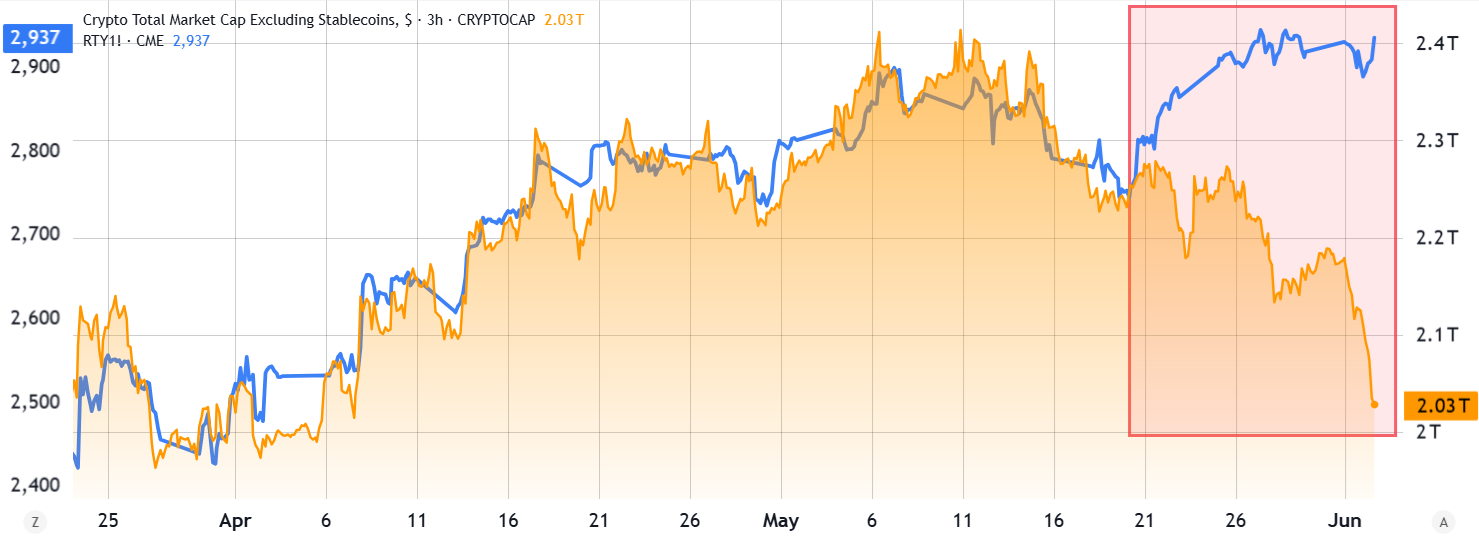
US Russell 2000 small cap equities index (left) vs. Bitcoin/USD. Source: TradingView
The tight correlation between Bitcoin and US small-cap stocks officially broke on May 21 after a solid two-month run. Worsening market sentiment was likely fueled by $2.1 billion in net outflows from US-listed spot Bitcoin ETFs between May 12 and May 20, though derivatives data had already been hinting at a lack of institutional appetite.
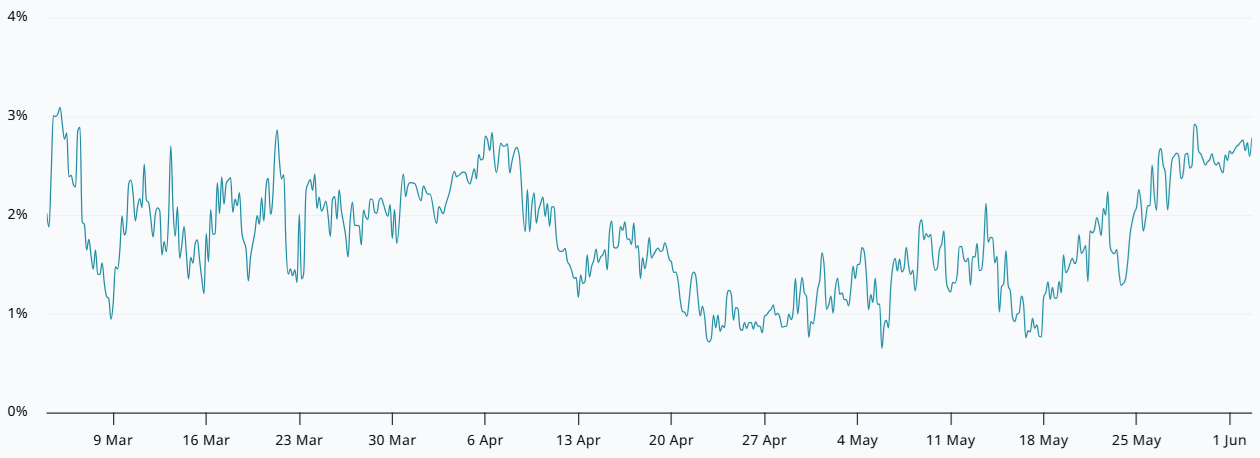
Bitcoin 2-month futures basis rate. Source: Laevitas
The annualized BTC futures premium relative to spot markets has held below the neutral 4% threshold for over three months, confirming weak demand for bullish leverage.
Strategy’s Bitcoin accumulation pause and strength in AI investments
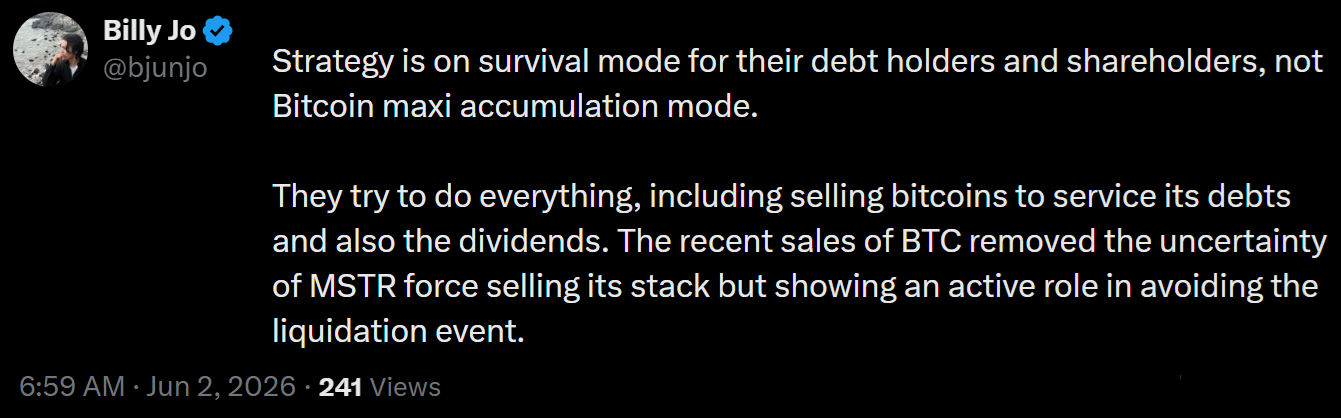
Strategy (MSTR US), led by Michael Saylor, also sparked mixed reactions after it chose to buy back convertible debt while pausing its signature weekly Bitcoin purchases.
Source: X/bjunjo
X user ‘bjunjo’ said that Strategy entered “survival mode for their debt holders and shareholders,” putting aside the sole mission to accumulate more Bitcoin. According to the analysis, the company will do whatever it takes to meet its financial obligations, as shown by a recent BTC 32 sale. Jeff Dorman, Chief Investment Officer at Arca, called the move “a complete balance sheet mismanagement.”
Source: X/ScroogeCap
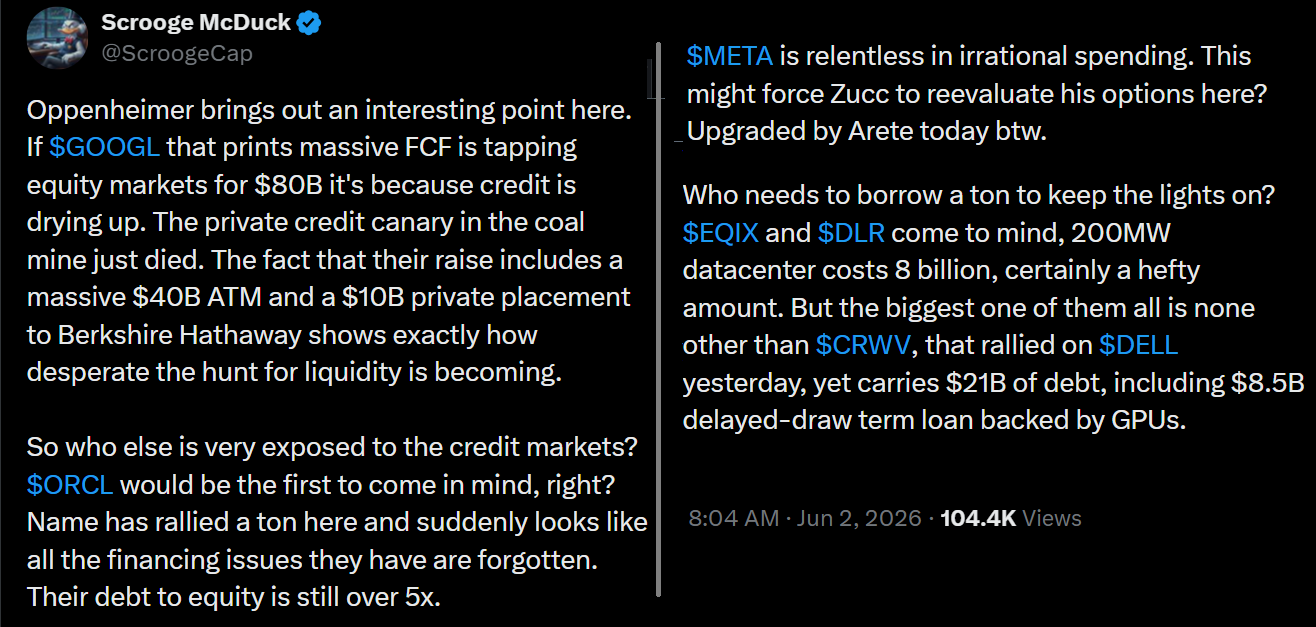
Meanwhile, X analyst ScroogeCap noted that Google’s (GOOG US) decision to raise equity rather than debt suggests that private equity is effectively dead as liquidity dries up. The analysis highlights that the Oracle (ORCL US) debt-to-equity ratio remains unusually high, while Meta (META US) might be forced to tap more capital due to “irrational spending.”
Jim Bianco of Bianco Research reportedly said, “We have not seen the market this concentrated around a single theme in 150 years.” Additionally, JPMorgan research found that 41 AI-related stocks account for half of the S&P 500’s market value.
Related: Bitcoin gets new $50K target after BTC price crashes 6% in a day
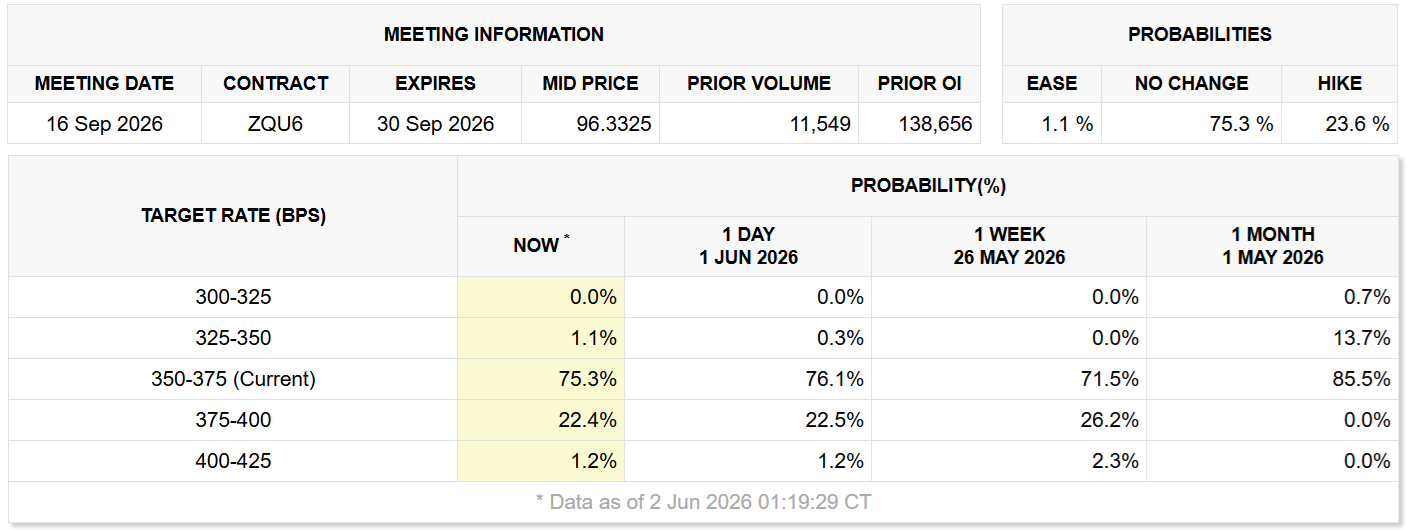
Interest rate target probabilities for the Sept. FOMC meeting. Source: CME Group
Traders became increasingly risk-averse as the war in Iran showed no sign of imminent relief, explaining the broader sell-off across cryptocurrency markets. US government bonds are now pricing in a 23% probability of the US Federal Reserve hiking interest rates by September, up from 0% just one month prior according to the CME FedWatch Tool.
Ultimately, the cryptocurrency market crash on Tuesday reflects heavy outflows from spot Bitcoin ETFs, an extreme capital concentration in AI investments and a macroeconomic environment signaling stricter monetary policy for longer than the market had previously anticipated.