
The Hashgraph Group and Merck have integrated the German tech maker’s product authentication technology with TrackTrace, a Hedera-based digital product passport platform introduced in February, as businesses seek to comply with new European Union supply-chain transparency and traceability requirements.
Under the arrangement, Merck’s M-Trust technology embeds security markers into products and packaging that can be verified with a handheld scanner. Authentication data is then recorded on The Hashgraph Group’s TrackTrace platform, creating a digital record linked to a product’s Digital Product Passport.
The companies said the integration combines physical product authentication with blockchain-based traceability, allowing businesses to verify both the authenticity of a product and the records associated with it.
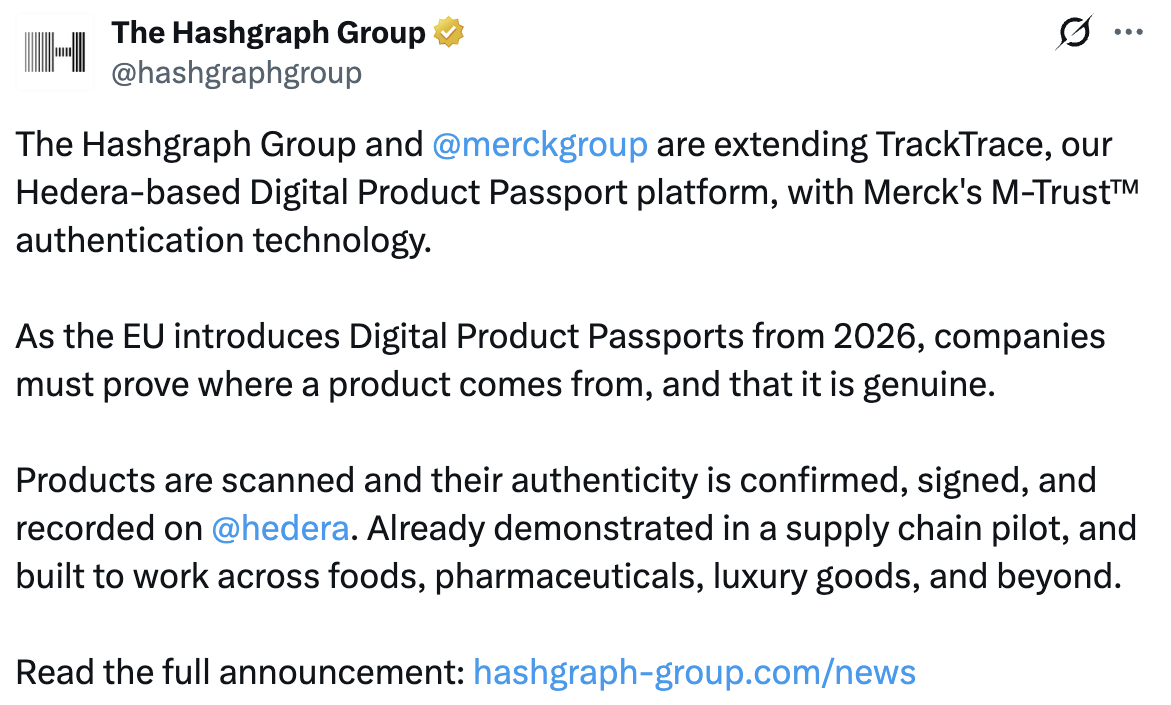
Source: The Hashgraph Group on X.com
The platform targets two emerging EU compliance frameworks: Digital Product Passports under the Ecodesign for Sustainable Products Regulation and traceability requirements under the EU Deforestation Regulation.
Merck is a science and technology company focused on healthcare, life sciences and electronics, while Swiss-based Hashgraph develops enterprise blockchain and AI applications within the Hedera ecosystem.
According to the companies, the technology has already been demonstrated in an undisclosed supply-chain pilot. Potential use cases include food, pharmaceutical, luxury goods and electronics supply chains, where businesses face increasing scrutiny over sourcing and product authenticity.
Related: ECB pushes back on euro stablecoin proposals, citing financial stability risks
EU sustainability rules create market for product traceability
The collaboration comes as companies prepare for forthcoming Digital Product Passport requirements under the European Union’s Ecodesign for Sustainable Products Regulation (ESPR), which entered into force in July 2024.
The regulation applies to most physical goods sold in the EU and forms part of the European Green Deal, a broader effort to improve resource efficiency, expand the circular economy and increase transparency around product environmental impacts.
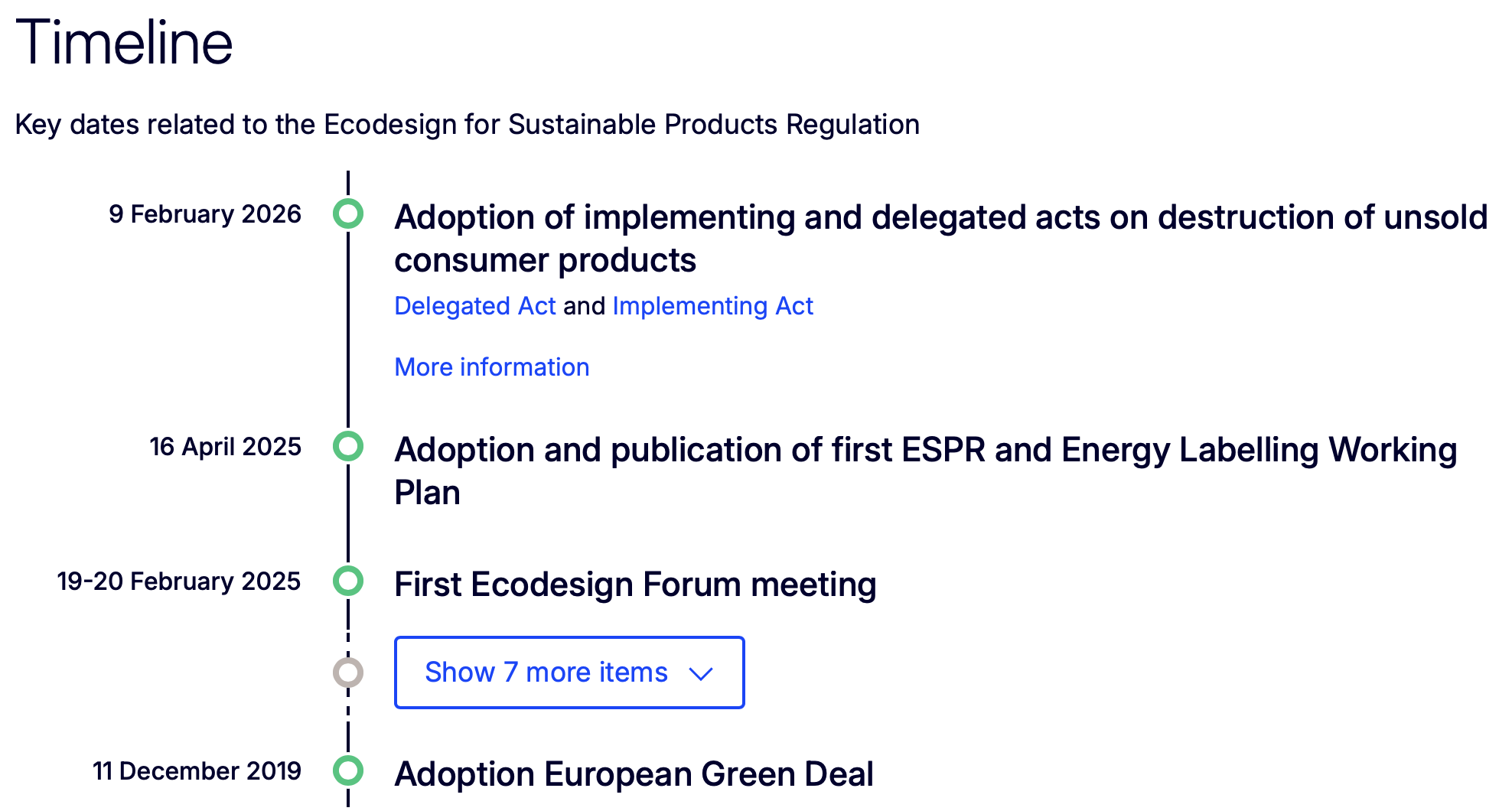
Source: European Commission
Interest in blockchain-based trade and supply-chain infrastructure extends beyond the EU. In March, authorities in Hong Kong and Shanghai agreed to study a blockchain-based cross-border platform under the Hong Kong Monetary Authority’s Project Ensemble initiative, which explores tokenized market infrastructure and digital financial rails.
The project will examine how trade documentation and commercial data can be integrated into trade finance applications, with the goal of streamlining cross-border commerce and related financial services.
Magazine: Vietnam preps crypto pilot, HK pushes tokenization: Asia Express